1First Grade

    Review: time

    Present our research

    Practice pages

    0 of 180 days complete · Saved on this device

    View all 180 days

    Math

    Review: time

    I can tell time to the hour and half hour.

    Standards: 1.MD.B.3

    Number practice (no timer)
    Mixed facts within 20 (keep-up practice)
    Builds on
    Weeks 27 and 28 (time to the hour and half hour on analog and digital clocks). One-minute check: "Where are the hands at half past 2?" (Long hand on 6; short hand halfway between 2 and 3)

    New words

    • bingo: a game where you mark a grid and try to get 3 marked boxes in a row

    You need

    • The paper plate clock from Week 27
    • 2 bingo cards: 3-by-3 grids an adult draws on paper and fills in. Card A, row by row: 1:00, 3:30, 5:00 / 7:30, 9:00, 11:30 / 1:30, 5:30, 9:30. Card B, row by row: 3:00, 1:30, 7:00 / 11:00, 5:30, 9:30 / 7:30, 3:30, 1:00.
    • 12 calling slips (small paper squares) with these times: 1:00, 1:30, 3:00, 3:30, 5:00, 5:30, 7:00, 7:30, 9:00, 9:30, 11:00, 11:30
    • 2 crayons for marking
    • Notebook and pencil
    • The paper fastener on the clock is a small part: keep it away from children under 3.
    1. Warm-Up · 5 min

      Fluency: mixed facts within 20, any strategy. "5 + 9?" (14) "13 - 6?" (7) Spaced review from Week 21: "53 + 4?" (57)

    2. Mini-Lesson · 10 min

      Review the clock rules out loud together. Say: "O'clock: long hand on 12, short hand on the hour, digital time ends in 00. Half past: long hand on 6, short hand halfway to the next number, digital time ends in 30." Set the paper clock to 8:00 and then to 8:30, and your child says what moved each time. (The long hand went from 12 to 6, and the short hand went halfway to 9.)

    3. Guided Practice · 10 min

      Clock Talk. You set the paper clock; your child reads it in words and writes it the digital way. 1) 2:00 2) 6:30 3) 10:30 4) 12:00 5) 8:00 Then your child sets the clock for times you write: 6) 4:30 7) 11:00 8) 2:30 If stuck, say: "Long hand first. Then find the hour the short hand points to or just passed."

    4. Play · 10 min

      Clock Bingo. Each player takes a bingo card. Mix the 12 calling slips face down. Turn over one slip but do not say the time out loud. Set the paper clock to that time and show it. Each player reads the clock and, if that time is on their card, marks it with an X. Keep going until a player has 3 marks in a row (across, down or corner to corner) and reads those 3 times out loud. Keep playing until both players have 3 in a row. Then switch cards and play again, and let your child set the clock for the calls.

    5. Exit Ticket · 3-5 min

      Before asking, set the paper clock to 6:00. Read each question aloud. Your child answers out loud or with a quick drawing. Check each answer together right away.

    Exit ticket

    1. What time does my clock show? Write it the digital way.
    2. Draw a clock with the hands for 12:30.
    Answers
    1. 6:00
    2. Look for: a short hand halfway between 12 and 1 and a long hand pointing to 6.
    Watch for, and help or stretch
    Watch for
    Marking the wrong half-hour time because the short hand is between two numbers, such as marking 7:30 for half past 6.
    Try
    Ask: "Which number has the short hand passed?" Your child touches that number, then says the time.
    Extra help
    Say the call time out loud as well as showing the clock, so your child only has to find the digital time on the card.
    Stretch
    Your child makes a new bingo card with 9 times of their choice, then calls a game for the family.

    At home (optional): Your child plays Clock Bingo with a family member.
    Reading & Writing

    Present our research

    I can share our research and answer questions.

    Standards: SL.1.4, SL.1.3, W.1.8

    Phonics
    Inflectional ending -ing (jumping, reading, playing) and Unit 5 ending review
    Sight words
    around, three, small, end, another
    Reading
    Our class research pages; original text "Plants Help Us"
    Writing
    Shared research: publish and present the plant research · Handwriting: neat published page
    Builds on
    The finished research page (Day 3). One-minute check: your child reads the closing sentence.

    New words

    • present: to share your work with an audience
    • audience: the people who listen and watch

    You need

    • The finished research page and the bean plant
    • A short list of 3 question starters you write for the audience: What...? How do you know...? Why...?
    • Sight word cards: around, three, small, end, another
    • Printed "Plants Help Us" (from Day 1)
    • Lined handwriting paper
    1. Phonics & Word Work · 15 min

      Read like a presenter. I do: read the research page aloud, smoothly, and show how you look up at the audience at the end of each sentence. We do: read the first fact together, then look up together. You do: your child reads these practice sentences smoothly: "Our bean is growing in a pot." "We watered it when the dirt looked dry." "The stem is leaning to the light." Then your child reads the -ing and -ed words alone: growing, watered, looked, leaning. Dictation: leaning, watered. If stuck on a word, find the root and the ending, then read the whole sentence again.

    2. Sight Words · 5 min

      Review: around, three, small, end, another. Clap and Read: you say a sentence with one of the words; your child claps when they hear it, then finds and reads the card.

    3. Read-Aloud & Shared Reading · 15 min

      Present the research. Gather an audience of family members (or stuffed animals with you asking for them). Your child holds the research page and the bean plant and: says the question, reads the 3 facts and the closing, and points to the labeled picture. Then each listener asks one question using a starter. Model one: "How do you know a plant needs light?" Your child answers in a complete sentence and tells where the fact came from (a book or our bean). (Answers vary. Look for: an answer from the page, the journal or "What Do Plants Need?", such as "The book said leaves use light.") Then your child asks the audience one question to check they understood, such as "What does a seed need to sprout?" If stuck answering, point to the page: "Is the answer here? Let's look together."

    4. Writing & Handwriting · 15 min

      Your child writes one sentence about how the presentation went: "I said ___." or "The best part was ___." (Answers vary. Look for: a complete sentence about the presentation.) Then add the last bean journal page for the week with an -ed or -ing word. Handwriting (4 min): your child writes the date neatly at the top of the journal page, with a capital for the month.

    5. Exit Ticket · 5 min

      Oral answers.

    Exit ticket

    1. What question did a listener ask you?
    2. How did you know the answer?
    3. What is one thing you would do differently next time you present?
    Answers
    1. Answers vary. Look for: a real question from the presentation.
    2. Answers vary. Look for: a source, such as the fact text, the journal or what we saw.
    3. Answers vary. Look for: one clear idea, such as speak louder or look up more.
    Watch for, and help or stretch
    Watch for
    Answering a question with "I don't know" right away.
    Try
    Say: "Let's look at our page and journal. Researchers check their notes." Find the answer together.
    Extra help
    Your child presents to one listener only and you hold the page.
    Stretch
    Your child presents a second time to a new listener on a video call and answers two questions.

    At home (optional): Your child presents the research to one more family member and asks them a question about plants.

    ScienceUnit test

    Unit 5 test: sky patterns

    I can describe and predict sky patterns.

    Standards: 1-ESS1-1, 1-ESS1-2

    Builds on
    Sky Patterns poster (Day 2). One-minute check: your child tells one pattern from each box on the poster.

    You need

    • Unit 5 test page (given separately)
    • Sky Patterns poster (for the review game)
    • Sun sequence cards and moon picture cards (for the review game)
    • Pencil and crayons
    1. Warm-Up / Wonder · 5 min

      Spaced review: say each word from the unit, and your child tells what it means or acts it out: shadow, east, west, rise, set, moon, pattern, star, daylight, season, predict. Wonder question: "What surprised you most in this unit?"

    2. Review Game · 10 min

      Play "What Comes Next?" Lay out 3 sun cards in order (sunrise, morning, midday) and your child picks the next card (sunset). Lay out 3 moon cards (thin, half, round) and your child picks the next (half). Then ask quick-fire questions: "Stars at noon: can we see them?" (no, the sky is too bright) "More daylight: June or December?" (June) Keep it light; this is practice, not the test. If stuck, your child walks to the matching box on the poster and finds the answer there.

    3. Check · 10–15 min

      Give the Unit 5 test. The test items are on the Unit 5 test page and are given separately; do not show them ahead of time. The test is a picture test: your child puts sun pictures in order, continues a moon pattern, chooses when stars can be seen, and picks the season with more daylight. Read every part aloud. Your child may answer by talking, pointing, showing or drawing; write their words exactly. It is not timed. Take a break between parts if needed. If stuck on a part, point to the matching box on the Sky Patterns poster and ask your child to tell what it shows, then try the part again. Score it with the answer key and note any idea to revisit.

    4. Exit Ticket · 3–5 min

      Ask the two reflection questions aloud. These are about how the unit felt, not more test items.

    Exit ticket

    1. Which part of the test felt easy?
    2. What do you still wonder about the sky?
    Answers
    1. Answers vary. Look for: an honest answer that names a part.
    2. Answers vary. Look for: a real question, such as "Why does the moon change shape?"
    Watch for, and help or stretch
    Watch for
    Picking a season with more daylight because it is warmer, not because of the graph.
    Try
    Ask: "What did our graph show?" and let your child look at the poster's Daylight box during the review game.
    Extra help
    Give the test in two short sittings. Your child may answer every part out loud.
    Stretch
    Your child writes a 3-sentence "Sky Facts" card for a younger child.

    At home (optional): Your child tells a family member their favorite sky pattern and why.

    Practice

    Read each direction aloud. Your child works on the page; answers are in the grown-up view.

    Warm-up

    Remember?

    Math

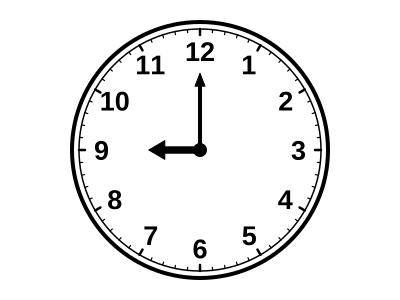
    1. A clock with the short hand on 9 and the long hand on 12. What time is it?
    2. 14 - 6 = ? Think 6 + ? = 14.

    Reading & Writing

    1. unpack
    2. has, had

    Math · Week 30 Day 4

    I can tell time to the hour and half hour.

    Look: 8:00 and 8:30

    1. O'clock: the long hand is on 12 and the short hand is on the hour. The digital time ends in 00.
    2. Half past: the long hand is on 6 and the short hand is halfway to the next number. The digital time ends in 30.
    3. From 8:00 to 8:30, the long hand moves from 12 to 6 and the short hand moves halfway to 9.

    Write the time the digital way.

    1. 1.
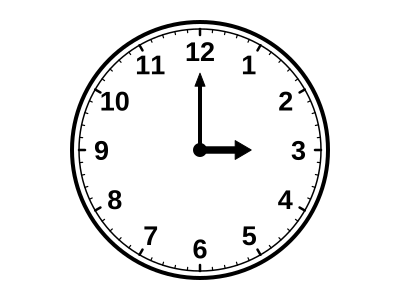
      A clock with the short hand on 3 and the long hand on 12. ____
    2. 2.
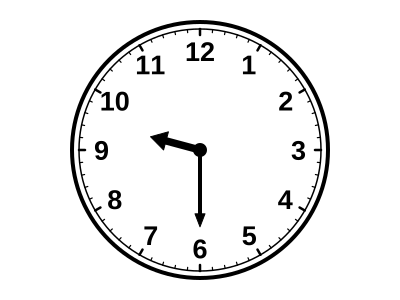
      A clock with the short hand halfway between 9 and 10 and the long hand on 6. ____
    3. 3.
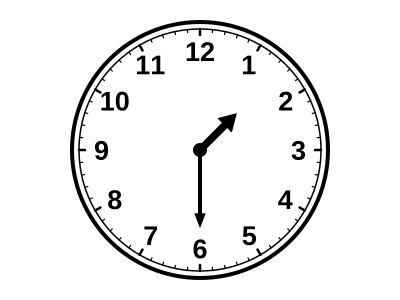
      A clock with the short hand halfway between 1 and 2 and the long hand on 6. ____
    4. 4.
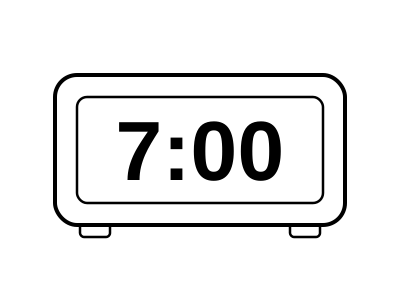
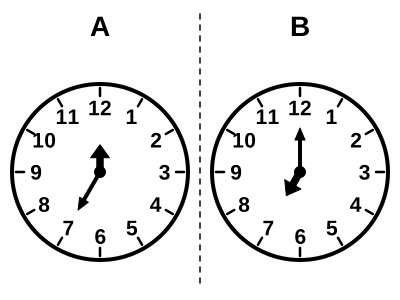
      A digital clock showing 7:00. Picture A: short hand on 12, long hand on 7; picture B: short hand on 7, long hand on 12. Circle the clock that matches.
      • A
      • B

    Draw the hands.

    1. 5.
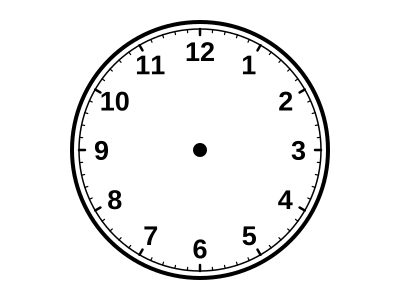
      A blank clock face with the numbers 1 to 12. Draw the hands for 5:00.
    2. 6.
      A blank clock face with the numbers 1 to 12. Draw the hands for 11:30.
    3. 7.
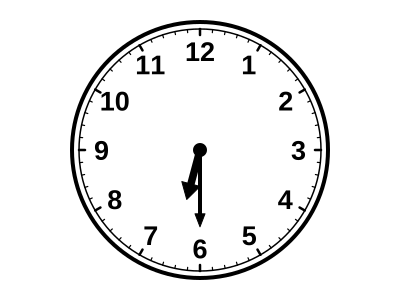
      A clock with the short hand halfway between 6 and 7 and the long hand on 6. Circle the time.
      • 6:30
      • 7:30
      • 6:00

    Challenge (optional)

    It is 12:30. What time will it be in one hour? Write it the digital way.

    You need: Pencil

    Reading & Writing · Week 30 Day 4

    I can share our research and answer questions.

    Look: sharing and answering questions

    1. Say the question, then read the facts and the closing.
    2. When a listener asks a question, answer in a full sentence.
    3. Tell where the fact came from: a text or our bean.

    Ask and Tell

    Kim: Why is the plant by the window? Max: It needs light. Our bean turned to the window!

    Read it. Circle the best answer.

    1. 1.
      Why is the plant by the window?
      • It needs light.
      • It is wet.
    2. 2.
      Who asked?
      • Kim
      • Max
    3. 3.
      What did the bean do?
      • It turned to the window.
      • It fell in the pot.
    4. 4.
      Which one asks?
      • What does a seed need?
      • A seed needs water.

    Write a question about plants. Then write an answer.

    1. 5.
      How ____?
    2. 6.
      Why ____?
    3. 7.
      It is because ____.

    Challenge (optional)

    The best part was ____.

    Science · Unit test

    Today is the unit test. Open it to read the directions, print the child's pages and score it.

    Open the Science unit test