1First Grade

    My own survey

    -ing endings

    Practice pages

    0 of 180 days complete · Saved on this device

    View all 180 days

    Math

    My own survey

    I can ask a question and collect data.

    Standards: 1.MD.C.4

    Number practice (no timer)
    Mixed facts within 20 (keep-up practice)
    Builds on
    Week 29 (tallies and graphs). One-minute check: draw 2 bundles of 5 and 1 mark. "How many?" (11)

    New words

    • question: what we ask in a survey; for our tally chart it has exactly 3 choices
    • total: how many answers there are in all

    You need

    • Notebook and pencil
    • A clipboard, or a hard book to write on
    • A phone for calling a relative (optional, with an adult)
    1. Warm-Up · 5 min

      Fluency: mixed facts within 20, any strategy. "9 + 6?" (15) "14 - 8?" (6) "7 + 7?" (14) Spaced review from Week 28: "Where is the long hand at half past 4?" (On 6)

    2. Mini-Lesson · 10 min

      Say: "Today you are the data collector. You will write your own survey question." Say: "A good survey question has 3 rules: everyone can answer it, it has exactly 3 choices, and each person answers once." Read two examples. 1) "Which do you like best: pancakes, waffles or cereal?" Ask: "Good question?" (Yes. It has 3 choices.) 2) "What is your favorite food?" Ask: "Good question for our 3-row chart?" (No. People could name lots of foods.) Help your child choose a question and 3 choices, such as "Which do you like best: the beach, the park or the zoo?" Your child writes the question at the top of a page and makes a tally chart with 3 rows. Your child may draw a small picture next to each choice.

    3. Guided Practice · 10 min

      Practice Asking. You pretend to be 3 different people, using funny voices. Your child asks the question, listens, says the answer back ("You chose the park") and makes one tally mark. Then cross out the practice marks or start a fresh chart. Ask: "How many marks should there be for 3 people?" (3) If stuck, say: "One person, one mark. Say the answer back, then mark it."

    4. Play · 10 min

      Collect the Data. Your child asks 8 to 10 people the survey question: family members, a neighbor (with an adult), or a relative by phone or video call. If fewer than 8 people can be asked today, finish tomorrow before Day 2's lesson. Your child counts each row and writes the number, then finds the total. Answers vary. Look for: one mark per person, bundles of 5 crossed, and a total that matches the number of people asked. Keep the tally chart for Day 2.

    5. Exit Ticket · 3-5 min

      Read each question aloud. Your child answers out loud or with a quick drawing. Check each answer together right away.

    Exit ticket

    1. Is "What is your favorite animal?" a good question for our 3-row tally chart? Why?
    2. You asked 9 people. How many tally marks should your chart have in all?
    3. Show 12 with tally marks.
    Answers
    1. No. People could name many different animals. Give 3 choices, such as cats, dogs or birds.
    2. 9
    3. Look for: 2 bundles of 5 and 2 more marks.
    Watch for, and help or stretch
    Watch for
    Letting one person give two answers, or making two marks for one person.
    Try
    Your child writes each person's name in a list and checks it off after marking their answer.
    Extra help
    Choose the question together from 3 ready-made ones. You write the choices; your child makes the tally marks.
    Stretch
    Your child asks a second question to the same people and compares: "Did more people answer this one the same way?" (Answers vary.)

    At home (optional): Your child finishes asking the survey question to anyone not yet asked and counts the total.
    Reading & Writing

    -ing endings

    I can read words that end in -ing.

    Standards: RF.1.3.f, L.1.4.c, RF.1.3.e

    Phonics
    Inflectional ending -ing (jumping, reading, playing) and Unit 5 ending review
    Sight words
    around, three, small, end, another
    Reading
    Our class research pages; original text "Plants Help Us"
    Writing
    Shared research: publish and present the plant research · Handwriting: neat published page
    Builds on
    -ed endings and root words (Week 29). One-minute check: your child reads jumped and played and tells the root of each.

    New words

    • -ing: an ending that shows something is happening now or keeps going
    • action: something you do, like jump or play
    • shelter: a safe place to live or rest

    You need

    • Word cards (index cards): jump, jumps, jumped, jumping, play, plays, played, playing
    • Word cards (index cards): resting, fishing, helping, kicking, sleeping, painting, standing, mixing, eating, melting
    • Sight word cards: around, three, small, end, another (5 index cards)
    • Printed "Plants Help Us" (in the lesson)
    • The draft fact page, the bean plant and the bean journal (from Week 29)
    • Lined handwriting paper
    1. Phonics & Word Work · 15 min

      I do: lay down jump and add -ing: jumping. Say: "-ing means it is happening now or keeps going. I am jumping." Jump in place while you say it. Then line up the whole family: jump, jumps, jumped, jumping. Read each and point to jump inside each one. Clap jumping: jump | ing, two beats; -ing adds a syllable. Do the same with play: play, plays, played, playing. We do: read resting, fishing and helping together; your child acts out each one while saying "I am ___." You do: your child reads kicking, sleeping, painting, standing, mixing, eating, melting and tells the root of each (kick, sleep, paint, stand, mix, eat, melt). Your child acts out 3 of them. Read: "The dog is jumping. Yesterday the dog jumped." Dictation: say each word; your child writes the root, then -ing: resting, playing, mixing. If stuck, cover -ing, read the root, then uncover it and add /ing/: "rest... rest-ing."

    2. Sight Words · 5 min

      Introduce this week's words with see-say-spell-write. For each card: Say: "This word is ___. Say it with me." Your child reads it, spells it aloud while tapping each letter, writes it once while saying each letter, and reads it again. Draw a small heart over any part we must learn by heart: around (a says /uh/: heart over the first a; round is regular with ou); three (thr and ee, regular); small (all says /awl/ as in all: heart over a); end (regular); another (a says /uh/ and o says /u/: hearts over a and o; th and er are regular). Finish by reading all five cards in mixed order twice. If stuck, cover the tricky part, read the rest together, then uncover it and say the whole word.

    3. Read-Aloud & Shared Reading · 15 min

      Say: "This week we finish our research about what plants need. First, let's read a new text about how plants help us." Echo-read the decodable text: you read a line, your child reads it back. Plants Help Us Plants help us in lots of ways. Here are three ways. First, plants give us things to eat. We eat beans, corn, peas, plums and nuts. Oats and wheat come from plants too. Next, trees give us shade. Shade is a dark spot out of the hot sun. On a hot day, it feels good to rest in the shade. Last, trees give birds and bugs shelter. Birds make nests in the branches. Bugs hide in the bark. A shelter is a safe place to live and rest. Look up! Birds are resting and singing in the branches. Plants are helping us each day. So let us help plants! Keep planting seeds and watering them. Ask: "What are the three ways plants help us?" (Plants give us things to eat; trees give us shade; trees give birds and bugs shelter.) Ask: "Find two -ing words in the last lines." (Answers vary. Look for: two of resting, singing, helping, planting, watering.) Then your child reads the draft fact page from Week 29 aloud. Ask: "Is our bean plant growing? What do you see?" (Answers vary. Look for: a true observation, such as it has more leaves.) If stuck on a word, point to the root first.

    4. Writing & Handwriting · 15 min

      Your child adds a bean journal page with an -ing word: "Day ___: My bean is ___." (Answers vary. Look for: growing, standing up, sprouting or another -ing word that fits.) Then your child rereads the draft and circles any word to fix next time (spelling or a missing period). Handwriting (4 min): the letters i, n and g. g dips below the line with a hook. Your child writes -ing 5 times and the word growing twice.

    5. Exit Ticket · 5 min

      Oral answers. Your child reads the words from a card you write.

    Exit ticket

    1. Read these words: dusting, peeking, rocking.
    2. What is the root word in sprouting?
    3. Which word tells it is happening now: yelled or yelling?
    Answers
    1. dusting, peeking, rocking
    2. sprout
    3. yelling
    Watch for, and help or stretch
    Watch for
    Reading the root and guessing a different ending (reading jumped for jumping).
    Try
    Run a finger to the very end of the word: "Look at the ending. Is it -s, -ed or -ing?"
    Extra help
    Read only the jump and play families today and act out each one.
    Stretch
    Your child makes a web for a new root word, such as rest, with all three endings (rests, rested, resting).

    At home (optional): Your child reads "Plants Help Us" to a family member and acts out one -ing word.

    Social Studies

    Spend, save or share?

    I can make a money choice and give reasons for it.

    Standards: D2.Eco.10.K-2, D2.Eco.2.K-2, D4.1.K-2

    Builds on
    Why people save (Week 27). One-minute check: ask "Name one reason people save." (Answers vary: for something big, for later, to help others.)

    New words

    • spend: to use money to buy something
    • save: to keep money now to use later
    • share: to give some to help others
    • reason: why you think or do something

    You need

    • 3 clean plastic jars or plastic cups labeled Spend, Save and Share
    • 10 pretend coins (paper circles) or 10 real coins
    • A Money Plan page: a sheet with 3 boxes labeled Spend, Save, Share and a line under each for a reason
    • Pencil and crayons
    1. Warm-Up / Wonder · 5 min

      Spaced review: ask: "What is a cost?" (what you give up when you make a choice) Wonder question: "If you had 10 coins, what would you do with them?" Safety: coins and other small objects are a choking hazard for children under 3. Keep them away from little brothers and sisters, and coins never go in mouths.

    2. Explore · 10–15 min

      Say: "When people get money, they choose what to do with it. They can spend some now, save some for later, and share some to help others." Talk about each jar. Spend: buying something now, like a small treat. Save: keeping money for a bigger goal later, like a ball or a book. Share: giving to help others, like the animal shelter, a food bank, or a friend's fundraiser. Ask: "Why do people save?" (Answers vary: to buy something bigger later, to be ready for surprises.) Give your child the 10 coins. Your child splits them among the 3 jars any way they like. Count each jar together. Check that the jars add up to 10 (for example, 4 + 4 + 2 = 10). Now the reasons. Say: "A good plan has reasons." Ask: "Why did you put that many in Save?" (Answers vary. Look for: a goal, such as a book.) Ask for 2 reasons for the whole plan. Then talk about benefits and costs: ask "What is a benefit of spending more now?" (Answers vary: you get a treat today.) "What is the cost?" (Answers vary: less to save for the big goal.) "What is a benefit of saving more?" (Answers vary: you reach your goal sooner.) Your child may move coins after hearing the benefits and costs. Say: "There is no one right plan. A good plan has reasons." If stuck giving a reason, offer a frame: "I put ___ in Save because I want ___."

    3. Talk & Record · 5–10 min

      Your child fills the Money Plan page: draws the coins in each box and writes or tells a reason under each. Sentence frame: "My plan is ___ because ___ and ___."

    4. Exit Ticket · 3–5 min

      Ask the three questions aloud. Your child answers by talking or drawing.

    Exit ticket

    1. Maya has 10 coins. She puts 5 in Spend and 3 in Save. How many are left for Share?
    2. Why might someone save money instead of spending it now?
    3. Give one reason for your own plan.
    Answers
    1. 2 coins (5 + 3 + 2 = 10).
    2. Answers vary. Look for: to buy something bigger later, or to be ready for something they might need.
    3. Answers vary. Look for: a reason that matches the plan.
    Watch for, and help or stretch
    Watch for
    Putting all coins in Spend with the reason "because I want to."
    Try
    Accept it, then ask: "What would you be able to buy next month?" Talk about one benefit of saving a few.
    Extra help
    Use 6 coins and 2 jars, Spend and Save.
    Stretch
    Your child makes a second plan for a big goal and compares the two plans' benefits and costs.

    At home (optional): Your child tells a family member the money plan and two reasons for it.

    Practice

    Read each direction aloud. Your child works on the page; answers are in the grown-up view.

    Warm-up

    Remember?

    Math

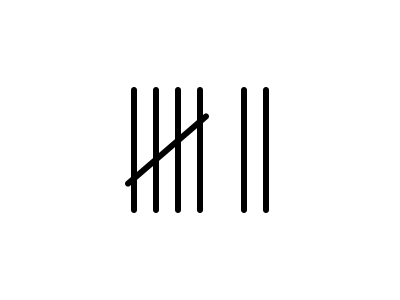
    1. Tally marks: one bundle of 5 and 2 more marks. How many does this tally show?
    2. 67 + 2 = ?

    Reading & Writing

    1. camped, rested, peeked

    Math · Week 30 Day 1

    I can ask a question and collect data.

    Look: a good survey question

    1. A good survey question: everyone can answer it, it has exactly 3 choices, and each person answers once.
    2. "Which do you like best: rain, snow or sun?" has 3 choices. It is a good question.
    3. Make one tally mark for each person who answers.

    Is it a good question for a 3-row tally chart? Circle yes or no.

    1. 1.
      What is your favorite song?
      • yes
      • no
    2. 2.
      Which do you like best: tacos, soup or pizza?
      • yes
      • no
    3. 3.
      Which pet do you like best: a cat, a dog or a fish?
      • yes
      • no

    Count and draw tally marks.

    1. 4.
      10 people each answer your question once. You make 1 mark for each answer. How many marks go on the chart? ____
    2. 5.
      Draw tally marks for 14.
    3. 6.
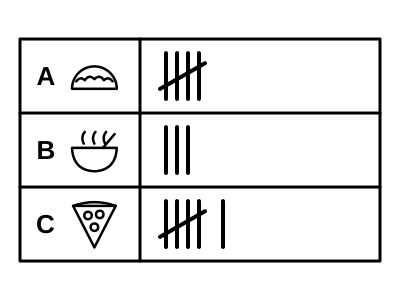
      A tally chart: A, tacos: 1 bundle of 5 (4 marks with a line across). B, soup: 3 marks. C, pizza: 1 bundle of 5 (4 marks with a line across) and 1 more mark. What is the total number of votes? ____
    4. 7.
      Tell your own survey question with 3 choices. A grown-up writes it here.

    Challenge (optional)

    In the tally chart above, 2 more people choose soup. How many chose soup now? Which choice has the fewest now?

    You need: Pencil

    Reading & Writing · Week 30 Day 1

    I can read words that end in -ing.

    Look: -ing endings

    1. jump + ing = jumping. -ing means it is happening now or keeps going.
    2. Clap it: jump-ing. -ing adds a beat.
    3. To find the root, cover -ing: jumping, jump.

    At the Park

    Kids are playing at the park. A boy is jumping. Three girls are singing. A dog is resting in the shade. Mom is reading on the grass.

    Add -ing. Write the new word.

    1. 1.
      sweep ____
    2. 2.
      toss ____
    3. 3.
      float ____
    4. 4.
      buzz ____

    Read the word. Write the root word.

    1. 5.
      boiling ____
    2. 6.
      drifting ____
    3. 7.
      dreaming ____
    4. 8.
      pointing ____

    Challenge (optional)

    I am ____ now.

    Social Studies · Week 30 Day 1

    I can make a money choice and give reasons for it.

    Look: a money plan

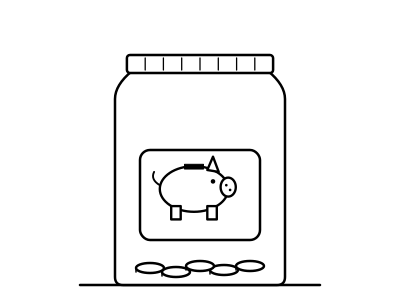
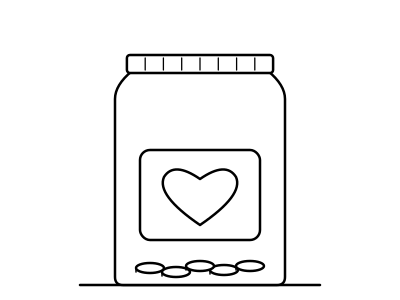
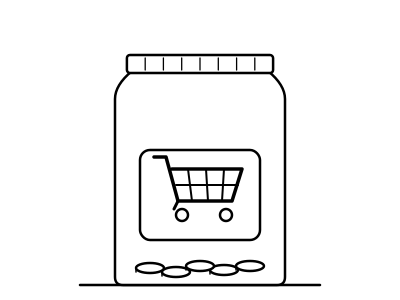
    1. When people get money, they choose. They can spend some now, save some for later and share some to help others. On this page, the jar with a cart means spend, the jar with a piggy bank means save and the jar with a heart means share.
    2. Split the coins into the 3 jars and count each jar. They must add up to the whole amount.
    3. A good plan has reasons. There is no one right plan.

    Listen. Circle the jar: the cart for spend, the piggy bank for save or the heart for share.

    1. 1.
      Buy a small treat today.
      • A jar with a shopping cart on it.
      • A jar with a piggy bank on it.
      • A jar with a heart on it.
    2. 2.
      Keep money for a new ball later.
      • A jar with a shopping cart on it.
      • A jar with a piggy bank on it.
      • A jar with a heart on it.
    3. 3.
      Give money to the animal shelter.
      • A jar with a shopping cart on it.
      • A jar with a piggy bank on it.
      • A jar with a heart on it.
    4. 4.
      Keep money in case you need new boots.
      • A jar with a shopping cart on it.
      • A jar with a piggy bank on it.
      • A jar with a heart on it.

    Count the coins and talk. Write what your child says.

    1. 5.
      Ana has 10 coins. 7 go in Save and 1 goes in Spend. How many go in Share?
    2. 6.
      Leo has 10 coins. 5 go in Save and 2 go in Share. How many are left for Spend?
    3. 7.
      What is one benefit of saving more coins?
    4. 8.
      What is a cost of spending all 10 coins today?

    Challenge (optional)

    Make a different plan for 10 coins. Check that your jars add up to 10.

    You need: 10 pretend coins