This week's lessons
Math and reading every day; science and social studies take turns
- Day 1 · Monday
- MathYear review: adding within 100I can add within 100 and find 10 more or 10 less.
- Reading & WritingTricky wordsI can read many tricky words quickly and correctly.
- ScienceFoil boat challengeI can build two boats and test which holds more pennies.
- Day 2 · Tuesday
- MathYear review: subtracting tensI can subtract tens and explain.
- Reading & WritingMixed pattern readingI can read a story with many phonics patterns.
- Social StudiesTell what we didI can explain our project in order and answer questions about it.
- Day 3 · Wednesday
- MathYear review: length and timeI can measure lengths and tell time.
- Reading & WritingRehearseI can practice my presentation with clear speaking.
- ScienceBoat data talkI can compare two boats with my data.
- Day 4 · Thursday
- MathYear review: dataI can make a graph and answer questions.
- Reading & WritingFeedbackI can use feedback to improve my presentation.
- Social Studies · CheckYear review: rules, communities and mapsI can remember what I learned about rules, communities and maps.
- Day 5 · Friday
- Math · CheckLesson + weekly check: numbers, measurement and dataI can show what I know about numbers to 100, length, time and data.
- Reading & Writing · CheckShare and check: tricky wordsI can read and spell sight words from the year and read contractions.
- Science · CheckMy engineering journalI can show my whole design process.
This week's checks
Short checks on the last day each subject meets this week
Social Studies · Day 4
- I can explain our project in order and answer questions about it.
- I can remember what I learned about rules, communities and maps.
Secure when: 7 of 9 correct, with at least one right on each goal
Open the checkMath · Day 5
- I can add within 100 and subtract tens.
- I can find 10 more or 10 less.
- I can tell time to the hour and half hour.
- I can measure length with paper clips.
- I can answer questions about a graph.
Secure when: 7 or 8 of the 8 items right.
Open the checkReading & Writing · Day 5
- I can read and spell sight words from the year.
- I can read contractions and tell the two words they stand for.
- I can read a story with many patterns.
- I can tell a Glow from a Grow.
Secure when: 16 of 20 words read in items 1-2, 4 of 5 spelled in items 3-7 (the lesson's pass rule), and 5 of 6 contractions read with their two words in item 8. Items 9-10 should both be right; a miss there goes into Week 36 warm-ups.
Open the checkScience · Day 5
- I can build two boats and test which holds more pennies.
- I can compare two boats with my data.
- I can show my whole design process.
Secure when: 6 of 8 correct, including at least 3 of items 1 to 4 (the walk-through of the problem, sketches, data and improvement).
Open the check
Reading About Our World: Why Boats Float
Read it aloud. Your child reads the sentences marked with a star. Builds science knowledge.
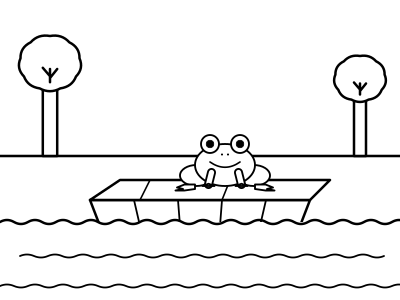
Sink or Float?
Squeeze a sheet of foil into a tight, hard ball and drop it in water. It sinks! Now shape a sheet of foil the same size into a flat boat with sides. It floats!
Shape Matters
A boat shape pushes aside a lot of water. The water pushes back up on the boat and holds it up. A raft can float.
Engineers and Boats
Engineers design boats that float and carry heavy loads, like cars and food. They test their designs to see how much each boat can hold. The boat did not sink.
Words to know
- float: stay on top of water
- sink: go down under water
- load: the things a boat carries
Talk about it
- What happens to a tight ball of foil in water?
- What holds a boat up?
- Two foil boats are made from the same foil. One has tall sides and one has no sides. Which can likely hold more pennies? Why?
Home Connection
Five-minute ideas for the whole family, with things you already have
Math
We can add within 100, subtract tens, measure, tell time and answer questions with data.
Do: Have a family math day: measure a table with spoons laid end to end, tell the time at lunch, and ask a 3-choice question to make a graph.
Talk: What did you measure, and how many spoons long was it?
Reading & Writing
Some words are tricky and must be learned by heart.
Do: Make two cards for each of this week's words and play Memory, reading each card you turn over.
Talk: Which tricky word is hardest for you? What helps you remember it?
Science
Testing with data helps us choose the best design.
Do: In the sink or a plastic tub, shape a square of foil into a boat and add pennies one at a time until it sinks. Try a second shape. Keep pennies away from children under 3.
Talk: Which boat shape held more pennies?
Social Studies
We can tell what we did to help and remember what we learned about rules, communities and maps.
Do: Your child tells a relative about the community project, in order from start to finish.
Talk: What was the best part of helping?
This week's words: animal, house, mother, found, still
Celebrate a family math day, a tricky word learned and a foil boat test.
Math catch-up: Say Tens or Ones Out Loud
10 minutes, if this week's math check was not secure · 1.NBT.C.4
In the year review, children mix up adding ones and adding tens (71 + 5 = 121) and answer tens problems in ones (70 - 50 = 2). Saying 'tens' or 'ones' out loud before solving fixes most slips.
You need: 100 straws or craft sticks, 10 rubber bands, paper and a pencil
- Write 66 + 3 and 66 + 30. Your child reads each one and says "ones" or "tens" for the second number.
- Build 66 and add 3 loose straws: 69. Build 66 again and add 3 bundles: 96.
- Write 50 - 40. Say it as tens: "5 tens take away 4 tens is 1 ten." Ask: "How do we write 1 ten?" (10)
- Your child makes up one adding-ones problem and one adding-tens problem for you to solve, and checks your answers.
Try again
- 52 + 4 = ___
- 52 + 40 = ___
- 70 - 30 = ___
Specials This Week
Weeks 31–36 unit • ~90 min/week per subject
Games, Cooperation, and Safety
Participating in cooperative games, understanding rules, demonstrating sportsmanship, identifying safe practices in physical activity.
Art and Storytelling
Creating art that tells a story, illustrating favorite books, connecting art to nature and emotions.
Music and Storytelling/Performance
Creating music to tell a story, composing simple rhythmic patterns, preparing and presenting a short musical performance.
For guiding principles and full standards reference, visit How to use this curriculum
As an Amazon Associate, we earn from qualifying purchases. Book and supply links on this page are affiliate links — using them supports this curriculum at no extra cost to you.