Math
Year review: adding within 100
I can add within 100 and find 10 more or 10 less.
Standards: 1.NBT.C.4, 1.NBT.C.5
- Number practice (no timer)
- Facts within 10 (keep-up practice)
- Builds on
- Unit 4 (Weeks 19 to 22: 10 more and 10 less, adding tens and adding ones). One-minute check: "10 more than 52?" (62) "52 + 6?" (58)
New words
- new ten: 10 ones traded for 1 ten when adding the ones makes 10 or more
You need
- Tens and ones kit: 9 tens and 20 ones. Use straw bundles of 10 (a rubber band around each) and loose straws, base-ten rods and unit cubes, or paper ten-strips (strips of 10 squares, cut by an adult) with beans as ones
- Hundred chart to 120: printed, or drawn as 12 rows of 10 boxes (1 to 10 in the top row, 111 to 120 in the bottom row)
- 2 dice
- 2 game pieces (a coin and a button)
- Notebook and pencil
- Beans, cubes, buttons, coins and dice are small parts: keep them away from children under 3.
Warm-Up · 5 min
Fluency: facts within 10. "6 + 3?" (9) "10 - 2?" (8) "4 + 6?" (10) Spaced review from Week 34: "What number is 8 tens and 3 ones?" (83)
Mini-Lesson · 10 min
Say: "We learned three kinds of adding within 100." 1) Adding tens: "34 + 20." Build 34. Add 2 tens. "3 tens and 2 tens are 5 tens. The ones stay 4." (54) On the chart, start at 34 and move down 2 rows. 2) Adding ones with no new ten: "52 + 6. 2 + 6 = 8, so 58." 3) Adding ones with a new ten: "47 + 8. 7 + 8 = 15. That is a new ten and 5 ones. 40 + 15 = 55." Draw the quick picture: 4 sticks and 7 dots, then 8 more dots; circle 10 dots to make a new stick. (5 sticks and 5 dots: 55) Then 10 more and 10 less in your head: "10 more than 63?" (73) "10 less than 63?" (53)
Guided Practice · 10 min
Your child solves each one with the kit, a quick picture or the chart, and tells which kind it is. 1) 26 + 30 (56; adding tens) 2) 71 + 5 (76; ones, no new ten) 3) 38 + 7 (45; new ten) 4) 40 + 47 (87; adding tens) 5) 59 + 6 (65; new ten) 6) 10 more than 88 (98) 7) 10 less than 30 (20) 8) 64 + 9 (73; new ten) If stuck, say: "Add the ones first. Is it 10 or more? Then you need a new ten."
Play · 10 min
Climb to 100. Each player starts at 0, off the chart, just before 1. On your turn, roll both dice but use only one of them: add that many ones or that many tens. Say the equation and move your piece. You must land exactly on 100. If neither die can be used without passing 100, pass. Model the best move: you are at 47 and roll a 5 and a 3. Think out loud: "47 + 50 = 97, 47 + 30 = 77, 47 + 5 = 52, or 47 + 3 = 50. 97 gets me closest to 100 without going over, so I take 5 tens: 97." Then say: "Next turn I need exactly 3 ones." Use the kit or a quick picture to check any new ten. Play 2 games.
Exit Ticket · 3-5 min
Put the objects to one side but leave them on the table. Read each question aloud. Your child answers out loud, with objects or with a quick drawing. Check each answer together right away.
Exit ticket
- 53 + 30 = ?
- 29 + 4 = ?
- What is 10 less than 76?
Answers
- 83
- 33
- 66
Watch for, and help or stretch
- Watch for
- Adding a ones number to the tens, such as 71 + 5 = 121.
- Try
- Ask: "Is 5 a tens number or a ones number?" Build it with the kit.
- Extra help
- Use the kit for every problem, trading 10 loose ones for a ten out loud.
- Stretch
- Ask: "You are at 68 and roll a 4 and a 2. What is your best move? Why?" (Add 2 tens: 68 + 20 = 88. 4 tens would pass 100, and 88 is closer to 100 than 72 or 70.)
At home (optional): Your child plays Climb to 100 with a family member, using dimes for tens and pennies for ones if you like.
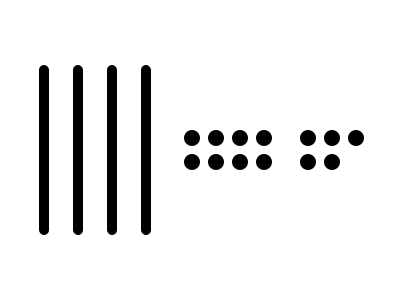 What is the answer? ____
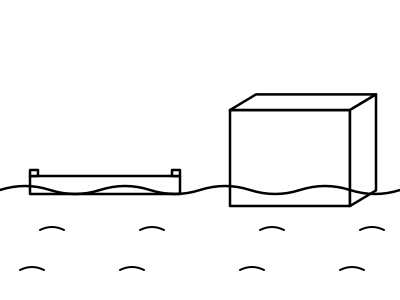 Which boat will keep water out better?
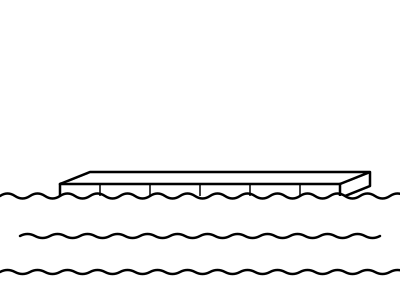
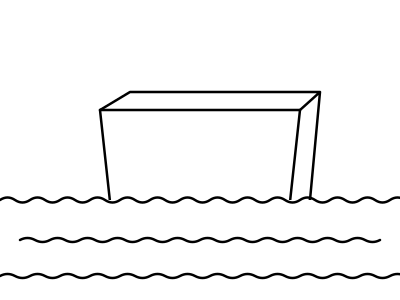
 Is this boat about to sink?