1First Grade

    Lesson + weekly check: numbers, measurement and data

    Share and check: tricky words

    Practice pages

    0 of 180 days complete · Saved on this device

    View all 180 days

    MathWeekly check

    Lesson + weekly check: numbers, measurement and data

    I can show what I know about numbers to 100, length, time and data.

    Standards: 1.NBT.C.4, 1.NBT.C.6, 1.MD.B.3, 1.MD.C.4

    Number practice (no timer)
    Facts within 10 (keep-up practice)
    Builds on
    Week 35 review: adding within 100, 10 more and 10 less, subtracting tens, length, time and data. One-minute check: "10 more than 46?" (56) "60 - 20?" (40)

    New words

    • mixed review: practice with many different kinds of problems

    You need

    • Tens and ones kit: 9 tens and 20 ones. Use straw bundles of 10 (a rubber band around each) and loose straws, base-ten rods and unit cubes, or paper ten-strips (strips of 10 squares, cut by an adult) with beans as ones
    • Hundred chart to 120: printed, or drawn as 12 rows of 10 boxes (1 to 10 in the top row, 111 to 120 in the bottom row)
    • The paper plate clock from Week 27
    • 1 die
    • 16 review cards made from paper squares, in 4 piles (written in the lesson)
    • A bar graph an adult draws: Lunch Choice. Soup 4, Salad 2, Pasta 7.
    • Notebook and pencil
    • The stored Week 35 check and its answer key
    • Beans, cubes, dice and the paper fastener on the clock are small parts: keep them away from children under 3.
    1. Warm-Up · 5 min

      Fluency: facts within 10. "2 + 7?" (9) "8 - 6?" (2) Spaced review from Week 33: "How many halves make a whole?" (2)

    2. Short Lesson: Review Game · 10 min

      Roll and Review. Roll the die. 1 or 2: take an adding card. 3: take a subtracting tens card. 4 or 5: take a clock card. 6: take a graph card. Your child solves the card for 1 point, then puts it on the bottom of its pile. Adding cards: 45 + 30 (75), 62 + 7 (69), 28 + 6 (34), 50 + 40 (90), 37 + 9 (46), 81 + 8 (89). Subtracting tens cards: 90 - 60 (30), 70 - 20 (50), 40 - 10 (30). Clock cards: "Set 9:00." "Set half past 2." "Read 6:30 and set it." "Read 11:00 and set it." Graph cards (use the Lunch Choice graph): "How many in all?" (13) "How many more chose pasta than soup?" (3) "Which got the fewest votes?" (Salad) Play 8 rolls. If stuck, say: "Which tool helps with this kind of card: the kit, the chart, the clock or the graph?"

    3. Weekly Check · 15 min

      Give the stored Week 35 check. The printed check has 8 items. It covers these goals: (1) I can add within 100 and subtract tens; (2) I can find 10 more or 10 less; (3) I can tell time to the hour and half hour; (4) I can measure length with paper clips; (5) I can answer questions about a graph. Read each item aloud. There is no time limit. Your child may use the kit, the chart, quick pictures or the paper clock. If your child is stuck, say only: "Which tool could help?" Do not give the answer. Score it with the answer key. Secure: 7 or 8 of the 8 items right. If the check is secure, start Week 36. If it is not, first do the reteach step on the check page for each group of items missed, then start Week 36.

    4. Exit Ticket · 3-5 min

      After the check, ask these two questions. Then go over any missed check items together.

    Exit ticket

    1. 56 + 20 = ?
    2. At half past 8, where does the long hand point?
    Answers
    1. 76
    2. To 6
    Watch for, and help or stretch
    Watch for
    Treating a tens problem like a ones problem, such as 45 + 30 = 48.
    Try
    Ask: "Is 30 tens or ones?" Build it with 3 tens.
    Extra help
    Let your child use the kit for every adding item and the paper clock for every clock item, and note it on the check.
    Stretch
    After the check, ask: "Write an adding problem with a new ten that equals 52." (Answers vary, such as 45 + 7 or 48 + 4.)

    At home (optional): Your child plays Roll and Review with a family member using the same cards.
    Reading & WritingWeekly check

    Share and check: tricky words

    I can read and spell sight words from the year and read contractions.

    Standards: RF.1.3.g, L.1.2.d, RF.1.3

    Phonics
    Contractions: an apostrophe shows letters left out (can't, it's, I'm, don't, isn't, let's), with cumulative review: tricky (irregular) words and mixed patterns
    Sight words
    animal, house, mother, found, still
    Reading
    Original decodable story "Mother Hen and the Lost Chick" reviewing all patterns
    Writing
    Showcase: rehearse the presentation · Handwriting: name and date
    Builds on
    This week's tricky words and contractions. One-minute check: warm up with said, was, can't, it's.

    New words

    • heart word: a word with a part we learn by heart

    You need

    • The printed Week 35 check (20 sight words to read, 5 to spell, 6 contractions and a short story)
    • 12 game cards (index cards): said, was, they, people, water, again, once, were, could, because, mother, animal
    • Sight word cards: animal, house, mother, found, still, picture, change, off, play, away
    • The 12 contraction cards from Days 1 to 4
    • Recording sheet
    • The showcase piece, the poster, the note card and the name tag
    • Lined paper and a pencil
    1. Review Game · 10 min

      Heart Word Hop: lay 12 cards on the floor: said, was, they, people, water, again, once, were, could, because, mother, animal. Your child hops to a card, reads it and points to the heart part. (Answers vary. Look for: the tricky part, such as ai in said, a in was, o in mother.) Your child then spells said, they and mother with eyes closed. If stuck on a word during the game (not during the check), say the word, point to its heart part, and have your child say it and spell it aloud, then come back to that card at the end.

    2. Sight Words · 5 min

      Review: animal, house, mother, found, still, picture, change, off, play, away. Flashlight Read: dim the lights; your child shines a flashlight on a card and reads it.

    3. Weekly Check · 15 min

      Give the printed Week 35 check: 10 items. Its goals: I can read and spell sight words from the year. I can read contractions and tell the two words they stand for. I can read a story with many patterns. I can tell a Glow from a Grow. Items 1-2: your child reads 20 sight words from the whole year. Items 3-7: your child writes 5 sight words from your dictation; say each word, use it in a sentence, and say it again. Item 8: your child reads 6 contractions and tells the two words for each. Items 9-10: a short story question and a Glow or Grow. Give no hints. Record each answer. Add any missed words to the Still Learning pile for Week 36. The check's pass rule: "Secure: 16 of 20 words read in items 1-2, 4 of 5 spelled in items 3-7 (the lesson's pass rule), and 5 of 6 contractions read with their two words in item 8. Items 9-10 should both be right; a miss there goes into Week 36 warm-ups."

    4. Share & Listen · 10 min

      Dress rehearsal: your child wears the name tag and gives the whole presentation to a listener, following the plan. The listener asks one question; your child answers in a complete sentence.

    5. Handwriting · 5 min

      Your child copies Mother Hen found Chip. neatly. Circle the best word.

    6. Exit Ticket · 5 min

      Talk about the week.

    Exit ticket

    1. Read a heart word and tell me its tricky part.
    2. How do you feel about the showcase next week?
    3. Read this word and tell me the two words: don't.
    Answers
    1. Answers vary. Look for: a correct read and a tricky part, such as said: ai says /e/.
    2. Answers vary. Look for: an honest feeling. If your child is nervous, remind them that the family is a friendly audience.
    3. don't: do not
    Watch for, and help or stretch
    Watch for
    Spelling a heart word by sound (sed for said).
    Try
    Before the check (not during it), review the heart part: show said, cover it, and have your child write it, then check.
    Extra help
    Give items 1-2 in two sets of 10 with a stretch between. In items 3-7, let your child say the letters aloud before writing.
    Stretch
    Your child reads 3 bonus words that join a sight word and a pattern word: grandmother, birdhouse, treehouse. Do not score them.

    At home (optional): Your child reads the Still Learning pile to a family member and moves any word read right 3 times to Know It.

    ScienceWeekly check

    My engineering journal

    I can show my whole design process.

    Standards: K-2-ETS1-1, K-2-ETS1-2, K-2-ETS1-3

    Builds on
    All of Unit 6. One-minute check: ask "Name the 6 engineering steps." (ask, imagine, plan, create, test, improve)

    New words

    • process: the steps you follow to do something

    You need

    • Engineering Journal
    • The 6 step cards from Week 31 (Ask, Imagine, Plan, Create, Test, Improve)
    • 6 sticky notes or paper tabs
    • Crayon holder design and the foil boats
    • Week 35 science check page (given separately)
    • Pencil
    1. Warm-Up / Wonder · 5 min

      Spaced review: ask: "What is a weakness?" (something a design does not do well) Wonder question: "Could someone who never saw your project understand it from your journal?"

    2. Review Game · 10 min

      Play "Step Match." Mix the 6 step cards. Your child puts them in order. Then flip through the Engineering Journal together. For each page, your child says which step it shows and sticks a tab on it with the step's name: interview notes (Ask), problem sentence (Ask), two sketches (Imagine and Plan), drawings of A and B as built (Create), tally chart (Test), T-charts (Test), Before and After chart (Improve). If a step has no page, your child adds a quick drawing now. Ask: "Which step did the foil boats use?" (all of them: we planned, created, tested and compared) If stuck naming a step for a page, ask: "Were we building here, testing here or fixing here?"

    3. Check · 10 min

      Give the Week 35 science check. The check items are on the Week 35 check page; do not show them ahead of time. Read each part aloud. Your child answers by talking, pointing, showing with the real materials or drawing. You write down their words exactly. It is not timed; stop and finish later if your child is tired. Make a check mark next to each part your child shows on their own. The printed check has 8 items. It covers these goals: (1) I can build two boats and test which holds more pennies; (2) I can compare two boats with my data; (3) I can show my whole design process. This week the check is an oral walk-through of the Engineering Journal. Look for: your child tells the problem and why it matters (from asking and observing), points to the two sketches and tells how a shape helps, shows the test data and tells one strength and one weakness of each design, and tells what was improved and how the retest came out. If stuck on a part, turn to that journal page and ask: "What did we do on this page?" Secure: 6 of 8 correct, including at least 3 of items 1 to 4 (the walk-through of the problem, sketches, data and improvement). If the check is not yet secure, use the reteach step on the check page that matches the items missed.

    4. Exit Ticket · 3–5 min

      Ask the three questions aloud. Your child answers by talking or drawing.

    Exit ticket

    1. Which step comes right after Test?
    2. Which journal page shows your problem?
    3. What is one thing you would do differently next time?
    Answers
    1. Improve.
    2. Answers vary. Look for: the interview notes or the problem sentence page.
    3. Answers vary. Look for: a real change, such as "I would make the base wider from the start."
    Watch for, and help or stretch
    Watch for
    Skipping the data and telling only about building.
    Try
    Open the tally chart. Ask: "What did the numbers tell us?"
    Extra help
    Tab only 4 steps: Ask, Plan, Create, Test.
    Stretch
    Your child writes a short title for each page and makes a table of contents on the inside cover.

    At home (optional): Your child practices telling the project to a family member using the journal tabs, getting ready for the presentation.

    Practice

    Read each direction aloud. Your child works on the page; answers are in the grown-up view.

    Warm-up

    Remember?

    Math

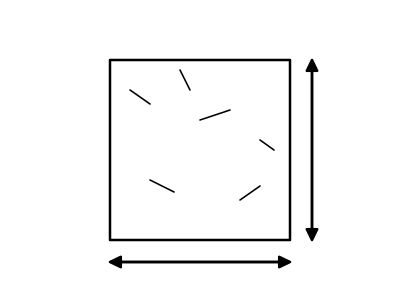
    1. A square is cut into 2 equal parts. What is each part called?
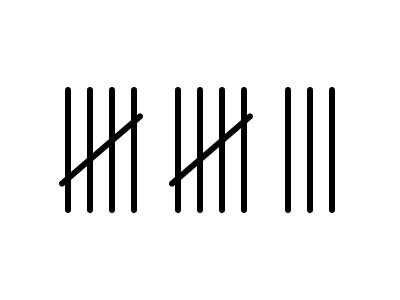
    2. Tally marks: 2 bundles of 5 and 3 more marks. How many does this tally show?

    Reading & Writing

    1. end, another

    Math · Week 35 check

    Weekly check

    How to give it: Read every item aloud, including the graph title and what each bar stands for. It is untimed. Your child may use the kit, the chart, quick pictures or the paper clock. If your child is stuck, say only: "Which tool could help?" Do not give the answer. There are 8 parts. 7 or 8 right: start Week 36. 5 or 6 right: redo the Guided Practice for the part that was missed before Week 36 (Day 1 for adding, Day 2 for subtracting tens, Day 3 for clocks, Day 4 for graphs). 4 or fewer right: redo Day 1 and Day 3 Guided Practice before Week 36.

    Secure when: 7 or 8 of the 8 items right.

    • I can add within 100 and subtract tens.
    • I can find 10 more or 10 less.
    • I can tell time to the hour and half hour.
    • I can measure length with paper clips.
    • I can answer questions about a graph.
    1. 1.
      38 + 40 = ____
    2. 2.
      67 + 5 = ____
    3. 3.
      80 - 30 = ____
    4. 4.
      10 more than 57 is ____.
    5. 5.
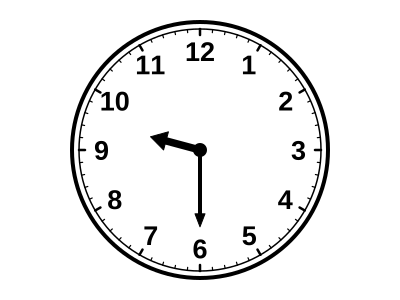
      A clock with the short hand halfway between 9 and 10 and the long hand on 6. Write the time.
    6. 6.
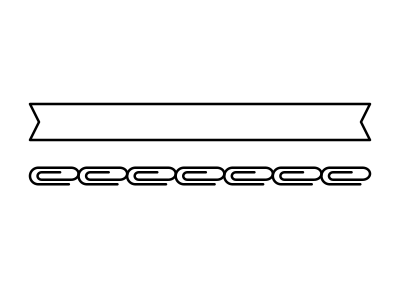
      A ribbon with 7 paper clips under it, end to end, from end to end. The ribbon is ____ paper clips long.
    7. 7.
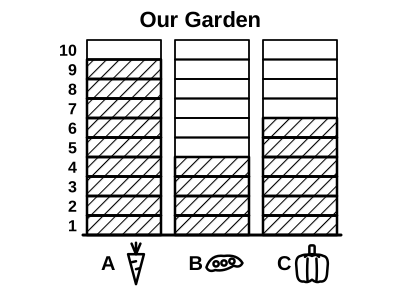
      A bar graph titled Our Garden with numbers 1 to 10 up the side. Bar A, a carrot: 9. Bar B, a bean: 4. Bar C, a pepper: 6. How many plants in all?
    8. 8.
      How many more carrots than beans?

    Reading & Writing · Week 35 check

    Weekly check

    How to give it: Give it in one sitting, untimed. Read each direction aloud and give no hints. For items 1-2, your child reads each word aloud and you tick the ones read right. For items 3-7, say each word, use it in a sentence, and say it again: once (I saw a frog once.), does (Does the dog swim?), some (I have some grapes.), house (My house is red.), water (The water is cold.). For item 8, your child reads each short word and tells the two words it stands for; tick a word only if both are right. Your child reads The Hen before item 9. For item 10, say: Which one is a Grow? Add any missed words to the Still Learning pile for Week 36.

    Secure when: 16 of 20 words read in items 1-2, 4 of 5 spelled in items 3-7 (the lesson's pass rule), and 5 of 6 contractions read with their two words in item 8. Items 9-10 should both be right; a miss there goes into Week 36 warm-ups.

    • I can read and spell sight words from the year.
    • I can read contractions and tell the two words they stand for.
    • I can read a story with many patterns.
    • I can tell a Glow from a Grow.

    The Hen

    A red hen sat in the barn. Rain fell on the farm, so the hen did not go out. She sat still and snug. When the sun came out, she ran to the corn.

    1. 1.
      of to you are what does two any other every
    2. 2.
      give live been put many know their your very only
    3. 3.
      ____
    4. 4.
      ____
    5. 5.
      ____
    6. 6.
      ____
    7. 7.
      ____
    8. 8.
      can't it's I'm don't isn't let's
    9. 9.
      Why did the hen not go out?
      • Rain fell.
      • She was sad.
    10. 10.
      Which one is a Grow?
      • Try to speak up.
      • I like your picture.

    Science · Week 35 check

    Weekly check

    How to give it: Read every direction, question and choice aloud. It is not timed; stop and finish later if your child is tired. Your child answers by talking, pointing, showing with the real materials or drawing, and you write their words exactly. Have the Engineering Journal with step tabs, the 6 step cards, the crayon holder and the foil boats. Your child walks you through the journal and may dictate every answer.

    Secure when: 6 of 8 correct, including at least 3 of items 1 to 4 (the walk-through of the problem, sketches, data and improvement).

    • I can build two boats and test which holds more pennies.
    • I can compare two boats with my data.
    • I can show my whole design process.
    1. 1.
      Open your Engineering Journal. Tell your problem and why it matters. Your grown-up writes it.
    2. 2.
      Point to your 2 sketches. Tell how one shape helps. Your grown-up writes it.
    3. 3.
      Show your test data. Tell one strength and one weakness of each design. Your grown-up writes it.
    4. 4.
      Tell what you improved and how the retest came out. Your grown-up writes it.
    5. 5.
      Put the 6 step cards in order. Make a mark when they are in order.
    6. 6.
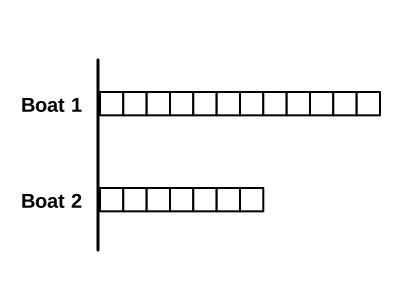
      A bar graph: Boat 1 has 12 squares, Boat 2 has 7 squares. Which boat held more pennies?
      • Boat 1
      • Boat 2
    7. 7.
      Look at the same graph. How many more pennies did that boat hold?
      • 5
      • 7
      • 12
    8. 8.
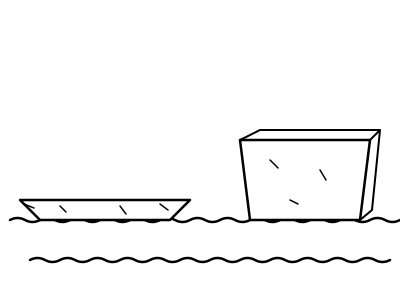
      Your 2 foil boats used the same size of foil. Circle what was different.
      • The 2 boat shapes.
      • The size of the foil.