Math
Year review: length and time
I can measure lengths and tell time.
Standards: 1.MD.A.1, 1.MD.A.2, 1.MD.B.3
- Number practice (no timer)
- Facts within 10 (keep-up practice)
- Builds on
- Unit 5 (Weeks 26 to 28: measuring with paper clips and telling time). One-minute check: "What are the measuring rules?" (Start at the end, no gaps, no overlaps.) "Where is the long hand at half past?" (On 6)
New words
- measure: find how long something is by counting same-size units
You need
- 20 paper clips, all the same size
- The paper plate clock from Week 27
- Objects to measure: a marker, a fork and a hairbrush
- A coin and 1 die for the clock game
- Notebook and pencil
- Paper clips, coins, dice and the paper fastener on the clock are small parts: keep them away from children under 3.
Warm-Up · 5 min
Fluency: facts within 10. "5 + 5?" (10) "7 - 4?" (3) "1 + 8?" (9) Spaced review from Week 21: "44 + 5?" (49)
Mini-Lesson · 10 min
Say: "Today we review two kinds of measuring: length and time." Lay paper clips along the marker as your child says the rules: start right at the end, clips touching with no gaps, no overlaps, in a straight line. Count them together. Say: "The marker is about ___ paper clips long." Then set the paper clock to 7:00 and then to 7:30. Ask: "What changed?" (The long hand moved from 12 to 6, and the short hand moved halfway to 8.)
Guided Practice · 10 min
Part 1: your child measures the fork and the hairbrush with paper clips and writes each sentence. (Answers vary. Look for: the 3 rules.) Then your child lines up the marker, the fork and the hairbrush with their ends even and puts them in order from shortest to longest. (Answers vary. Look for: ends lined up.) Ask: "How many paper clips longer is the hairbrush than the fork?" (Answers vary. Look for: the difference of the two counts.) Part 2: your child reads 4 times. Set the paper clock to 2:00 and then 12:30; write 5:00 and 8:30 for your child to read and set. (2 o'clock; half past 12; 5 o'clock; half past 8) If stuck, say: "For length: where does the first clip go? For time: look at the long hand first."
Play · 10 min
Roll a Time. Roll the die for the hour (1 to 6). Flip the coin: heads means o'clock and tails means half past. Your child sets the paper clock and writes the digital time. Model one turn: roll a 4 and flip tails. Say: "4 and half past: 4:30. Long hand on 6, short hand halfway between 4 and 5." Take turns: you roll and your child sets, then your child rolls and you set, and your child checks you. Play 8 rounds.
Exit Ticket · 3-5 min
Before asking, set the paper clock to 10:30. Then lay 6 paper clips end to end on a sheet of paper, draw a line from the start of the first clip to the end of the last one, and take the clips away. Read each question aloud. Your child answers out loud, with the clips or with a quick drawing. Check each answer together right away.
Exit ticket
- What time does my clock show? Say it two ways.
- How many paper clips long is the line I drew? Measure it.
- Where is the short hand at 3:30?
Answers
- Half past 10, or 10:30
- 6 paper clips
- Halfway between 3 and 4
Watch for, and help or stretch
- Watch for
- Leaving gaps between paper clips, or reading 3:30 as 4:30.
- Try
- For gaps: slide the clips together and count again. For time: ask, "Which number has the short hand passed?"
- Extra help
- Measure only the fork today, and set only o'clock times on the clock before adding half-hour times.
- Stretch
- Your child finds something at home that is between 8 and 12 paper clips long and proves it by measuring.
At home (optional): Your child measures a shoe with paper clips and reads the clock at one half-hour time tomorrow for a family member.
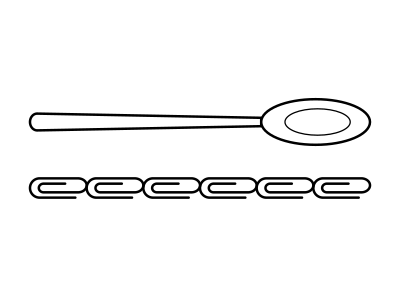 The spoon is ____ paper clips long.
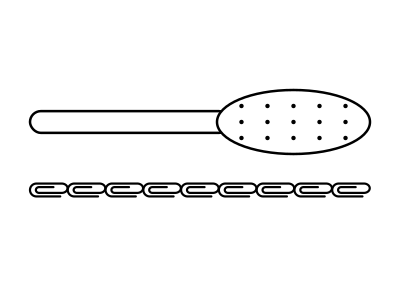 The brush is ____ paper clips long.
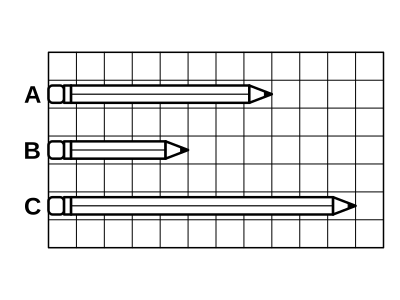 Circle the order from shortest to longest.
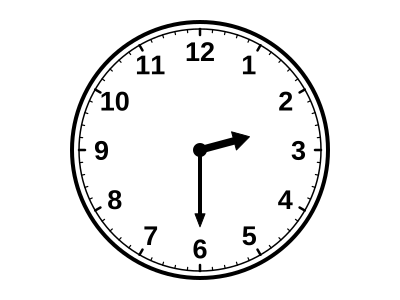 Write the time. ____
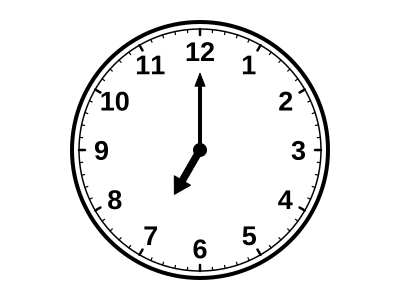 Write the time. ____
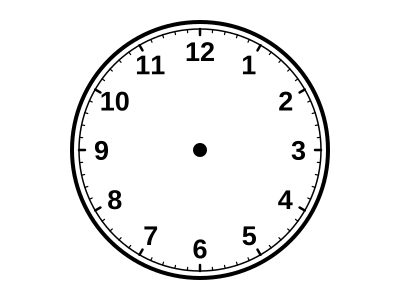 Draw the hands for 11:30.
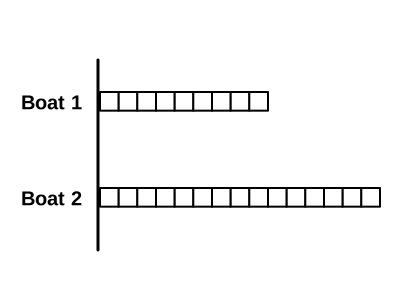 Use the graph.
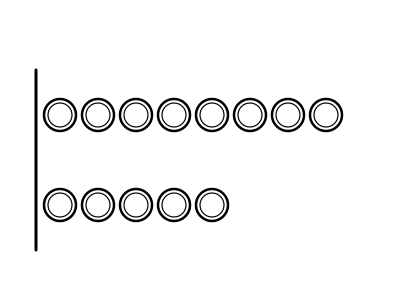 Use the penny rows.