    1First Grade

    Subtraction as a missing part

    I, me and my

    Practice pages

    0 of 180 days complete · Saved on this device

    View all 180 days

    Math

    Subtraction as a missing part

    I can subtract by thinking what number to add.

    Standards: 1.OA.B.4

    Number practice (no timer)
    Think addition: 10 - 8 is 8 + ? = 10
    Builds on
    Day 2 counting up, and Week 2 fact families. One-minute check: "If 6 + 4 = 10, what is 10 - 4?" (6)

    New words

    • think addition: solve a take-away fact by thinking of the adding fact that goes with it

    You need

    • Ten frame drawn on paper
    • 20 counters
    • Notebook and pencil
    1. Warm-Up · 5 min

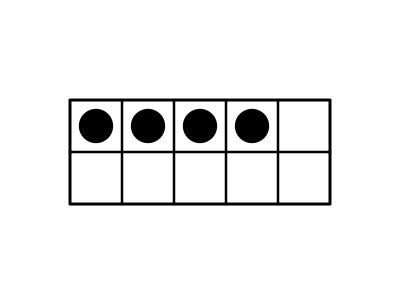
      Fluency: think addition. Show 6 on the ten frame. Ask: "How many empty?" (4) "So 10 - 6 = ?" (4) Do 8 (2) and 5 (5). Spaced review from Day 2: "4 + ? = 9." (5)

    2. Mini-Lesson · 10 min

      Say: "Today we use adding to help us take away." Write 10 - 8. Put 8 counters on the ten frame. Say: "10 - 8 asks: 8 and what make 10?" Point to the empty boxes. Ask: "How many empty boxes?" (2) Say: "8 + 2 = 10, so 10 - 8 = 2." Write the pair: 10 - 8 = 2 because 8 + 2 = 10. Do one more that does not start at 10: 9 - 7. Put 7 counters on the ten frame and draw a line after the 9th box. Ask: "7 and what make 9?" (2) Write: 9 - 7 = 2 because 7 + 2 = 9.

    3. Guided Practice · 10 min

      Your child builds the part on the ten frame and finds the missing part, then writes the pair of facts. 1) 10 - 6 (4; because 6 + 4 = 10) 2) 8 - 5 (3; because 5 + 3 = 8) 3) 7 - 4 (3; because 4 + 3 = 7) 4) 10 - 3 (7; because 3 + 7 = 10) If stuck, say: "Put the small number on the frame. Count up to the big number. How many did you add?"

    4. Play · 10 min

      Fill the Frame. You put some counters on the ten frame without your child looking. Your child looks, says how many, says how many more make 10, and then says the take-away fact: "7. 3 more make 10. So 10 - 7 = 3." Do 6 rounds. Then trade roles. Take as long as needed to think each time.

    5. Exit Ticket · 3-5 min

      Put the objects to one side but leave them on the table. Read each question aloud. Your child answers out loud, with objects or with a quick drawing. Check each answer together right away.

    Exit ticket

    1. 10 - 8 = ? What adding fact helps?
    2. Solve 9 - 6.
    3. Finish this: 7 - 5 = 2 because 5 + ? = 7.
    Answers
    1. 2, because 8 + 2 = 10
    2. 3 (because 6 + 3 = 9)
    3. 2
    Watch for, and help or stretch
    Watch for
    Counting back one at a time from 10 for 10 - 8, which takes longer and is easy to miscount.
    Try
    Say: "8 is close to 10. Is it quicker to count back 8 or count up from 8?" Count up together: 9, 10.
    Extra help
    Stay with facts from 10 only. Your child counts the empty boxes on the ten frame each time.
    Stretch
    Try facts from 12 to 15, such as 13 - 9: think 9 and what make 13? (4)

    At home (optional): Cover 2 cups of an egg carton so 10 cups show, and put a few small objects in the cups (or use the paper ten frame). Say the take-away fact for the empty spots.
    Reading & Writing

    I, me and my

    I can use I, me and my correctly when I tell about myself.

    Standards: L.1.1.d, SL.1.6, RF.1.3.b

    Phonics
    Digraphs th, wh and ck (thin, when, duck)
    Sight words
    one, two, do, who, does
    Reading
    Can I Play Too? (Mo Willems); original decodable "Chick and Duck"
    Writing
    Personal narrative: telling a small moment with I, me and my · Handwriting: lowercase u, y, v, w, x, z
    Builds on
    Speaking in full sentences (Week 3 sharing). One-minute check: ask "What did you eat for breakfast?" Your child answers in a full sentence.

    New words

    • pronoun: a word used in place of a name, like I, me or my
    • complete sentence: a sentence that tells who and what happened

    You need

    • Sentence strips
    • Small unbreakable (plastic) mirror
    • Sight word cards
    • Printed "Chick and Duck"
    1. Phonics & Word Work · 15 min

      I do: read when, which, whip and them, this, moth. We do: sort cards into wh and th: whiz, thud, when, then, which, with. You do: your child reads shut, chop, them, whip, deck, thick, moth, chin, and names the digraph in each. Read: "Who is with me?" "Do you see my duck?" Dictation: this, them, which, moth. If stuck, have your child underline the two letters that make one sound before reading.

    2. Sight Words · 5 min

      Review: one, two, do, who, does. Flip and Read: lay the five cards face down with last week's words. Your child flips a card, reads it and uses it in a short spoken sentence. Missed words go back in the pile.

    3. Read-Aloud & Shared Reading · 15 min

      Reread "Chick and Duck". Ask: "Who says We can kick a rock?" (Chick) Ask: "Duck says What can we do? Who is we?" (Chick and Duck) Ask: "If you were Chick, how would you tell what happened? Start with I." (Answers vary. Look for: I or me used for Chick, such as "I ran to the shed with Duck.")

    4. Writing & Handwriting · 15 min

      Play I Spy Me with the mirror. Your child finishes three sentence starters aloud in full sentences: "I can ___." "Mom helped me ___." (any family member) "My bike is ___." (or any thing they own). Say: "Use I when you are doing it. Use me after words like helped or with. Use my when it belongs to you." Your child writes one sentence for each starter. Handwriting (4 min): model each letter large in the air, then on paper while saying the path aloud. x: slant down one way, then cross with a slant the other way; z: across, slant down to the left, across. Your child writes each letter 3 times on lined paper and circles the best one.

    5. Exit Ticket · 5 min

      Oral answers.

    Exit ticket

    1. Fix this sentence: Me can run.
    2. Fill in: Dad helped ___ (I or me)?
    3. Tell me one complete sentence about your day.
    Answers
    1. I can run.
    2. me
    3. Answers vary. Look for: who plus what happened, such as "I played catch."
    Watch for, and help or stretch
    Watch for
    Saying me and Dad went instead of Dad and I went.
    Try
    Take the other person out: "Me went?" or "I went?" (I went) Then put them back: "Dad and I went."
    Extra help
    Practise with actions: your child points to themself and says "I jump" while jumping.
    Stretch
    Your child writes a sentence that uses I, me and my together, such as "My dad and I...". (Answers vary.)

    At home (optional): At dinner, each person tells one thing about their day starting with I.

    Social Studies

    Talking and listening rules

    I can follow our talking rules: take turns, look at the speaker and add on to their idea.

    Standards: D2.Civ.9.K-2

    Builds on
    What is fair. One-minute check: ask "Is it fair if everyone gets a turn?" (Yes.)

    New words

    • take turns: to go one at a time
    • add on: to say more about someone else's idea

    You need

    • A talking stick (a spoon, a pencil or a small toy)
    • Chart of 3 talking rules: 1) Take turns. 2) Look at the speaker. 3) Add on.
    • Markers
    1. Warm-Up / Wonder · 5 min

      Spaced review: ask: "What is a fair way to share 9 crackers among 3 people?" (3 each) Wonder question: "What happens if everyone talks at the same time?" Try it for 5 seconds: everyone says their favorite food at once. Ask: "Could you hear anyone?" (No.)

    2. Explore · 10–15 min

      Make three family talking rules together and write them on the chart: 1) Take turns: only the person with the talking stick talks. 2) Look at the speaker. 3) Add on: say what the last person said, then add your idea. Teach the add-on starters: "You said ___. I think ___." and "I agree because ___." or "I think something different because ___." Practice with a fun question: "What is the best pet?" You go first with the stick: "I think a dog is the best pet because dogs like to play." Pass the stick. Your child says: "You said a dog. I think ___." Go around 3 times with other questions: "What is the best season?" "What is the best breakfast?" If stuck, whisper the starter: "You said..."

    3. Talk & Record · 5–10 min

      Your child draws a picture of two people talking, with one holding the stick and one looking and listening. Sentence frame: "A good listener ___." (Sample: looks at the speaker; waits for a turn.)

    4. Exit Ticket · 3–5 min

      Ask the two questions aloud.

    Exit ticket

    1. Tell our three talking rules.
    2. What did I say about the best pet?
    Answers
    1. Take turns, look at the speaker and add on.
    2. Answers vary. Look for: an accurate retelling of what you said, such as "You said a dog."
    Watch for, and help or stretch
    Watch for
    Waiting for a turn but not really listening, then starting a new topic.
    Try
    Before your child adds on, they must say back the last speaker's idea. Hand the stick over only after that.
    Extra help
    Practice only rules 1 and 2 today, and keep each turn to one sentence.
    Stretch
    Your child leads a talk with a new question and makes sure everyone gets a turn.

    At home (optional): At dinner, use the talking stick for one question. Your child reminds everyone of the rules.

    Practice

    Read each direction aloud. Your child works on the page; answers are in the grown-up view.

    Warm-up

    Remember?

    Math

    1. Start at 8. Count back 2. Where do you land?
    2. 5 birds sit on a wire. 4 more land on it. How many birds in all?

    Reading & Writing

    Math · Week 4 Day 3

    I can subtract by thinking what number to add.

    Look: 8 - 6

    1. 8 - 6 asks: 6 and what make 8?
    2. Put 6 counters on the ten frame. Count up to 8: 7, 8. That is 2.
    3. 6 + 2 = 8, so 8 - 6 = 2.

    Write the missing numbers.

    1. 1.
      8 - 3 = ___ because 3 + ___ = 8.
    2. 2.
      9 - 5 = ___ because 5 + ___ = 9.
    3. 3.
      6 - 4 = ___ because 4 + ___ = 6.
    4. 4.
      10 - 9 = ___ because 9 + ___ = 10.

    Think addition. Circle the answer.

    1. 5.
      7 - 3
      • 3
      • 4
      • 10
    2. 6.
      8 - 7
      • 1
      • 2
      • 8
    3. 7.
      Ten frame with 4 counters and 6 empty boxes. 10 - 4
      • 4
      • 5
      • 6

    Challenge (optional)

    The adding fact 2 + 6 = 8 helps with two take-away facts. Write them.

    You need: ten frame and 10 counters (optional)

    Reading & Writing · Week 4 Day 3

    I can use I, me and my correctly when I tell about myself.

    Look: I, me and my

    1. Say: "Use I when I do it: I can hop."
    2. Say: "Use me after words like with or to: Dad sat with me."
    3. Say: "Use my when it is mine: My duck is Mack."

    My Duck

    I have a duck. My duck is Mack. Mack can sit with me. I fed Mack a bit of fish. Mack and I had fun.

    Circle the word that fits: I, me or my.

    1. 1.
      ___ can hop.
      • I
      • me
    2. 2.
      Dad sat with ___.
      • I
      • me
    3. 3.
      ___ cat is Pip.
      • My
      • Me
    4. 4.
      Mom and ___ had fun.
      • I
      • me
    5. 5.
      Mom can hug ___.
      • I
      • me

    Read the word. Circle the two letters that make one sound.

    1. 6.
      bath
    2. 7.
      whip
    3. 8.
      deck

    Challenge (optional)

    Fix it: Me had a nap.

    Social Studies · Week 4 Day 3

    I can follow our talking rules: take turns, look at the speaker and add on to their idea.

    Look: our three talking rules

    1. Rule 1: take turns. Only the person with the talking stick talks.
    2. Rule 2: look at the speaker.
    3. Rule 3: add on. "You said cats are soft. I think cats are fun too because they purr."

    Dinner Talk

    At dinner, Mia said, "I think fall is the best season because I can jump in leaves." Her dad looked at her and waited. Then he said, "You said fall. I think fall is great too because we pick apples." Then Mia's brother Sam talked while Dad was still talking, and nobody could hear either one.

    Listen to the story. Circle yes or no.

    1. 1.
      Did Mia's dad look at Mia while she talked?
      • yes
      • no
    2. 2.
      Did Mia's dad add on to her idea?
      • yes
      • no
    3. 3.
      Could everyone hear Sam when he talked over people?
      • yes
      • no
    4. 4.
      Should Sam wait for his turn to talk?
      • yes
      • no

    Talk and draw. Write what your child says.

    1. 5.
      I say: "I think rain is fun because I can splash." You add on. Start with "You said ___."
    2. 6.
      What can you do with your eyes when someone is talking?
    3. 7.
      Draw what you look like when you are a good listener.

    Challenge (optional)

    Tell about a time someone added on to your idea. How did it feel?

    You need: crayons, a talking stick (a spoon or a pencil)