    1First Grade

    Lesson + weekly check: missing numbers in stories

    Share and check: th, wh, ck

    Practice pages

    0 of 180 days complete · Saved on this device

    View all 180 days

    MathWeekly check

    Lesson + weekly check: missing numbers in stories

    I can find the missing number at the start, middle or end of a story.

    Standards: 1.OA.A.1, 1.OA.B.4

    Number practice (no timer)
    Think addition: 10 - 8 is 8 + ? = 10
    Builds on
    Days 1 to 4: the unknown at the end, middle and start. One-minute check: "Solve 5 + ? = 8." (3)

    New words

    • unknown: the number we do not know yet

    You need

    • 9 story cards: index cards with short stories written on them (see the review game)
    • 20 counters
    • A cup
    • The stored Week 4 check and its answer key
    • Notebook and pencil
    1. Warm-Up · 5 min

      Fluency: think addition. "10 - 4 is 6 because 4 + 6 = 10." Your child says the "because" part for 10 - 2 (2 + 8 = 10) and 10 - 7 (7 + 3 = 10). Spaced review from Week 3: "How many more is 9 than 6?" (3)

    2. Short Lesson: Review Game · 10 min

      Where Is the Unknown? Read each story card. Your child sorts it into a pile: Start, Middle or End. Then solve 3 of them, one from each pile. Cards: 1) "4 cats and 2 more cats. How many now?" (End; 6) 2) "6 ducks. Some swim away. 2 are left." (Middle; 4) 3) "Some pencils in a cup. You add 3. Now there are 8." (Start; 5) 4) "10 beads. 7 fall off." (End; 3) 5) "5 shells. You find some more. Now you have 9." (Middle; 4) 6) "Some cars. 1 more comes. Now there are 7." (Start; 6) 7) "3 balloons and 4 balloons." (End; 7) 8) "8 kids. Some go home. 5 are left." (Middle; 3) 9) "Some fish. 2 more swim in. Now there are 10." (Start; 8) If stuck, say: "What do we know at the start? What happened? What do we know at the end? The missing one is the unknown."

    3. Weekly Check · 15 min

      Give the stored Week 4 check. The printed check has 8 items. It covers these goals: (1) I can solve adding and taking stories where the end is missing; (2) I can find how many were added when the middle number is missing; (3) I can subtract by thinking what number to add; (4) I can solve a story when the first number is missing. Your child may draw a picture or use the cup and counters, and writes an equation with ? or a helping adding fact where the item asks for one. Read each story aloud as many times as needed. There is no time limit, and the cup and counters may be used. Score it with the answer key. Secure: 7 of 8 correct, with at least 1 right on each goal. If the check is secure, start Week 5. If it is not, first do the reteach step on the check page for each group of items missed, then start Week 5.

    4. Exit Ticket · 3-5 min

      After the check, ask these two questions. Then go over any missed check items together.

    Exit ticket

    1. Some birds were on a wire. 2 more came. Now there are 6. How many were there at first?
    2. Write an equation with ? for: 5 toys and some more make 9.
    Answers
    1. 4 birds
    2. 5 + ? = 9 (the ? is 4)
    Watch for, and help or stretch
    Watch for
    Mixing up the start and change, and writing the equation in the wrong order.
    Try
    Act out the story in time order: "First... then... now." Write each number as it happens.
    Extra help
    Let your child act out each check story with the cup and counters.
    Stretch
    After the check, your child writes one start-unknown story for you.

    At home (optional): Tell a family member one story of each kind: unknown at the start, middle and end.
    Reading & WritingWeekly check

    Share and check: th, wh, ck

    I can read th, wh and ck words and listen and respond to a friend's story.

    Standards: RF.1.3.a, SL.1.1.b, RF.1.3.g

    Phonics
    Digraphs th, wh and ck (thin, when, duck)
    Sight words
    one, two, do, who, does
    Reading
    Can I Play Too? (Mo Willems); original decodable "Chick and Duck"
    Writing
    Personal narrative: telling a small moment with I, me and my · Handwriting: lowercase u, y, v, w, x, z
    Builds on
    Digraph practice this week. One-minute check: warm up with when, thin and duck.

    New words

    • listener: the person who pays attention while someone else talks or reads

    You need

    • Word cards (th, wh, ck and sh, ch)
    • Sight word cards
    • Small moment writing
    • Recording sheet
    1. Review Game · 10 min

      Digraph Hop: write sh, ch, th, wh and ck on paper squares on the floor. Say a word (thin, chop, whip, back, fish). Your child hops to the digraph they hear. Then read 6 cards together. If stuck on a word during the game (not during the check), cover all but the first sound, say it together, then uncover the rest and blend.

    2. Sight Words · 5 min

      Review: one, two, do, who, does, you, are, they, have, what. Memory Match: make two cards for each of three words. Turn them face down and play Memory; read the word on every card turned over. Mix this week's and last week's words.

    3. Weekly Check · 15 min

      The printed check has 8 items. It covers these goals: (1) I can read words with th, wh and ck; (2) I can read the sight words one, two, do, who and does; (3) I can use the pictures and words to tell how a character feels, where the story happens and what happens; (4) I can use I, me and my correctly. Give no hints. Record each answer. Secure: 8 of the 10 words in items 1 and 2, 4 of the 5 sight words, and 4 of the other 5 items. For any part that is not yet secure, use the matching reteach step on the check page next week.

    4. Share & Listen · 10 min

      Your child reads the small moment aloud. The listener asks one question (Who was with you?), and your child answers. Then your child asks the listener one question back about their own small moment. (SL.1.1.b)

    5. Handwriting · 10 min

      Model each letter large in the air, then on paper while saying the path aloud. u: down, around and up, then down; y: slant down to the right, then a long slant down to the left below the line; v: slant down, slant up; w: slant down, up, down, up; x: slant down one way, then cross with a slant the other way; z: across, slant down to the left, across. Your child writes each letter 3 times on lined paper and circles the best one. Then copy "Who can run?"

    6. Exit Ticket · 5 min

      Talk about the week.

    Exit ticket

    1. Read one word with th and one with ck.
    2. What question did you ask your listener?
    Answers
    1. Answers vary. Look for: correct reads such as thin and duck.
    2. Answers vary. Look for: a question about the listener's story.
    Watch for, and help or stretch
    Watch for
    Reading does as doze (long o).
    Try
    Review the heart part (oe says /u/) and read "Who does?" and "What does it do?" three times each.
    Extra help
    Split the check into two sittings if needed.
    Stretch
    Your child reads 3 bonus words with ending blends (jump, best, hand) to preview next week. Do not score them.

    At home (optional): Read "Chick and Duck" to a family member, using a different voice for each character.

    Social StudiesWeekly check

    Being a good classmate

    I can show honesty, kindness and responsibility in my learning space.

    Standards: D2.Civ.7.K-2

    Builds on
    Talking and listening rules. One-minute check: your child tells the three talking rules. (Take turns, look at the speaker, add on.)

    New words

    • honest: telling the truth
    • kind: being friendly and helpful to others
    • responsible: doing your jobs and keeping your promises
    • respectful: treating people and things with care

    You need

    • 4 virtue cards: honest, kind, responsible, respectful (a word and a quick picture on each)
    • A sticker chart with 5 boxes
    • Stickers
    1. Warm-Up / Wonder · 5 min

      Spaced review: ask: "What does add on mean?" (to say more about someone else's idea) Wonder question: "What makes someone a good classmate or a good learning buddy?"

    2. Review Game · 10 min

      Read each short scenario. Your child holds up the virtue card that fits and tells what a good helper would do. 1) You broke a crayon your friend lent you. (Honest: tell your friend and say sorry.) 2) A classmate falls on the playground. (Kind: help them up or get a grown-up.) 3) It is your job to feed the fish today. (Responsible: feed the fish without being reminded.) 4) Someone is talking and you want to talk too. (Respectful: wait and listen.) Then play "Show Me": you name a virtue and your child acts it out in 10 seconds. If stuck, read the meaning on the card and ask: "What could you do that matches this?"

    3. Check · 10 min

      Give the Week 4 social studies check. The check items are on the Week 4 check page; do not show them ahead of time. This week the check is a role-play. Read each part aloud. Your child answers by talking, pointing, acting it out or drawing, and you write their words exactly. It is not timed; stop and finish later if your child is tired. Make a check mark next to each part your child shows on their own. The printed check has 8 items. It covers these goals: (1) I can tell what fair means and spot when something is fair or not fair; (2) I can follow our talking rules: take turns, look at the speaker and add on to their idea; (3) I can show honesty, kindness and responsibility in my learning space. Your child picks one virtue card, says what it means and acts it out in a short role-play with you. Then your child sets one "good classmate" goal for next week and you write it on the sticker chart. Look for a correct meaning and an action that matches it. Secure: 6 of 8 correct, with at least one right on each goal. If the check is not yet secure, use the reteach step on the check page that matches the items missed.

    4. Exit Ticket · 3–5 min

      Ask the two questions aloud.

    Exit ticket

    1. What does honest mean?
    2. What is your good classmate goal for next week?
    Answers
    1. Telling the truth.
    2. Answers vary. Look for: a goal your child can do and see, such as "I will put my things away without a reminder."
    Watch for, and help or stretch
    Watch for
    Picking a goal that is too big or vague, such as "be good."
    Try
    Ask: "What will I see you doing when you meet your goal?" Make it one action.
    Extra help
    Use 2 virtue cards (honest and kind) and 2 scenarios.
    Stretch
    Your child makes up a new scenario for a family member to solve.

    At home (optional): Your child works on their goal each day and adds a sticker when they do it.

    Practice

    Read each direction aloud. Your child works on the page; answers are in the grown-up view.

    Warm-up

    Remember?

    Math

    1. Start at 7. Count back 1. Where do you land?
    2. Ivy has 5 blocks. Raj has 9 blocks. How many fewer blocks does Ivy have?

    Reading & Writing

    1. dish, chop, shed

    Math · Week 4 check

    Weekly check

    How to give it: Read every item aloud as many times as needed. Untimed. Your child may draw a picture, use counters and the cup, and write an equation with a ? before solving. Help with reading only, not with the math.

    Secure when: 7 of 8 correct, with at least 1 right on each goal

    • I can solve adding and taking stories where the end is missing.
    • I can find how many were added when the middle number is missing.
    • I can subtract by thinking what number to add.
    • I can solve a story when the first number is missing.
    1. 1.
      2 owls are in a tree. 6 more fly in. Write the equation with a ?. Then solve it.
    2. 2.
      10 balloons. 2 pop. Write the equation with a ?. Then solve it.
    3. 3.
      You have 2 toy cars. You get some more. Now you have 6. How many did you get?
    4. 4.
      4 + ? = 5
    5. 5.
      10 - 5 = ___. Write the adding fact that helps.
    6. 6.
      9 - 3 = ___ because 3 + ___ = 9.
    7. 7.
      Some buses were at the stop. 7 more pulled in. Now there are 9. How many were there at first?
    8. 8.
      ? - 4 = 5

    Reading & Writing · Week 4 check

    Weekly check

    How to give it: Give the check after the review game, in a quiet spot, one part at a time. It is untimed; take a stretch break between parts if needed. Read every direction aloud, but do not read the words or story for your child. Do not help except to say "Try your best" or "Skip it." Mark each item right or wrong. Items 1 and 2 (Part 1): your child reads the digraph words aloud. Item 3 (Part 2): your child reads the 5 sight words. Part 3: your child reads "Thad and the Moth" aloud (a new story in place of "Chick and Duck"), then you read the directions for items 4 to 8. The listen-and-respond share follows, as in the lesson.

    Secure when: 8 of the 10 words in items 1 and 2, 4 of the 5 sight words, and 4 of the other 5 items.

    • I can read words with th, wh and ck.
    • I can read the sight words one, two, do, who and does.
    • I can use the pictures and words to tell how a character feels, where the story happens and what happens.
    • I can use I, me and my correctly.

    Thad and the Moth

    Thad sat on a rock with Mom. A moth sat on the rock. "Which moth is that?" said Thad. The moth did a hop. Then it sat on Thad! Thad had fun.

    1. 1.
      than whim lick shop chat
    2. 2.
      whet wick hack bath dish
    3. 3.
      one two do who does
    4. 4.
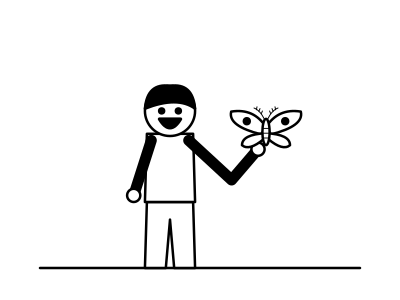
      A boy smiling with a moth on his hand.
      • Thad had fun.
      • Thad is sad.
    5. 5.
      Thad and Mom sat on a ___.
      • rock
      • deck
    6. 6.
      Then the moth sat on ___!
      • Thad
      • Mom
    7. 7.
      ___ can see a moth.
      • I
      • Me
    8. 8.
      Mom sat with ___.
      • I
      • me

    Social Studies · Week 4 check

    Weekly check

    How to give it: Read every question and choice aloud, and point to each picture as you name it. This week the check is a role-play. Your child answers by talking, pointing, circling, acting it out or drawing; write their words exactly on the line. It is not timed; stop and finish later if your child is tired. Do not show the page ahead of time. Items 3 and 8 are acted out with you. Make a check mark next to each part your child shows on their own.

    Secure when: 6 of 8 correct, with at least one right on each goal

    • I can tell what fair means and spot when something is fair or not fair.
    • I can follow our talking rules: take turns, look at the speaker and add on to their idea.
    • I can show honesty, kindness and responsibility in my learning space.
    1. 1.
      Share 8 grapes between 2 friends. How many for each friend?
    2. 2.
      One child gets a turn on the tablet every day. The other child never gets a turn. Is that fair?
      • yes
      • no
    3. 3.
      While I talk for a bit, show me what a good listener does.
    4. 4.
      I say: "I like snow because I can make a snowman." Add on to my idea.
    5. 5.
      You spilled juice on the floor at a friend's house. What would an honest person do?
    6. 6.
      It is your job to put the napkins on the table. What does a responsible person do?
    7. 7.
      A new kid is sitting alone at the park. What is a kind thing to do?
    8. 8.
      Pick a virtue card. Say what it means. Then act it out with me.