1First Grade

    Result unknown review

    Pictures tell us more

    Practice pages

    0 of 180 days complete · Saved on this device

    View all 180 days

    Math

    Result unknown review

    I can solve adding and taking stories where the end is missing.

    Standards: 1.OA.A.1

    Number practice (no timer)
    Think addition: 10 - 8 is 8 + ? = 10
    Builds on
    Weeks 1 and 2 adding and taking stories. One-minute check: "5 frogs, 3 hop away. How many are left?" (2)

    New words

    • unknown: the number we do not know yet
    • question mark: the sign ? that stands for the unknown number

    You need

    • 20 counters
    • A cup
    • Index cards or paper squares
    • Notebook and pencil
    1. Warm-Up · 5 min

      Fluency: think addition. Show 8 counters on the ten frame. Ask: "How many more make 10?" (2) Say: "So 10 - 8 = 2." Do 7 (3) and 9 (1). Spaced review from Week 3: "Turn around 3 + 6." (6 + 3 = 9)

    2. Mini-Lesson · 10 min

      Say: "This week we solve stories where one number is missing. We write a question mark for the missing number. Today the missing number is at the end." Tell a story: "4 kittens are in a basket. 3 more climb in. How many kittens now?" Write 4 + 3 = ? Say: "The question mark is the number we do not know yet. It is the unknown." Your child acts it out (7). Erase the ? and write 7. Now a take-from story: "8 bubbles. 5 pop. How many are left?" Write 8 - 5 = ? Your child acts it out (3). Ask: "In both stories, where was the unknown?" (At the end.)

    3. Guided Practice · 10 min

      Tell each story. Your child writes the equation with ?, solves it with counters, then writes the answer in place of the ?. 1) "6 ants and 2 more ants." (6 + 2 = ?; 8) 2) "9 pears. You give away 4." (9 - 4 = ?; 5) 3) "5 boats and 5 more boats." (5 + 5 = ?; 10) 4) "7 leaves on a branch. 3 fall off." (7 - 3 = ?; 4) If stuck, say: "Act out the story first. Then write the numbers in the order they happened."

    4. Play · 10 min

      You Be the Teacher. Your child makes up one adding story and one taking story with the unknown at the end. You write each equation with a ? and solve it. Make one mistake on purpose, such as writing 6 + 2 = 9. Your child checks with counters and fixes it (8). Then trade: you tell 2 stories and your child writes and solves them.

    5. Exit Ticket · 3-5 min

      Put the objects to one side but leave them on the table. Read each question aloud. Your child answers out loud, with objects or with a quick drawing. Check each answer together right away.

    Exit ticket

    1. Write and solve: 4 bees and 3 more bees.
    2. Write and solve: 8 cherries, eat 5.
    3. What does the ? stand for?
    Answers
    1. 4 + 3 = ?; 7
    2. 8 - 5 = ?; 3
    3. The number we do not know yet (the unknown).
    Watch for, and help or stretch
    Watch for
    Writing the answer in the wrong place, such as 4 + 7 = 3.
    Try
    Read the equation as a story, pointing to each number. Ask: "Where does the total go?"
    Extra help
    Use totals of 6 or less, and write the equation for your child so they focus on finding the ?.
    Stretch
    Give stories with numbers to 15, such as "12 cards, 2 more" (14) and "15 cards, give away 5" (10).

    At home (optional): Make up one story at dinner with the unknown at the end, and have someone at the table solve it.
    Reading & Writing

    Pictures tell us more

    I can use the pictures to describe how characters feel.

    Standards: RL.1.7, RF.1.3.a, RF.1.3.g

    Phonics
    Digraphs th, wh and ck (thin, when, duck)
    Sight words
    one, two, do, who, does
    Reading
    Can I Play Too? (Mo Willems); original decodable "Chick and Duck"
    Writing
    Personal narrative: telling a small moment with I, me and my · Handwriting: lowercase u, y, v, w, x, z
    Builds on
    Describing characters by what they say and do (Week 3). One-minute check: ask "What did Chad want in The Ship Shop, and how did he feel at the end?" (the big red ship; happy or excited)

    New words

    • illustration: a picture in a book
    • picture clue: a detail in a picture that helps us understand the story
    • expression: the look on a face that shows a feeling

    You need

    • Can I Play Too? (Mo Willems), optional read-aloud; any picture book with clear character faces, such as a friendship story, works
    • th, wh and ck cards
    • Sight word cards: one, two, do, who, does
    • Printed "Chick and Duck"
    • Paper and crayons
    • Lined handwriting paper
    1. Phonics & Word Work · 15 min

      I do: Say: "t and h together say /th/. Let your tongue peek out between your teeth." "w and h together say /w/ in when." "c and k together say /k/ at the end of a short word, as in duck." Read thin, when and duck, touching each digraph as one sound. We do: read then, with, path, whip, sock, back. You do: your child reads thin, bath, when, which, duck, pick, math, rock. Ask: "How many sounds in duck?" (3: /d/ /u/ /k/) Read: "Beth and Chuck sat on the deck." "When can we get the duck?" Dictation: thin, when, duck, with. If stuck on th, put a hand on your throat: for then you feel a buzz; for thin you feel no buzz, only air on your tongue. Both are spelled th.

    2. Sight Words · 5 min

      Introduce this week's words with see-say-spell-write. For each card: Say: "This word is ___. Say it with me." Your child reads it, spells it aloud while tapping each letter, then writes it once while saying each letter, and reads it again. Draw a small heart over the tricky part, the part we must learn by heart: one (it starts with a /w/ sound that no letter shows); two (the w is silent); do (o says /oo/); who (wh says /h/ and o says /oo/); does (oe says /u/ and s says /z/). Finish by reading all five cards in mixed order twice. If stuck, cover the tricky part, read the regular part together, then uncover it and say the whole word.

    3. Read-Aloud & Shared Reading · 15 min

      Read the picture book aloud. Pause on three pages. Your child copies a character's face with crayons and says how the character feels and which picture clue shows it. Ask: "How does this character feel?" (Answers vary. With Can I Play Too?: Gerald, Piggie or Snake might look worried, excited or sad. Look for: a feeling word.) Ask: "What in the picture shows that?" (Look for: a picture detail such as eyebrows, a frown, tears or a big smile.) Ask: "Does the picture tell us something the words do not?" (Answers vary. Look for: a feeling or action only shown in the picture.) Then read "Chick and Duck" aloud while your child follows: Chick and Duck Chick and Duck sat on a log. "What can we do?" said Duck. "We can kick a rock," said Chick. Duck did not kick. "That is not fun," said Duck. "Then what is fun?" said Chick. "Who can get to the shed? One, two... run!" said Duck. Chick and Duck ran and ran. Duck got to the shed. When Chick got to it, Duck sat on a mat. "That was fun!" said Chick. "Can we do it with Mom?" Then they sat in the shed and had a nap.

    4. Writing & Handwriting · 15 min

      Your child draws a face that shows how they felt at one moment this week and writes a sentence: "I felt ___ when ___." (Answers vary.) Spell sight words correctly and stretch the rest. Handwriting (4 min): model each letter large in the air, then on paper while saying the path aloud. u: down, around and up, then down; y: slant down to the right, then a long slant down to the left below the line. Your child writes each letter 3 times on lined paper and circles the best one.

    5. Exit Ticket · 5 min

      Oral answers; show the words on cards.

    Exit ticket

    1. Read these words: thin, when, duck.
    2. Read this sight word: who.
    3. Show me a picture clue that tells how a character feels.
    Answers
    1. thin, when, duck
    2. who
    3. Answers vary. Look for: pointing to a face or body detail and naming a feeling.
    Watch for, and help or stretch
    Watch for
    Reading th as /t/ or /f/ (thin read as tin or fin).
    Try
    Have your child put the tongue between the teeth and blow gently before saying the word.
    Extra help
    Teach th and ck today and add wh tomorrow. Use a mirror to see the tongue for th.
    Stretch
    Your child reads "Chick and Duck" alone and lists the th, wh and ck words. (th: That, Then, with, they; wh: What, Who, When; ck: Duck, kick, rock, Chick)

    At home (optional): Look at faces in a family photo or magazine. Your child names how each person feels and the clue that shows it.

    Social Studies

    What is fair?

    I can tell what fair means and spot when something is fair or not fair.

    Standards: D2.Civ.8.K-2

    Builds on
    Rules and people in charge. One-minute check: your child tells one rule that helps things be fair. (Sample: take turns.)

    New words

    • fair: everyone gets a good chance or what they need
    • equal: the same amount
    • share: to give part of something to others

    You need

    • 9 crackers or 9 counters
    • 3 plates (or 3 stuffed animals as diners)
    • 5 scenario cards (written below)
    • 2 baskets or paper labels: Fair / Not fair
    1. Warm-Up / Wonder · 5 min

      Spaced review: ask: "What does a stop sign tell drivers to do?" (Stop.) Wonder question: "What does fair mean?" (Answers vary.)

    2. Explore · 10–15 min

      Cracker share. Put out 9 crackers and 3 plates. Way 1: put 7 on one plate and 1 on each of the others. Ask: "Is this fair?" (No. One plate has a lot more.) Way 2: 5, 2 and 2. Ask: "Fair?" (No.) Way 3: your child shares them out one at a time until all are gone. Ask: "How many on each plate?" (3) "Fair?" (Yes. Each plate is equal.) Say: "Equal means the same amount." Now sort the scenario cards into Fair and Not fair. 1) Everyone gets a turn on the swing. (Fair.) 2) One person always goes first in every game. (Not fair.) 3) Everyone helps clean up after the party. (Fair.) 4) The biggest kid always gets the best seat. (Not fair.) 5) A friend who cannot reach the sink gets a stool, and the others do not need one. (Fair.) Talk about card 5. Say: "Sometimes fair means giving each person what they need." If stuck, ask: "Would you feel okay if this happened to you?"

    3. Talk & Record · 5–10 min

      Your child draws the 3 plates with 3 crackers each. Sentence frame: "Fair means ___." (Sample: everyone gets the same, or everyone gets what they need.)

    4. Exit Ticket · 3–5 min

      Ask the three questions aloud. Your child may use counters for question 1.

    Exit ticket

    1. You have 6 crackers and 2 kids. What is a fair share?
    2. Is it fair if one person always goes first?
    3. Your friend cannot reach the sink, so they get a stool and you don't. Is that fair?
    Answers
    1. 3 crackers each.
    2. No. Everyone should get a turn to go first.
    3. Yes. Fair can mean giving each person what they need.
    Watch for, and help or stretch
    Watch for
    Thinking fair always means "what I want" or "I get the most."
    Try
    Switch seats: "If you were the plate with 1 cracker, would it feel fair?"
    Extra help
    Share 6 crackers between 2 plates, and sort only cards 1 and 2.
    Stretch
    Your child shares 12 crackers among 3 plates (4 each) and makes up a new fair or not-fair card.

    At home (optional): At snack time, your child shares a snack fairly with a family member and tells how they knew it was fair.

    Practice

    Read each direction aloud. Your child works on the page; answers are in the grown-up view.

    Warm-up

    Remember?

    Math

    1. Ana has 7 shells. Ben has 4 shells. How many more shells does Ana have?
    2. 9 and what number make 10?

    Reading & Writing

    1. shin, chug, rash

    Math · Week 4 Day 1

    I can solve adding and taking stories where the end is missing.

    Look: 5 kites and 4 more

    1. 5 kites fly in the sky. 4 more kites go up.
    2. We do not know the end yet, so write 5 + 4 = ?
    3. Act it out: 9 kites. Write 9 in place of the ?: 5 + 4 = 9.

    Listen to the story. Write the equation with a ?. Then solve it.

    1. 1.
      3 cats sit on a step. 5 more cats come.
    2. 2.
      10 pears are in a box. You take out 6.
    3. 3.
      2 boats are at the dock. 7 more boats come in.
    4. 4.
      6 bees are on a flower. 5 fly off.

    Solve. Write the number that goes in place of the ?.

    1. 5.
      7 + 3 = ?
    2. 6.
      9 - 2 = ?
    3. 7.
      4 - 4 = ?

    Challenge (optional)

    Tell a take-away story where the end is missing. Write the equation with a ?. Then solve it.

    You need: 10 counters (optional)

    Reading & Writing · Week 4 Day 1

    I can use the pictures to describe how characters feel.

    Look: feelings in the pictures

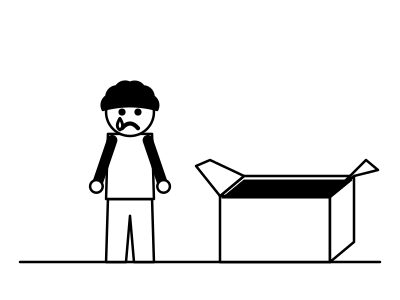
    1. Look at the first picture with your child. Point to Seth's face: "His mouth is down and there is a tear."
    2. Say: "The picture shows how Seth feels. He is sad."
    3. Say: "Look at the face and the body to find how a character feels."

    Seth and the Duck

    Seth had a duck. The duck ran and hid in a sock! Seth was sad. Then Beth got the duck. Seth had fun with the duck.

    Look at each picture. Circle the sentence that tells how Seth feels.

    1. 1.
      A boy with a tear on his cheek and a frown, looking at an empty box.
      • Seth is sad.
      • Seth had fun.
    2. 2.
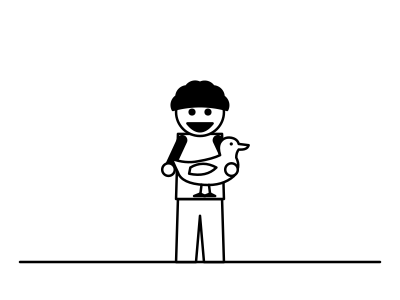
      The same boy with a big smile, holding a duck.
      • Seth is sad.
      • Seth had fun.
    3. 3.
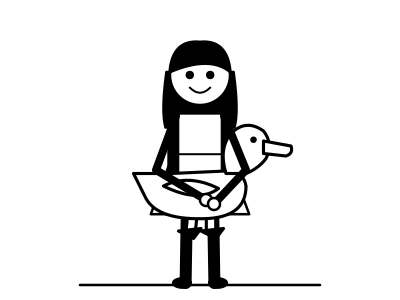
      A girl hugging a duck and smiling.
      • Beth had fun.
      • Beth is sad.

    Read the word. Circle th, wh or ck.

    1. 4.
      path
      • th
      • wh
      • ck
    2. 5.
      when
      • th
      • wh
      • ck
    3. 6.
      pack
      • th
      • wh
      • ck
    4. 7.
      moth
      • th
      • wh
      • ck

    Challenge (optional)

    Who had a duck?

    Social Studies · Week 4 Day 1

    I can tell what fair means and spot when something is fair or not fair.

    Look: making it fair

    1. I have 8 strawberries and 2 bowls.
    2. I put one in each bowl, again and again, until they are all gone.
    3. Each bowl has 4. Equal shares are fair.

    Draw dots to share. Your child writes how many each one gets.

    1. 1.
      Share 10 grapes between 2 plates. How many on each plate?
    2. 2.
      Share 6 stickers among 3 friends. How many for each friend?
    3. 3.
      Share 12 blocks among 3 kids. How many for each kid?

    Listen. Circle yes if it is fair. Circle no if it is not fair.

    1. 4.
      Each child picks one song for the car ride, taking turns.
      • yes
      • no
    2. 5.
      The same child holds the TV remote every night.
      • yes
      • no
    3. 6.
      A child who cannot see the board well gets a seat up front.
      • yes
      • no
    4. 7.
      One child takes all the blocks and will not share.
      • yes
      • no

    Challenge (optional)

    A friend uses a wheelchair, so the class picks a game everyone can play. Is that fair? Why?

    You need: crayons