Math
Look for a ten
I can add three numbers by finding two that make 10.
Standards: 1.OA.A.2, 1.OA.B.3
- Number practice (no timer)
- Doubles to 5 + 5; make 10 with three numbers
- Builds on
- Day 1 adding three numbers, and Week 1 partners of 10. One-minute check: "6 and what make 10?" (4)
New words
- make a ten: find two numbers that add to 10 and add them first
You need
- 20 cubes
- Ten frame drawn on paper
- Deck of cards ace to 9
- Crayon for circling
- Notebook and pencil
Warm-Up · 5 min
Fluency: doubles to 5 + 5 and make 10 with three numbers. "3 + 3 = ?" (6) "4 + 4 = ?" (8) "2 + 3 + what = 10?" (5) Spaced review from Day 1: "2 + 3 + 4 = ?" (9)
Mini-Lesson · 10 min
Say: "Yesterday we added three numbers any way. Today we look for two numbers that make 10." Write 4 + 3 + 6. Ask: "Do you see two numbers that make 10?" (4 and 6) Circle them. Say: "4 + 6 = 10. Now add the 3. 10 + 3 = 13." Show it with cubes: put 4 and 6 on the ten frame (it fills up), and put 3 more outside it. Ask: "Is it easy to see 13?" (Yes. 1 full ten and 3 more.) Say: "Adding 10 and a number is easy, so we look for a ten first." Ask: "Can we add the 6 before the 3, even though it is last?" (Yes. We can add the numbers in any order.)
Guided Practice · 10 min
Your child circles the pair that makes 10, adds it, then adds the third number. 1) 7 + 2 + 3 (7 + 3 = 10, 10 + 2 = 12) 2) 5 + 8 + 5 (5 + 5 = 10, 10 + 8 = 18) 3) 1 + 6 + 9 (1 + 9 = 10, 10 + 6 = 16) 4) 2 + 4 + 8 (2 + 8 = 10, 10 + 4 = 14) Ask after each: "Which two did you add first? Why?" If stuck, say: "Point to each number and say its partner to 10. Is that partner here?"
Play · 10 min
Ten Hunt. Each player flips 3 cards. If the three cards add to more than 20, put the biggest card back and flip a new one. If two of your cards make 10, circle them in the air with your finger, say "10 and __ more," and say the sum. If there is no 10, add any way you like. Write each equation. Play 6 rounds. The player who finds a 10 gets an extra point, but there is no rush.
Exit Ticket · 3-5 min
Put the objects to one side but leave them on the table. Read each question aloud. Your child answers out loud, with objects or with a quick drawing. Check each answer together right away.
Exit ticket
- 4 + 3 + 6 = ? Which two did you add first?
- Solve 8 + 5 + 2.
- Solve 9 + 4 + 1.
Answers
- 13; 4 and 6 (to make 10)
- 15 (8 + 2 = 10, then 10 + 5)
- 14 (9 + 1 = 10, then 10 + 4)
Watch for, and help or stretch
- Watch for
- Always adding left to right, even when a 10 is easy to make.
- Try
- Before adding, ask your child to say "Is there a 10?" and look for it first.
- Extra help
- Write the partners of 10 list (1 and 9, 2 and 8, 3 and 7, 4 and 6, 5 and 5) on a card for your child to look at.
- Stretch
- Give four numbers, such as 3 + 7 + 4 + 6. Your child finds two tens (20).
At home (optional): Write 3 numbers from the house (such as 2 shoes, 5 cups, 8 books) and look for a 10.
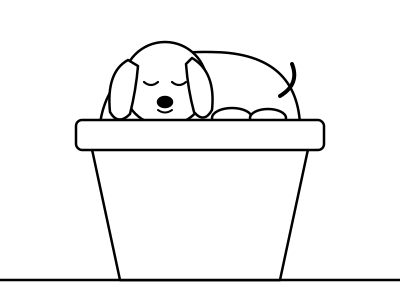

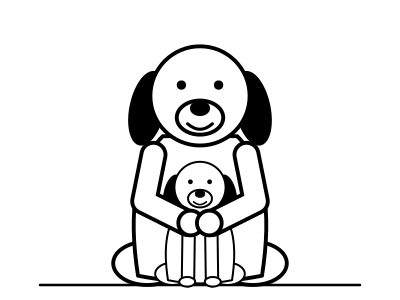
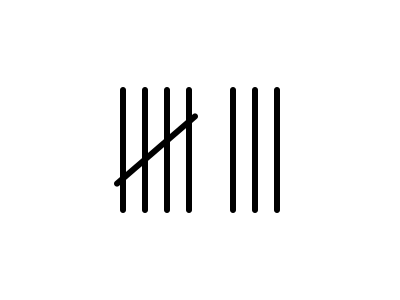 How many votes?
 How many votes?
 How many votes?
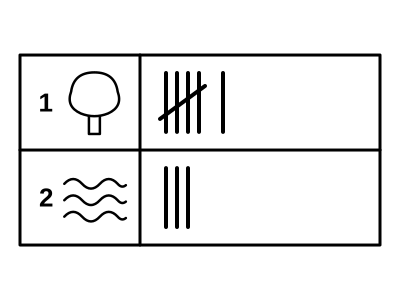 The tree is the park. The waves are the pool. Which place won?