1First Grade

    Adding three numbers

    Peter's adventure

    Practice pages

    0 of 180 days complete · Saved on this device

    View all 180 days

    Math

    Adding three numbers

    I can add three numbers to find the total.

    Standards: 1.OA.A.2, 1.OA.B.3

    Number practice (no timer)
    Doubles to 5 + 5; make 10 with three numbers
    Builds on
    Weeks 1 to 4 adding within 10. One-minute check: "6 + 4 = ?" (10) "10 + 3 = ?" (13)

    New words

    • addend: one of the numbers we add
    • sum: the answer when we add

    You need

    • 20 cubes or counters
    • 3 small bowls
    • Notebook and pencil
    1. Warm-Up · 5 min

      Fluency: doubles to 5 + 5. Say a double and your child says the sum: 2 + 2 (4), 4 + 4 (8), 5 + 5 (10). Make 10 with three numbers: "5 and 3 and what make 10?" (2) Spaced review from Week 4: "? + 3 = 7." (4)

    2. Mini-Lesson · 10 min

      Say: "Today we add three numbers." Put 3 cubes in one bowl, 4 in another and 6 in a third. Ask: "How many cubes in all?" Let your child try any way first. Watch and listen. Then share your way: "I added 3 and 4 first. That is 7. Then I added 6 more: 8, 9, 10, 11, 12, 13." Write 3 + 4 + 6 = 13. Say: "Each number we add is an addend. The answer is the sum. Here the sum is 13." Ask: "Did you find 13 too? How did you do it?" (Answers vary.) Say: "We can add any two first, then add the third."

    3. Guided Practice · 10 min

      Your child adds each set of three bowls, says which two they added first, and writes the equation. 1) 2, 5 and 3 (2 + 5 + 3 = 10) 2) 4, 4 and 1 (4 + 4 + 1 = 9) 3) 6, 2 and 4 (6 + 2 + 4 = 12) 4) 1, 7 and 2 (1 + 7 + 2 = 10) If stuck, say: "Pour two bowls together and count them. Now pour in the last bowl and count on."

    4. Play · 10 min

      Three Bowls. Your child puts a small handful of cubes, no more than 6, into each of the 3 bowls. You both find the sum. Then each person says which two bowls they added first. Ask: "Did we get the same sum, even if we started in different places?" (Yes.) Do 4 rounds and write each equation.

    5. Exit Ticket · 3-5 min

      Put the objects to one side but leave them on the table. Read each question aloud. Your child answers out loud, with objects or with a quick drawing. Check each answer together right away.

    Exit ticket

    1. 3 + 4 + 2 = ?
    2. 5 + 1 + 3 = ?
    3. Tell me which two numbers you added first in question 2.
    Answers
    1. 9
    2. 9
    3. Answers vary. Look for: any pair named, followed by adding the third number correctly.
    Watch for, and help or stretch
    Watch for
    Forgetting to add the third number.
    Try
    Point to each bowl and put a check mark under it on paper when it has been added.
    Extra help
    Keep each addend at 3 or less, and let your child touch and count every cube.
    Stretch
    Use addends up to 9, such as 8 + 5 + 2 (15), and ask your child to find a way that is quick.

    At home (optional): Count the forks, spoons and knives on the table and write one three-number equation.
    Reading & Writing

    Peter's adventure

    I can describe the characters, setting and big events in a story.

    Standards: RL.1.3, RL.1.1, RF.1.3.b

    Phonics
    Ending blends -st, -nd, -mp, -nt, -ft, -lk (best, hand, jump, tent)
    Sight words
    from, were, there, where, here
    Reading
    The Tale of Peter Rabbit (Beatrix Potter, public domain)
    Writing
    Personal narrative: adding details and telling the story across pages · Handwriting: lowercase e, f, s; all lowercase review
    Builds on
    Telling characters, setting and events with charts (Weeks 1 to 4). One-minute check: ask "Who are the characters in Chick and Duck, and where do they race to?" (Chick and Duck; the shed)

    New words

    • story map: a chart that shows who, where and what happened in a story
    • blend: two consonants side by side where we hear both sounds, like st in best
    • warn: tell someone about danger before it happens

    You need

    • The Tale of Peter Rabbit (Beatrix Potter, public domain; any edition of the original text and pictures works, including a library copy)
    • Story map: a page with boxes for Who, Where and Events 1, 2, 3
    • Ending blend cards
    • Sight word cards: from, were, there, where, here
    • Lined handwriting paper
    • Printed "Max and the Raft" (in the Shared Reading block)
    1. Phonics & Word Work · 15 min

      I do: Say: "Some words end with two consonants. We hear both sounds." Draw 4 sound boxes and push counters for just: /j/ /u/ /s/ /t/. Read just, sand and lamp, sliding through both end sounds. We do: read best, hand, jump, tent. You do: your child reads rest, bend, damp, hunt, gift, milk, fast, pond. Ask: "How many sounds in jump?" (4: /j/ /u/ /m/ /p/) Read: "Max went to the pond to fish." "The tent was soft and damp." Dictation: best, hand, jump, tent. If stuck, cover the last letter, read the word without it (jum), then uncover it and add the sound (jump).

    2. Sight Words · 5 min

      Introduce this week's words with see-say-spell-write. For each card: Say: "This word is ___. Say it with me." Your child reads it, spells it aloud while tapping each letter, then writes it once while saying each letter, and reads it again. Draw a small heart over the tricky part, the part we must learn by heart: from (o says /u/); were (ere says /er/); there (ere says /air/); where (ere says /air/); here (ere says /eer/). Finish by reading all five cards in mixed order twice. If stuck, cover the tricky part, read the regular part together, then uncover it and say the whole word.

    3. Read-Aloud & Shared Reading · 15 min

      Read The Tale of Peter Rabbit aloud. At the start, read Mrs. Rabbit's warning: "don't go into Mr. McGregor's garden". Ask: "What did Mrs. Rabbit warn the children about?" (Not to go into Mr. McGregor's garden.) Fill the story map together. Who: Peter, Mrs. Rabbit, Mr. McGregor (also Flopsy, Mopsy and Cotton-tail). Where: Mr. McGregor's garden. Events: your child names three big events in order. (Answers vary. Look for, for example: Peter squeezes under the gate and eats vegetables; Mr. McGregor chases him; Peter escapes and runs home.) Ask: "Why did Peter run?" (Mr. McGregor saw him and chased him.) Then echo-read this week's decodable story: you read a line, your child reads it back. Max and the Raft Max and Jen went to the pond. "Where is the raft?" said Jen. "There it is, in the sand!" said Max. It was not a big raft. Max and Jen had to lift it. They set it on the pond. Jump! Max and Jen were on the raft. The wind went past. The raft went fast! "No, no!" said Jen. Max had to kick and kick. The raft went back to the sand. Max and Jen were wet, but it was fun. "Here is a hot bun and a cup of milk," said Mom.

    4. Writing & Handwriting · 15 min

      Your child writes one sentence for the story map's first event box, such as "Peter went in the garden." Accept sound spelling for garden. Handwriting (4 min): model each letter large in the air, then on paper while saying the path aloud. e: start in the middle, go across, then up and around like a c; f: start like a candy cane at the top, pull down, then cross at the middle line. Your child writes each letter 3 times on lined paper and circles the best one. Then write the word felt.

    5. Exit Ticket · 5 min

      Oral answers.

    Exit ticket

    1. Read these words: best, hand, jump.
    2. Who is the main character in The Tale of Peter Rabbit?
    3. Where does most of the story happen?
    Answers
    1. best, hand, jump
    2. Peter (Peter Rabbit)
    3. In Mr. McGregor's garden.
    Watch for, and help or stretch
    Watch for
    Dropping the second-to-last sound (jump read as jup, hand as had).
    Try
    Have your child hum the /m/ or /n/ and keep it going into the last sound: ju-mmm-p.
    Extra help
    Practise with sound boxes and counters for every blend word today. Start with st and nd only.
    Stretch
    Your child writes 3 more ending-blend words that are not on the cards. (Answers vary, such as mist, sand or lamp.)

    At home (optional): Retell The Tale of Peter Rabbit to someone at home using the story map.

    Science

    Plan a fair test

    I can plan a test to see if a hard tap shakes more than a soft tap.

    Standards: 1-PS4-1

    Builds on
    Sound can make things shake. One-minute check: your child tells you both directions. (Shaking makes sound, and sound makes things shake.)

    New words

    • fair test: a test where you change only one thing
    • change: the one thing we make different on purpose
    • same: the things we keep just alike every time

    You need

    • Dancing rice bowl from Week 4 (bowl, stretched plastic wrap, about 20 grains of rice)
    • Pot and wooden spoon
    • Ruler and a small piece of tape
    • Planning page with 3 boxes: I will change / I will keep the same / I will watch
    • Results chart: 2 rows (Soft bang, Hard bang) and 3 columns (Try 1, Try 2, Try 3)
    • Sound Journal
    1. Warm-Up / Wonder · 5 min

      Spaced review: ask: "What made the rice jump without touching?" (The sound made the plastic shake.) Wonder question: "Will a hard bang make the rice jump higher than a soft bang?" Your child predicts and draws a smiley next to their guess.

    2. Explore · 10–15 min

      Say: "In a fair test, we change only one thing. Everything else stays the same." Plan together on the planning page. I will change: soft bang or hard bang. I will keep the same: the pot, the spoon, the bowl, 20 grains of rice and the distance. Measure 6 inches from the bowl with the ruler and put tape there; the pot always goes at the tape. I will watch: how high the rice jumps. Use three words: no jump, small hop, big jump. Now run it. Soft bang, 3 times; your child records each try. Then hard bang, 3 times. Put the rice back in the middle between tries. Ask: "Which bang made the rice jump higher?" (The hard bang, most of the time.) "Why?" (A bigger sound makes a bigger shake.) If your results do not match, that is fine. Ask: "What did we see?" and record that. If stuck, point to each box on the planning page and read it aloud before each try.

    3. Talk & Record · 5–10 min

      Your child looks at the chart and finishes: "When I banged harder, the rice ___." (jumped higher) Then: "My prediction was right / not right." Circle one. Say: "Both are fine. Scientists learn either way."

    4. Exit Ticket · 3–5 min

      Ask the three questions aloud.

    Exit ticket

    1. In our test, what was the one thing we changed?
    2. Name one thing we kept the same.
    3. Which made the rice jump higher?
    Answers
    1. Soft bang or hard bang (how hard we banged).
    2. Any one of: the distance, the pot, the spoon, the bowl or the amount of rice.
    3. The hard bang. Accept any answer that matches what your child saw.
    Watch for, and help or stretch
    Watch for
    Changing two things at once, such as moving the pot closer while banging harder.
    Try
    Point to the tape mark. Say: "The pot lives here every time. Only the bang changes."
    Extra help
    Do 1 try of each instead of 3, and use just two words: hop or no hop.
    Stretch
    Your child plans a second fair test that changes the distance instead (6 inches and 12 inches) and keeps the bang the same.

    At home (optional): Your child explains to a family member what a fair test is: "You change only one thing."

    Practice

    Read each direction aloud. Your child works on the page; answers are in the grown-up view.

    Warm-up

    Remember?

    Math

    1. 2 + 5 = 7. So what is 7 - 2?
    2. 1 + 6 = 7. So 6 + 1 = ?

    Reading & Writing

    1. thud, wham, neck

    Math · Week 5 Day 1

    I can add three numbers to find the total.

    Look: 2 + 6 + 3

    1. We can add any two numbers first. Add 2 + 6 = 8.
    2. Now add the last number. Start at 8 and count on 3: 9, 10, 11.
    3. 2 + 6 + 3 = 11. The sum is 11.

    Add the three numbers. Write the sum.

    1. 1.
      1 + 3 + 5 = ___
    2. 2.
      6 + 1 + 1 = ___
    3. 3.
      2 + 2 + 5 = ___
    4. 4.
      4 + 3 + 3 = ___

    Count the cubes in each bowl. Write how many in all.

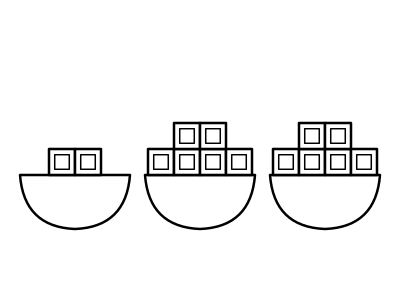
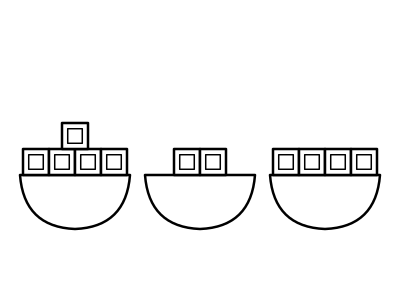
    1. 5.
      3 bowls; the first has 5 cubes, the second has 2 cubes and the third has 4 cubes.
    2. 6.
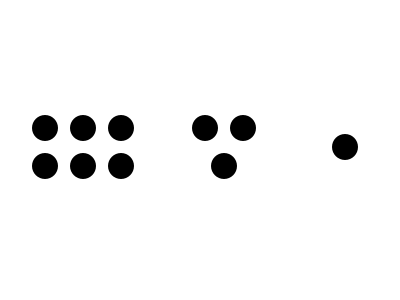
      3 groups of dots: 6 dots, 3 dots and 1 dot.
    3. 7.
      3 bowls; the first has 2 cubes, the second has 6 cubes and the third has 6 cubes.

    Challenge (optional)

    Pick three numbers, each 6 or less, that add to 12. Write the equation.

    You need: cubes or counters (optional)

    Reading & Writing · Week 5 Day 1

    I can describe the characters, setting and big events in a story.

    Look: characters, setting and big events

    1. Read "The Lost Pup" together.
    2. Say: "The characters are Kent and the pup. The setting is a camp."
    3. Say: "The big events: the pup ran, Kent looked, and Kent got the pup."

    The Lost Pup

    Kent had a pup at the camp. The pup ran from the tent. Where was the pup? It was in the pond! Kent got the wet pup.

    Read each sentence. Circle the word that matches the story.

    1. 1.
      Kent had a ___.
      • pup
      • cat
    2. 2.
      Kent was at the ___.
      • camp
      • shop
    3. 3.
      The pup was in the ___!
      • pond
      • tent

    Say the picture name. Write the two letters at the end.

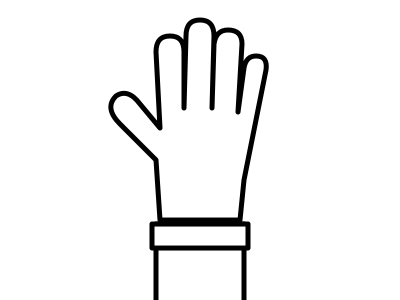
    1. 4.
      A hand. h a ___
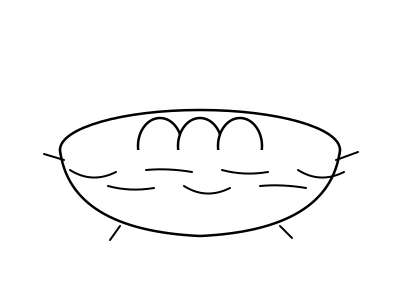
    2. 5.
      A nest. n e ___
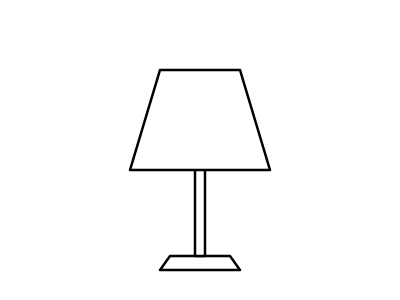
    3. 6.
      A lamp. l a ___
    4. 7.
      A glass of milk. m i ___

    Challenge (optional)

    Where was the pup?

    Science · Week 5 Day 1

    I can plan a test to see if a hard tap shakes more than a soft tap.

    Look: Plan a fair test

    1. We want to know: does a hard tap shake more than a soft tap?
    2. Change one thing: the tap. Keep the rest the same: the same drum, the same spoon, the same spot.
    3. Watch and record what happens each time.

    Is the test fair? A fair test changes only one thing. Circle yes or no.

    1. 1.
      Tap 1 is a soft tap on a big drum. Tap 2 is a hard tap on a little drum.
      • yes
      • no
    2. 2.
      Tap 1 is soft and tap 2 is hard. Both use the same drum, the same spoon and the same spot.
      • yes
      • no
    3. 3.
      A soft bang with the pot 6 inches from the bowl. A hard bang with the pot across the room.
      • yes
      • no
    4. 4.
      A soft bang and a hard bang, both with the pot at the tape mark.
      • yes
      • no

    Circle or draw.

    1. 5.
      We test a big drum and a little drum, tapped the same way. How many things do we change?
      • 1
      • 2
      • 3
    2. 6.
      Which picture shows a bigger shake?
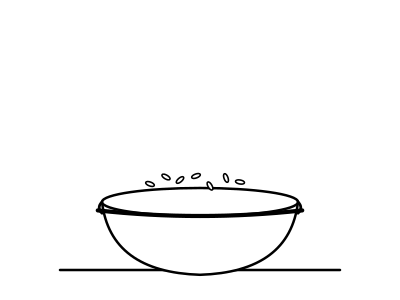
      • Rice grains just off the plastic of a bowl drum.
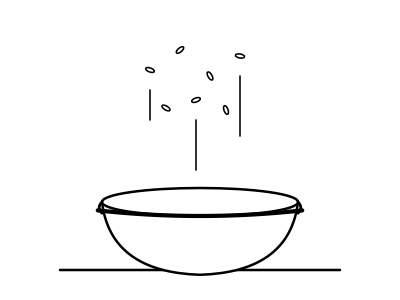
      • Rice grains high in the air above a bowl drum.
    3. 7.
      A new test: does a big spoon or a little spoon make the rice jump more? Draw the one thing you will change.

    Challenge (optional)

    Why must the pot go at the tape mark every time?

    You need: crayons