This week's lessons
Math and reading every day; science and social studies take turns
- Day 1 · Monday
- MathAdding three numbersI can add three numbers to find the total.
- Reading & WritingPeter's adventureI can describe the characters, setting and big events in a story.
- SciencePlan a fair testI can plan a test to see if a hard tap shakes more than a soft tap.
- Day 2 · Tuesday
- MathLook for a tenI can add three numbers by finding two that make 10.
- Reading & WritingPicture detectivesI can use pictures to tell how Peter feels and where he is.
- Social StudiesDeciding togetherI can help my group make a choice by sharing ideas and voting.
- Day 3 · Wednesday
- MathLook for a doubleI can add three numbers by finding a double.
- Reading & WritingThe lesson in the storyI can retell the story and tell what Peter learned.
- ScienceThick and thin, high and lowI can find out how changing a band changes its sound.
- Day 4 · Thursday
- MathThree-addend story problemsI can solve a story with three numbers that add to 20 or less.
- Reading & WritingStretch my story across pagesI can write a story across three pages with a detail on each.
- Social Studies · CheckSame question, different answersI can share my idea and tell how a friend's idea is different.
- Day 5 · Friday
- Math · CheckLesson + weekly check: three numbersI can add three numbers and show which two I added first.
- Reading & Writing · CheckShare and check: ending blendsI can read words with ending blends and share my booklet.
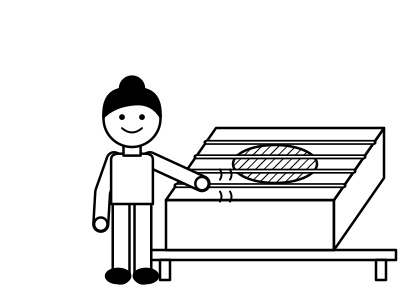
- Science · CheckMake a shoebox instrumentI can make an instrument and show where it vibrates.
This week's checks
Short checks on the last day each subject meets this week
Social Studies · Day 4
- I can help my group make a choice by sharing ideas and voting.
- I can share my idea and tell how a friend's idea is different.
Secure when: 6 of 8 correct, with at least one right on each goal
Open the checkMath · Day 5
- I can add three numbers to find the total.
- I can add three numbers by finding two that make 10.
- I can add three numbers by finding a double.
- I can solve a story with three numbers that add to 20 or less.
Secure when: 7 of 8 correct, and every item has a circled pair or a clear first step
Open the checkReading & Writing · Day 5
- I can read words that end with st, nd, mp, nt, ft and lk.
- I can read the sight words from, were, there, where and here.
- I can blend sounds to say a word with an ending blend.
- I can tell the characters, setting and big events in a story.
- I can find a describing word.
Secure when: 8 of the 10 words in items 1 and 2, 4 of the 5 sight words, 2 of the 3 blended words, and 3 of items 7 to 10.
Open the checkScience · Day 5
- I can plan a test to see if a hard tap shakes more than a soft tap.
- I can find out how changing a band changes its sound.
- I can make an instrument and show where it vibrates.
Secure when: 6 of 8 correct, including items 1 and 2 (plays, points to the bands and explains in one sentence).
Open the check
Reading About Our World: Music Makers
Read it aloud. Your child reads the sentences marked with a star. Builds science knowledge.
Strings Shake
A guitar has strings. When you pluck a string, it shakes back and forth. That shaking makes music. Pluck it harder, and the sound gets louder. I can tap a thin band. It can hum.
Thick and Thin
On a guitar, a thick string makes a low sound. A thin string makes a high sound. Players choose strings to make high and low notes.
Drums and Voices
A drum has a tight top. Tap it, and the top shakes. Your voice works by shaking too. Every instrument makes sound by making something vibrate.
Words to know
- instrument: something people play to make music
- pluck: pull and let go quickly
- note: one sound in music
Talk about it
- What does a thin guitar string make: a high sound or a low sound?
- What shakes when you tap a drum?
- A player wants a very low note. Should the player pluck a thick string or a thin string? Why?
Home Connection
Five-minute ideas for the whole family, with things you already have
Math
We can add three numbers by looking for a ten or a double first.
Do: Make three small piles of beans: 4, 6 and 3. Your child adds them by finding a ten first: 4 + 6 = 10, then 10 + 3 = 13.
Talk: Which two numbers would you add first, and why?
Reading & Writing
Many stories teach a lesson.
Do: Read The Tale of Peter Rabbit by Beatrix Potter, or any story about a character who gets into trouble. Write jump, hand, best, tent and milk for your child to read.
Talk: What lesson did the character learn?
Science
We can plan a fair test, and changing how something shakes changes its sound.
Do: Stretch 2 or 3 rubber bands of different thickness around an open shoebox. Your child plucks each one gently and listens. A grown-up helps.
Talk: Which band made the highest sound? Which made the lowest?
Social Studies
Groups can make choices together by sharing ideas and voting.
Do: Hold a family vote on a game to play or a snack to share, with 2 or 3 choices. Everyone gives one reason, then votes.
Talk: How did it feel if your choice did not win?
This week's words: from, were, there, where, here
Celebrate a three-number sum, the lesson your child found in a story and a family vote.
Math catch-up: Check Off Each Number
10 minutes, if this week's math check was not secure · 1.OA.A.2
With three numbers, children often add two and forget the third. A check mark under each number as it is added keeps all three in the total.
You need: 3 small bowls, 20 dry beans, paper and a pencil
- Write 4 + 6 + 3 on paper. Put 4, 6 and 3 beans in three bowls.
- Ask: "Is there a 10?" Your child finds 4 and 6, pours them together and says "10." Put a check under the 4 and the 6.
- Ask: "Which number has no check?" (3.) Pour it in and count on from 10: 11, 12, 13. Check the 3.
- Do 2 more with new numbers whose total is 20 or less. Your child checks off each number before saying the total.
Try again
- 3 + 7 + 6 = ___ (Look for a ten.)
- 5 + 7 + 5 = ___ (Look for a double.)
- 2 + 8 + 5 = ___
Specials This Week
Weeks 1–6 unit • ~90 min/week per subject
Locomotor Skills and Space Awareness
Mastering basic locomotor skills (walking, running, hopping, jumping, galloping, sliding, skipping), understanding personal and general space.
Exploring Line and Shape
Different types of lines (straight, curved, zig-zag, wavy), identifying basic shapes, creating patterns with lines and shapes.
Rhythm and Beat
Identifying and keeping a steady beat, understanding basic rhythms (ta – quarter note, ti-ti – eighth notes), clapping and patting rhythms.
For guiding principles and full standards reference, visit How to use this curriculum
As an Amazon Associate, we earn from qualifying purchases. Book and supply links on this page are affiliate links — using them supports this curriculum at no extra cost to you.