1First Grade

    Look for a double

    The lesson in the story

    Practice pages

    0 of 180 days complete · Saved on this device

    View all 180 days

    Math

    Look for a double

    I can add three numbers by finding a double.

    Standards: 1.OA.A.2, 1.OA.B.3

    Number practice (no timer)
    Doubles to 5 + 5; make 10 with three numbers
    Builds on
    Day 2 look for a ten, and doubles to 5 + 5. One-minute check: "3 + 3 = ?" (6) "4 + 4 = ?" (8)

    New words

    • double: two of the same number added together, such as 4 + 4

    You need

    • 20 cubes
    • 15 envelopes or folded paper letters for the mail-carrier story
    • Crayon
    • Notebook and pencil
    1. Warm-Up · 5 min

      Fluency: doubles to 5 + 5 and make 10 with three numbers. Your child shows doubles with two hands: 1 + 1, 2 + 2, 3 + 3, 4 + 4, 5 + 5 (2, 4, 6, 8, 10). Spaced review from Day 2: "7 + 1 + 3 = ?" (11)

    2. Mini-Lesson · 10 min

      Say: "Today we look for a double when we add three numbers." Write 3 + 3 + 5. Ask: "Do you see two numbers that are the same?" (3 and 3) Circle them. Say: "3 + 3 = 6. That is a double. Now add 5. 6 + 5 = 11." Build it with cubes to check: two towers of 3 and a tower of 5. Now tell a mail-carrier story with the envelopes: "The mail carrier brings 4 letters to one house, 4 letters to the next house and 2 letters to the last house." Your child sorts the envelopes. Write 4 + 4 + 2. Ask: "Is there a double?" (4 + 4 = 8) "Add the 2." (10) Ask: "Is there a 10 too?" (No. But the double helped.)

    3. Guided Practice · 10 min

      Your child circles the double, adds it, then adds the third number. 1) 2 + 2 + 7 (2 + 2 = 4, 4 + 7 = 11) 2) 5 + 3 + 5 (5 + 5 = 10, 10 + 3 = 13) 3) 1 + 6 + 6 (6 + 6 = 12, 12 + 1 = 13) 4) 3 + 4 + 3 (3 + 3 = 6, 6 + 4 = 10) For number 3, say: "6 + 6 is a new double. Build two towers of 6 to find it." If stuck, say: "Point to two numbers that look the same. Show both on your fingers. How many?"

    4. Play · 10 min

      Mail Carrier. Your child is the mail carrier and delivers envelopes to three houses (three spots on the floor). You say how many letters go to each house, always with a double: 2, 2 and 5; 4, 3 and 4; 5, 5 and 2. Your child delivers them, then tells how many letters in all and which double helped. Answers: 9, 11 and 12. Then your child picks the numbers, with no more than 5 letters for each house, and you deliver.

    5. Exit Ticket · 3-5 min

      Put the objects to one side but leave them on the table. Read each question aloud. Your child answers out loud, with objects or with a quick drawing. Check each answer together right away.

    Exit ticket

    1. 3 + 3 + 5 = ? Which double did you use?
    2. Solve 4 + 4 + 2.
    3. Solve 2 + 5 + 5.
    Answers
    1. 11; 3 + 3 = 6
    2. 10
    3. 12 (5 + 5 = 10, then 10 + 2)
    Watch for, and help or stretch
    Watch for
    Not seeing a double when it is not next to the other number, as in 5 + 3 + 5.
    Try
    Have your child point to the first number and look at every other number for its match.
    Extra help
    Build every problem with cube towers and stand the two double towers side by side.
    Stretch
    Ask your child to make a three-number problem that has both a double and a 10 (such as 5 + 5 + 5: 10 + 5 = 15).

    At home (optional): Find doubles at home (2 shoes, 2 hands, 2 eyes) and add one more thing to make a three-number problem.
    Reading & Writing

    The lesson in the story

    I can retell the story and tell what Peter learned.

    Standards: RL.1.2, SL.1.1.b, SL.1.6

    Phonics
    Ending blends -st, -nd, -mp, -nt, -ft, -lk (best, hand, jump, tent)
    Sight words
    from, were, there, where, here
    Reading
    The Tale of Peter Rabbit (Beatrix Potter, public domain)
    Writing
    Personal narrative: adding details and telling the story across pages · Handwriting: lowercase e, f, s; all lowercase review
    Builds on
    Retelling in order (Week 3). One-minute check: your child uses the story map from Day 1 to tell the first event of Peter Rabbit.

    New words

    • lesson: what a character learns in a story, or what the story teaches us
    • add on: say something that builds on what another person said

    You need

    • Story map from Day 1
    • The Tale of Peter Rabbit (Beatrix Potter, public domain; any edition of the original text and pictures works, including a library copy)
    • Sight word cards
    • Printed "Max and the Raft"
    1. Phonics & Word Work · 15 min

      Blends with digraphs. I do: read chest, chimp, thump, shift. Say: "A digraph and a blend can live in the same word." We do: read past, fast, went, lift, wind, milk from "Max and the Raft". You do: your child reads lamp, sent, gust, pump, hand, soft, chest, thump. Read: "The wind went past." "Here is a cup of milk." Dictation: fast, went, milk, lift. If stuck, frame the blend with two fingers and read it slowly before reading the whole word.

    2. Sight Words · 5 min

      Review: from, were, there, where, here. Word Hunt: your child finds this week's words in the decodable story or a book on the shelf and points to each one as you count them. Use "Max and the Raft". (where, there, were and here are all in it)

    3. Read-Aloud & Shared Reading · 15 min

      Your child retells Peter Rabbit using the story map, in order. Then talk it through. Ask: "What did Peter's mother tell him?" (Do not go into Mr. McGregor's garden.) Ask: "What happened because he did not listen?" (He was chased, lost his jacket and shoes, and felt sick.) Ask: "What did Peter learn?" (Answers vary. Look for: listen to your parent, or it is not safe to go where you are warned not to go.) Say your own idea, such as "I think Peter learned to stay out of the garden." Your child adds on in a full sentence: "I think so too, because ___." or "I think something different, because ___." (SL.1.1.b, SL.1.6)

    4. Writing & Handwriting · 15 min

      Your child writes one sentence about the lesson: "Peter learned ___." Then one about themself: "I learned to ___ too." (Answers vary.) Handwriting (4 min): all-lowercase review. Your child writes the alphabet in lowercase on lined paper, saying each letter, and circles any letter that needs more practice.

    5. Exit Ticket · 5 min

      Oral answers.

    Exit ticket

    1. What did Peter learn?
    2. I think Peter was brave. Add on to my idea.
    3. Read this word: thump.
    Answers
    1. Answers vary. Look for: a lesson such as listen to your mother or stay safe.
    2. Answers vary. Look for: "I think so too, because..." or "I think something different, because..." with a reason.
    3. thump
    Watch for, and help or stretch
    Watch for
    Retelling every small event, or retelling out of order.
    Try
    Use only the three event boxes. Say: "Just the big events. What happened first?"
    Extra help
    Retell with the pictures in the book open, turning pages as your child talks.
    Stretch
    Your child compares Peter to his sisters: what did they do differently? (They went to pick blackberries and stayed out of the garden.)

    At home (optional): Ask a family member: "What is a time you did not listen and learned a lesson?" Listen and add on.

    Science

    Thick and thin, high and low

    I can find out how changing a band changes its sound.

    Standards: 1-PS4-1

    Builds on
    Planning a fair test. One-minute check: ask "In a fair test, how many things do you change?" (one)

    New words

    • thick: wide and big around
    • thin: narrow and skinny

    You need

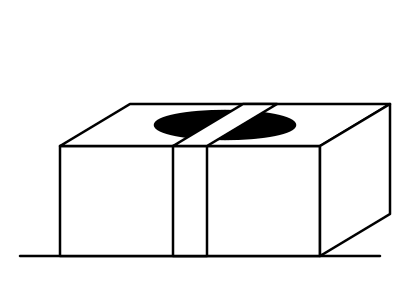
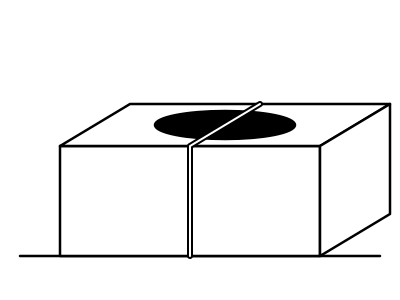
    • A thick rubber band and a thin rubber band, stretched around the open box by a grown-up
    • 3 matching sturdy mugs or metal cups (not glass)
    • Water and a measuring cup
    • A metal spoon
    • A towel for spills
    • Cause and effect chart with 2 columns: What I changed / What I heard
    • Sound Journal
    1. Warm-Up / Wonder · 5 min

      Spaced review: your child sorts two sounds: a whistle (high) and a big drum (low). Wonder question: "If two rubber bands are different, will they sound different?"

    2. Explore · 10–15 min

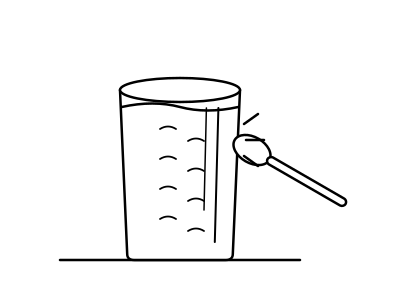
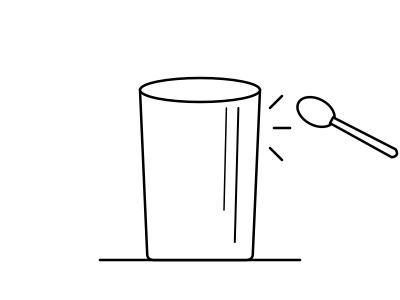
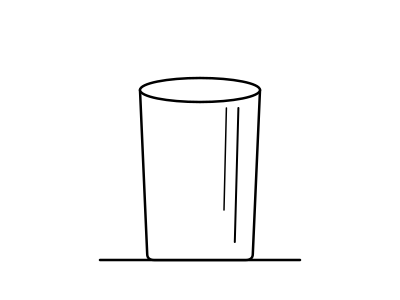
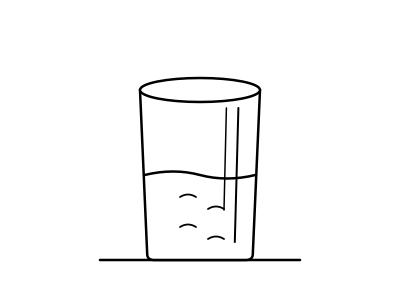
      Part 1, bands: your child plucks the thin band, then the thick band. Ask: "Which sounds higher?" (the thin band) "Which sounds lower?" (the thick band) Pluck each again and watch. Ask: "Which one shakes faster?" (Both look blurry, so it is hard to tell. Say: "Scientists measured it. The thin band shakes faster, and faster shaking makes a higher sound.") Part 2, cups: fill the cups with water: the first with none, the second with half a cup, the third with 1 cup (or almost full). Your child taps each one gently near the top edge with the spoon. Ask: "Which sounds lowest?" (The cup with the most water.) "What part is vibrating?" (The cup and the water in it.) If stuck hearing the difference, your child closes their eyes while you tap two cups, one after the other, and tells which was lower. The difference can be small, so tap gently and listen closely.

    3. Talk & Record · 5–10 min

      Fill in the cause and effect chart together. Row 1: "Thin band" / "high sound." Row 2: "Thick band" / "low sound." Row 3: "Lots of water" / "low sound." Your child draws one row. Say: "When we changed what was vibrating, the sound changed."

    4. Exit Ticket · 3–5 min

      Ask the three questions aloud.

    Exit ticket

    1. Which band made a lower sound, the thick one or the thin one?
    2. When you tapped the cup, what was vibrating?
    3. Which cup sounded lowest?
    Answers
    1. The thick band.
    2. The cup and the water in it.
    3. The cup with the most water.
    Watch for, and help or stretch
    Watch for
    Mixing up high and low with loud and quiet, such as calling the thick band "louder."
    Try
    Pluck the thin band hard and the thick band softly. Ask: "Which is louder?" then "Which is higher?" as two separate questions.
    Extra help
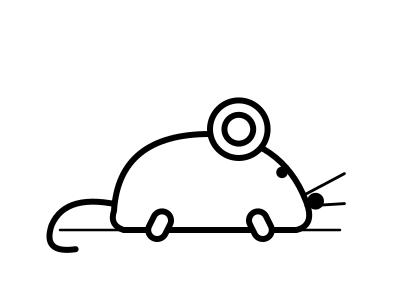
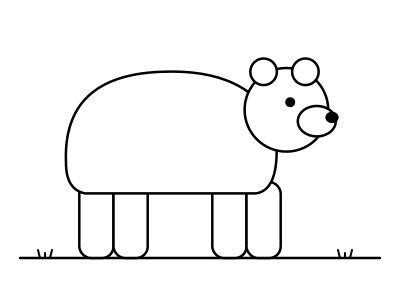
    Do only Part 1 with the bands, and use the words "mouse" (high) and "bear" (low).
    Stretch
    Your child lines up the 3 cups from highest sound to lowest and plays a 3-note tune.

    At home (optional): Your child plays the cups or the bands for a family member and points out the highest and lowest sounds.

    Practice

    Read each direction aloud. Your child works on the page; answers are in the grown-up view.

    Warm-up

    Remember?

    Math

    1. Sam has 4 grapes. Zoe has 9 grapes. How many fewer grapes does Sam have?
    2. 2 + 6 = 8. So what is 8 - 2?

    Reading & Writing

    Math · Week 5 Day 3

    I can add three numbers by finding a double.

    Look: 4 + 1 + 4

    1. Look for two numbers that are the same: 4 and 4. Circle them.
    2. 4 + 4 = 8. That is a double.
    3. Add the last number: 8 + 1 = 9. So 4 + 1 + 4 = 9.

    Circle the double. Write the sum.

    1. 1.
      2 + 2 + 6 = ___
    2. 2.
      1 + 1 + 9 = ___
    3. 3.
      5 + 5 + 3 = ___
    4. 4.
      6 + 2 + 6 = ___

    Listen to the story. Write how many in all.

    1. 5.
      The mail carrier brings 3 letters to one house, 3 letters to the next house and 1 letter to the last house. How many letters?
    2. 6.
      A farm has 4 cows, 2 pigs and 4 goats. How many animals?
    3. 7.
      3 towers of cubes with 6, 6 and 3 cubes. How many cubes in all?

    Challenge (optional)

    Solve 6 + 5 + 6. Which double did you use?

    You need: cubes (optional)

    Reading & Writing · Week 5 Day 3

    I can retell the story and tell what Peter learned.

    Look: retell and find the lesson

    1. Read "Ned and the Pond" together. Retell it on three fingers: Mom said do not go in, Ned went in, Ned sat in the mud.
    2. Ask: "What did Ned learn?" (to do what Mom said)
    3. Say: "The lesson is what a character learns. We can learn it too."

    Ned and the Pond

    Mom said, "Ned, do not go in the pond." Ned went in. Ned sat in the mud! He lost a sock. "I must do what Mom said," said Ned.

    Write 1, 2 and 3 to retell the story in order.

    1. 1.
      Ned sat in the mud!
    2. 2.
      Mom said, "Do not go in the pond."
    3. 3.
      Ned lost a sock.

    Read and circle, then finish the sentence about you.

    1. 4.
      Ned must ___.
      • do what Mom said
      • go in the pond
    2. 5.
      Did Ned do what Mom said?
      • yes
      • no
    3. 6.
      I must ___.

    Challenge (optional)

    Ned lost a ___.

    Science · Week 5 Day 3

    I can find out how changing a band changes its sound.

    Look: Change the band, change the sound

    1. Pluck a thin band. It sounds high, like a mouse.
    2. Pluck a thick band. It sounds low, like a bear.
    3. We changed the band, and the sound changed.

    Each thing is plucked or tapped. Circle the mouse for a high sound or the bear for a low sound.

    1. 1.
      A very thick rubber band stretched on a box.
      • A mouse.
      • A bear.
    2. 2.
      A very thin rubber band stretched on a box.
      • A mouse.
      • A bear.
    3. 3.
      A metal cup filled almost to the top with water, tapped with a spoon.
      • A mouse.
      • A bear.
    4. 4.
      An empty metal cup, tapped with a spoon.
      • A mouse.
      • A bear.

    Circle or draw.

    1. 5.
      Circle the cup that sounds highest when you tap it.
      • An empty metal cup.
      • A half-full metal cup.
      • A full metal cup.
    2. 6.
      A guitar has thick strings and thin strings. Circle the string that makes the high sounds.
      • A thick guitar string.
      • A thin guitar string.
    3. 7.
      Draw a rubber band that would make a low sound.

    Challenge (optional)

    Pull a band tighter on the box. Predict: will it sound higher or lower?

    You need: crayons