1First Grade

    Three-addend story problems

    Stretch my story across pages

    Practice pages

    0 of 180 days complete · Saved on this device

    View all 180 days

    Math

    Three-addend story problems

    I can solve a story with three numbers that add to 20 or less.

    Standards: 1.OA.A.2

    Number practice (no timer)
    Doubles to 5 + 5; make 10 with three numbers
    Builds on
    Days 2 and 3 making a ten and doubles. One-minute check: "6 + 4 + 5 = ?" Your child circles 6 and 4 first (15).

    New words

    • community helper: a person whose job helps the people in a town, such as a firefighter or librarian

    You need

    • 20 counters
    • Paper and crayons for drawing
    • Notebook and pencil
    1. Warm-Up · 5 min

      Fluency: doubles to 5 + 5 and make 10 with three numbers. "5 + 5 = ?" (10) "1 + 9 + 3: which two make 10?" (1 and 9; sum 13) Spaced review from Week 4: "Some fish. 3 more came. Now there are 8. How many at first?" (5)

    2. Mini-Lesson · 10 min

      Say: "Today we solve stories with three numbers about community helpers." Tell a story: "5 firefighters are at the station. 3 more arrive. Then 5 more come. How many firefighters in all?" Your child draws 5 circles, 3 circles and 5 circles. Write 5 + 3 + 5 = ? Ask: "Is there a double or a 10?" (5 + 5 is a double and makes 10.) Circle the two 5s. Say: "5 + 5 = 10. 10 + 3 = 13. There are 13 firefighters." Write 13 in place of the ?. Say: "When the sum is up to 20, look for a 10 or a double first."

    3. Guided Practice · 10 min

      Your child draws each story, circles the pair added first and writes the equation with ?. 1) "A baker makes 6 loaves, then 2 loaves, then 4 loaves." (6 + 2 + 4 = ?; 6 + 4 = 10, 10 + 2 = 12) 2) "A vet sees 3 dogs, 7 cats and 3 rabbits." (3 + 7 + 3 = ?; 3 + 7 = 10, 10 + 3 = 13) 3) "A crossing guard helps 8 kids, then 1 kid, then 2 kids." (8 + 1 + 2 = ?; 8 + 2 = 10, 10 + 1 = 11) 4) "A librarian puts away 4 books, 4 books and 9 books." (4 + 4 + 9 = ?; 4 + 4 = 8, 8 + 9 = 17) For number 4, start at 9 and count on 8, holding up a finger for each count: 10, 11, 12, 13, 14, 15, 16, 17. If stuck, say: "Draw one group at a time. Then find two groups that are easy to add."

    4. Play · 10 min

      Helper Stories. Your child chooses a community helper (bus driver, nurse, mail carrier, farmer, teacher) and tells a three-number story with a sum of 20 or less. You draw it and write the equation. Your child checks your work. Then you tell one and your child draws and solves it. Do 3 stories each.

    5. Exit Ticket · 3-5 min

      Put the objects to one side but leave them on the table. Read each question aloud. Your child answers out loud, with objects or with a quick drawing. Check each answer together right away.

    Exit ticket

    1. A nurse gives 2 stickers, then 8 stickers, then 3 stickers. How many in all?
    2. Which two numbers did you add first?
    3. Solve 6 + 6 + 2.
    Answers
    1. 13 stickers
    2. Answers vary. Look for: 2 and 8 to make 10 is a strong choice; any correct order is fine.
    3. 14
    Watch for, and help or stretch
    Watch for
    Losing a number when drawing, such as drawing only two groups.
    Try
    Before drawing, your child holds up one finger for each number in the story (3 fingers), then draws one group per finger.
    Extra help
    Use sums to 10 and let your child act out each story with counters.
    Stretch
    Add a fourth number, such as "5, 5, 3 and 2" (15), still within 20.

    At home (optional): Tell a three-number helper story to a family member and draw it together.
    Reading & Writing

    Stretch my story across pages

    I can write a story across three pages with a detail on each.

    Standards: W.1.3, L.1.2.e, RF.1.3.b

    Phonics
    Ending blends -st, -nd, -mp, -nt, -ft, -lk (best, hand, jump, tent)
    Sight words
    from, were, there, where, here
    Reading
    The Tale of Peter Rabbit (Beatrix Potter, public domain)
    Writing
    Personal narrative: adding details and telling the story across pages · Handwriting: lowercase e, f, s; all lowercase review
    Builds on
    Writing a small moment (Week 4). One-minute check: your child reads the small moment from Week 4.

    New words

    • booklet: a small book made of folded or stapled pages
    • describing word: a word that tells more, like big, loud or fast

    You need

    • Stapled 3-page booklet
    • Handwriting sheet (e, f, s)
    • Small moment from Week 4
    • Sight word cards
    1. Phonics & Word Work · 15 min

      I do: Change One Sound chain, reading each word aloud: band, bend, bent, hunt, hint, mint, mist. We do: read the chain together. You do: your child reads damp, list, bump, gift, wind, silk, went, past. Read: "The tent is damp." "They went from the pond to the camp." Dictation: damp, mint, bend, soft, chest. If stuck, compare two words in the chain and ask: "Which letter changed? What sound does it make?"

    2. Sight Words · 5 min

      Review: from, were, there, where, here. Rainbow Write: your child writes two of this week's words three times each in different crayons, saying each letter, then reads them. Use where and there.

    3. Read-Aloud & Shared Reading · 15 min

      Look at how Potter spreads her story across many pages, one event on each. Ask: "What happens on this page?" for three pages in a row. (Answers vary. Look for: one event per page.) Ask: "Why does she use a new page for each event?" (Answers vary. Look for: so we can see each part, or so it is not too much on one page.) Then your child reads "Max and the Raft" to you smoothly.

    4. Writing & Handwriting · 15 min

      Your child turns the small moment into a 3-page booklet: one event per page. Each page gets a picture and a sentence with one describing word (big, loud, fast, red). Say: "Page 1 is the start, page 2 is the middle, page 3 is the end." Handwriting (4 min): model each letter large in the air, then on paper while saying the path aloud. e: start in the middle, go across, then up and around like a c; f: start like a candy cane at the top, pull down, then cross at the middle line; s: start at 2 o'clock, curve back, then curve the other way like a snake. Your child writes each letter 3 times on lined paper and circles the best one. Review all three letters once each.

    5. Exit Ticket · 5 min

      Your child shows the booklet.

    Exit ticket

    1. What happens on page 2 of your booklet?
    2. Point to a describing word.
    3. Read this word: mint.
    Answers
    1. Answers vary. Look for: the middle event of the moment.
    2. Answers vary. Look for: a word such as big, loud or fast.
    3. mint
    Watch for, and help or stretch
    Watch for
    Putting the whole story on page 1 and leaving the other pages empty.
    Try
    Touch each page and say what goes there before writing: "Start. Middle. End."
    Extra help
    Your child finishes pictures on all 3 pages today and writes one sentence; the rest can be added tomorrow.
    Stretch
    Your child adds a sound word or a feeling word to every page.

    At home (optional): Read your booklet to a family member and ask which describing word they liked best.

    Social StudiesWeekly check

    Same question, different answers

    I can share my idea and tell how a friend's idea is different.

    Standards: D2.Civ.10.K-2, D4.4.K-2

    Builds on
    Deciding together. One-minute check: draw 1 bundle of 5 tally marks and 1 more line, and ask how many. (6)

    New words

    • opinion: what someone thinks or feels about something
    • reason: the "because" part that tells why

    You need

    • 'Which is better?' question cards (sample: summer or winter? pancakes or waffles?)
    • Two-column T-chart: My idea / Another person's idea
    • Pencil
    1. Warm-Up / Wonder · 5 min

      Spaced review: ask: "What did our family vote on?" (Answers vary.) Wonder question: "Can two people have different opinions and both have good reasons?"

    2. Review Game · 10 min

      Play "This or That." Read a question card. Your child picks one and says a reason with "because." (Sample: "Summer, because I can swim.") You pick and give a reason too. Do 3 cards. Then the big question: "Should recess (play break) be longer or shorter?" Your child gives their opinion and a reason, and you write it in the left column. Then your child interviews a family member: "What do you think? Why?" Your child records the answer in the right column with your help. If stuck finding a reason, ask: "What would happen if it were longer? Would that be good or bad for you?"

    3. Check · 10 min

      Give the Week 5 social studies check. The check items are on the Week 5 check page; do not show them ahead of time. This week the check is spoken, using the T-chart. Read each part aloud. Your child answers by talking, pointing, acting it out or drawing, and you write their words exactly. It is not timed; stop and finish later if your child is tired. Make a check mark next to each part your child shows on their own. The printed check has 8 items. It covers these goals: (1) I can help my group make a choice by sharing ideas and voting; (2) I can share my idea and tell how a friend's idea is different. Your child tells how their idea and the other person's idea are different, and asks one question about the other person's reason. Look for: two different opinions named correctly, and a real question, such as "Why do you think a shorter break is better?" Secure: 6 of 8 correct, with at least one right on each goal. If the check is not yet secure, use the reteach step on the check page that matches the items missed.

    4. Exit Ticket · 3–5 min

      Ask the three questions aloud.

    Exit ticket

    1. What was your opinion, and what was your reason?
    2. What was the other person's reason?
    3. Ask one question about their reason.
    Answers
    1. Answers vary. Look for: an opinion with a "because."
    2. Answers vary. Look for: an accurate retelling of the other person's reason.
    3. Answers vary. Look for: a real question, such as "Why do you think that?" or "What would you do with more time?"
    Watch for, and help or stretch
    Watch for
    Saying the other person's opinion is "wrong" because it is different.
    Try
    Say: "An opinion is not right or wrong. We can disagree and still listen." Ask your child to repeat the other reason kindly.
    Extra help
    Use a simpler question (pancakes or waffles?) and give the starter "I think ___ because ___."
    Stretch
    Your child interviews two people and tells which reason they think is strongest and why.

    At home (optional): Your child asks a family member one "This or That" question and listens for the reason.

    Practice

    Read each direction aloud. Your child works on the page; answers are in the grown-up view.

    Warm-up

    Remember?

    Math

    1. 8 balloons are tied to a chair. 5 float off. How many are left?
    2. 4 kids are on the bus. Some more get on. Now there are 7. How many more came?

    Reading & Writing

    1. Mom said to get the red bag.

    Math · Week 5 Day 4

    I can solve a story with three numbers that add to 20 or less.

    Look: a baker's story

    1. A baker makes 2 pies, then 5 pies, then 8 pies. Draw 2, 5 and 8 circles.
    2. Look for a 10: 2 + 8 = 10.
    3. Add the last number: 10 + 5 = 15. Write 2 + 5 + 8 = 15.

    Listen to the story. Draw it. Write the equation.

    1. 1.
      A farmer picks 1 pumpkin, then 5 pumpkins, then 9 pumpkins. How many pumpkins?
    2. 2.
      A bus driver picks up 5 kids, then 6 kids, then 5 kids. How many kids?
    3. 3.
      A librarian puts away 7 books, then 2 books, then 3 books. How many books?

    Listen to the story. Write how many in all.

    1. 4.
      A vet sees 4 dogs, 4 cats and 1 bird. How many animals?
    2. 5.
      A teacher hands out 8 pencils, then 2 pencils, then 9 pencils. How many pencils?
    3. 6.
      A mail carrier brings 2 boxes, 3 boxes and 2 boxes. How many boxes?
    4. 7.
      A crossing guard helps 10 kids, then 3 kids, then 4 kids. How many kids?

    Challenge (optional)

    Make up a helper story with three numbers that add to 20. Write the equation.

    You need: crayons

    Reading & Writing · Week 5 Day 4

    I can write a story across three pages with a detail on each.

    Look: one detail on each page

    1. Say: "A story can go across three pages: the start, the middle and the end."
    2. Read "The Tent". Point to big, red and hot: "Each part has a describing word."
    3. Sketch three boxes and say one part of your own story for each box.

    The Tent

    We set up a big tent. It had a red rug in it. Then a hot wind hit the tent. We had fun in the tent.

    Read the sentence. Circle the describing word.

    1. 1.
      A wet dog ran.
    2. 2.
      I had a soft hat.
    3. 3.
      The tan cat sat.

    Plan your story in three boxes. Draw one part in each box.

    1. 4.
      The start:
    2. 5.
      The middle:
    3. 6.
      The end:

    Challenge (optional)

    The tent was ___.

    You need: crayons

    Social Studies · Week 5 check

    Weekly check

    How to give it: Read every question and choice aloud, and point to each picture as you name it. This week the check is spoken, using the T-chart from Day 4. Your child answers by talking, pointing, circling, acting it out or drawing; write their words exactly on the line. It is not timed; stop and finish later if your child is tired. Do not show the page ahead of time. Write your child's opinion in the left column and yours in the right column. Make a check mark next to each part your child shows on their own.

    Secure when: 6 of 8 correct, with at least one right on each goal

    • I can help my group make a choice by sharing ideas and voting.
    • I can share my idea and tell how a friend's idea is different.
    1. 1.
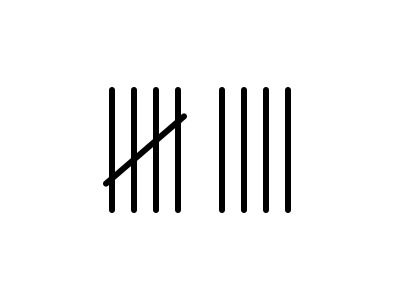
      One bundle of 5 tally marks and 4 more marks. How many votes?
    2. 2.
      Tell the steps for deciding together, in order.
    3. 3.
      Apples got 6 votes. Pears got 4 votes. Which won?
      • An apple.
      • A pear.
    4. 4.
      Is it fair if only one person in the family gets to vote?
      • yes
      • no
    5. 5.
      Which is better, a cat or a dog? Tell your opinion with "because."
    6. 6.
      My opinion: "Winter is the best season because I like hot cocoa." How is my idea different from yours?
    7. 7.
      What could you ask me to learn more about why I like winter?
    8. 8.
      Can two people have different opinions and both have good reasons?
      • yes
      • no