1First Grade

    Review: adding and taking stories

    -ng and -nk

    Practice pages

    0 of 180 days complete · Saved on this device

    View all 180 days

    Math

    Review: adding and taking stories

    I can solve adding and taking-away stories.

    Standards: 1.OA.A.1, 1.OA.C.5

    Number practice (no timer)
    Counting on from the bigger number
    Builds on
    Weeks 1, 2 and 4 adding and taking stories. One-minute check: "7 + 2 = ?" (9) "9 - 3 = ?" (6)

    New words

    • count on: start at a number and count forward to add

    You need

    • 20 counters
    • Number line 0 to 20 drawn on a strip of paper
    • 2 dice
    • Deck of cards ace to 10
    • Notebook and pencil
    1. Warm-Up · 5 min

      Fluency: counting on from the bigger number. Say a number and your child counts on 3 more: 6 (7, 8, 9), 9 (10, 11, 12). Spaced review from Week 5: "2 + 8 + 3 = ?" (13)

    2. Mini-Lesson · 10 min

      Say: "This week we review all our story types. Today we also learn a quick way to add: counting on." Tell a story: "6 kids are on the slide. 3 more come." Say: "We do not need to count all 9 from 1. We know there are 6. Put 6 in your head and count on." Tap your head and say "6," then hold up fingers: "7, 8, 9." Say: "6 + 3 = 9." Write it. Now say: "2 + 7. Which number is bigger?" (7) "Start at 7 and count on 2." (8, 9) Say: "Starting with the bigger number means fewer counts." Then tell a take-from story: "9 crackers. You eat 3." (9 - 3 = 6)

    3. Guided Practice · 10 min

      Mixed confidence builders. Your child decides if each story is adding or taking away, then solves it. For adding, your child counts on from the bigger number. 1) "7 ducks and 2 more ducks." (7 + 2 = 9; count on 8, 9) 2) "10 crayons. You give away 4." (10 - 4 = 6) 3) "5 bugs and 4 more bugs." (5 + 4 = 9; count on 6, 7, 8, 9) 4) "3 hats and 8 hats." (3 + 8 = 11; start at 8: 9, 10, 11) If stuck, say: "Say the bigger number out loud. Now hold up one finger each time you count on."

    4. Play · 10 min

      Dice Count On. Each player rolls two dice. Say the bigger number out loud, then count on the smaller number, holding up a finger for each count. For a 2 and a 5: "5... 6, 7." Write the equation 5 + 2 = 7. Then roll a die and add it to a card from 1 to 10 for bigger sums, still starting with the bigger number. Play 8 rounds in all.

    5. Exit Ticket · 3-5 min

      Put the objects to one side but leave them on the table. Read each question aloud. Your child answers out loud, with objects or with a quick drawing. Check each answer together right away.

    Exit ticket

    1. 5 + 3 = ? Count on from 5.
    2. Solve 2 + 9. Which number did you start with?
    3. There are 8 apples. 3 are eaten. How many are left?
    Answers
    1. 8
    2. 11; start with 9
    3. 5 apples
    Watch for, and help or stretch
    Watch for
    Counting the start number as one of the counts on, so 6 + 3 becomes "6, 7, 8."
    Try
    Tap your head on the start number and say it quietly. The first finger goes up on the next number.
    Extra help
    Use the number line: your child puts a finger on the bigger number and hops forward.
    Stretch
    Count on from numbers in the teens, such as 14 + 3 (17).

    At home (optional): Walk up the stairs counting on: "We are on step 4. Go up 3." (5, 6, 7)
    Reading & Writing

    -ng and -nk

    I can read words that end with -ng and -nk.

    Standards: RF.1.3.b, RF.1.2.d, RF.1.3.g

    Phonics
    Ending blends -ng and -nk (ring, sang, pink, bunk) and Unit 1 short vowel review
    Sight words
    come, some, give, live, put
    Reading
    Child's choice from Unit 1 stories; original decodable "The Best Nest"
    Writing
    Personal narrative: revise and publish one true story · Handwriting: lowercase letter size (tall, small, tail letters)
    Builds on
    Ending blends (Week 5). One-minute check: your child reads best, hand and jump, then segments tent into sounds (/t/ /e/ /n/ /t/).

    New words

    • ng: two letters that make one sound at the end of ring
    • nk: the /ng/ sound plus /k/, as in pink

    You need

    • -ng/-nk cards
    • Sound boxes and counters
    • Sight word cards: come, some, give, live, put
    • Printed "The Best Nest"
    • Highlighter or crayon
    1. Phonics & Word Work · 15 min

      I do: Say: "n and g together at the end make one sound, /ng/, like a bell: ring." Push counters into sound boxes for ring: /r/ /i/ /ng/ (3 sounds). Then pink: /p/ /i/ /ng/ /k/ (4 sounds). Say: "In nk words we hear /ng/ and then /k/." We do: segment sang (3) and bunk (4). You do: your child reads king, long, hung, sing, sink, honk, think, junk. Read: "The king sang a long song." "Put the pink cup in the sink." Dictation: ring, sang, pink, bunk. If stuck, have your child hold a hand on the throat to feel the hum of /ng/.

    2. Sight Words · 5 min

      Introduce this week's words with see-say-spell-write. For each card: Say: "This word is ___. Say it with me." Your child reads it, spells it aloud while tapping each letter, then writes it once while saying each letter, and reads it again. Draw a small heart over the tricky part, the part we must learn by heart: come (o says /u/ and the e is silent); some (o says /u/ and the e is silent); give (the e is silent; i stays short); live (the e is silent; i stays short, as in 'I live here'); put (u says the /oo/ in 'foot'). Finish by reading all five cards in mixed order twice. If stuck, cover the tricky part, read the regular part together, then uncover it and say the whole word.

    3. Read-Aloud & Shared Reading · 15 min

      Read "The Best Nest" together, taking turns by page: The Best Nest Hen had a nest. It was not the best nest. It had a big gap. "I must fix it," said Hen. Hen went to the pond to get some mud. She put the mud in the gap. Then she put in a pink rag. Duck went to the nest. "I think this nest is the best," said Duck. "Thank you," said Hen. "Come in and sit." Duck sat with Hen. They sang a song. Ding, dong, ding! The nest did not sink. It did not tip. "I can live in this nest," said Hen. "It is the best nest!" Then hunt for -ng and -nk words and highlight them. (8 different words: sang, song, ding, dong, pink, think, thank, sink) Ask: "What was wrong with Hen's nest at the start?" (It had a big gap.) Ask: "How did she fix it?" (She put mud and a pink rag in the gap.) Ask: "How did Duck feel about the nest?" (Duck thought it was the best.)

    4. Writing & Handwriting · 15 min

      Your child writes two sentences with ng or nk words: one about something that rings or sings, and one with think. Then sort the lowercase letters by size. Handwriting (5 min): Say: "Letters come in three sizes. Tall letters (b, d, f, h, k, l, t) touch the top line. Small letters (a, c, e, i, m, n, o, r, s, u, v, w, x, z) stay in the middle. Tail letters (g, j, p, q, y) hang below the line." Your child writes one tall, one small and one tail letter, then writes ring and pink, checking each letter's size.

    5. Exit Ticket · 5 min

      Oral answers.

    Exit ticket

    1. How many sounds are in ring?
    2. Read these words: sang, pink.
    3. How did Hen fix her nest?
    Answers
    1. 3 (/r/ /i/ /ng/)
    2. sang, pink
    3. She put mud and a pink rag in the gap.
    Watch for, and help or stretch
    Watch for
    Saying ng as two sounds (/n/ /g/), as in sin-g.
    Try
    Say: "ng is one humming sound in your nose." Hum it together, then say ring without a hard g.
    Extra help
    Teach -ng only today, and add -nk tomorrow.
    Stretch
    Your child writes a new sentence for the story using some, come or give.

    At home (optional): Listen for ng and nk words at home: ring, sink, honk, think. Your child says each one and the ending sound.

    Social Studies

    Our big question: why do we need rules?

    I can explain why our big question matters and what ideas help answer it.

    Standards: D1.1.K-2, D1.2.K-2

    Builds on
    All the Unit 1 lessons. One-minute check: your child tells one rule and the reason for it.

    New words

    • big question: a question that takes lots of learning to answer

    You need

    • Chart paper
    • Marker
    • Unit 1 work: name page, family drawing, chore chart, rules chart, sign pictures, fair plates drawing, talking rules chart, people-in-charge cards from Week 3
    • 3 sticky notes labeled Safety, Fairness, People in charge
    1. Warm-Up / Wonder · 5 min

      Spaced review: ask: "What is an opinion?" (What someone thinks or feels.) Wonder question: "Why do you think people everywhere have rules?"

    2. Explore · 10–15 min

      Write the big question at the top of the chart paper: "Why do we need rules?" Ask: "Why does this question matter to you?" (Answers vary. Sample: "So I can be safe at the park," or "So games are fair.") Write your child's answer under the question. Then put the 3 sticky notes on the floor as pile labels: Safety, Fairness, People in charge. Your child picks up each piece of Unit 1 work and decides which pile it helps with. Expected: rules chart and signs (Safety), fair plates and talking rules (Fairness), people in charge cards (People in charge). Some pieces fit more than one pile. Ask: "How does this help answer our big question?" If stuck, read the piece aloud and ask: "Is this about staying safe, being fair or who is in charge?"

    3. Talk & Record · 5–10 min

      Under the big question, your child draws one picture for each pile. Sentence frame: "We need rules because ___." (to keep us safe and to be fair)

    4. Exit Ticket · 3–5 min

      Ask the two questions aloud.

    Exit ticket

    1. Why does our big question matter to you?
    2. Name one idea that helps answer it.
    Answers
    1. Answers vary. Look for: a personal reason, such as staying safe or games being fair.
    2. Answers vary. Look for: safety, fairness, people in charge, taking turns or a sign.
    Watch for, and help or stretch
    Watch for
    Sorting by what the page looks like instead of the idea.
    Try
    Ask: "What did we learn when we made this?" then sort by that answer.
    Extra help
    Use 2 piles (Safety and Fairness) and 4 pieces of work.
    Stretch
    Your child adds a fourth pile, such as "Working together," and puts the vote chart there.

    At home (optional): Your child asks a family member, "Why do we need rules?" and adds one new idea to the chart.

    Practice

    Read each direction aloud. Your child works on the page; answers are in the grown-up view.

    Warm-up

    Remember?

    Math

    1. 4 + 1 + 3 = ?
    2. The parts are 6 and 3. What is the whole?

    Reading & Writing

    1. list, pond, lump

    Math · Week 6 Day 1

    I can solve adding and taking-away stories.

    Look: 3 + 7 by counting on

    1. Which number is bigger? 7.
    2. Put 7 in your head. Count on 3, one finger for each: 8, 9, 10.
    3. 3 + 7 = 10.

    Start with the bigger number. Count on. Write the sum.

    1. 1.
      8 + 2 = ___
    2. 2.
      2 + 6 = ___
    3. 3.
      4 + 9 = ___
    4. 4.
      9 + 3 = ___

    Listen to the story. Is it adding or taking away? Write the equation.

    1. 5.
      7 kids are at the park. 3 go home.
    2. 6.
      4 ducks swim. 6 more ducks come.
    3. 7.
      10 balloons. 5 float away.
    4. 8.
      1 hen and 8 chicks are in the yard.

    Challenge (optional)

    Solve 3 + 12 by counting on. Which number did you start with?

    Reading & Writing · Week 6 Day 1

    I can read words that end with -ng and -nk.

    Look: -ng and -nk

    1. Say ring slowly: /r/ /i/ /ng/. Say: "n and g at the end make one sound, /ng/."
    2. Say pink: /p/ /i/ /ng/ /k/. Say: "In nk words we hear /ng/ and then /k/."
    3. Read "Hank and the King" together, tapping each ng and nk word.

    Hank and the King

    Hank sang a song. The king sat on a bunk. "I think that song is fun," said the king. "Sing it to me!" Hank sang a long song.

    Read the word. Circle ng or nk.

    1. 1.
      rang
      • ng
      • nk
    2. 2.
      honk
      • ng
      • nk
    3. 3.
      lung
      • ng
      • nk
    4. 4.
      sank
      • ng
      • nk

    Read each sentence. Circle the word that matches the story.

    1. 5.
      Hank sang a ___.
      • song
      • sink
    2. 6.
      The king sat on a ___.
      • bunk
      • ring
    3. 7.
      Hank sang a ___ song.
      • long
      • pink

    Challenge (optional)

    "I think it is fun," said the ___.

    Social Studies · Week 6 Day 1

    I can explain why our big question matters and what ideas help answer it.

    Look: sorting our ideas

    1. Our big question is: "Why do we need rules?"
    2. We sort what we learned into three idea piles: safety, fairness and people in charge.
    3. Each idea helps answer the big question.

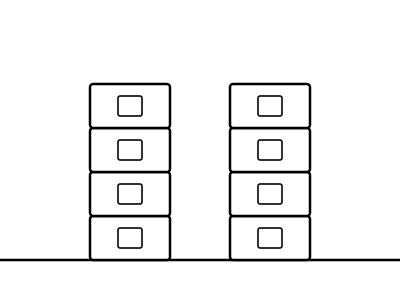
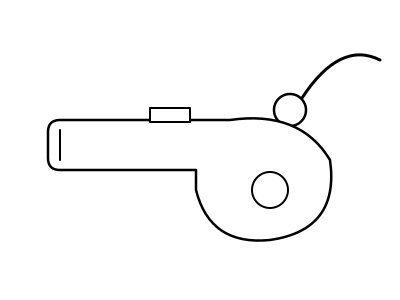
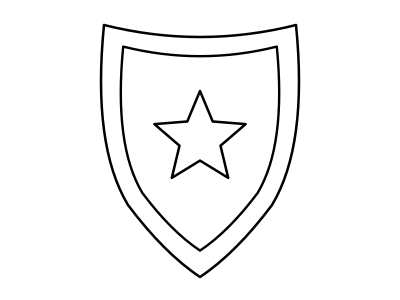
    Listen. Circle the idea pile it goes with: the shield for safety, the even blocks for fairness or the whistle for people in charge.

    1. 1.
      A stop sign at the corner.
      • A shield.
      • Two equal stacks of blocks.
      • A whistle.
    2. 2.
      Sharing the crayons equally.
      • A shield.
      • Two equal stacks of blocks.
      • A whistle.
    3. 3.
      A lifeguard at the pool.
      • A shield.
      • Two equal stacks of blocks.
      • A whistle.
    4. 4.
      Taking turns to talk at dinner.
      • A shield.
      • Two equal stacks of blocks.
      • A whistle.
    5. 5.
      Holding hands in a parking lot.
      • A shield.
      • Two equal stacks of blocks.
      • A whistle.

    Talk and draw. Write what your child says.

    1. 6.
      Tell about a time a rule helped you.
    2. 7.
      What would a playground be like with no rules?
    3. 8.
      Draw one picture that answers "Why do we need rules?"

    Challenge (optional)

    What is one question about rules you still wonder about?

    You need: crayons