    1First Grade

    Review: three numbers and turn-arounds

    Fix up my story

    Practice pages

    0 of 180 days complete · Saved on this device

    View all 180 days

    Math

    Review: three numbers and turn-arounds

    I can use turn-around facts and add three numbers.

    Standards: 1.OA.A.2, 1.OA.B.3

    Number practice (no timer)
    Counting on from the bigger number
    Builds on
    Weeks 3 and 5 turn-around facts and three addends. One-minute check: "4 + 5 + 6: which two make 10?" (4 and 6)

    New words

    • turn-around fact: the same two numbers added in the other order, such as 2 + 5 and 5 + 2

    You need

    • Dominoes or paper dominoes
    • 3 dice
    • 20 cubes in two colors
    • Notebook and pencil
    1. Warm-Up · 5 min

      Fluency: counting on from the bigger number. "2 + 7: start at?" (7) "Count on." (8, 9) Do 1 + 12 (13). Spaced review from Day 2: "? + 4 = 9." (5)

    2. Mini-Lesson · 10 min

      Say: "Today we use turn-around facts and add three numbers." Show a domino with 3 and 6. Ask: "How many dots?" (9) Turn it around. Ask: "Now?" (9) Say: "Changing the order does not change the total." Roll three dice: say they show 4, 5 and 6. Ask: "Which two should we add first?" (4 and 6 make 10.) Say: "10 + 5 = 15." Ask your child: "Why can we add the 6 before the 5, even though it came last?" (Answers vary. Look for: the order does not change the total, like a turn-around.)

    3. Guided Practice · 10 min

      Your child does each problem and explains the choice. 1) Domino 1 and 5: both facts (1 + 5 = 6, 5 + 1 = 6). Ask: "Which is quicker to count on?" (5 + 1) 2) Three dice: 2, 2 and 5 (2 + 2 = 4, 4 + 5 = 9) 3) Three dice: 3, 6 and 1 (3 + 6 = 9, 9 + 1 = 10; or 6 + 1 + 3) 4) Three dice: 5, 5 and 4 (5 + 5 = 10, 10 + 4 = 14) If stuck, say: "Look for a 10 or a double first. If there isn't one, start with the biggest number."

    4. Play · 10 min

      Prove It. Your child builds a three-color cube train for 3 + 2 + 5, counts it (10), then breaks it and rebuilds it in a new order (5 + 3 + 2, 2 + 5 + 3). Each time, your child counts again and says, "Still 10." Then your child explains to you, in their own words, why the total stays the same. Do one more with 4, 1 and 6 (11).

    5. Exit Ticket · 3-5 min

      Put the objects to one side but leave them on the table. Read each question aloud. Your child answers out loud, with objects or with a quick drawing. Check each answer together right away.

    Exit ticket

    1. Write the turn-around fact for 2 + 8.
    2. Solve 6 + 3 + 4.
    3. Why does changing the order not change the total?
    Answers
    1. 8 + 2 = 10
    2. 13
    3. Answers vary. Look for: the same things are there, just in a different order, so nothing is added or taken away.
    Watch for, and help or stretch
    Watch for
    Thinking a new order gives a new total, and recounting from 1 every time.
    Try
    Build the train, turn it around in front of your child, and ask, "Did I add or take away any cubes?"
    Extra help
    Use one die and one domino at a time, with totals to 10.
    Stretch
    Ask your child to find every order for 1 + 4 + 6 (six orders, all 11) and write them.

    At home (optional): Roll 3 dice with a family member and show two different orders that give the same total.
    Reading & Writing

    Fix up my story

    I can check my story for capitals, end marks and time words.

    Standards: W.1.3, L.1.2.b, L.1.2.a

    Phonics
    Ending blends -ng and -nk (ring, sang, pink, bunk) and Unit 1 short vowel review
    Sight words
    come, some, give, live, put
    Reading
    Child's choice from Unit 1 stories; original decodable "The Best Nest"
    Writing
    Personal narrative: revise and publish one true story · Handwriting: lowercase letter size (tall, small, tail letters)
    Builds on
    Writing a narrative booklet (Week 5). One-minute check: your child reads one page of the booklet to you.

    New words

    • revise: make writing better by changing or adding words
    • edit: fix capitals, end marks and spelling
    • checklist: a list of things to check, one at a time

    You need

    • Booklet from Week 5
    • Colored pencil
    • 3-item checklist card: capital, end mark, time word
    • Sight word cards
    1. Phonics & Word Work · 15 min

      Digraphs with -ng and -nk. I do: read thing, think, chunk. We do: read shock, which, bath, sing, wink, shut. You do: your child reads thing, chunk, bunk, thank, ring, chest, when, back. Read: "I think I can put the thing in the sink." "Come and sit with me." Dictation: thing, chunk, think, bath. If stuck, find the digraph and the ending first, then blend the middle.

    2. Sight Words · 5 min

      Review: come, some, give, live, put. Flip and Read: lay the five cards face down with last week's words. Your child flips a card, reads it and uses it in a short spoken sentence. Missed words go back in the pile.

    3. Read-Aloud & Shared Reading · 15 min

      Reread "The Best Nest" for expression. Say: "Hen fixed her nest so it was the best. Writers fix their writing too." Ask: "What did Hen do to fix the gap?" (put in mud and a pink rag) Ask: "What could we fix in a story?" (Answers vary. Look for: capitals, end marks, missing words, spelling.) Then you read one page of your own writing (on purpose missing one capital and one end mark). Your child finds both mistakes.

    4. Writing & Handwriting · 15 min

      Use the 3-item checklist on the booklet. Your child reads one page aloud and checks: 1) Does each sentence start with a capital? 2) Does each end with an end mark? 3) Is there a time word? Your child fixes the page with a colored pencil. Then check the names: do they start with capitals? (L.1.2.a) Handwriting (3 min): your child rewrites one fixed sentence, minding letter size.

    5. Exit Ticket · 5 min

      Your child shows a fix.

    Exit ticket

    1. Show me one fix you made.
    2. Fix this: we went to the pond
    3. Read this word: chunk.
    Answers
    1. Answers vary. Look for: a corrected capital, end mark or added time word.
    2. We went to the park. (capital W and an end mark)
    3. chunk
    Watch for, and help or stretch
    Watch for
    Rewriting the whole page instead of fixing small parts.
    Try
    Say: "Writers just fix the part that needs it." Point to one sentence at a time.
    Extra help
    Check one item at a time: read through once for capitals only, then once for end marks.
    Stretch
    Your child also checks sight word spelling against the word cards.

    At home (optional): Look at a note or list at home together; your child finds the capitals and end marks.

    Social Studies

    My rules poster

    I can make a poster that shows a rule and gives reasons for it.

    Standards: D4.1.K-2, D4.3.K-2, D2.Civ.3.K-2

    Builds on
    Our big question. One-minute check: your child answers the big question with one reason. (Sample: to keep us safe.)

    New words

    • poster: a big paper with words and pictures that shares an idea
    • present: to show and tell your work to others

    You need

    • Poster paper or a large sheet
    • Markers or crayons
    • The big question chart from Day 1
    1. Warm-Up / Wonder · 5 min

      Spaced review: ask: "What were our three idea piles?" (Safety, fairness, people in charge.) Wonder question: "Which rule do you think is the most important?"

    2. Explore · 10–15 min

      Your child picks one rule and makes a poster. 1) At the top, write the rule (you write lightly and your child traces, or your child copies). 2) In the middle, draw a picture of people following it. 3) At the bottom, two reasons, each starting with "because." (Sample: "Wait your turn for the slide. Because it is fair. Because no one gets bumped.") Then your child presents the poster to the family: says the rule, shows the picture, reads the two reasons. A listener asks one question, and your child answers. If stuck on a second reason, ask: "Who else does this rule help?"

    3. Talk & Record · 5–10 min

      After presenting, your child finishes: "My best reason is ___ because ___." Say it aloud; you write it on the back of the poster.

    4. Exit Ticket · 3–5 min

      Ask the three questions aloud.

    Exit ticket

    1. What is the rule on your poster?
    2. Tell two reasons for it.
    3. What question did someone ask you, and what did you say?
    Answers
    1. Answers vary. Look for: a real rule.
    2. Answers vary. Look for: two reasons, each one about safety, fairness or helping people.
    3. Answers vary. Look for: the question repeated correctly and an answer that fits it.
    Watch for, and help or stretch
    Watch for
    Giving the same reason twice in different words.
    Try
    Ask: "That one was about safety. Is there a reason about being fair?"
    Extra help
    Your child gives one reason by talking, and you write it for them.
    Stretch
    Your child adds a third reason and presents to someone on a video call.

    At home (optional): Hang the poster where the family can see it. Your child reminds someone of the rule once this week.

    Practice

    Read each direction aloud. Your child works on the page; answers are in the grown-up view.

    Warm-up

    Remember?

    Math

    1. 7 + 5 + 3 = ? Find two numbers that make 10 first.
    2. 8 and what number make 10?

    Reading & Writing

    1. from, were, there

    Math · Week 6 Day 3

    I can use turn-around facts and add three numbers.

    Look: 2 + 7 + 8

    1. Look for a 10: 2 + 8 = 10.
    2. Add the number that is left: 10 + 7 = 17.
    3. We added the 8 before the 7. The order does not change the total. 2 + 7 + 8 = 17.

    Write the turn-around fact.

    1. 1.
      4 + 6 = 10
    2. 2.
      1 + 7 = 8
    3. 3.
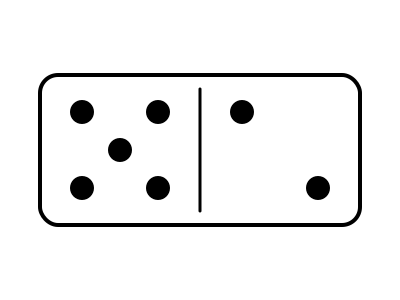
      A domino with 5 dots on one side and 2 dots on the other. Write both facts.

    Add the three numbers. Write the sum.

    1. 4.
      7 + 3 + 4 = ___
    2. 5.
      6 + 6 + 1 = ___
    3. 6.
      8 + 1 + 2 = ___
    4. 7.
      4 + 9 + 4 = ___

    Challenge (optional)

    Show that 3 + 4 + 5 and 5 + 4 + 3 have the same total. What is it?

    You need: cubes in 3 colors (optional)

    Reading & Writing · Week 6 Day 3

    I can check my story for capitals, end marks and time words.

    Look: check and fix

    1. Read "The Fix" together. Say: "Hank fixed his song. Writers fix their writing too."
    2. Show the checklist: a capital at the start, an end mark at the end, a time word.
    3. Fix one together: we sang → We sang.

    The Fix

    Hank had a bad song. "I can fix it," said Hank. Then Hank sang it with a ring and a bang. It was the best song!

    Does it have a capital and an end mark? Circle yes or no.

    1. 1.
      We had fun
      • yes
      • no
    2. 2.
      Then we sat in the sun.
      • yes
      • no
    3. 3.
      the king sang.
      • yes
      • no
    4. 4.
      Last, we went to the pond.
      • yes
      • no

    Write it the right way. Use capitals and an end mark.

    1. 5.
      we sang a song
    2. 6.
      then i sat on the bunk
    3. 7.
      kim and hank went to the pond

    Challenge (optional)

    Then Hank sang a song.

    Social Studies · Week 6 Day 3

    I can make a poster that shows a rule and gives reasons for it.

    Look: a poster plan

    1. Pick a rule: "Put the lid on the glue."
    2. Draw people following the rule.
    3. Give two reasons, each with "because": "Because the glue stays wet. Because it will not spill."

    Listen to the rule and the reason. Circle yes if it is a good reason. Circle no if it is not.

    1. 1.
      Wear a helmet on your bike, because it keeps your head safe.
      • yes
      • no
    2. 2.
      Wear a helmet on your bike, because helmets are shiny.
      • yes
      • no
    3. 3.
      Take turns on the swing, because then everyone gets to play.
      • yes
      • no
    4. 4.
      Take turns on the swing, because swings are red.
      • yes
      • no
    5. 5.
      Close the gate, because the dog could run into the street.
      • yes
      • no

    Plan your poster. Write what your child says.

    1. 6.
      What rule will your poster show?
    2. 7.
      Tell two reasons for your rule. Start each one with "because."
    3. 8.
      Draw a small sketch of people following your rule.

    Challenge (optional)

    Make a second small poster for a rule at the park.

    You need: crayons