1First Grade

    Review: comparing and missing numbers

    Story review

    Practice pages

    0 of 180 days complete · Saved on this device

    View all 180 days

    Math

    Review: comparing and missing numbers

    I can solve comparing stories and stories with a missing number.

    Standards: 1.OA.A.1, 1.OA.B.4

    Number practice (no timer)
    Counting on from the bigger number
    Builds on
    Weeks 3 and 4 comparing and missing numbers. One-minute check: "8 and 5: how many more is 8?" (3)

    New words

    • difference: how many more one group has than another

    You need

    • 20 cubes
    • Part-part-whole mat
    • A cup
    • Notebook and pencil
    1. Warm-Up · 5 min

      Fluency: counting on from the bigger number. "3 + 8: start at?" (8) "Count on 3." (9, 10, 11) Do 4 + 9 (13). Spaced review from Day 1: "10 - 4 = ?" (6)

    2. Mini-Lesson · 10 min

      Say: "Today we review comparing stories and missing-number stories." Build towers of 8 and 3. Say: "Ana has 8 shells. Leo has 3. How many more does Ana have?" (5) Write 8 - 3 = 5. Then say: "Here is a missing-number story. You have 4 shells. You find some more. Now you have 9. How many did you find?" Put 4 cubes out and the cup beside them. Write 4 + ? = 9. Your child counts up: 5, 6, 7, 8, 9 (5). Say: "Both answers are 5. But one story compares two groups, and one story has a number hiding."

    3. Guided Practice · 10 min

      Your child solves 2 comparing and 2 missing-number stories with cubes and number bonds. 1) "6 red cars and 10 blue cars. How many fewer red cars?" (4 fewer; 10 - 6 = 4) 2) "Mom picked 9 flowers. You picked 2 fewer than Mom. How many did you pick?" (7 flowers; 9 - 2 = 7) 3) "Some dogs were at the park. 2 more came. Now there are 8." (? + 2 = 8; 6) 4) "5 cookies. Some are eaten. 1 is left." (5 - ? = 1; 4) After all 4, ask: "Which kind was easiest? Which was hardest? Why?" (Answers vary.) If stuck, say: "Is this two groups side by side, or one group that changed?"

    4. Play · 10 min

      Story Sort and Solve. Write 4 numbers on paper: 3, 7, 10 and 5. Your child makes up one comparing story and one missing-number story using any of these numbers. You solve them with cubes, and your child checks. Then you make up one of each for your child. Example: "You have 3 crayons. I have 10. How many more do I have?" (7)

    5. Exit Ticket · 3-5 min

      Put the objects to one side but leave them on the table. Read each question aloud. Your child answers out loud, with objects or with a quick drawing. Check each answer together right away.

    Exit ticket

    1. Towers of 9 and 4: how many more in the taller tower?
    2. Solve ? + 3 = 10.
    3. Solve 7 - ? = 5.
    Answers
    1. 5 more
    2. 7
    3. 2
    Watch for, and help or stretch
    Watch for
    Adding the two numbers in a comparing story (9 + 4 = 13).
    Try
    Line up two towers. Ask: "Are we putting them together or seeing how much taller one is?"
    Extra help
    Keep numbers to 6. Act out every story with real objects.
    Stretch
    Use numbers from 11 to 20, such as "15 and 11: how many more?" (4)

    At home (optional): Your child tells a family member which story kind was hardest today, and the family member makes up one more story of that kind for your child to solve.
    Reading & Writing

    Story review

    I can retell a Unit 1 story with its characters, setting and lesson.

    Standards: RL.1.2, RL.1.3, RL.1.1

    Phonics
    Ending blends -ng and -nk (ring, sang, pink, bunk) and Unit 1 short vowel review
    Sight words
    come, some, give, live, put
    Reading
    Child's choice from Unit 1 stories; original decodable "The Best Nest"
    Writing
    Personal narrative: revise and publish one true story · Handwriting: lowercase letter size (tall, small, tail letters)
    Builds on
    All Unit 1 retelling. One-minute check: ask "What do we put on a story map?" (who, where and the big events)

    New words

    • favorite: the one you like best
    • central message: the big lesson a story teaches

    You need

    • Unit 1 books, any your child chooses: Chrysanthemum, The Relatives Came, Tell Me Again About the Night I Was Born, Can I Play Too? or The Tale of Peter Rabbit, plus the Unit 1 decodable stories
    • Blank story map
    • Sight word cards
    • -ng/-nk cards
    1. Phonics & Word Work · 15 min

      Short vowel review with -ng and -nk. I do: read bang, wing, lung, song. We do: read bank, wink, honk, sunk. You do: your child reads a 10-word review row: cat, bed, pig, hot, bug, bang, wing, bank, wink, junk, then sorts the last 5 into -ng and -nk. Read: "Give the bank to Hank." "Put the ring in the box." Dictation: song, wing, bank, junk. If stuck, put the word on a card and cover the ending; read the first part, then add -ng or -nk.

    2. Sight Words · 5 min

      Review: come, some, give, live, put. Swat It: spread the cards on the table. Say a word; your child taps it with a clean spatula, reads it and spells it. Then your child calls a word for you to swat.

    3. Read-Aloud & Shared Reading · 15 min

      Your child picks a favorite Unit 1 book. Fill a blank story map from memory: who, where, three big events. Then reread a few pages to check. Ask two or three questions: "Who is the main character?" (Answers vary by book. Look for: the character the story is mostly about.) "What was the problem?" (Look for: a problem from the chosen book.) "Why did the character feel that way at the end?" (Look for: a reason from the story.) For Peter Rabbit, also ask: "What is the lesson?" (Listen to your parents, or stay where it is safe.)

    4. Writing & Handwriting · 15 min

      Your child writes 2 sentences telling why this is their favorite Unit 1 book: "I like ___ because ___." Handwriting (4 min): letter size check. Your child copies "I like this book." and puts a dot under each tall letter (I, l, k, t, h, b, k: 7 dots). Then your child copies "A big pig can jog." and puts a star under each tail letter (g, p, g, j, g: 5 stars).

    5. Exit Ticket · 5 min

      Oral answers.

    Exit ticket

    1. Tell me who, where and one big event in your favorite story.
    2. What lesson does the story teach?
    3. Read this word: honk.
    Answers
    1. Answers vary. Look for: a character, a setting and an event from the chosen book.
    2. Answers vary. Look for: a lesson tied to the story.
    3. honk
    Watch for, and help or stretch
    Watch for
    Retelling the whole book page by page.
    Try
    Hold up three fingers: "Three big events only. Which three matter most?"
    Extra help
    Your child retells with the book open and fills the story map by drawing.
    Stretch
    Your child compares two Unit 1 characters: "___ and ___ both ___." (Answers vary.)

    At home (optional): Retell your favorite Unit 1 story to a family member at bedtime.

    Science

    Sound Museum

    I can teach someone that shaking makes sound and sound makes shaking.

    Standards: 1-PS4-1

    Builds on
    All the sound investigations. One-minute check: your child shows one thing that makes sound when it shakes and one time that sound made something shake.

    New words

    • exhibit: a display that teaches visitors about something

    You need

    • Sound Journal (with the Week 1 prediction)
    • Two favorite setups, such as the rubber band guitar and the dancing rice bowl, with the pot and spoon
    • 2 sheets of paper for exhibit signs
    • Crayons
    1. Warm-Up / Wonder · 5 min

      Spaced review: play "Which Way?" with 2 examples. A singer sings (shaking makes sound). A loud truck makes the window rattle (sound makes shaking). Wonder question: "Could you teach a grown-up everything we learned about sound?"

    2. Explore · 10–15 min

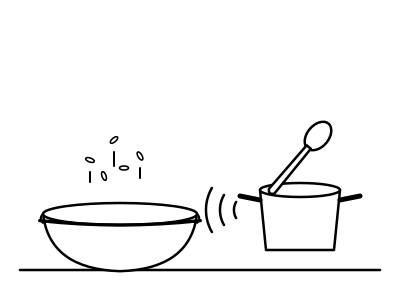
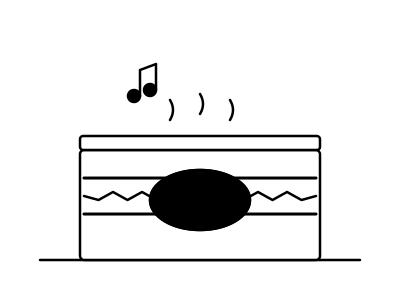
      Set up a 2-exhibit Sound Museum on a table. Exhibit 1 sign: "Shaking makes sound." Use the rubber band guitar. Exhibit 2 sign: "Sound makes shaking." Use the dancing rice bowl and the pot. Your child makes each sign with a picture. Then your child gives a tour to a family member or a stuffed animal. At each exhibit, your child shows it and says one sentence. Coach with the frame: "Watch this. When ___, ___." (Sample: "When I pluck the band, it shakes and makes a sound." "When I bang the pot, the sound makes the plastic shake and the rice jumps.") If stuck, ask: "What should the visitor watch for?"

    3. Talk & Record · 5–10 min

      Open the Sound Journal to the Week 1 prediction and read it aloud together. Your child finishes on a new page: "I used to think ___. Now I know ___." (Sample: "I used to think sound comes from hitting. Now I know sound is made when things vibrate.") Your child draws a small picture beside it.

    4. Exit Ticket · 3–5 min

      Ask the three questions aloud.

    Exit ticket

    1. Tell one way shaking makes sound.
    2. Tell one way sound makes things shake.
    3. Finish: "I used to think ___. Now I know ___."
    Answers
    1. Answers vary. Look for: an object that vibrates and makes a sound, such as a plucked rubber band.
    2. Answers vary. Look for: the pot bang making the rice jump, or music making the tissue shake.
    3. Answers vary. Look for: "Now I know sound is made when things vibrate" or similar.
    Watch for, and help or stretch
    Watch for
    Showing the exhibit without saying what is vibrating.
    Try
    Ask the visitor's question: "What is shaking here?" Your child points to it and names it.
    Extra help
    Do one exhibit at a time and give your child the full sentence to repeat.
    Stretch
    Your child adds a third exhibit, such as "Changing the sound," with the thick and thin bands.

    At home (optional): Your child gives the Sound Museum tour to one more family member or a friend on a video call.

    Practice

    Read each direction aloud. Your child works on the page; answers are in the grown-up view.

    Warm-up

    Remember?

    Math

    1. Some kids were in the pool. 4 more jumped in. Now there are 9. How many were there at first?
    2. 3 kids are at the park. 3 more come to play. How many kids in all?

    Reading & Writing

    1. jam, sip, hat

    Math · Week 6 Day 2

    I can solve comparing stories and stories with a missing number.

    Look: two kinds of stories

    1. Comparing: Ana has 7 shells and Leo has 4. Line them up. Ana has 3 more.
    2. Missing number: you have 4 shells and find some more. Now you have 7. Count up from 4: 5, 6, 7. You found 3.
    3. Both answers are 3, but one story compares two groups and one has a number hiding.

    Listen to the comparing story. Write the answer.

    1. 1.
      Max has 10 crayons. Nia has 7 crayons. How many more crayons does Max have?
    2. 2.
      There are 5 cups and 9 straws. How many fewer cups than straws?
    3. 3.
      Dad has 8 keys. You have 2 fewer keys than Dad. How many keys do you have?

    Find the missing number.

    1. 4.
      6 + ? = 10
    2. 5.
      ? + 4 = 9
    3. 6.
      9 - ? = 7
    4. 7.
      Some birds were on a roof. 3 more came. Now there are 9. How many were there at first?

    Challenge (optional)

    Make up a comparing story where the answer is 2 more.

    You need: cubes and a cup (optional)

    Reading & Writing · Week 6 Day 2

    I can retell a Unit 1 story with its characters, setting and lesson.

    Look: characters, setting and lesson

    1. Read "The Pink Hat" together.
    2. Fill a story map out loud: "Who? Ling and Kim. Where? Out in the sun. What happened? Ling gave Kim the hat."
    3. Ask: "What lesson does Ling show us?" (It is kind to give and share.)

    The Pink Hat

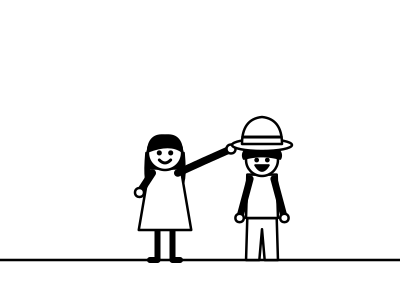
    Ling had a pink hat. Kim did not have a hat. It was hot in the sun. Ling put the hat on Kim. "Thank you!" said Kim.

    Read and circle the answer. The last one is the lesson.

    1. 1.
      Ling had a ___ hat.
      • pink
      • red
    2. 2.
      It was hot in the ___.
      • sun
      • shed
    3. 3.
      Ling put the hat on ___.
      • Kim
      • Mom
    4. 4.
      Ling putting her hat on Kim.
      • It is fun to give.
      • A hat is pink.

    Read the word. Circle ng or nk.

    1. 5.
      bank
      • ng
      • nk
    2. 6.
      wing
      • ng
      • nk
    3. 7.
      junk
      • ng
      • nk
    4. 8.
      hung
      • ng
      • nk

    Challenge (optional)

    Give a pal a ___.

    Science · Week 6 Day 2

    I can teach someone that shaking makes sound and sound makes shaking.

    Look: Two big ideas about sound

    1. Shaking makes sound: pluck a band, and you hear a twang.
    2. Sound makes shaking: bang a pot, and the rice on the bowl drum hops.
    3. Tell a visitor: "When ___, ___."

    Sort each one. Circle the guitar for "shaking makes sound." Circle the bowl drum for "sound makes shaking."

    1. 1.
      A person strums a guitar.
      • The rubber band guitar (shaking makes sound).
      • The rice bowl drum (sound makes shaking).
    2. 2.
      Loud music makes a toy on top of the speaker buzz.
      • The rubber band guitar (shaking makes sound).
      • The rice bowl drum (sound makes shaking).
    3. 3.
      A bee beats its wings and you hear a buzz.
      • The rubber band guitar (shaking makes sound).
      • The rice bowl drum (sound makes shaking).
    4. 4.
      A jet flies low and the windows rattle.
      • The rubber band guitar (shaking makes sound).
      • The rice bowl drum (sound makes shaking).
    5. 5.
      A child taps a xylophone.
      • The rubber band guitar (shaking makes sound).
      • The rice bowl drum (sound makes shaking).

    Draw, circle and tell.

    1. 6.
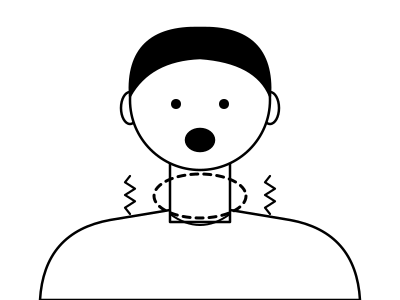
      Circle the part of your body that vibrates when you sing.
      • An elbow.
      • A throat.
    2. 7.
      Draw a new museum exhibit with a sound-maker we did not use. Show it shaking.
    3. 8.
      Tell a visitor one thing you learned. Use "When ___, ___." Your grown-up writes it.

    Challenge (optional)

    Think of a time at home when a sound made something shake. Tell about it.

    You need: crayons