1First Grade

    Unit 1 game day

    Publish my story

    Practice pages

    0 of 180 days complete · Saved on this device

    View all 180 days

    Math

    Unit 1 game day

    I can play math games to show what I know about adding and subtracting.

    Standards: 1.OA.A.1, 1.OA.C.5

    Number practice (no timer)
    Counting on from the bigger number
    Builds on
    All of Unit 1: stories, partners of 10, fact families, three addends and counting on. One-minute check: "7 and what make 10?" (3)

    New words

    • number bond: a picture that shows two parts and the whole they make

    You need

    • Dominoes or paper dominoes
    • Deck of cards ace to 9 (four of each)
    • 2 dice
    • Ten frame
    • Notebook and pencil
    1. Warm-Up · 5 min

      Fluency: counting on from the bigger number. Roll a die and say a number from 5 to 10. Your child counts on from the bigger one. For example, you say 8 and roll 3: "8... 9, 10, 11." Spaced review from Week 2: "Fact family for 4, 6, 10." (4 + 6 = 10, 6 + 4 = 10, 10 - 6 = 4, 10 - 4 = 6)

    2. Mini-Lesson · 10 min

      Say: "Today is game day! We will play three games that use everything we learned in Unit 1." Explain each game before you start. Show Domino Number Bonds first: pick a domino with 2 and 6. Say: "The parts are 2 and 6. The whole is 8." Draw the number bond with 8 on top. Then explain Make 10 Go Fish and Roll and Count On (below). Ask: "Which strategy will help most in Go Fish?" (Partners of 10.)

    3. Guided Practice · 10 min

      Domino Number Bonds. Lay out 8 dominoes. Your child picks one, names the parts, finds the whole and draws the number bond. Then your child writes one adding and one subtracting fact from it. For a 3 and 5 domino: 3 + 5 = 8 and 8 - 5 = 3. Do 4 dominoes. If stuck, say: "Count one side, then count on the other side."

    4. Play · 10 min

      Make 10 Go Fish, then Roll and Count On. Deal 5 cards each from the ace-to-9 deck. On your turn, ask the other player for the card that makes 10 with one of yours: "Do you have a 3 to go with my 7?" If yes, lay the pair down and say "7 and 3 make 10." If no, say "Go fish" and draw a card. Play for about 6 minutes. Then Roll and Count On: each player rolls two dice and counts on from the larger number, saying the equation. Play 4 rolls each. Nobody races; each player gets as much time as they need.

    5. Exit Ticket · 3-5 min

      Put the objects to one side but leave them on the table. Read each question aloud. Your child answers out loud, with objects or with a quick drawing. Check each answer together right away.

    Exit ticket

    1. Domino with 4 and 5: what is the whole?
    2. What card goes with a 6 to make 10?
    3. Roll a 2 and a 6. Count on from the bigger number. What is the sum?
    Answers
    1. 9
    2. 4
    3. 8 (start at 6: 7, 8)
    Watch for, and help or stretch
    Watch for
    Asking for the wrong partner in Go Fish, such as asking for a 6 to go with a 6.
    Try
    Put the card on the ten frame. Count the empty boxes to find the partner.
    Extra help
    Play Go Fish with the ten frame on the table so your child can see the partner to 10.
    Stretch
    Play Go Fish to make 9 instead of 10, or count on with a card and a die (up to 15).

    At home (optional): Teach a family member one of today's games and play it together.
    Reading & Writing

    Publish my story

    I can make a neat final copy of my true story.

    Standards: W.1.3, L.1.1.a, SL.1.1.a

    Phonics
    Ending blends -ng and -nk (ring, sang, pink, bunk) and Unit 1 short vowel review
    Sight words
    come, some, give, live, put
    Reading
    Child's choice from Unit 1 stories; original decodable "The Best Nest"
    Writing
    Personal narrative: revise and publish one true story · Handwriting: lowercase letter size (tall, small, tail letters)
    Builds on
    Revising with a checklist (Day 3). One-minute check: your child tells you the three checklist items. (capital, end mark, time word)

    New words

    • publish: make a neat final copy to share with readers
    • title: the name of a book or story
    • author: the person who writes a story

    You need

    • Good paper
    • Crayons
    • Revised booklet
    • Sight word cards
    1. Phonics & Word Work · 15 min

      Unit 1 review. I do: read one word of each kind: cat, ship, duck, jump, ring. We do: read bed, fish, chop, when, nest, pink. You do: your child reads a 10-word row: cat, bed, fish, chop, duck, when, jump, nest, ring, pink. Read: "Give me some milk." "Put the pink rag in the box." Dictation: shed, thump, king, milk, rock. If stuck, ask: "What kind of word is it? Short vowel, digraph, blend or -ng?" and use that clue.

    2. Sight Words · 5 min

      Review: come, some, give, live, put. Rainbow Write: your child writes two of this week's words three times each in different crayons, saying each letter, then reads them. Use come and some.

    3. Read-Aloud & Shared Reading · 15 min

      Look at the cover of a Unit 1 book. Ask: "Where is the title?" (on the cover, usually at the top) "Who is the author?" (Answers vary by book, such as Beatrix Potter.) "What does by mean?" (who wrote it) Say: "You are the author of your story." Then your child reads "The Best Nest" to you with expression, using a happy voice for Hen at the end.

    4. Writing & Handwriting · 15 min

      Your child copies one page of the booklet neatly on good paper, minding tall, small and tail letters. Then makes a cover with a title and a "by" line: "by [name]". Read the published page to a family member, who follows the listening rules from Week 1 (eyes on the talker, one talker at a time). (SL.1.1.a)

    5. Exit Ticket · 5 min

      Oral answers.

    Exit ticket

    1. Point to the title and the by line on your cover.
    2. What are our two listening rules?
    3. Read this word: thump.
    Answers
    1. Answers vary. Look for: correct pointing.
    2. One talker at a time; eyes on the talker.
    3. thump
    Watch for, and help or stretch
    Watch for
    Rushing the final copy so letters float above or sink below the lines.
    Try
    Have your child point to the line where each letter should sit before writing it.
    Extra help
    Your child copies one sentence only and draws the rest of the page.
    Stretch
    Your child publishes a second page and adds a dedication: "For ___."

    At home (optional): Read your published story to someone at home or on a video call.

    ScienceUnit test

    Unit 1 test: sound both ways

    I can use two things to show that vibrations make sound and sound makes things vibrate.

    Standards: 1-PS4-1

    Builds on
    The Sound Museum. One-minute check: ask your child to give the claim for each exhibit. (Shaking makes sound. Sound makes things shake.)

    You need

    • Rubber band box
    • Dancing rice bowl
    • Pot and wooden spoon
    • Unit 1 test page
    • Crayons
    • Sound Journal
    1. Warm-Up / Wonder · 5 min

      Spaced review: say each new word from the unit and your child acts it out or tells what it means: vibrate (shakes a hand fast), loud, quiet, high, low, claim, evidence, fair test. Wonder question: "What was your favorite sound test?"

    2. Review Game · 10 min

      Play "Sound Scientist Says." Give quick commands and your child does them: "Sound Scientist says make a high, quiet sound." "Sound Scientist says stop the ringing lid." "Sound Scientist says show me something vibrating." "Sound Scientist says tell me one piece of evidence." Then review the two big ideas once more with the real materials. Keep it light; this is practice, not the test. If stuck on a command, model it once and let your child copy.

    3. Check · 10–15 min

      Give the Unit 1 test. The test items are on the Unit 1 test page and are given separately; do not show them ahead of time. Part 1 is a performance task: your child uses the real materials to show both directions (shaking makes sound, and sound makes things shake) and tells the evidence for each. Part 2 is a short picture page your child marks. Read every part aloud. Your child may answer by talking, pointing, showing or drawing; write their words exactly. It is not timed. Take a break between Part 1 and Part 2 if needed. Score it with the answer key and note any idea to revisit.

    4. Exit Ticket · 3–5 min

      Ask the two reflection questions aloud. These are about how the unit felt, not more test items.

    Exit ticket

    1. Which part of the test felt easy?
    2. What do you still wonder about sound?
    Answers
    1. Answers vary. Look for: an honest answer that names a part.
    2. Answers vary. Look for: a real question, such as "How does sound get through a wall?"
    Watch for, and help or stretch
    Watch for
    Showing the materials but not telling the evidence.
    Try
    Ask: "What did you see happen?" Evidence is what they saw or heard.
    Extra help
    Give Part 1 on one day and Part 2 the next day. Your child may answer every part out loud.
    Stretch
    Your child answers the unit's big question: "How could we talk to someone in another room?" using the word vibrate.

    At home (optional): Your child finishes the last page of the Sound Journal: "The most important thing I learned about sound is ___."

    Practice

    Read each direction aloud. Your child works on the page; answers are in the grown-up view.

    Warm-up

    Remember?

    Math

    1. 1 + 8 = 9. So 8 + 1 = ?
    2. The parts are 1 and 5. What is the whole?

    Reading & Writing

    Math · Week 6 Day 4

    I can play math games to show what I know about adding and subtracting.

    Look: a domino number bond

    1. A domino has 3 dots and 4 dots. The parts are 3 and 4.
    2. Count all the dots: 7. The whole is 7.
    3. Write an adding fact and a take-away fact: 3 + 4 = 7 and 7 - 4 = 3.

    Count the dots. Write the whole. Then write one take-away fact.

    1. 1.
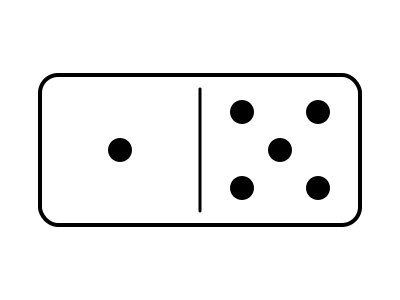
      A domino with 1 dot on one side and 5 dots on the other.
    2. 2.
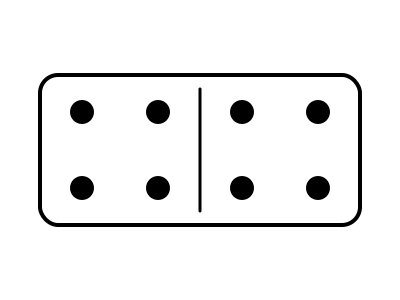
      A domino with 4 dots on one side and 4 dots on the other.
    3. 3.
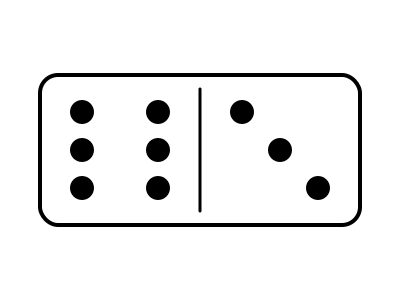
      A domino with 6 dots on one side and 3 dots on the other.

    Make 10 Go Fish: write the card you ask for.

    1. 4.
      You have a 9.
    2. 5.
      You have a 2.
    3. 6.
      You have a 7.
    4. 7.
      You have a 5.

    Challenge (optional)

    Picture two dice: a 6 and a 5. Count on from the bigger number. What is the sum?

    Reading & Writing · Week 6 Day 4

    I can make a neat final copy of my true story.

    Look: a neat final copy

    1. Say: "Tall letters touch the top line. Small letters stay in the middle. Tail letters hang below."
    2. Copy one sentence slowly on the board while saying which letters are tall, small or tail.
    3. Say: "A cover has a title and a by line that tells who wrote it."

    Ling Sang It

    Ling sang a song to Mom and Dad. Mom and Dad sat and did not chat. Then Mom said, "That song is the best!"

    Copy the sentence in your best letters.

    1. 1.
      Ling sang a long song.
    2. 2.
      Think of a fun thing.
    3. 3.
      think

    Make a cover for your true story.

    1. 4.
      Title:
    2. 5.
      By:
    3. 6.
      Cover picture:

    Challenge (optional)

    Mom said that the song is the ___.

    You need: crayons

    Science · Unit test

    Today is the unit test. Open it to read the directions, print the child's pages and score it.

    Open the Science unit test