This week's lessons
Math and reading every day; science and social studies take turns
- Day 1 · Monday
- MathReview: adding and taking storiesI can solve adding and taking-away stories.
- Reading & Writing-ng and -nkI can read words that end with -ng and -nk.
- Social StudiesOur big question: why do we need rules?I can explain why our big question matters and what ideas help answer it.
- Day 2 · Tuesday
- MathReview: comparing and missing numbersI can solve comparing stories and stories with a missing number.
- Reading & WritingStory reviewI can retell a Unit 1 story with its characters, setting and lesson.
- ScienceSound MuseumI can teach someone that shaking makes sound and sound makes shaking.
- Day 3 · Wednesday
- MathReview: three numbers and turn-aroundsI can use turn-around facts and add three numbers.
- Reading & WritingFix up my storyI can check my story for capitals, end marks and time words.
- Social StudiesMy rules posterI can make a poster that shows a rule and gives reasons for it.
- Day 4 · Thursday
- MathUnit 1 game dayI can play math games to show what I know about adding and subtracting.
- Reading & WritingPublish my storyI can make a neat final copy of my true story.
- Science · Unit testUnit 1 test: sound both waysI can use two things to show that vibrations make sound and sound makes things vibrate.
- Day 5 · Friday
- Math · Unit testUnit 1 test: addition and subtraction situationsI can solve all kinds of adding and subtracting stories.
- Reading & Writing · Unit testUnit 1 testI can show what I know about stories, short vowels and digraphs.
- Social Studies · Unit testUnit 1 test: rules and rolesI can show what I know about rules, fairness and people in charge.
This week's checks
Short checks on the last day each subject meets this week
Math · Unit 1 test
Open the unit testReading & Writing · Unit 1 test
Open the unit testScience · Unit 1 test
Open the unit testSocial Studies · Unit 1 test
Open the unit test
Reading About Our World: Rules for Everyone
Read it aloud. Your child reads the sentences marked with a star. Builds social studies knowledge.
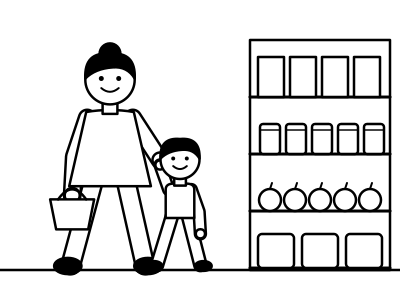
Rules in Many Places
Homes have rules. Schools have rules. Stores and parks have rules too. Rules tell us how to act in each place. We do not run in the shop.
Laws
Some rules are for a whole town, a state or our country. These rules are called laws. Leaders write laws to keep people safe and treat people fairly.
A Sign Tells a Law
A stop sign is red and has 8 sides. It tells drivers to stop. Every driver must follow it. That keeps people walking and riding safe.
Words to know
- law: a rule for a whole town, state or country
- leader: a person who helps a group decide what to do
- sign: a board with words or a picture that tells something
Talk about it
- What do we call rules for a whole town, state or country?
- What color is a stop sign, and how many sides does it have?
- What might happen if drivers did not stop at stop signs?
Home Connection
Five-minute ideas for the whole family, with things you already have
Math
We can act out adding and subtracting stories to see what happens.
Do: Make up a dinner-table story, like "5 cups are on the table. 2 more cups come." Your child acts it out with real cups and says the number sentence. Then switch to a taking-away story.
Talk: Is your story an adding story or a taking-away story? How can you tell?
Reading & Writing
Writers fix up their stories and share them.
Do: Your child reads their finished story to a relative, in person or on a call. Then write ring, sang, pink, bunk and song for your child to read.
Talk: What part of your story are you proudest of?
Science
Shaking makes sound, and sound can make things shake.
Do: Your child teaches the family two things: hum with a hand on the throat (shaking makes sound), and tap a pot near rice on plastic wrap (sound makes things shake).
Talk: Can you name an instrument and tell where it shakes?
Social Studies
Rules help us stay safe, be fair and get along.
Do: Your child shows the rules poster they made and explains why the rule matters.
Talk: What rule would you add at home, and why?
This week's words: come, some, give, live, put
Celebrate the end of Unit 1: a published story, a sound demonstration and a rules poster.
Math catch-up: Which Story Is It?
10 minutes, if this week's math check was not secure · 1.OA.A.1
At the end of Unit 1, the most common slip is using the wrong operation, especially adding the two numbers in a comparing story. Acting out first and naming the story type fixes most of these.
You need: 2 kinds of small objects, 12 of each (such as pasta and buttons), 3 index cards or paper scraps labeled Joining, Going Away, Comparing
- Lay out the 3 cards. Tell a story: "8 frogs sit on a log. 3 hop off." Your child acts it out with objects, then puts a finger on the card that fits (Going Away).
- Tell a comparing story: "Ana has 8 stickers. Leo has 5." Your child makes two rows and points to Comparing. Ask: "Is anyone joining or going away?" (No.)
- Say: "Comparing asks how many more or fewer. Look for the extras with no partner." Your child counts the extras: 3.
- Tell 3 more mixed stories. Your child picks the card first, then solves.
Try again
- Max has 9 stickers. Ana has 4 stickers. How many more stickers does Max have?
- 6 frogs sit on a log. 5 more frogs hop on. How many frogs are on the log now?
- 12 balloons are at a party. 4 balloons pop. How many balloons are left?
Specials This Week
Weeks 1–6 unit • ~90 min/week per subject
Locomotor Skills and Space Awareness
Mastering basic locomotor skills (walking, running, hopping, jumping, galloping, sliding, skipping), understanding personal and general space.
Exploring Line and Shape
Different types of lines (straight, curved, zig-zag, wavy), identifying basic shapes, creating patterns with lines and shapes.
Rhythm and Beat
Identifying and keeping a steady beat, understanding basic rhythms (ta – quarter note, ti-ti – eighth notes), clapping and patting rhythms.
For guiding principles and full standards reference, visit How to use this curriculum
As an Amazon Associate, we earn from qualifying purchases. Book and supply links on this page are affiliate links — using them supports this curriculum at no extra cost to you.