1First Grade

    Counting on to add

    Story or information?

    Practice pages

    0 of 180 days complete · Saved on this device

    View all 180 days

    Math

    Counting on to add

    I can start at the bigger number and count on to add.

    Standards: 1.OA.C.5, 1.OA.C.6

    Number practice (no timer)
    Counting on (untimed)
    Builds on
    Week 6 counting on from the bigger number. One-minute check: "5 + 2: start at 5 and count on." (6, 7)

    New words

    • strategy: a smart way to solve a problem
    • count on: start at a number and count forward to add

    You need

    • Number line 0 to 20
    • 2 dice
    • Deck of cards ace to 10
    • 20 counters
    • Notebook and pencil
    1. Warm-Up · 5 min

      Fluency: counting on, untimed. You say a number from 5 to 15 and your child counts on 3 from it: 8 (9, 10, 11), 12 (13, 14, 15). Spaced review from Unit 1: "Fact family for 3, 4, 7." (3 + 4 = 7, 4 + 3 = 7, 7 - 4 = 3, 7 - 3 = 4)

    2. Mini-Lesson · 10 min

      Say: "Unit 2 is about smart ways to add and subtract up to 20. The first strategy is counting on." Write 3 + 8. Ask: "Which number is bigger?" (8) Put your finger on 8 on the number line. Say: "I put 8 in my head and count on 3." Hop and say "9, 10, 11," holding up a finger each time. Say: "3 + 8 = 11." Ask: "Why didn't I start at 3?" (Starting at 8 means only 3 counts. Starting at 3 means 8 counts.) Now write 9 + 4. Your child puts a finger on 9 and counts on 4 (10, 11, 12, 13).

    3. Guided Practice · 10 min

      Your child circles the bigger number, then counts on. 1) 2 + 9 (start at 9: 10, 11; 2 + 9 = 11) 2) 4 + 7 (start at 7: 8, 9, 10, 11; 4 + 7 = 11) 3) 9 + 3 (start at 9: 10, 11, 12; 9 + 3 = 12) 4) 3 + 6 (start at 6: 7, 8, 9; 3 + 6 = 9) 5) 12 + 2 (start at 12: 13, 14; 12 + 2 = 14) If stuck, say: "Put your finger on the bigger number. Whisper it. Hold up a finger for each count."

    4. Play · 10 min

      Card and Die. Your child flips a card (1 to 10) and rolls a die. Your child says the bigger number, counts on the smaller one, and writes the equation. For a 7 card and a 4 on the die: "7... 8, 9, 10, 11. 7 + 4 = 11." Take turns, 5 rounds each. Check each other with the number line. Remember: take your time. Getting it right matters more than going fast.

    5. Exit Ticket · 3-5 min

      Put the objects to one side but leave them on the table. Read each question aloud. Your child answers out loud, with objects or with a quick drawing. Check each answer together right away.

    Exit ticket

    1. 3 + 8 = ? Start with the bigger number.
    2. Solve 2 + 9.
    3. Solve 6 + 3.
    Answers
    1. 11
    2. 11
    3. 9
    Watch for, and help or stretch
    Watch for
    Starting with the smaller number and losing count.
    Try
    Ask: "Which number is bigger?" Circle it before your child begins.
    Extra help
    Use the number line for every problem. Keep the smaller number at 1, 2 or 3.
    Stretch
    Count on from teen numbers, such as 15 + 4 (19), and explain why counting on 4 is easier than counting on 15.

    At home (optional): Play Card and Die with a family member for 5 rounds.
    Reading & Writing

    Story or information?

    I can tell how a storybook is different from a book that gives information.

    Standards: RL.1.5, RF.1.3.b, RF.1.2.b

    Phonics
    Beginning l-blends (black, clap, flag, glad, plum, sled)
    Sight words
    could, would, should, any, many
    Reading
    Fletcher and the Falling Leaves (Julia Rawlinson) paired with The Pumpkin Book (Gail Gibbons)
    Writing
    Informational: listing facts I know about a topic · Handwriting: capitals L, F, E, H, T, I
    Builds on
    Hearing many story read-alouds in Unit 1. One-minute check: ask "What do all our Unit 1 books have?" (characters, a setting and events, or a problem)

    New words

    • fiction: a made-up story with characters and a problem
    • nonfiction: a book that gives true facts about real things
    • information book: a nonfiction book that teaches facts

    You need

    • Fletcher and the Falling Leaves (Julia Rawlinson), optional read-aloud; any fall picture book that tells a story works
    • The Pumpkin Book (Gail Gibbons), optional read-aloud; any simple information book about pumpkins or plants works, or use the "Pumpkin Facts" text in the lesson
    • Two-column chart on paper: Story Book and Information Book
    • l-blend word cards
    • Sight word cards: could, would, should, any, many
    • Printed "Glen and the Black Plum" (in the Shared Reading block)
    1. Phonics & Word Work · 15 min

      I do: Say: "In some words, two consonants start the word. We say both sounds fast." Push counters for clap: /k/ /l/ /a/ /p/ (4 sounds). Read clap, sliding the c and l together. We do: read flag, glad, plum. You do: your child reads black, sled, plan, clip, flop, glum, slid, block. Read: "Glen had a black flag." "Could you clap?" Dictation: clap, flag, plum, sled. If stuck, read the word without the first letter (lap), then add it (c-lap, clap).

    2. Sight Words · 5 min

      Introduce this week's words with see-say-spell-write. For each card: Say: "This word is ___. Say it with me." Your child reads it, spells it aloud while tapping each letter, then writes it once while saying each letter, and reads it again. Draw a small heart over the tricky part, the part we must learn by heart: could (oul says /oo/ as in 'book'; the l is silent); would (oul says /oo/; the l is silent); should (sh is regular; oul says /oo/; the l is silent); any (a says /e/); many (a says /e/). Finish by reading all five cards in mixed order twice. If stuck, cover the tricky part, read the regular part together, then uncover it and say the whole word.

    3. Read-Aloud & Shared Reading · 15 min

      Read a few pages of the story book, then a few pages of the information book (or the "Pumpkin Facts" text below). Fill the chart together. Ask: "Does this book have characters and a problem?" (The story book does. With Fletcher and the Falling Leaves: a little fox worries about his tree losing its leaves.) Ask: "What does the information book give us?" (true facts, often with real photos or diagrams) Ask: "Which book would you use to learn how pumpkins grow? Why?" (The information book, because it has true facts.) Pumpkin Facts (an original information text; you read it aloud) Page 1, Seeds: A pumpkin starts as a flat, white seed. Farmers plant the seeds in warm soil in late spring. Page 2, Vines: The seed sprouts. A long vine grows along the ground, with big, wide leaves. Page 3, Flowers: The vine grows bright yellow flowers. Bees visit the flowers and carry pollen from one flower to another. Page 4, Fruit: A small green pumpkin grows where a flower was. Over the summer it grows bigger and turns orange. Page 5, Inside: Inside a pumpkin are stringy pulp and many seeds. Each seed could grow a new pumpkin plant. Then echo-read this week's decodable story: you read a line, your child reads it back. Glen and the Black Plum Glen sat on a log with Dad. Glen had a black plum in a bag. "I am glad I got this plum," said Glen. Glen set the plum on the log. Flop! The plum slid in the mud. "Yuck! It is a mud plum!" said Glen. Dad had a cloth in the bag. Dad got the mud from the plum. "Do you have any plum left?" said Dad. "I have one plum, but you can have a bit," said Glen. "Could we come back to this log?" said Glen. "Yes, we could," said Dad. Glen and Dad did a big clap.

    4. Writing & Handwriting · 15 min

      Your child writes one fact they learned about pumpkins: "A pumpkin ___." (Answers vary, such as "A pumpkin has seeds.") Handwriting (4 min): capitals start at the top line and touch the bottom line. Straight-line capitals: L is down, then across the bottom. F is down, across the top, across the middle. E is like F plus a bottom line. H is down, down, then across the middle. T is across the top, then down the middle. I is down, with a short line across the top and bottom. Your child writes each capital 3 times, then writes one word that starts with it (Lin, Fran, Ed, Hank, Tom, Ike). Circle the best letter in each row.

    5. Exit Ticket · 5 min

      Oral answers.

    Exit ticket

    1. Read these words: flag, sled.
    2. Is a book with true facts about frogs fiction or nonfiction?
    3. Name one thing a story book has.
    Answers
    1. flag, sled
    2. nonfiction (an information book)
    3. Characters, a setting or a problem (any one)
    Watch for, and help or stretch
    Watch for
    Dropping the l (reading flag as fag or clap as cap).
    Try
    Have your child say the blend as one chunk first: "fl, fl, flag."
    Extra help
    Use real covers: your child sorts 4 books from your shelf into Story and Information piles.
    Stretch
    Your child reads "Glen and the Black Plum" alone and finds all the l-blend words. (Glen, black, plum, glad, Flop, slid, cloth, clap)

    At home (optional): Look at 3 books at home. Your child tells which are stories and which give information, and why.

    Science

    What gives light?

    I can sort things that give off light from things that do not.

    Standards: 1-PS4-2

    Builds on
    Using our senses to observe. One-minute check: ask "Which sense did we use most in the sound unit?" (hearing) "Which sense will we use for light?" (seeing)

    New words

    • light: what lets our eyes see
    • light source: something that gives off its own light

    You need

    • 7 picture cards (draw or print): sun, lamp, flashlight, firefly, a picture of a candle, spoon, book
    • Sorting mat with 2 columns: Gives off light / Does not
    • A flashlight and a metal spoon
    • Science notebook (start a Light Journal section)
    • Crayons
    1. Warm-Up / Wonder · 5 min

      Spaced review from the sound unit: ask: "What do sounds come from?" (Things that vibrate.) Wonder question for the new unit: "Can you see in the dark?" (Answers vary.) Write your child's answer at the top of the first Light Journal page.

    2. Explore · 10–15 min

      Say: "A light source is something that gives off its own light." Turn the flashlight on. Say: "A flashlight is a light source when it is on." Your child sorts the 7 cards on the mat. Expected: gives off light: sun, lamp, flashlight, firefly, candle. Does not: spoon, book. Talk about the firefly: "Fireflies make their own light inside their bodies." Talk about the spoon: "It is shiny, but does it make its own light? Let's check." Take the spoon into a dark closet. Ask: "Does it glow?" (No.) Then go on a light source hunt around the home and find 5 real ones. (Sample: ceiling light, lamp, oven light, TV screen, night-light.) Your child counts them on their fingers. If stuck, ask: "If the room were dark, would this thing still shine?"

    3. Talk & Record · 5–10 min

      In the Light Journal, your child draws 2 columns and draws 2 light sources on one side and 2 things that do not give off light on the other. Sentence frame: "A ___ is a light source because it ___." (Sample: "A lamp is a light source because it gives off light.")

    4. Exit Ticket · 3–5 min

      Ask the three questions aloud.

    Exit ticket

    1. Is a book a light source?
    2. Name two light sources.
    3. Is a lamp a light source when it is turned off?
    Answers
    1. No. It does not give off its own light.
    2. Answers vary. Look for: the sun, a lamp, a flashlight, a firefly, a candle or a screen.
    3. No. It gives off light only when it is on.
    Watch for, and help or stretch
    Watch for
    Calling shiny things, like a spoon or a mirror, light sources.
    Try
    Take the shiny thing into a dark closet. If it does not glow in the dark, it is not a light source.
    Extra help
    Sort only 4 cards: sun, flashlight, book and spoon.
    Stretch
    Your child sorts the light sources into two groups: made by nature (sun, firefly) and made by people (lamp, flashlight).

    At home (optional): Your child counts the light sources in one room at home after dark and draws them.

    Practice

    Read each direction aloud. Your child works on the page; answers are in the grown-up view.

    Warm-up

    Remember?

    Math

    1. 3 + 5 + 3 = ? Look for a double.
    2. There are 7 toy cars. 5 are in the box. The rest are on the rug. How many are on the rug?

    Reading & Writing

    1. wing, bank, junk

    Math · Week 7 Day 1

    I can start at the bigger number and count on to add.

    Look: 2 + 8

    1. Circle the bigger number: 8.
    2. Put 8 in your head. Count on 2, one finger for each: 9, 10.
    3. 2 + 8 = 10. Starting at 8 takes only 2 counts.

    Circle the bigger number. Count on. Write the sum.

    1. 1.
      3 + 7 = ___
    2. 2.
      8 + 3 = ___
    3. 3.
      2 + 7 = ___
    4. 4.
      11 + 3 = ___
    5. 5.
      4 + 8 = ___

    Start at the bigger number on the number line. Hop to count on. Write the sum.

    1. 6.
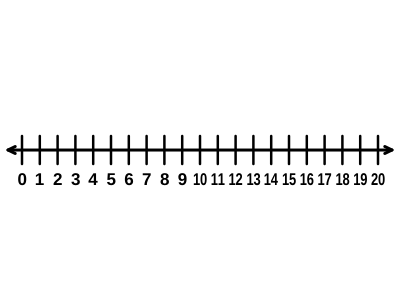
      Number line from 0 to 20. 2 + 13 = ___
    2. 7.
      6 + 2 = ___
    3. 8.
      3 + 15 = ___

    Challenge (optional)

    For 4 + 9, which takes fewer counts: starting at 4 or starting at 9? Solve it.

    Reading & Writing · Week 7 Day 1

    I can tell how a storybook is different from a book that gives information.

    Look: story or information

    1. Say: "A storybook has characters and a problem. It can be made up. An information book gives true facts."
    2. Read "A Plum" together. Ask: "Are these true facts?" (yes)
    3. Say: "A plum sang a song" could only be in a story, because a real plum cannot sing.

    A Plum

    A plum is soft and red. In a plum is a big pit. A plum can sit in a box at the shop. You can get a plum and cut it.

    Read each sentence. Color the box blue if it is a true fact. Color it red if it could only be in a story.

    1. 1.
      A plum is soft.
    2. 2.
      A plum sang a song.
    3. 3.
      A cat can lap up milk.
    4. 4.
      The cat said, "I am glad!"

    Say the picture name. Write the two letters at the start.

    1. 5.
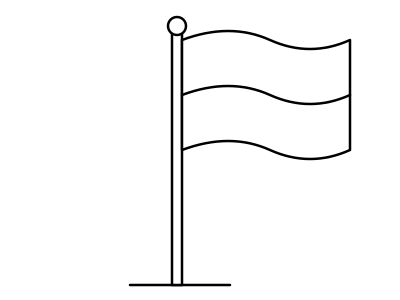
      A flag. ___ a g
    2. 6.
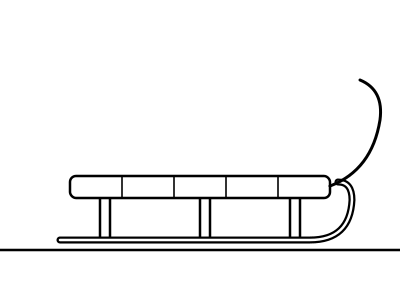
      A sled. ___ e d
    3. 7.
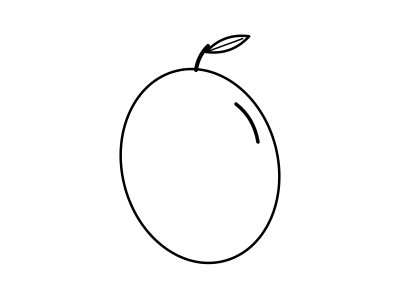
      A plum. ___ u m
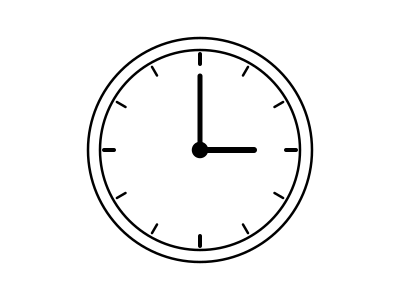
    4. 8.
      A clock. ___ o ck

    Challenge (optional)

    Could a plum sing?

    You need: blue and red crayons

    Science · Week 7 Day 1

    I can sort things that give off light from things that do not.

    Look: Is it a light source?

    1. Ask: does it make its own light?
    2. A glow stick shines in the dark, so it is a light source.
    3. A rock does not shine in the dark, so it is not a light source.

    Circle the light source.

    1. 1.
      Which one gives off light?
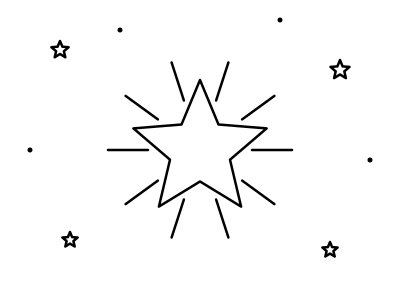
      • A star in the night sky.
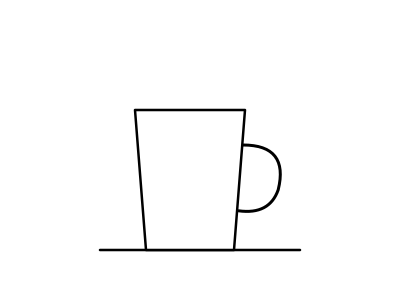
      • A cup.
    2. 2.
      Which one gives off light?
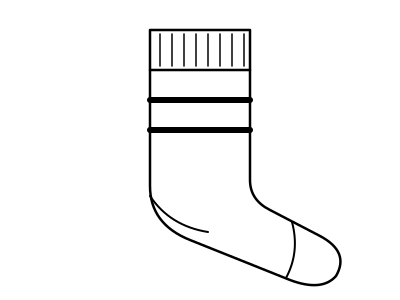
      • A sock.
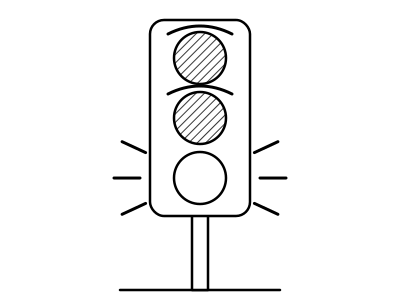
      • A traffic light that is on.
    3. 3.
      Which one gives off light?
      • A flash of lightning in the sky.
      • A shoe.
    4. 4.
      Which one gives off light?
      • A seashell.
      • A lit night-light in a dark room.

    Is it a light source? Circle yes or no.

    1. 5.
      A TV that is turned on
      • yes
      • no
    2. 6.
      A shiny toy car
      • yes
      • no
    3. 7.
      A crayon
      • yes
      • no

    Challenge (optional)

    Draw a light source you could take on a camping trip.

    You need: crayons