1First Grade

    Counting on with a bead rack

    Asking about facts

    Practice pages

    0 of 180 days complete · Saved on this device

    View all 180 days

    Math

    Counting on with a bead rack

    I can count on past 10 on a bead rack.

    Standards: 1.OA.C.6, 1.OA.B.3

    Number practice (no timer)
    Counting on (untimed)
    Builds on
    Day 1 counting on. One-minute check: "4 + 9: start at?" (9) "Count on." (10, 11, 12, 13)

    New words

    • bead rack: a counting tool with beads in groups of 5. Today we use a homemade bead string.

    You need

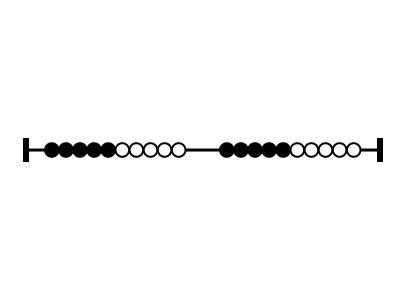
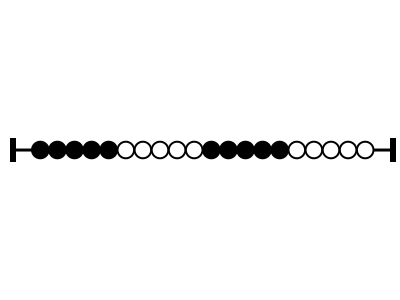
    • Homemade bead string: 20 beads, buttons or cereal rings on a shoelace or pipe cleaner, in groups of 5 of the same color (5 red, 5 white, 5 red, 5 white)
    • Number line 0 to 20
    • Notebook and pencil
    1. Warm-Up · 5 min

      Fluency: counting on, untimed. Say "Count on 4 from 9." (10, 11, 12, 13) "Count on 2 from 14." (15, 16) Spaced review from Unit 1: "8 and 2 more make?" (10)

    2. Mini-Lesson · 10 min

      Say: "Today we count on past 10 on a bead string." Show the string. Ask: "How many beads in each color group?" (5) "How many in the first two groups?" (10) Slide 9 beads to the left. Say: "That is 9. I see 5 red and 4 white." Say: "Now I slide 5 more and count on." Slide one bead at a time while saying "10, 11, 12, 13, 14." Say: "9 + 5 = 14." Ask: "Where did we pass 10?" (At the first bead we slid.) Now write 3 + 9. Ask: "Should we start with 3 or 9?" (9) Say: "Turn it around: 9 + 3." Slide 9, then count on 3 (10, 11, 12).

    3. Guided Practice · 10 min

      Your child slides beads for each problem, starting with the bigger number. 1) 8 + 4 (slide 8, count on 9, 10, 11, 12; 8 + 4 = 12) 2) 3 + 9 (turn around to 9 + 3: 10, 11, 12; 12) 3) 11 + 2 (slide 11, count on 12, 13; 13) 4) 5 + 10 (turn around to 10 + 5: 11, 12, 13, 14, 15; 15) For number 4, ask: "Is there a quicker way to see 10 + 5?" (Slide two full groups and one more group. 10 and 5 is 15.) If stuck, say: "Count the first beads in groups of 5. Then slide and count on one bead at a time."

    4. Play · 10 min

      Slide and Say. You say a problem; your child slides the beads and says the answer. Then your child says a problem for you. Include turn-arounds: if the first number is small, the solver must turn it around before sliding. Problems to use: 2 + 8 (10), 7 + 6 (13), 4 + 9 (13), 13 + 3 (16), 6 + 12 (18). Do 5 each.

    5. Exit Ticket · 3-5 min

      Put the objects to one side but leave them on the table. Read each question aloud. Your child answers out loud, with objects or with a quick drawing. Check each answer together right away.

    Exit ticket

    1. Slide 9 beads, then 5 more. How many?
    2. Solve 3 + 9. Which number did you start with?
    3. Solve 12 + 4.
    Answers
    1. 14
    2. 12; start with 9
    3. 16
    Watch for, and help or stretch
    Watch for
    Losing track of how many beads were slid while counting on.
    Try
    Your child says the number and holds up one finger for each bead slid. Stop when the right number of fingers is up.
    Extra help
    Use sums to 12, and let your child count the first group of beads in 5s.
    Stretch
    Ask: "Slide 15. Count on 4. Now slide back 4. Where are you?" (19, then 15)

    At home (optional): Make a bead string or cereal-ring necklace with 20 pieces in groups of 5.
    Reading & Writing

    Asking about facts

    I can ask and answer questions about facts in a book.

    Standards: RI.1.1, SL.1.2, RF.1.3.b

    Phonics
    Beginning l-blends (black, clap, flag, glad, plum, sled)
    Sight words
    could, would, should, any, many
    Reading
    Fletcher and the Falling Leaves (Julia Rawlinson) paired with The Pumpkin Book (Gail Gibbons)
    Writing
    Informational: listing facts I know about a topic · Handwriting: capitals L, F, E, H, T, I
    Builds on
    Asking questions about stories (Unit 1). One-minute check: ask "What question words do we use?" (who, what, where, when, why, how)

    New words

    • fact: something true that can be checked
    • wonder: to want to know about something

    You need

    • The Pumpkin Book (Gail Gibbons), optional read-aloud; any simple information book about pumpkins or plants works, or use the "Pumpkin Facts" text in the lesson
    • Sticky notes
    • Sight word cards
    • Printed "Glen and the Black Plum"
    1. Phonics & Word Work · 15 min

      I do: read clam, flip, blot. We do: read glob, plop, slam, clock, flash. You do: your child reads black, slip, club, flat, glad, plug, flock. Read: "The sled slid fast." "Would you like a plum?" Dictation: slip, club, flat, glad. If stuck, frame the blend with two fingers and say it as one chunk.

    2. Sight Words · 5 min

      Review: could, would, should, any, many. Swat It: spread the cards on the table. Say a word; your child taps it with a clean spatula, reads it and spells it. Then your child calls a word for you to swat. Point out that could, would and should rhyme and share oul.

    3. Read-Aloud & Shared Reading · 15 min

      Reread part of the information book or the "Pumpkin Facts" text from Day 1. Your child says or writes one "I wonder..." question on a sticky note, such as "I wonder why pumpkins turn orange." Find the answer together in the text if it is there; if not, say: "This book does not tell us. Where could we find out?" (another book, an expert, a library) Ask: "What do bees do for pumpkin flowers?" (They carry pollen from flower to flower.) Ask: "What color is a pumpkin before it is orange?" (green) Then partner-read "Glen and the Black Plum": Glen and the Black Plum Glen sat on a log with Dad. Glen had a black plum in a bag. "I am glad I got this plum," said Glen. Glen set the plum on the log. Flop! The plum slid in the mud. "Yuck! It is a mud plum!" said Glen. Dad had a cloth in the bag. Dad got the mud from the plum. "Do you have any plum left?" said Dad. "I have one plum, but you can have a bit," said Glen. "Could we come back to this log?" said Glen. "Yes, we could," said Dad. Glen and Dad did a big clap.

    4. Writing & Handwriting · 15 min

      Your child writes a question and its answer from the text: "What is inside a pumpkin? Pulp and seeds." Check the question mark. Handwriting (4 min): capitals start at the top line and touch the bottom line. Review L, F and E: each starts at the top line. Your child writes each capital 3 times, then writes one word that starts with it (Lin, Fran, Ed). Circle the best letter in each row.

    5. Exit Ticket · 5 min

      Oral answers.

    Exit ticket

    1. Ask me one question about pumpkins.
    2. What do bees carry from flower to flower?
    3. Read this word: flat.
    Answers
    1. Answers vary. Look for: a real question that starts with a question word.
    2. pollen
    3. flat
    Watch for, and help or stretch
    Watch for
    Saying a fact instead of asking a question.
    Try
    Say: "A question asks something we do not know yet. Start with What or Why."
    Extra help
    Give question starters on cards: What, Where, Why, How.
    Stretch
    Your child asks a question the text does not answer and suggests where to find the answer.

    At home (optional): Ask a family member one I wonder question about something in your kitchen and find the answer together.

    Social Studies

    What is a community?

    I can tell what a community is and name places and people in mine.

    Standards: D2.Civ.6.K-2

    Builds on
    Rules in public places (Unit 1). One-minute check: your child names one public place and one rule there. (Sample: the library; use quiet voices.)

    New words

    • community: a group of people who live, work and play in the same area and share places
    • neighborhood: the streets and homes close to where you live

    You need

    • Clipboard or a hard book
    • Paper and crayons
    • Photos of your neighborhood if you cannot walk
    • 3 sheets labeled People, Places, Shared things
    1. Warm-Up / Wonder · 5 min

      Spaced review: ask: "Why do we need rules?" (To keep us safe and to be fair.) Wonder question: "Who are the people who live and work near us?"

    2. Explore · 10–15 min

      Take a short neighborhood walk (about 10 minutes; do it earlier in the day if you need to), or look at photos. Your child draws or you write each thing you see. Look for people (a neighbor, a mail carrier, a store worker), places (homes, a store, a park, a school, a place of worship, a library) and shared things (sidewalks, streetlights, benches, a mailbox, a playground). Back home, your child sorts the list into the three sheets: People, Places, Shared things. Say: "A community is a group of people who live, work and play near each other and share places." Ask: "Which things on our list does everyone get to use?" (Answers vary: the park, sidewalks, the library.) Ask: "Who takes care of the shared things, like fixing sidewalks or cleaning the park?" (Workers for our town or city, and neighbors who help.) Say: "People in a community share the work of caring for shared things." If stuck sorting, ask: "Is it a person, a place you can go, or a thing many people use?" Optional note for families: every part of the United States is the homeland of Native peoples, and Native nations and Native people are part of communities across the country today. Many places are the homelands of more than one nation. To learn whose homelands include your area, look at the websites of Native nations near you, or ask your library or a tribal cultural center. If you share this with your child, use the present tense, for example: "Our town is on the homelands of the ___ people. ___ people live, work and go to school today."

    3. Talk & Record · 5–10 min

      Your child draws one picture of the community with at least one person, one place and one shared thing. Sentence frame: "My community has ___."

    4. Exit Ticket · 3–5 min

      Ask the three questions aloud.

    Exit ticket

    1. What is a community?
    2. Name a place everyone in our community can use.
    3. Name one person you saw working in our community.
    Answers
    1. People who live, work and play in the same area and share places.
    2. Answers vary. Look for: a shared place, such as a park, the library, a sidewalk or a post office.
    3. Answers vary. Look for: a real worker, such as a mail carrier, a store clerk or a bus driver.
    Watch for, and help or stretch
    Watch for
    Thinking a community is only buildings.
    Try
    Ask: "Would the park be a community with no people in it?" A community is people plus the places they share.
    Extra help
    Sort into 2 sheets only: People and Places.
    Stretch
    Your child makes a simple picture map of the walk with 3 places in order.

    At home (optional): Your child names 3 places in the community the family uses each week and who works there.

    Practice

    Read each direction aloud. Your child works on the page; answers are in the grown-up view.

    Warm-up

    Remember?

    Math

    1. 5 + 1 + 2 = ?
    2. 1 and what number make 10?

    Reading & Writing

    Math · Week 7 Day 2

    I can count on past 10 on a bead rack.

    Look: 8 + 5 on a bead string

    1. Slide 8 beads: a group of 5 and 3 more.
    2. Slide 5 more beads, one at a time, and count on: 9, 10, 11, 12, 13.
    3. 8 + 5 = 13. We passed 10 on the second bead.

    Slide the beads. Count on. Write the sum.

    1. 1.
      A bead string of 20 beads in groups of 5. 9 + 4 = ___
    2. 2.
      7 + 5 = ___
    3. 3.
      10 + 2 = ___
    4. 4.
      14 + 3 = ___

    Turn it around so the bigger number is first. Write the new fact and the sum.

    1. 5.
      3 + 11
    2. 6.
      4 + 10
    3. 7.
      1 + 16
    4. 8.
      5 + 13

    Challenge (optional)

    A bead string with 10 beads slid to the left. How many more beads do you slide to show 16?
    You need: bead string of 20 beads (optional)

    Reading & Writing · Week 7 Day 2

    I can ask and answer questions about facts in a book.

    Look: ask and answer questions about facts

    1. Read "The Slug" together.
    2. Ask: "Is a slug fast?" Point to the words that tell the answer: "No, it is not!"
    3. Say: "I wonder: can a slug swim? The text does not tell us. We could look in a book or ask an expert."

    The Slug

    A slug is soft and wet. It can slip on a log. It can get in a plant pot. Is a slug fast? No, it is not!

    Read each question. Circle the answer from the text.

    1. 1.
      Is a slug soft?
      • yes
      • no
    2. 2.
      A slug can slip on a ___.
      • log
      • flag
    3. 3.
      Is a slug fast?
      • yes
      • no
    4. 4.
      Can a slug ___?

    Read the words. Draw a picture to match.

    1. 5.
      a black flag
    2. 6.
      a plum in a cup
    3. 7.
      a clam

    Challenge (optional)

    Where can a slug get?

    You need: crayons

    Social Studies · Week 7 Day 2

    I can tell what a community is and name places and people in mine.

    Look: person, place or shared thing?

    1. A community is a group of people who live, work and play near each other and share places.
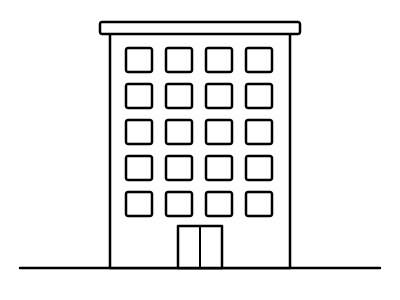
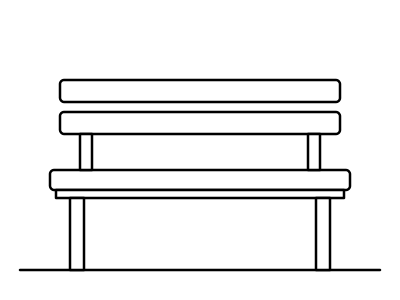
    2. We sort what we see: a neighbor is a person, a store is a place, a bench is a shared thing. On this page, the person picture means a person, the building means a place and the bench means any shared thing, like a water fountain or a traffic light.
    3. Ask: "Is it a person, a place you can go, or a thing many people use?"

    Listen. Circle the person, the building for a place or the bench for a shared thing.

    1. 1.
      a bus driver
      • A person.
      • A building.
      • A park bench.
    2. 2.
      a fire station
      • A person.
      • A building.
      • A park bench.
    3. 3.
      a water fountain at the park
      • A person.
      • A building.
      • A park bench.
    4. 4.
      a traffic light
      • A person.
      • A building.
      • A park bench.
    5. 5.
      a dentist
      • A person.
      • A building.
      • A park bench.
    6. 6.
      a post office
      • A person.
      • A building.
      • A park bench.

    Talk and draw. Write what your child says.

    1. 7.
      Name a shared thing on your street. Who takes care of it?
    2. 8.
      Draw a place in your community where people play.
    3. 9.
      Who are two people who live or work near your home?

    Challenge (optional)

    Is your family part of more than one community? Name one.

    You need: crayons