1First Grade

    Lesson + weekly check: counting on

    Share and check: l-blends

    Practice pages

    0 of 180 days complete · Saved on this device

    View all 180 days

    MathWeekly check

    Lesson + weekly check: counting on

    I can count on and count back to add and subtract.

    Standards: 1.OA.C.5, 1.OA.C.6

    Number practice (no timer)
    Counting on (untimed)
    Builds on
    Days 1 to 4: counting on, bead string, missing numbers and counting back. One-minute check: "9 + 3 = ?" (12) "13 - 2 = ?" (11)

    New words

    • count on: start at a number and count forward to add

    You need

    • Deck of cards ace to 10
    • Number line 0 to 20
    • Bead string
    • The stored Week 7 check and its answer key
    • Notebook and pencil
    1. Warm-Up · 5 min

      Fluency: counting on, untimed. "Count on 4 from 8." (9, 10, 11, 12) "Count back 3 from 14." (13, 12, 11) Spaced review from Week 5: "5 + 5 + 4 = ?" (14)

    2. Short Lesson: Review Game · 10 min

      Counting On War. Each player flips two cards and counts on from the bigger number out loud, saying the equation. For example, 3 and 9: "9... 10, 11, 12. 9 + 3 = 12." The bigger sum keeps all four cards. There is no clock and no racing: each player takes their full time and checks with the number line if they want. Play 6 rounds. If stuck, say: "Put your finger on the bigger number. Whisper it. Hop and count out loud."

    3. Weekly Check · 15 min

      Give the stored Week 7 check. The printed check has 8 items. It covers these goals: (1) I can start at the bigger number and count on to add; (2) I can count on past 10 on a bead rack; (3) I can count on to find what is missing; (4) I can count back to subtract a small number. Read each fact aloud. Your child solves it out loud. There is no time limit. Watch the strategy, not the speed: does your child start with the bigger number? Count on correctly without counting the start number? Choose to count back only for small take-aways? Note what you see next to each item. Score it with the answer key. Secure: 7 of 8 correct, counting on from the bigger number (not from 1) and not counting the start number. If the check is secure, start Week 8. If it is not, first do the reteach step on the check page for each group of items missed, then start Week 8.

    4. Exit Ticket · 3-5 min

      After the check, ask these two questions. Then go over any missed check items together.

    Exit ticket

    1. Solve 2 + 9. Tell me the number you started with.
    2. Solve 16 - 2.
    Answers
    1. 11; start with 9
    2. 14
    Watch for, and help or stretch
    Watch for
    Starting with the first number every time instead of the bigger number.
    Try
    Ask "Which is bigger?" before each fact, and circle it.
    Extra help
    Allow the number line and bead string during the check, and note it on the check.
    Stretch
    After the check, play Counting On War with three cards and add all three.

    At home (optional): Play Counting On War with a family member. Remember: no racing.
    Reading & WritingWeekly check

    Share and check: l-blends

    I can read l-blend words and explain what an information book is.

    Standards: RF.1.3.b, RL.1.5, RF.1.3.g

    Phonics
    Beginning l-blends (black, clap, flag, glad, plum, sled)
    Sight words
    could, would, should, any, many
    Reading
    Fletcher and the Falling Leaves (Julia Rawlinson) paired with The Pumpkin Book (Gail Gibbons)
    Writing
    Informational: listing facts I know about a topic · Handwriting: capitals L, F, E, H, T, I
    Builds on
    This week's word work and book types. One-minute check: warm up with clap, flag and sled.

    New words

    • explain: tell how or why

    You need

    • Word cards (l-blends)
    • Two new book covers: one story, one information book
    • Sight word cards
    • Recording sheet
    1. Review Game · 10 min

      Blend Fishing: write l-blend words on paper fish with a paper clip on each (black, clap, flag, glad, plum, sled, slip, club). Your child fishes with a magnet on a string, or just picks a fish, and reads the word. Keep the fish if it is read correctly. If stuck on a word during the game (not during the check), cover all but the first sound, say it together, then uncover the rest and blend.

    2. Sight Words · 5 min

      Review: could, would, should, any, many, come, some, give, live, put. Memory Match: make two cards for each of three words. Turn them face down and play Memory; read the word on every card turned over. Mix this week's and last week's words.

    3. Weekly Check · 15 min

      The printed check has 8 items. It covers these goals: (1) I can read words that start with an l-blend; (2) I can read the sight words could, would, should, any and many; (3) I can tell a storybook from a book that gives information; (4) I can name the main topic and answer questions about facts in a text. Give no hints. Record each answer. Secure: 8 of the 10 words in items 1 and 2, 4 of the 5 sight words, item 4 right with a sensible reason in item 5, and 2 of items 6 to 8. For any part that is not yet secure, use the matching reteach step on the check page next week.

    4. Share & Listen · 10 min

      Your child shares the expert fact list with a family member and answers one question about the topic.

    5. Handwriting · 10 min

      Capitals start at the top line and touch the bottom line. Review all six straight-line capitals. Your child writes each capital 3 times, then writes one word that starts with it (Lin, Fran, Ed, Hank, Tom, Ike). Circle the best letter in each row.

    6. Exit Ticket · 5 min

      Talk about the week.

    Exit ticket

    1. Read an l-blend word from this week.
    2. How can you tell an information book from a story book?
    Answers
    1. Answers vary. Look for: a correct read such as flag.
    2. Answers vary. Look for: facts, real photos or diagrams versus characters and a problem.
    Watch for, and help or stretch
    Watch for
    Reading could as cold (saying the l).
    Try
    Review the heart part: the l is silent. Read "Could you? Would you? Should you?" together.
    Extra help
    Do items 4 and 5 first while your child is fresh; it is a thinking task, not a reading task.
    Stretch
    Your child reads 3 bonus words with r-blends and s-blends (frog, step, swim). Do not score them.

    At home (optional): Read "Glen and the Black Plum" to a family member.

    ScienceWeekly check

    Seeing needs light

    I can explain why I cannot see in a totally dark room.

    Standards: 1-PS4-2

    Builds on
    The dark box. One-minute check: ask "What did you need so you could see the toy in the box?" (light shining on it)

    New words

    • light path: the way light travels: from a light source, to a thing, to our eyes

    You need

    • A closet or a windowless room
    • Flashlight
    • A small toy
    • Light Journal
    • Crayons
    1. Warm-Up / Wonder · 5 min

      Spaced review: ask: "Is a book a light source?" (No. It does not give off its own light.) "Is a flashlight?" (Yes, when it is on.) Wonder question: "Could you find a toy in a room with no light at all?"

    2. Review Game · 10 min

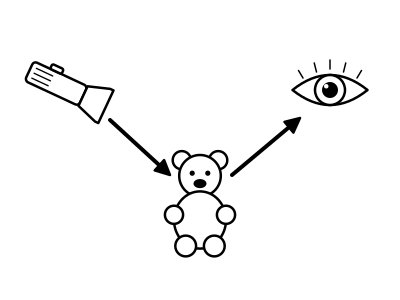
      Closet test. Grown-up stays with your child the whole time and keeps a hand on the door. Put the toy on the floor. Turn off the light and close the door. Your child tries to see the toy for 30 seconds. Ask: "Can you see it?" (No, or only a little if light sneaks in under the door.) Turn on the flashlight and point it at the toy. Ask: "Now?" (Yes.) Back in the light, draw the light path together: an arrow from the flashlight to the toy, and a second arrow from the toy to an eye. Say: "Light goes from the light source to the toy. Then it bounces off the toy into our eyes." Your child traces the arrows with a finger and says: "Light, toy, eyes." If stuck on the order, walk it: your child stands where the flashlight is, walks to the toy, then walks to where the eye is. If your child feels nervous in the dark, open the door a crack and test in a dim room instead.

    3. Check · 10 min

      Give the Week 7 science check. The check items are on the Week 7 check page; do not show them ahead of time. This week the check is an explanation your child tells or draws. Read each part aloud. Your child answers by talking, pointing, showing with the real materials or drawing. You write down their words exactly. It is not timed; stop and finish later if your child is tired. Make a check mark next to each part your child shows on their own. The printed check has 8 items. It covers these goals: (1) I can sort things that give off light from things that do not; (2) I can show that I cannot see a toy in the dark box until light shines on it; (3) I can explain why I cannot see in a totally dark room. Your child completes: "I can only see things when ___." (light shines on them) and draws the light path with 2 arrows. Look for an answer based on the closet or dark box evidence, not just "when it is daytime." Secure: 6 of 8 correct, including item 6 (an answer about light shining on things) and item 8 (both arrows). If the check is not yet secure, use the reteach step on the check page that matches the items missed.

    4. Exit Ticket · 3–5 min

      Ask the two questions aloud.

    Exit ticket

    1. Why couldn't you see the toy in the dark closet?
    2. Finish: "I can only see things when ___."
    Answers
    1. No light was shining on it.
    2. Light shines on them (and bounces into my eyes).
    Watch for, and help or stretch
    Watch for
    Saying our eyes send out light to see things.
    Try
    Ask: "If your eyes made light, could you see in the closet?" (We could not.) The light has to come from a light source and into our eyes.
    Extra help
    Use the dark box instead of the closet, and your child points to each step of the light path as you say it.
    Stretch
    Your child explains why a cat in a room with no light at all could not see either. (No light is shining on anything.)

    At home (optional): At night, your child turns off a room light with a grown-up, then turns it back on, and tells what changed and why.

    Practice

    Read each direction aloud. Your child works on the page; answers are in the grown-up view.

    Warm-up

    Remember?

    Math

    1. 4 + 2 + 4 = ? Look for a double.
    2. 10 crayons are in a box. 4 roll onto the floor. How many are left?

    Reading & Writing

    Math · Week 7 check

    Weekly check

    How to give it: Read each item aloud. Your child solves it out loud and writes the answer. Untimed. Watch the strategy, not the speed, and note next to each item whether your child started with the bigger number. Your child may use the number line or bead string. Do not help with the math.

    Secure when: 7 of 8 correct, counting on from the bigger number (not from 1) and not counting the start number

    • I can start at the bigger number and count on to add.
    • I can count on past 10 on a bead rack.
    • I can count on to find what is missing.
    • I can count back to subtract a small number.
    1. 1.
      2 + 11 = ___. Circle the number you start with.
    2. 2.
      1 + 8 = ___
    3. 3.
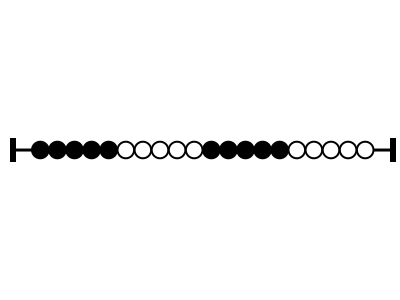
      A bead string of 20 beads in groups of 5. 6 + 5 = ___
    4. 4.
      12 + 5 = ___
    5. 5.
      7 + ? = 10
    6. 6.
      14 + ? = 18
    7. 7.
      14 - 2 = ___
    8. 8.
      18 - 3 = ___

    Reading & Writing · Week 7 check

    Weekly check

    How to give it: Give the check after the review game, in a quiet spot, one part at a time. It is untimed; take a stretch break between parts if needed. Read every direction aloud, but do not read the words or story for your child. Do not help except to say "Try your best" or "Skip it." Mark each item right or wrong. Items 1 and 2 (Part 1): your child reads the words aloud. Item 3 (Part 2): your child reads the 5 sight words. Items 4 and 5 (Part 3): show the two covers; your child points to the one that gives information and tells you why. Then your child reads "A Sled" aloud and you read the directions for items 6 to 8.

    Secure when: 8 of the 10 words in items 1 and 2, 4 of the 5 sight words, item 4 right with a sensible reason in item 5, and 2 of items 6 to 8.

    • I can read words that start with an l-blend.
    • I can read the sight words could, would, should, any and many.
    • I can tell a storybook from a book that gives information.
    • I can name the main topic and answer questions about facts in a text.

    A Sled

    A sled is fun. You can sit on a sled. A sled can go fast. You can go on it with a pal.

    1. 1.
      clog flap glut plot slot
    2. 2.
      blob clan fled plod slab
    3. 3.
      could would should any many
    4. 4.
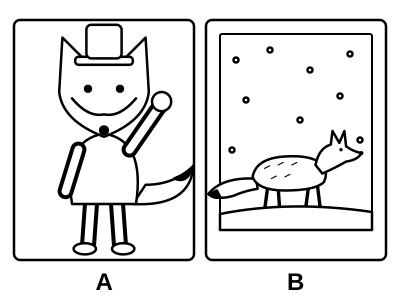
      Two book covers. A: a cartoon fox in a hat, waving. B: a photo of a real fox in the snow.
      • A
      • B
    5. 5.
      Tell why:
    6. 6.
      • a sled
      • a pal
      • a plum
    7. 7.
      You can ___ on a sled.
      • sit
      • dig
    8. 8.
      Can a sled go fast?
      • yes
      • no

    Science · Week 7 check

    Weekly check

    How to give it: Read every direction, question and choice aloud. It is not timed; stop and finish later if your child is tired. Your child answers by talking, pointing, showing with the real materials or drawing, and you write their words exactly. Have a flashlight and a small toy ready. If your child needs to see the dark again, use a dim room with the door open a crack. Look for answers based on the closet or dark box evidence.

    Secure when: 6 of 8 correct, including item 6 (an answer about light shining on things) and item 8 (both arrows).

    • I can sort things that give off light from things that do not.
    • I can show that I cannot see a toy in the dark box until light shines on it.
    • I can explain why I cannot see in a totally dark room.
    1. 1.
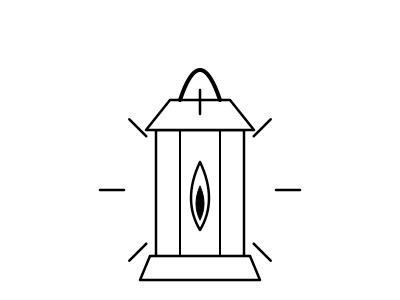
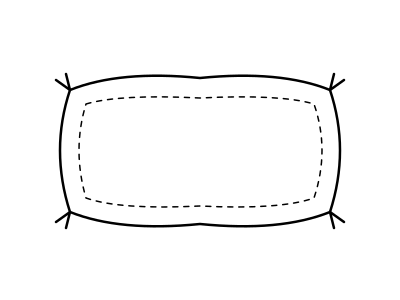
      Circle the light source.
      • A lit lantern.
      • A pillow.
    2. 2.
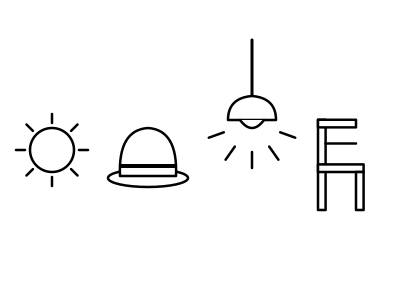
      4 things in a row: the sun, a hat, a ceiling light that is on, a chair. Make a mark on the 2 light sources.
    3. 3.
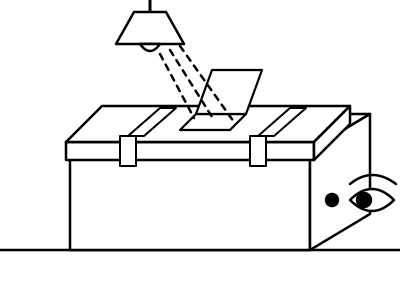
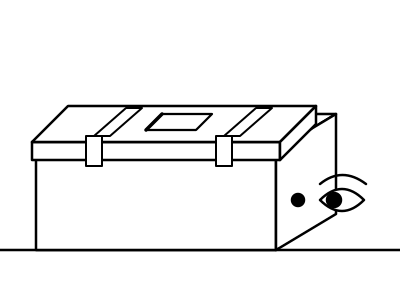
      A shoebox with the lid taped shut, the flap closed and an eye at the peephole. Can the eye see the toy inside?
      • yes
      • no
    4. 4.
      The same shoebox with the flap open and a lamp shining in. Can the eye see the toy now?
      • yes
      • no
    5. 5.
      You are in a room with no windows, and the light is off. Can you see your shoes?
      • yes
      • no
    6. 6.
      Tell what has to happen for you to see a toy. Your grown-up writes it.
    7. 7.
      Circle the picture that shows the light path.
      • An arrow from a flashlight to a toy, and an arrow from the toy to an eye.
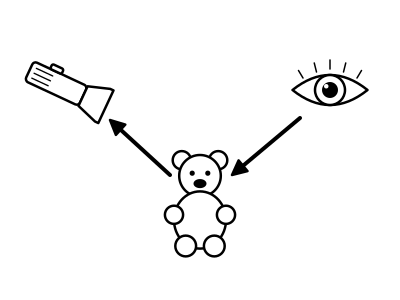
      • An arrow from an eye to a toy, and an arrow from the toy to a flashlight.
    8. 8.
      Draw the light path: a flashlight, a toy and an eye. Add 2 arrows.