1First Grade

    Counting on to find a missing number

    The big idea

    Practice pages

    0 of 180 days complete · Saved on this device

    View all 180 days

    Math

    Counting on to find a missing number

    I can count on to find what is missing.

    Standards: 1.OA.D.8, 1.OA.C.6

    Number practice (no timer)
    Counting on (untimed)
    Builds on
    Days 1 and 2 counting on, and Week 4 missing numbers. One-minute check: "4 + ? = 7." (3)

    New words

    • equal sign: the sign = that means both sides are the same amount
    • true: correct; both sides really are the same

    You need

    • Number line 0 to 20
    • Bead string from Day 2
    • 20 counters
    • Notebook and pencil
    1. Warm-Up · 5 min

      Fluency: counting on, untimed. "Count on from 7 to 11. How many counts?" (4: 8, 9, 10, 11) Spaced review from Day 2: "3 + 9 = ?" (12)

    2. Mini-Lesson · 10 min

      Say: "Today we count on to find a missing number." Write 7 + ? = 11. Say: "7 plus what number is 11?" Put a finger on 7. Say: "I count on until I reach 11, and I keep track of how many counts." Hop and hold up a finger for each: "8, 9, 10, 11." Ask: "How many fingers?" (4) Write 4 in place of the ?. Say: "7 + 4 = 11. Is this true?" Slide 7 and 4 on the bead string to check (11). Then write 11 = 8 + ?. Say: "The equal sign can come first. It still means both sides are the same." Count on from 8 to 11 (9, 10, 11; 3).

    3. Guided Practice · 10 min

      Your child counts on from the first number to the total and tracks the counts on fingers or the number line. 1) 8 + ? = 12 (9, 10, 11, 12; 4) 2) 9 + ? = 13 (10, 11, 12, 13; 4) 3) 6 + ? = 9 (7, 8, 9; 3) 4) 12 + ? = 15 (13, 14, 15; 3) 5) 10 = 7 + ? (8, 9, 10; 3) After each, your child checks by adding: "8 + 4 = 12. True." If stuck, say: "Start at the number you know. Stop at the total. Count your fingers."

    4. Play · 10 min

      Missing Number Hunt. Write 4 equations with a ? on paper squares and hide them around the room: 5 + ? = 8 (3), 9 + ? = 14 (5), ? + 2 = 11 (9), 13 = 10 + ? (3). Your child finds each one, solves it by counting on or thinking of what makes the total, and brings it back. Check each with the bead string. For ? + 2 = 11, say: "Turn it around: 2 + ? = 11. Or think: what number and 2 more make 11?" (9)

    5. Exit Ticket · 3-5 min

      Put the objects to one side but leave them on the table. Read each question aloud. Your child answers out loud, with objects or with a quick drawing. Check each answer together right away.

    Exit ticket

    1. 7 + ? = 11
    2. 9 + ? = 12
    3. Is 6 + 4 = 10 true?
    Answers
    1. 4
    2. 3
    3. Yes, it is true.
    Watch for, and help or stretch
    Watch for
    Giving the total as the answer (11 instead of 4).
    Try
    Ask: "What number did we start at? Where did we stop? How many steps did we take?"
    Extra help
    Use totals to 10, and count on with real counters placed one at a time.
    Stretch
    Solve 14 - ? = 10 (4) and 5 = ? - 3 (8). Ask how counting on helped.

    At home (optional): Hide two missing-number cards for a family member to find and solve.
    Reading & Writing

    The big idea

    I can name the main topic of a book and tell two key details.

    Standards: RI.1.2, RF.1.3.b

    Phonics
    Beginning l-blends (black, clap, flag, glad, plum, sled)
    Sight words
    could, would, should, any, many
    Reading
    Fletcher and the Falling Leaves (Julia Rawlinson) paired with The Pumpkin Book (Gail Gibbons)
    Writing
    Informational: listing facts I know about a topic · Handwriting: capitals L, F, E, H, T, I
    Builds on
    Retelling a story (Unit 1). One-minute check: your child retells "Glen and the Black Plum" in two sentences.

    New words

    • main topic: what a whole nonfiction text is mostly about
    • key detail: an important fact that tells more about the topic

    You need

    • The Pumpkin Book (Gail Gibbons), optional read-aloud; any simple information book about pumpkins or plants works, or use the "Pumpkin Facts" text in the lesson
    • Hand outline: your child traces a hand (palm = topic, fingers = details)
    • Sight word cards
    • l-blend word list
    1. Phonics & Word Work · 15 min

      l-blends with ending blends. I do: read blast, clamp, plant. We do: read blend, plump, glint, flank, cling. You do: your child reads a short list: clap, plant, slid, black, blend, flag, plump, cling. Read: "The plant is in a black pot." "Should we plant the plum?" Dictation: plant, blend, clamp, cling. If stuck, cover the end and read the beginning blend and vowel first (pla), then add the end (nt).

    2. Sight Words · 5 min

      Review: could, would, should, any, many. Flip and Read: lay the five cards face down with last week's words. Your child flips a card, reads it and uses it in a short spoken sentence. Missed words go back in the pile.

    3. Read-Aloud & Shared Reading · 15 min

      Reread the information book or "Pumpkin Facts". Your child traces a hand. Say: "The palm is the main topic, what the whole book is mostly about." Ask: "What is this text mostly about?" (pumpkins, or how pumpkins grow) Your child writes or draws pumpkins on the palm. Ask: "What are two key details?" (Answers vary. Look for: two facts, such as pumpkins grow on vines, bees visit the flowers, they start green, they have seeds inside.) Your child puts one fact on each of two fingers. Ask: "Is a flower the main topic? Why or why not?" (No. Flowers are one detail; the whole text is about pumpkins.)

    4. Writing & Handwriting · 15 min

      Your child writes a sentence for the topic and one for a detail: "This book is about pumpkins." "Pumpkins grow on vines." Handwriting (4 min): capitals start at the top line and touch the bottom line. H is down, down, across. T is across, then down. I is down, then short lines at the top and bottom. Your child writes each capital 3 times, then writes one word that starts with it (Hank, Tom, Ike). Circle the best letter in each row.

    5. Exit Ticket · 5 min

      Oral answers.

    Exit ticket

    1. What is the main topic of Pumpkin Facts?
    2. Tell one key detail.
    3. Read this word: plant.
    Answers
    1. pumpkins (how pumpkins grow)
    2. Answers vary. Look for: a true fact from the text, such as pumpkins grow on vines.
    3. plant
    Watch for, and help or stretch
    Watch for
    Naming a detail (seeds) as the main topic.
    Try
    Ask: "Is that on every page, or just one page?" The main topic is on every page.
    Extra help
    Offer two choices for the topic: "Is it mostly about bees or about pumpkins?"
    Stretch
    Your child fills all five fingers with details.

    At home (optional): Look at a food package or a short article at home. Your child tells what it is mostly about.

    Science

    The dark box

    I can show that I cannot see a toy in the dark box until light shines on it.

    Standards: 1-PS4-2

    Builds on
    Light sources. One-minute check: your child names 2 light sources and 1 thing that is not a light source.

    New words

    • dark: having no light
    • peephole: a tiny hole to look through

    You need

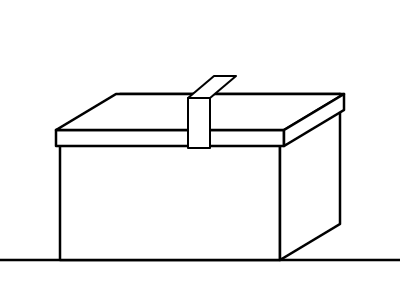
    • Shoebox with a lid
    • A small toy
    • Flashlight
    • Pencil or scissors for the grown-up to make the holes
    • Dark tape to seal the edges of the lid
    • Light Journal
    1. Warm-Up / Wonder · 5 min

      Spaced review: ask: "What is a light source?" (Something that gives off its own light.) Wonder question: "If we put a toy in a closed box, can we see it?" Your child predicts.

    2. Explore · 10–15 min

      Grown-up makes the dark box: poke a peephole the size of a pencil in one short end, and cut a flap about 2 inches square in the lid near the other end. Put the toy inside at the far end. Close the lid and tape the edges. Test 1, flap closed: your child looks through the peephole. Ask: "What do you see?" (Nothing, or almost nothing.) Test 2, flap open: open the flap toward a bright window or a lamp. Ask: "Now what do you see?" (The toy.) Test 3, flashlight: close the flap partway and shine the flashlight in. Ask: "How does it look now?" (Bright and easy to see.) Ask: "What changed each time?" (How much light got in.) If stuck because your child can see a little in Test 1, light is leaking in. Add more tape along the edges and try again.

    3. Talk & Record · 5–10 min

      In the Light Journal, your child draws 3 boxes: Flap closed, Flap open, Flashlight in. In each, they draw what they saw through the peephole. Sentence frame: "I could see the toy when ___." (light got in, or light shone on it)

    4. Exit Ticket · 3–5 min

      Ask the two questions aloud.

    Exit ticket

    1. When the flap was closed, could you see the toy?
    2. What did you need so you could see the toy?
    Answers
    1. No (or only a little, if light leaked in).
    2. Light shining on it.
    Watch for, and help or stretch
    Watch for
    Saying that if you wait long enough in the dark, your eyes will see the toy.
    Try
    Seal the box well, wait one full minute with an eye at the peephole and check again. With no light, the toy still cannot be seen.
    Extra help
    Do Tests 1 and 2 only, and say "dark, can't see" and "light, can see" together.
    Stretch
    Your child opens the flap a tiny bit, then halfway, then all the way, and tells how the toy looks each time.

    At home (optional): Keep the dark box for Friday. Your child shows a family member Test 1 and Test 2.

    Practice

    Read each direction aloud. Your child works on the page; answers are in the grown-up view.

    Warm-up

    Remember?

    Math

    1. 4 + 2 + 6 = ? Find two numbers that make 10 first.
    2. Start at 10. Count back 2. Where do you land?

    Reading & Writing

    1. come, some, give

    Math · Week 7 Day 3

    I can count on to find what is missing.

    Look: 6 + ? = 11

    1. Put a finger on 6. Count on to 11, holding up a finger for each: 7, 8, 9, 10, 11.
    2. Count your fingers: 5.
    3. 6 + 5 = 11. The missing number is 5.

    Count on. Write the missing number.

    1. 1.
      8 + ? = 10
    2. 2.
      9 + ? = 15
    3. 3.
      13 + ? = 16
    4. 4.
      5 + ? = 12

    The total can come first. Write the missing number. In the last one, circle the true equation.

    1. 5.
      12 = 9 + ?
    2. 6.
      14 = 10 + ?
    3. 7.
      17 = 15 + ?
    4. 8.
      Circle the true equation.
      • 7 + 5 = 12
      • 7 + 4 = 12

    Challenge (optional)

    ? + 3 = 12. What is the missing number? Tell how you found it.

    Reading & Writing · Week 7 Day 3

    I can name the main topic of a book and tell two key details.

    Look: main topic and key details

    1. Trace your hand. Say: "The palm is the main topic, what the whole text is mostly about."
    2. Read "The Clam" together. Write clam on the palm.
    3. Say: "Each finger is a key detail: a clam can live in wet sand, a clam can dig, a clam can shut."

    The Clam

    A clam can live in wet sand. It can dig and dig. A clam can shut. Then it can rest.

    Circle the main topic. Then color the box by each key detail about clams.

    1. 1.
      • a clam
      • wet sand
      • a log
    2. 2.
      A clam can dig.
    3. 3.
      A clam can shut.
    4. 4.
      I like jam.

    Write the word your grown-up says.

    1. 5.
    2. 6.
    3. 7.

    Challenge (optional)

    Could a clam dig?

    You need: crayons

    Science · Week 7 Day 3

    I can show that I cannot see a toy in the dark box until light shines on it.

    Look: See the toy in the dark box

    1. Close the flap and peek in. It is dark, so you cannot see the toy.
    2. Open the flap to let light in.
    3. Now light shines on the toy, and you can see it.

    Circle the picture where you could see the toy.

    1. 1.
      Which toy could you see?
      • A toy in a box with the lid shut.
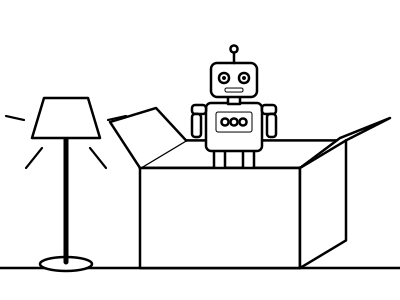
      • A toy in an open box next to a lamp that is on.
    2. 2.
      Which teddy bear could you see?
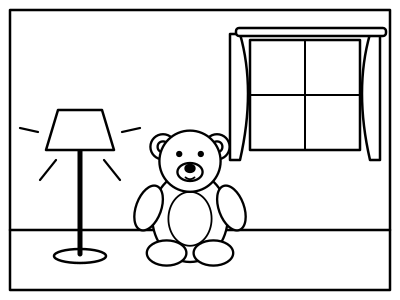
      • A teddy bear in a room with the lamp on.
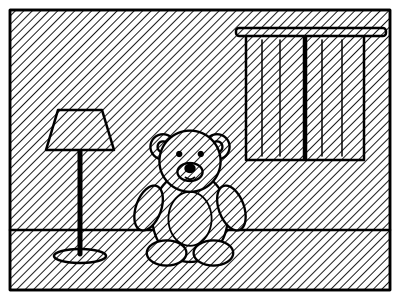
      • A teddy bear in a room with the lights off and the curtains shut.
    3. 3.
      Which ball could you see?
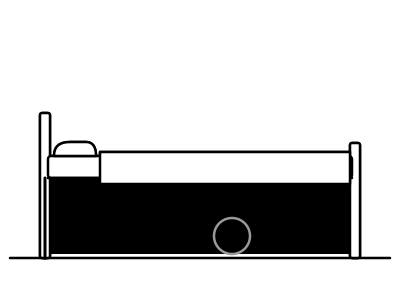
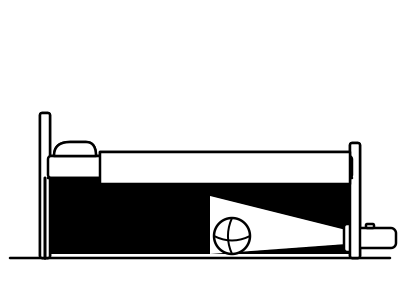
      • A ball under a bed in the dark.
      • A ball under a bed, with a flashlight shining on it.

    Circle yes or no.

    1. 4.
      You put a book in a drawer and shut it. Can you see the book?
      • yes
      • no
    2. 5.
      Now you open the drawer and shine a flashlight in. Can you see the book?
      • yes
      • no
    3. 6.
      A cat sits deep in a cave with no light at all. Can you see the cat?
      • yes
      • no
    4. 7.
      Draw a toy in your room. Draw the light source that helps you see it.

    Challenge (optional)

    Why did we tape the edges of the dark box?

    You need: crayons