1First Grade

    Counting back to subtract

    Expert list

    Practice pages

    0 of 180 days complete · Saved on this device

    View all 180 days

    Math

    Counting back to subtract

    I can count back to subtract a small number.

    Standards: 1.OA.C.5, 1.OA.C.6

    Number practice (no timer)
    Counting on (untimed)
    Builds on
    Day 3 missing numbers, and Week 2 counting back by 1 and 2. One-minute check: "10 - 2: count back." (9, 8)

    New words

    • count back: say the numbers backward to take away

    You need

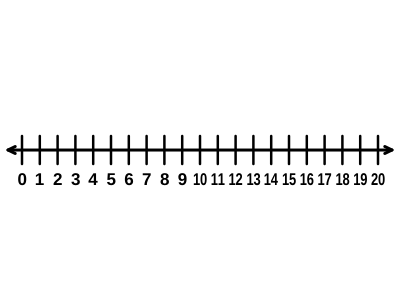
    • Number line 0 to 20
    • Bead string
    • Deck of cards ace to 3, and cards 10 to 20 made from paper squares
    • Notebook and pencil
    1. Warm-Up · 5 min

      Fluency: counting on, untimed. "8 + ? = 11: count on." (9, 10, 11; 3) Count back by 1 from 20 to 10 together. Spaced review from Unit 1: "If 5 + 4 = 9, then 9 - 4 = ?" (5)

    2. Mini-Lesson · 10 min

      Say: "Today we count back to take away. We did this with small numbers. Now we use bigger ones." Write 15 - 3. Put a finger on 15. Say: "I start at 15. I count back 3." Hop back and hold up a finger each time: "14, 13, 12." Say: "15 - 3 = 12." Now write 15 - 12. Say: "Should I count back 12 times?" (No. That is a lot of hops.) Say: "When we take away a big number, count up instead: from 12 to 15 is 13, 14, 15. That is 3." Say: "Counting back is a good choice when we take away 1, 2 or 3."

    3. Guided Practice · 10 min

      Your child counts back on the number line, saying each number and holding up fingers. 1) 12 - 2 (11, 10; 10) 2) 18 - 1 (17; 17) 3) 11 - 3 (10, 9, 8; 8) 4) 16 - 2 (15, 14; 14) 5) 14 - 11. Ask first: "Count back or count up?" (Count up: 12, 13, 14; 3) If stuck, say: "Whisper the start number. The first hop back says the next number down."

    4. Play · 10 min

      Back It Up. Put the paper cards 10 to 20 in one pile and the ace, 2 and 3 cards in another. Your child flips one card from each pile and counts back the small number from the big one, saying the equation: "17 - 2 = 15." You check on the number line. Take turns, 5 rounds each. Then ask: "Was counting back easy or hard? Why?" (Answers vary. Look for: easy because it is only 1, 2 or 3 counts.)

    5. Exit Ticket · 3-5 min

      Put the objects to one side but leave them on the table. Read each question aloud. Your child answers out loud, with objects or with a quick drawing. Check each answer together right away.

    Exit ticket

    1. 15 - 3 = ?
    2. Solve 20 - 2.
    3. For 13 - 10, would you count back or count up? What is the answer?
    Answers
    1. 12
    2. 18
    3. Count up (from 10 to 13). The answer is 3.
    Watch for, and help or stretch
    Watch for
    Counting the start number as the first count back (15, 14, 13 for 15 - 3, giving 13).
    Try
    Say: "Start number in a whisper. First hop out loud." Do 15 - 1 together until it lands on 14.
    Extra help
    Use only 1 and 2 as the number taken away, with starting numbers to 12.
    Stretch
    Ask your child to sort 6 problems into "count back" and "count up" piles and explain each choice.

    At home (optional): Count back 3 from your house number, a page number or a number on a cereal box.
    Reading & Writing

    Expert list

    I can list facts I already know about a topic.

    Standards: W.1.2, L.1.5.a, L.1.1.a

    Phonics
    Beginning l-blends (black, clap, flag, glad, plum, sled)
    Sight words
    could, would, should, any, many
    Reading
    Fletcher and the Falling Leaves (Julia Rawlinson) paired with The Pumpkin Book (Gail Gibbons)
    Writing
    Informational: listing facts I know about a topic · Handwriting: capitals L, F, E, H, T, I
    Builds on
    Labeling pictures and writing facts. One-minute check: your child tells you one fact about pumpkins without looking.

    New words

    • expert: someone who knows a lot about a topic
    • sort: put things into groups that go together
    • category: a group of things that are alike

    You need

    • Paper
    • Handwriting sheet (L, F, E, H, T, I)
    • Index cards for sorting
    • Sight word cards
    1. Phonics & Word Work · 15 min

      l-blends with digraphs. I do: read flush, clash, slick. We do: read plush, flock, cloth, sloth. You do: your child reads black, flash, cling, clock, sled, plum, glad, slush. Read: "Would you like a plum?" "Many of us can clap." Dictation: flock, slick, clash, plum, glad. If stuck, have your child find the digraph first and underline it.

    2. Sight Words · 5 min

      Review: could, would, should, any, many. Rainbow Write: your child writes two of this week's words three times each in different crayons, saying each letter, then reads them. Use any and many.

    3. Read-Aloud & Shared Reading · 15 min

      Say: "You are an expert on something. Experts write information books." Reread a page of the information book or "Pumpkin Facts". Ask: "How does the author show they are an expert?" (Answers vary. Look for: many true facts, exact words, pictures that teach.) Then read "Glen and the Black Plum" for fluency and ask: "Is this a story or an information text? How do you know?" (A story: it has characters, Glen and Dad, and events.)

    4. Writing & Handwriting · 15 min

      Your child chooses an expert topic they know well (cats, soccer, trucks, a family recipe). Your child lists 5 facts; you can write untaught words on a sticky note to copy. Then sort topic words on index cards into two groups: Things It Does and Things It Has. For cats: Does: purr, jump, sleep. Has: fur, whiskers, a tail. (L.1.5.a) Handwriting (3 min): your child writes the expert topic as a title with a capital, such as "Trucks".

    5. Exit Ticket · 5 min

      Oral answers.

    Exit ticket

    1. What is your expert topic? Tell me two facts.
    2. Sort these for a dog: barks, fur, runs, tail.
    3. Read this word: cloth.
    Answers
    1. Answers vary. Look for: one topic and two true facts.
    2. Does: barks, runs. Has: fur, tail.
    3. cloth
    Watch for, and help or stretch
    Watch for
    Listing opinions (cats are the best) instead of facts.
    Try
    Ask: "Is that true for every cat? Could we check it?" If not, it is an opinion.
    Extra help
    Your child draws 5 facts and labels each with one word.
    Stretch
    Your child adds a third sort group, such as Where It Lives.

    At home (optional): Tell a family member 3 facts about your expert topic.

    Social StudiesWeekly check

    Community helpers

    I can name community helpers and tell how each one helps.

    Standards: D2.Civ.2.K-2, D2.Civ.6.K-2

    Builds on
    What is a community. One-minute check: ask "What is a community?" (People who live, work and play near each other and share places.)

    New words

    • community helper: a person whose job helps the people in a community

    You need

    • 6 helper picture cards that show people of different genders and backgrounds: firefighter, nurse, mail carrier, sanitation worker, librarian, bus driver
    • 6 "how they help" cards (written below)
    • Dress-up items (optional)
    1. Warm-Up / Wonder · 5 min

      Spaced review: ask: "Name a shared place in our community." (Sample: the park.) Wonder question: "Who helps our community every day, even when we don't see them?"

    2. Review Game · 10 min

      Match each helper to how they help. Firefighter: puts out fires and helps in emergencies. Nurse: cares for people who are sick or hurt. Mail carrier: brings letters and packages. Sanitation worker: picks up trash and recycling to keep the community clean and healthy. Librarian: helps people find books and information. Bus driver: takes people where they need to go. Use "she," "he" and "they" for different cards so your child sees that any person can do any of these jobs. Then play a guessing game: you act out a helper with no words, and your child guesses. Ask: "What would happen if this helper took a week off?" for one card. (Sample: trash would pile up.) If stuck, give a clue: "This helper drives a big truck early in the morning." (sanitation worker)

    3. Check · 10 min

      Give the Week 7 social studies check. The check items are on the Week 7 check page; do not show them ahead of time. This week the check is a role-play. Read each part aloud. Your child answers by talking, pointing, acting it out or drawing, and you write their words exactly. It is not timed; stop and finish later if your child is tired. Make a check mark next to each part your child shows on their own. The printed check has 8 items. It covers these goals: (1) I can tell what a community is and name places and people in mine; (2) I can name community helpers and tell how each one helps. Your child acts out one helper; you or another family member guesses. Then your child tells how that helper helps the community. Look for the right helper and one true way they help. Secure: 6 of 8 correct, with at least one right on each goal. If the check is not yet secure, use the reteach step on the check page that matches the items missed.

    4. Exit Ticket · 3–5 min

      Ask the two questions aloud.

    Exit ticket

    1. How does a sanitation worker help our community?
    2. Who helps when someone is sick or hurt?
    Answers
    1. Picks up trash and recycling, which keeps the community clean and healthy.
    2. A nurse or a doctor (also paramedics).
    Watch for, and help or stretch
    Watch for
    Saying only men or only women can do a certain helper job.
    Try
    Show a picture of a helper who does not match that idea, and ask: "Is this a firefighter?" (Yes.) Say: "Anyone can learn to do this job."
    Extra help
    Use 3 helpers: firefighter, nurse and mail carrier.
    Stretch
    Your child makes a thank-you card for a real helper in your community and tells how that person helps.

    At home (optional): Your child thanks a community helper this week (a mail carrier, a librarian or a store worker), with a grown-up.

    Practice

    Read each direction aloud. Your child works on the page; answers are in the grown-up view.

    Warm-up

    Remember?

    Math

    1. To find 8 - 5, think 5 + ? = 8. What is the missing number?
    2. 4 + 3 = 7. So what is 7 - 4?

    Reading & Writing

    1. Who hid the duck?
    2. pot, fun, leg

    Math · Week 7 Day 4

    I can count back to subtract a small number.

    Look: 14 - 3

    1. Put a finger on 14. Do not count the 14.
    2. Count back 3, one finger for each: 13, 12, 11.
    3. 14 - 3 = 11.

    Count back on the number line. Write the answer.

    1. 1.
      Number line from 0 to 20. 17 - 1 = ___
    2. 2.
      13 - 2 = ___
    3. 3.
      20 - 3 = ___
    4. 4.
      12 - 1 = ___
    5. 5.
      16 - 3 = ___

    Should you count back or count up? Circle one. Then solve the last one.

    1. 6.
      11 - 2
      • back
      • up
    2. 7.
      17 - 15
      • back
      • up
    3. 8.
      17 - 15 = ___

    Challenge (optional)

    Start at 20. Count back 3. Then count back 3 more. Where do you land?

    Reading & Writing · Week 7 Day 4

    I can list facts I already know about a topic.

    Look: list facts and sort words

    1. Say: "I am an expert on cats. I can list facts I know: a cat can lap up milk, a cat can nap."
    2. Sort words into two groups: things a cat can do and things a cat can not do.
    3. Say: "Now you will list facts about your own expert topic."

    A Cat

    A cat can lap up milk. It can nap in the sun. It can lick and lick. A cat can run and jump.

    Read each word. Circle can if a cat can do it, or can not if a cat can not do it.

    1. 1.
      nap
      • can
      • can not
    2. 2.
      sing
      • can
      • can not
    3. 3.
      lick
      • can
      • can not
    4. 4.
      clap
      • can
      • can not

    List three facts about your expert topic.

    1. 5.
      Fact 1:
    2. 6.
      Fact 2:
    3. 7.
      Fact 3:

    Challenge (optional)

    A cat can ___.

    Social Studies · Week 7 check

    Weekly check

    How to give it: Read every question and choice aloud, and point to each picture as you name it. This week the check is a role-play. Your child answers by talking, pointing, circling, acting it out or drawing; write their words exactly on the line. It is not timed; stop and finish later if your child is tired. Do not show the page ahead of time. For item 8, you or another family member guesses the helper. Make a check mark next to each part your child shows on their own.

    Secure when: 6 of 8 correct, with at least one right on each goal

    • I can tell what a community is and name places and people in mine.
    • I can name community helpers and tell how each one helps.
    1. 1.
      Is a community just one house?
      • yes
      • no
    2. 2.
      A library. Is this a place many people in a community share?
      • yes
      • no
    3. 3.
      Tell about a worker you see near our home. What do they do?
    4. 4.
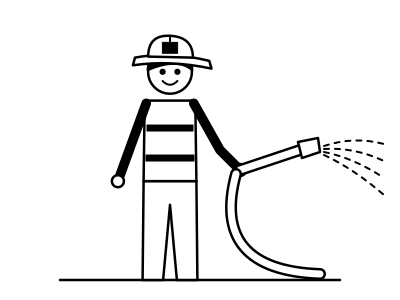
      A firefighter. How does this helper help?
    5. 5.
      A mail carrier with a bag. How does this helper help?
    6. 6.
      Who helps people find books and information?
    7. 7.
      What would happen if the bus drivers took a week off?
    8. 8.
      Act out one helper with no words. Then tell how that helper helps.