1First Grade

    Doubles to 10 + 10

    How are they connected?

    Practice pages

    0 of 180 days complete · Saved on this device

    View all 180 days

    Math

    Doubles to 10 + 10

    I can tell doubles facts to 10 + 10.

    Standards: 1.OA.C.6

    Number practice (no timer)
    Doubles and doubles plus one
    Builds on
    Day 1 doubles to 5 + 5. One-minute check: "5 + 5 = ?" (10) "2 + 2 = ?" (4)

    New words

    • five-and-five trick: seeing 5 + 5 = 10 inside a bigger double, then adding the extras

    You need

    • Double ten frame and 20 counters
    • An empty egg carton (12 cups) and 20 small objects
    • Pictures or real examples of doubles (an egg carton, a spider picture, a bike)
    • Notebook and pencil
    1. Warm-Up · 5 min

      Fluency: doubles and doubles plus one. Sing the doubles song from Day 1. Then ask out of order: "3 + 3?" (6) "5 + 5?" (10) Spaced review from Week 7: "14 - 2: count back." (13, 12)

    2. Mini-Lesson · 10 min

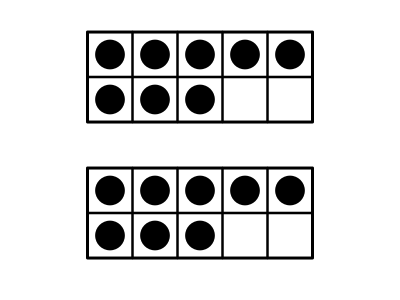
      Say: "Today we learn bigger doubles, up to 10 + 10." Put 6 counters in the top ten frame and 6 in the bottom. Ask: "How many in each?" (6) Say: "I see 5 and 5 make 10, and 1 and 1 make 2 more. So 6 + 6 = 12." Write it. Show the egg carton: "This carton has 2 rows of 6 cups. 6 + 6 = 12." Build 7 + 7: "5 and 5 is 10, 2 and 2 is 4 more. 7 + 7 = 14." Continue with 8 + 8 = 16, 9 + 9 = 18 and 10 + 10 = 20, using the five-and-five trick each time. Write all of them in a list.

    3. Guided Practice · 10 min

      Your child builds each double on the double ten frame and uses the five-and-five trick to find it. 1) 8 + 8 (10 and 6 more; 16) 2) 9 + 9 (10 and 8 more; 18) 3) 7 + 7 (14) 4) 10 + 10 (20) Real-life doubles: 5) "A spider has 8 legs. How many legs on 2 spiders?" (8 + 8 = 16) 6) "Your fingers and your toes." (10 + 10 = 20) If stuck, say: "Look at the full rows of 5 first. 5 + 5 = 10. Then count the extras."

    4. Play · 10 min

      Doubles Hunt. Walk around your home and look for doubles: 2 bike wheels (1 + 1 = 2), 2 wheels on a scooter, the egg carton (6 + 6), a 2-row muffin pan, socks in pairs, legs on a chair and a table. For each one, your child says and writes the doubles fact. Find at least 4 doubles. Then fill the egg carton with counters and remove one from each row. Ask: "What double is this now?" (5 + 5 = 10)

    5. Exit Ticket · 3-5 min

      Put the objects to one side but leave them on the table. Read each question aloud. Your child answers out loud, with objects or with a quick drawing. Check each answer together right away.

    Exit ticket

    1. 6 + 6 = ?
    2. 8 + 8 = ?
    3. 10 + 10 = ?
    Answers
    1. 12
    2. 16
    3. 20
    Watch for, and help or stretch
    Watch for
    Counting all the counters one by one each time instead of using 5 + 5 = 10.
    Try
    Cover the two full rows of 5 with your hands and say "10." Then count on the extras.
    Extra help
    Work on 6 + 6 and 7 + 7 only, building each with the five-and-five trick.
    Stretch
    Ask: "Which double is 18?" (9 + 9) "Which double is 14?" (7 + 7) "Is there a double that makes 15?" (No.)

    At home (optional): Find two more real-life doubles at home and draw them.
    Reading & Writing

    How are they connected?

    I can tell how two ideas in a text are connected.

    Standards: RI.1.3, RF.1.2.b, RF.1.3.b

    Phonics
    Beginning r-blends and s-blends (frog, trip, drum, step, swim, snap)
    Sight words
    again, once, says, every, other
    Reading
    Original nonfiction mini-book "Shadows All Around" (ties to the light science unit)
    Writing
    Informational: All About book plan with a topic sentence · Handwriting: capitals P, B, R, D
    Builds on
    Main topic and details (Day 1). One-minute check: your child tells you what a shadow is.

    New words

    • connection: how two ideas go together
    • block: be in the way so something cannot get through

    You need

    • Flashlight
    • Toy figure
    • "Shadows All Around"
    • Sight word cards
    1. Phonics & Word Work · 15 min

      Spoken blending first: say /s/ /p/ /o/ /t/ (spot), /s/ /n/ /a/ /k/ (snack), /s/ /t/ /o/ /p/ (stop), /s/ /w/ /i/ /m/ (swim), /s/ /k/ /i/ /d/ (skid). Your child blends each. Then read: scab, skid, smash, snack, spot, stop, swing, stick. Read: "Stop the truck!" "Brad says the frog is fast." Dictation: spot, snack, stop, drum. If stuck, repeat the sounds more slowly and have your child echo them before blending.

    2. Sight Words · 5 min

      Review: again, once, says, every, other. Swat It: spread the cards on the table. Say a word; your child taps it with a clean spatula, reads it and spells it. Then your child calls a word for you to swat.

    3. Read-Aloud & Shared Reading · 15 min

      Reread page 3 of "Shadows All Around" (Why Shadows Form). Then make a shadow: shine the flashlight on the toy figure against a wall. Ask: "What is blocking the light?" (the toy) "What happens because the light is blocked?" (A shadow forms on the wall.) Say: "Light is blocked, so a shadow forms. That is a connection." Move the toy out of the light. Ask: "Where did the shadow go? Why?" (It is gone, because nothing is blocking the light.) Move the light closer. Ask: "What happens?" (The shadow gets bigger.) (RI.1.3)

    4. Writing & Handwriting · 15 min

      Your child completes a connection sentence: "The toy blocks the light, so ___." (a shadow forms) Then draws the flashlight, toy and shadow with an arrow for the light. Handwriting (4 min): capitals start at the top line and touch the bottom line. R is like P plus a slant leg from the middle. D is down, then back to the top and one big curve to the bottom. Your child writes each capital 3 times, then writes one word that starts with it (Ron, Dan). Circle the best letter in each row.

    5. Exit Ticket · 5 min

      Oral answers.

    Exit ticket

    1. Why does a shadow form?
    2. What happens to the shadow when the flashlight moves closer to the toy?
    3. Blend these sounds: /s/ /n/ /a/ /p/.
    Answers
    1. Something blocks the light.
    2. It gets bigger.
    3. snap
    Watch for, and help or stretch
    Watch for
    Saying the shadow is made by the flashlight, not by the blocking object.
    Try
    Turn the flashlight on with nothing in front of it. Ask: "Is there a shadow now?" (No.) Then add the toy.
    Extra help
    Act it out with your child's hand in front of the flashlight before using the toy.
    Stretch
    Your child makes a shadow puppet and explains how its shape matches the hand.

    At home (optional): At bedtime, use a flashlight to make shadow puppets with a family member.

    Science

    Does the moon make light?

    I can test how a mirror, foil and paper bounce light and tell where the moon's light comes from.

    Standards: 1-PS4-2, 1-PS4-3

    Builds on
    Seeing needs light. One-minute check: your child draws or tells the light path. (light source, to the thing, to our eyes)

    New words

    • reflect: to bounce light off something
    • mirror: a smooth, shiny surface that bounces light very well

    You need

    • An unbreakable plastic mirror (or a shiny metal tray)
    • A sheet of aluminum foil
    • White paper
    • Flashlight
    • The dark box from Week 7
    • Light Journal
    1. Warm-Up / Wonder · 5 min

      Spaced review: ask: "Is the sun a light source?" (Yes.) Wonder question: "The moon looks bright at night. Does the moon make its own light?" Your child predicts yes or no.

    2. Explore · 10–15 min

      Dim the room. 1) Shine the flashlight at the mirror at a slant. Ask: "Where did the light go?" (It bounced onto the wall or the ceiling.) Say: "The mirror reflects light. To reflect means to bounce light off." 2) Shine the light on smooth foil. (A bright spot bounces.) Crumple the foil and smooth it out, then try again. (Lots of small spots.) 3) Shine the light on white paper. (A soft glow on the wall, but no bright spot.) Ask: "Which made the brightest spot?" (the mirror) Say: "The paper bounces light too, but it spreads the light all around, so we see a soft glow instead of a spot." 4) Dark box: open the flap. Your child shines the flashlight at the mirror so the bounced light goes into the flap. Look through the peephole. Ask: "Can you see the toy?" (Yes.) Then talk about the moon. Say: "The moon does not make its own light. The sun shines on the moon, and the light bounces off it toward us. That is why the moon looks bright." If stuck aiming, hold the mirror still and let your child move only the flashlight until a spot appears.

    3. Talk & Record · 5–10 min

      Your child draws the sun, the moon and the Earth with a person on it. They draw an arrow from the sun to the moon and an arrow from the moon to the person. Sentence frame: "The moon looks bright because ___." (sunlight bounces off it)

    4. Exit Ticket · 3–5 min

      Ask the three questions aloud.

    Exit ticket

    1. Does a mirror make its own light?
    2. Why does the moon look bright at night?
    3. Which made the brightest spot of bounced light: the mirror, the foil or the paper?
    Answers
    1. No. It reflects (bounces) light.
    2. Sunlight bounces off it.
    3. The mirror. (Smooth, shiny things bounce light all in one direction, so the spot is bright. Paper bounces light too, but spreads it around.)
    Watch for, and help or stretch
    Watch for
    Calling the moon or a mirror a light source because it looks bright.
    Try
    Turn off the flashlight. Ask: "Is the mirror still bright?" (No.) It needs light from a source to bounce.
    Extra help
    Use only the mirror and the paper so the difference is easy to see.
    Stretch
    Your child uses two mirrors to bounce a light spot around a corner, with a grown-up holding one mirror.

    At home (optional): If the moon is up tonight or tomorrow morning, look at it together. Your child tells where its light comes from. (the sun)

    Practice

    Read each direction aloud. Your child works on the page; answers are in the grown-up view.

    Warm-up

    Remember?

    Math

    1. 7 + 2 + 3 = ? Find two numbers that make 10 first.
    2. Kai has 2 cubes. Lena has 7 cubes. How many fewer cubes does Kai have?

    Reading & Writing

    1. have, what

    Math · Week 8 Day 2

    I can tell doubles facts to 10 + 10.

    Look: 7 + 7 with the five-and-five trick

    1. Put 7 counters in the top ten frame and 7 in the bottom ten frame.
    2. See 5 and 5: that is 10. See 2 and 2 more: that is 4.
    3. 10 and 4 is 14. So 7 + 7 = 14.

    Use the five-and-five trick. Write the sum.

    1. 1.
      Two ten frames, one above the other, with 8 counters in each. How many counters?
    2. 2.
      A muffin pan has 2 rows of 6 cups. How many cups?
    3. 3.
      9 + 9 = ___
    4. 4.
      4 + 4 = ___

    Listen. Write the sum. In the last one, circle the answer.

    1. 5.
      There are 2 rows of 10 chairs. How many chairs?
    2. 6.
      You have 3 shells. Grandma has 3 shells. How many shells?
    3. 7.
      Which double makes 10?
      • 4 + 4
      • 5 + 5
      • 6 + 6

    Challenge (optional)

    Find a double in your home. Draw it and write the fact.

    You need: two ten frames and 20 counters (optional)

    Reading & Writing · Week 8 Day 2

    I can tell how two ideas in a text are connected.

    Look: how two ideas connect

    1. Read "The Frog and the Sun" together.
    2. Say: "The sun is hot, so the frog gets hot. The frog is hot, so it hops in the pond. One fact leads to the next."
    3. Say: "That is a connection between two ideas."

    The Frog and the Sun

    A frog can sit on a rock in the sun. The sun is hot, and the rock is hot. Then the frog is hot! The frog can hop in the pond to get wet. In the pond, the frog is not hot.

    Read the first part. Circle what happened next.

    1. 1.
      The sun is hot. Then the frog is ___.
      • hot
      • big
    2. 2.
      The frog is hot. Then it can hop in the ___.
      • pond
      • sun
    3. 3.
      The frog is in the pond. Then the frog is ___.
      • not hot
      • hot

    Read the word. Circle the two letters at the start.

    1. 4.
      snip
    2. 5.
      stub
    3. 6.
      spun
    4. 7.
      swam

    Challenge (optional)

    What can the frog do if it is hot?

    Science · Week 8 Day 2

    I can test how a mirror, foil and paper bounce light and tell where the moon's light comes from.

    Look: Bounce light with a mirror

    1. Shine a flashlight at a mirror at a slant.
    2. Look for the bright spot on the wall. The mirror reflects (bounces) the light.
    3. The moon works like a mirror: sunlight bounces off the moon to us.

    Circle the thing that bounces light best.

    1. 1.
      Which one makes a bright bounced spot?
      • A shiny metal tray.
      • A wool sock.
    2. 2.
      Which one makes a bright bounced spot?
      • A paper towel.
      • A smooth, shiny metal spoon.
    3. 3.
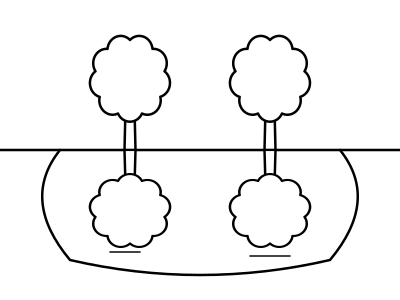
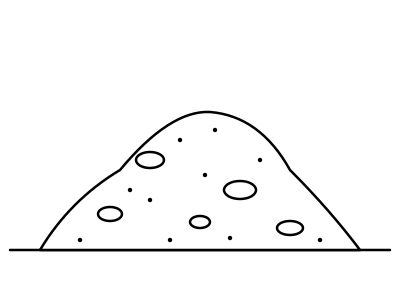
      Which one bounces the trees back like a mirror?
      • A calm, smooth pond.
      • A pile of dirt.

    Circle or draw.

    1. 4.
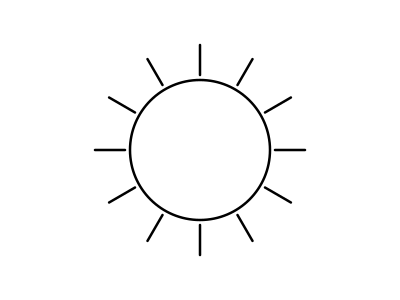
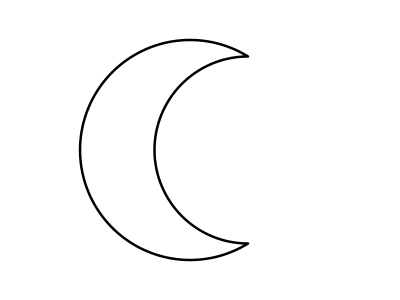
      Circle the one that makes its own light.
      • The sun.
      • The moon.
    2. 5.
      Circle the one that makes its own light.
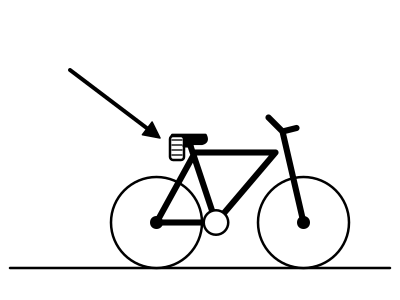
      • A bike reflector.
      • A flashlight that is on.
    3. 6.
      Where does the moon's light start? Circle it.
      • A lamp.
      • The sun.
      • A campfire.
    4. 7.
      Draw a flashlight shining on a mirror and a bright spot on the wall. Add arrows to show where the light goes.

    Challenge (optional)

    A cat's eyes shine when car lights hit them at night. Are the cat's eyes a light source?

    You need: crayons