1First Grade

    Doubles to 5 + 5

    Main topic and details

    Practice pages

    0 of 180 days complete · Saved on this device

    View all 180 days

    Math

    Doubles to 5 + 5

    I can tell doubles facts to 5 + 5.

    Standards: 1.OA.C.6

    Number practice (no timer)
    Doubles and doubles plus one
    Builds on
    Week 7 counting on, and Week 5 doubles in three addends. One-minute check: "3 + 3 = ?" (6)

    New words

    • double: two of the same number added together, such as 4 + 4
    • doubles fact: an adding fact with two of the same number, such as 5 + 5 = 10

    You need

    • Two ten frames drawn side by side on paper (a double ten frame)
    • 20 counters
    • Paper and markers for drawing dots
    • Notebook and pencil
    1. Warm-Up · 5 min

      Fluency: doubles and doubles plus one. Show two hands with 2 fingers each. Ask: "2 + 2?" (4) Then 3 fingers on each hand (6). Spaced review from Week 7: "8 + 3: count on." (9, 10, 11)

    2. Mini-Lesson · 10 min

      Say: "Today we learn doubles facts. A double is when we add the same number twice." Draw two rows of 3 dots, one row above the other. Ask: "How many in each row?" (3) "How many in all?" (6) Write 3 + 3 = 6. Put 4 counters in the top ten frame and 4 in the bottom one. Ask: "4 + 4?" (8) Write it. Build every double from 1 + 1 to 5 + 5 on the double ten frame, writing each one: 1 + 1 = 2, 2 + 2 = 4, 3 + 3 = 6, 4 + 4 = 8, 5 + 5 = 10. Then sing the doubles song together to any tune you like: "1 + 1 is 2, 2 + 2 is 4, 3 + 3 is 6, 4 + 4 is 8, 5 + 5 is 10!"

    3. Guided Practice · 10 min

      Your child builds each double on the double ten frame, says the fact and writes it. Mix the order: 1) 4 + 4 (8) 2) 2 + 2 (4) 3) 5 + 5 (10) 4) 3 + 3 (6) 5) 1 + 1 (2) Ask: "What do you notice about the sums?" (Answers vary. Look for: they go up by 2 each time; each one splits into two equal rows.) If stuck, say: "Build one row. Build the same row below it. Count them all."

    4. Play · 10 min

      Doubles Dot Draw. You call out a double. Your child draws it as two matching rows of dots and writes the fact underneath. Then your child closes their eyes, you call a double again, and your child says the sum without drawing. If they are not sure, they draw it. Do each double from 1 + 1 to 5 + 5 at least once.

    5. Exit Ticket · 3-5 min

      Put the objects to one side but leave them on the table. Read each question aloud. Your child answers out loud, with objects or with a quick drawing. Check each answer together right away.

    Exit ticket

    1. 4 + 4 = ?
    2. 3 + 3 = ?
    3. Show me 5 + 5 with your fingers. What is the sum?
    Answers
    1. 8
    2. 6
    3. 10 (5 fingers on each hand)
    Watch for, and help or stretch
    Watch for
    Mixing up a double with counting on 1, such as saying 4 + 4 = 5.
    Try
    Build two rows of 4 side by side. Ask: "Are these the same? Count them all."
    Extra help
    Focus on 1 + 1 to 3 + 3 today, building each one with counters.
    Stretch
    Ask your child to try 6 + 6 and 7 + 7 with the double ten frame (12 and 14).

    At home (optional): Find doubles at home: eyes, ears, shoes, hands. Say the doubles fact for each pair (1 + 1 = 2) and for two people (2 + 2 = 4 eyes).


    Reading & Writing

    Main topic and details

    I can tell the main topic and retell key details of a nonfiction text.

    Standards: RI.1.2, RI.1.10, RF.1.3.b

    Phonics
    Beginning r-blends and s-blends (frog, trip, drum, step, swim, snap)
    Sight words
    again, once, says, every, other
    Reading
    Original nonfiction mini-book "Shadows All Around" (ties to the light science unit)
    Writing
    Informational: All About book plan with a topic sentence · Handwriting: capitals P, B, R, D
    Builds on
    Naming the main topic (Week 7). One-minute check: ask "What was Pumpkin Facts mostly about?" (pumpkins)

    New words

    • shadow: a dark shape made when something blocks light
    • retell: tell the important parts again in your own words

    You need

    • "Shadows All Around" printed (in the lesson)
    • r-blend and s-blend cards
    • Sight word cards: again, once, says, every, other
    • Printed "Spot the Frog"
    1. Phonics & Word Work · 15 min

      I do: Say: "r and s can make blends too." Push counters for frog: /f/ /r/ /o/ /g/ (4 sounds). Read frog, sliding fr together. We do: read trip, drum, step. You do: your child reads crab, grin, brush, skip, spin, snug, stamp, swim. Read: "Fran can swim to the raft." "Stop the drum!" Dictation: frog, trip, step, swim. If stuck, say the blend as one chunk (fr, fr), then add the rest.

    2. Sight Words · 5 min

      Introduce this week's words with see-say-spell-write. For each card: Say: "This word is ___. Say it with me." Your child reads it, spells it aloud while tapping each letter, then writes it once while saying each letter, and reads it again. Draw a small heart over the tricky part, the part we must learn by heart: again (ai says /e/ in most speech); once (it starts with a /w/ sound and c says /s/); says (ay says /e/ and s says /z/); every (the middle e is often swallowed: ev-ry); other (o says /u/). Finish by reading all five cards in mixed order twice. If stuck, cover the tricky part, read the regular part together, then uncover it and say the whole word.

    3. Read-Aloud & Shared Reading · 15 min

      Read "Shadows All Around" aloud: Shadows All Around (an original nonfiction mini-book; you read it aloud) Page 1: Look around on a sunny day. You can see shadows almost everywhere. Page 2, What Is a Shadow?: A shadow is a dark shape. It forms when something blocks light. Page 3, Why Shadows Form: Light travels in straight lines. When your body is in the way, the light cannot get through. A dark area is left on the side of you away from the light. That dark area is your shadow. Page 4, Shadows Change: In the morning and the evening, the sun is low in the sky and your shadow is long. Near the middle of the day, the sun is high and your shadow is short. Page 5, Try It: Shine a flashlight on a toy. Move the light closer to the toy. What happens to the shadow? It gets bigger. Ask: "What is this mostly about?" (shadows) Your child retells 3 details. (Answers vary. Look for: a shadow is a dark shape; it forms when something blocks light; shadows are long in the morning and short at midday.) Ask: "What makes a shadow?" (something blocking light) Then echo-read "Spot the Frog": Spot the Frog Brad and Fran went to the pond. "Stop! I spot a frog," said Fran. The frog sat on a big flat rock in the sun. Brad went up to it. Snap! The frog got a bug. Then the frog did a big jump. Plop! It swam in the pond. "Come back, frog!" said Brad. "It is not a pet," said Fran. "The frog can live in the pond." Brad and Fran sat on the bank and had a snack. "I could come back again," said Brad.

    4. Writing & Handwriting · 15 min

      Your child writes the topic and one detail: "This book is about shadows. A shadow is ___." Handwriting (4 min): capitals start at the top line and touch the bottom line. P is down, then back to the top and around to the middle. B is down, around to the middle, and around again to the bottom. Your child writes each capital 3 times, then writes one word that starts with it (Pam, Brad). Circle the best letter in each row.

    5. Exit Ticket · 5 min

      Oral answers.

    Exit ticket

    1. Read these words: frog, step.
    2. What is Shadows All Around mostly about?
    3. Tell one key detail about shadows.
    Answers
    1. frog, step
    2. shadows
    3. Answers vary. Look for: a true detail from the text, such as a shadow forms when something blocks light.
    Watch for, and help or stretch
    Watch for
    Adding an extra vowel inside the blend (fuh-rog).
    Try
    Have your child say the first two sounds quickly, as one push of air, with no uh between them.
    Extra help
    Start with r-blends only today; add s-blends tomorrow.
    Stretch
    Your child finds all the words in "Spot the Frog" that start with a blend. (Brad, Fran, Stop, spot, frog, flat, Snap, Plop, swam, snack)

    At home (optional): Go outside with a family member on a sunny day. Your child finds their shadow and tells what is blocking the light.

    Social Studies

    Skills helpers need

    I can tell what a helper needs to know and be able to do for their job.

    Standards: D2.Eco.3.K-2

    Builds on
    Community helpers. One-minute check: your child names 2 community helpers and how each one helps.

    New words

    • skill: something a person knows how to do well
    • know: to have learned facts or ideas in your head

    You need

    • Helper cards from Week 7
    • "Skills web" page: a circle in the middle with 4 lines coming out
    • Crayons
    1. Warm-Up / Wonder · 5 min

      Spaced review: play a quick round of the helper guessing game with 2 helpers. Wonder question: "Could anyone be a baker tomorrow, or do they need to learn things first?"

    2. Explore · 10–15 min

      Say: "Helpers need to know things and be able to do things. Those are their skills." Make a skills web for a baker together. Write "Baker" in the middle. On the lines: knows recipes, can measure flour and sugar, can use an oven safely, can decorate a cake. Then your child picks a second helper and makes a web with your help. Sample for a mail carrier: knows the streets, can read addresses, can drive safely, can carry heavy bags. Sample for a nurse: knows how the body works, can take a temperature, can give medicine safely, can help people feel calm. Ask: "Which skill is the most important for this job? Why?" (Answers vary.) If stuck, ask: "What does this helper do all day? What would they need to learn to do that?"

    3. Talk & Record · 5–10 min

      Your child draws the helper in the middle of the web. Sentence frame: "A ___ needs to know how to ___."

    4. Exit Ticket · 3–5 min

      Ask the two questions aloud.

    Exit ticket

    1. What does a baker need to know?
    2. Name one skill a mail carrier needs.
    Answers
    1. Answers vary. Look for: recipes, how to measure or how to use an oven safely.
    2. Answers vary. Look for: reading addresses, knowing the streets, driving safely or carrying heavy bags.
    Watch for, and help or stretch
    Watch for
    Listing tools, like "an oven," instead of skills.
    Try
    Ask: "The oven is the tool. What does the baker need to know how to do with it?" (bake safely)
    Extra help
    Make only the baker web, with 2 skills.
    Stretch
    Your child makes a skills web for a job they might want someday.

    At home (optional): Your child asks a grown-up about one skill they need for their own work or for a job at home, and tells you.

    Practice

    Read each direction aloud. Your child works on the page; answers are in the grown-up view.

    Warm-up

    Remember?

    Math

    1. 2 + 9 = ? Start at the bigger number and count on.
    2. Jada has 10 marbles. Theo has 6 marbles. How many more marbles does Jada have?

    Reading & Writing

    1. blot, clip, plug

    Math · Week 8 Day 1

    I can tell doubles facts to 5 + 5.

    Look: 2 + 2

    1. Draw 2 dots in the top row.
    2. Draw 2 dots in the bottom row, right under them.
    3. Count them all: 4. 2 + 2 = 4. That is a double.

    Count the dots. Write the doubles fact.

    1. 1.
      2 rows of 3 dots, one row above the other.
    2. 2.
      2 rows of 5 dots, one row above the other.
    3. 3.
      2 rows of 1 dot, one row above the other.
    4. 4.
      2 rows of 4 dots, one row above the other.

    Circle the answer.

    1. 5.
      Which one is a double?
      • 4 + 4
      • 4 + 5
    2. 6.
      Which one is a double?
      • 1 + 2
      • 1 + 1
    3. 7.
      Which one is a double?
      • 3 + 2
      • 3 + 3

    Challenge (optional)

    Draw a double that makes 10. Write the fact.

    You need: crayons

    Reading & Writing · Week 8 Day 1

    I can tell the main topic and retell key details of a nonfiction text.

    Look: main topic and key details

    1. Read "The Frog" together. Ask: "What is it mostly about?" (a frog)
    2. Say: "That is the main topic."
    3. Retell the key details on your fingers: a frog can swim, hop, snap up a bug and rest on a rock.

    The Frog

    A frog can swim in a pond. It can hop on a log. It can snap up a bug. A frog can rest on a big flat rock.

    Circle the main topic. Then circle the key detail from the text.

    1. 1.
      • a frog
      • a log
      • a bug
    2. 2.
      A frog can ___.
      • swim
      • sing
    3. 3.
      It can snap up a ___.
      • bug
      • drum
    4. 4.
      A frog can rest on a ___ rock.
      • flat
      • red

    Say the picture name. Write the two letters at the start.

    1. 5.
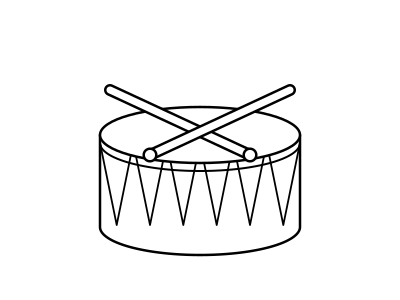
      A drum. ___ u m
    2. 6.
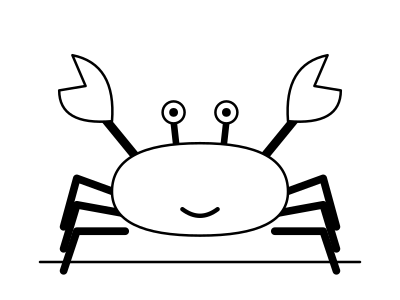
      A crab. ___ a b
    3. 7.
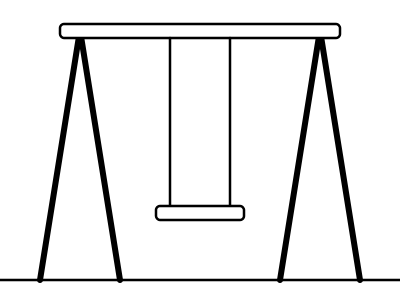
      A swing. ___ i ng
    4. 8.
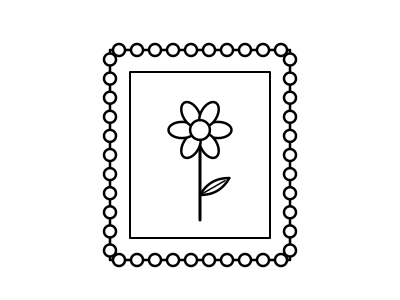
      A postage stamp. ___ a mp

    Challenge (optional)

    Can a frog swim?

    Social Studies · Week 8 Day 1

    I can tell what a helper needs to know and be able to do for their job.

    Look: a skills web

    1. Pick a helper: a vet, who cares for sick animals.
    2. Ask: what does a vet need to know? How animal bodies work.
    3. Ask: what must a vet be able to do? Give a shot safely and calm a scared pet.

    Listen. Circle yes if the helper needs this skill. Circle no if not.

    1. 1.
      Does a bus driver need to know the roads?
      • yes
      • no
    2. 2.
      Does a bus driver need to know how to play the drums?
      • yes
      • no
    3. 3.
      Does a dentist need to know how to clean teeth?
      • yes
      • no
    4. 4.
      Does a farmer need to know when to plant seeds?
      • yes
      • no
    5. 5.
      Does a librarian need to know how to fly a plane?
      • yes
      • no

    Talk and draw. Write what your child says.

    1. 6.
      Make a skills web for a teacher. Tell two skills a teacher needs.
    2. 7.
      Pick a job you might like. What would you need to learn?
    3. 8.
      Draw a helper using one skill.

    Challenge (optional)

    For a firefighter, which skill do you think is the hardest to learn? Why?

    You need: crayons