1First Grade

    Lesson + weekly check: doubles

    Share and check: r- and s-blends

    Practice pages

    0 of 180 days complete · Saved on this device

    View all 180 days

    MathWeekly check

    Lesson + weekly check: doubles

    I can use doubles to add.

    Standards: 1.OA.C.6

    Number practice (no timer)
    Doubles and doubles plus one
    Builds on
    Days 1 to 4: doubles to 10 + 10 and near doubles. One-minute check: "8 + 8 = ?" (16)

    New words

    • doubles fact: an adding fact with two of the same number, such as 5 + 5 = 10

    You need

    • 20 index cards or paper squares for memory match
    • Double ten frame and 20 counters
    • The stored Week 8 check and its answer key
    • Notebook and pencil
    1. Warm-Up · 5 min

      Fluency: doubles and doubles plus one. Sing the doubles song all the way to 10 + 10 is 20. Spaced review from Week 7: "16 - 2 = ?" (14)

    2. Short Lesson: Review Game · 10 min

      Doubles Memory Match. Make 20 cards: 10 with a doubles fact (1 + 1 to 10 + 10) and 10 with the sums (2, 4, 6, 8, 10, 12, 14, 16, 18, 20). Mix them face down in rows. Take turns flipping two cards. If a fact and its sum match, say the fact and keep the pair. If not, flip them back. Use the double ten frame to check any match you are not sure about. Play until all pairs are found. If stuck, say: "Build the double on the double ten frame. See 5 and 5, then count the extras."

    3. Weekly Check · 15 min

      Give the stored Week 8 check. The printed check has 10 items. It covers these goals: (1) I can tell doubles facts to 5 + 5; (2) I can tell doubles facts to 10 + 10; (3) I can use a double to help with a near double; (4) I can use doubles and near doubles to solve stories. Do not use a clock and do not hurry your child. On the check, mark each double as "knows it" (said it without counting), "figured it out" (used fingers or the five-and-five trick) or "needs a model" (needed the double ten frame). Score it with the answer key. Secure: 8 of 10 correct, with at least 2 of the 3 near doubles (items 6–8) explained with the right double. If the check is secure, start Week 9. If it is not, first do the reteach step on the check page for each group of items missed, then start Week 9. Some doubles need a model: use those doubles in every warm-up next week.

    4. Exit Ticket · 3-5 min

      After the check, ask these two questions. Then go over any missed items together.

    Exit ticket

    1. 9 + 9 = ?
    2. Solve 6 + 7 and tell which double helped.
    Answers
    1. 18
    2. 13; 6 + 6 = 12
    Watch for, and help or stretch
    Watch for
    Knowing small doubles but guessing big doubles (8 + 8, 9 + 9).
    Try
    Use the five-and-five trick: 8 + 8 is 5 + 5 = 10, and 3 + 3 = 6 more, so 16.
    Extra help
    Let your child build any double on the double ten frame during the check, and mark it "needs a model."
    Stretch
    After the check, ask: "Which double is 14? 18? 16?" (7 + 7, 9 + 9, 8 + 8) Then ask for a near double your child makes up.

    At home (optional): Play Doubles Memory Match with a family member.

    Reading & WritingWeekly check

    Share and check: r- and s-blends

    I can read r-blend and s-blend words and tell the topic of a text.

    Standards: RF.1.3.b, RI.1.2, RF.1.3.g

    Phonics
    Beginning r-blends and s-blends (frog, trip, drum, step, swim, snap)
    Sight words
    again, once, says, every, other
    Reading
    Original nonfiction mini-book "Shadows All Around" (ties to the light science unit)
    Writing
    Informational: All About book plan with a topic sentence · Handwriting: capitals P, B, R, D
    Builds on
    Blend practice. One-minute check: warm up with frog, step and swim.

    New words

    • passage: a short piece of writing

    You need

    • Word cards (r-blends and s-blends)
    • Short new 4-sentence passage (written in step 4)
    • Sight word cards
    • Recording sheet
    1. Review Game · 10 min

      Blend Hopscotch: chalk or tape 8 squares with blend words (frog, trip, drum, step, swim, snap, crab, spin). Your child hops and reads each word they land on. If stuck on a word during the game (not during the check), cover all but the first sound, say it together, then uncover the rest and blend.

    2. Sight Words · 5 min

      Review: again, once, says, every, other, could, would, should, any, many. Memory Match: make two cards for each of three words. Turn them face down and play Memory; read the word on every card turned over. Mix this week's and last week's words.

    3. Weekly Check · 15 min

      The printed check has 8 items. It covers these goals: (1) I can read words that start with an r-blend or an s-blend; (2) I can read the sight words again, once, says, every and other; (3) I can tell the main topic of a text and one key detail; (4) I can tell how two ideas are connected; (5) I can use a, an, this and that. Give no hints. Record each answer. Secure: 8 of the 10 words in items 1 and 2, 4 of the 5 sight words, the topic in item 4, and 3 of items 5 to 8. For any part that is not yet secure, use the matching reteach step on the check page next week.

    4. Share & Listen · 10 min

      Your child shares the All About book plan with a family member and reads the topic sentence aloud.

    5. Handwriting · 10 min

      Capitals start at the top line and touch the bottom line. Review all four capitals. Your child writes each capital 3 times, then writes one word that starts with it (Pam, Brad, Ron, Dan). Circle the best letter in each row.

    6. Exit Ticket · 5 min

      Talk about the week.

    Exit ticket

    1. Read a word with an r-blend and a word with an s-blend.
    2. What is your All About book about?
    Answers
    1. Answers vary. Look for: correct reads such as frog and step.
    2. Answers vary. Look for: one clear topic.
    Watch for, and help or stretch
    Watch for
    Reading says with a long a (sayz) instead of /sez/.
    Try
    Review the heart part (ay says /e/) and read "Mom says yes." three times.
    Extra help
    Read the passage title aloud before item 4 so your child can focus on the sentences.
    Stretch
    Your child reads 3 bonus magic e words (cake, made, game) to preview next week. Do not score them.

    At home (optional): Read "Spot the Frog" to a family member.

    Social StudiesWeekly check

    Working to earn money

    I can explain that people earn money by doing work.

    Standards: D2.Eco.6.K-2

    Builds on
    Goods and services. One-minute check: ask "Is a bus ride a good or a service?" (a service)

    New words

    • earn: to get money for doing work
    • pay: money a worker gets for doing a job

    You need

    • 20 pretend coins (buttons or paper circles)
    • Job cards: baker, mail carrier, librarian, gardener
    • A snack card or a small toy card marked "3 coins", and a bigger toy card marked "5 coins" (for the extension)
    1. Warm-Up / Wonder · 5 min

      Spaced review: your child sorts 2 items out loud: bread (good), a teeth cleaning (service). Wonder question: "Where does money come from when grown-ups buy things?" (Answers vary.)

    2. Review Game · 10 min

      Play "Job Day." Your child picks a job card and does a pretend job for 2 minutes: the baker shapes pretend bread from paper, the mail carrier delivers 5 letters to family members, the librarian puts 5 books in order, the gardener waters plants. When the job is done, you pay 5 pretend coins. Say: "You earned 5 coins because you did work." Your child "buys" the snack card for 3 coins. Ask: "How many coins are left?" (2) Do one more job and earn 5 more. Ask: "Now how many coins?" (7) Say: "People do work and get paid. Then they use that money to buy goods and services." If stuck with the coins, count them out one at a time together.

    3. Check · 10 min

      Give the Week 8 social studies check. The check items are on the Week 8 check page; do not show them ahead of time. This week the check is spoken. Read each part aloud. Your child answers by talking, pointing, acting it out or drawing, and you write their words exactly. It is not timed; stop and finish later if your child is tired. Make a check mark next to each part your child shows on their own. The printed check has 8 items. It covers these goals: (1) I can tell what a helper needs to know and be able to do for their job; (2) I can tell the difference between goods and services; (3) I can explain that people earn money by doing work. Your child tells how a grown-up gets money to buy things. Look for: "They work and get paid." Keep the talk general; do not ask about your own family's pay. Secure: 6 of 8 correct, with at least one right on each goal. If the check is not yet secure, use the reteach step on the check page that matches the items missed.

    4. Exit Ticket · 3–5 min

      Ask the two questions aloud. Your child may use coins for question 2.

    Exit ticket

    1. How do people get money to buy things?
    2. You earned 5 coins and spent 3. How many are left?
    Answers
    1. They work and get paid.
    2. 2
    Watch for, and help or stretch
    Watch for
    Thinking money comes from the bank machine or a wallet with no work behind it.
    Try
    Ask: "How did your coins get in your pile today?" (I did a job.) Say: "Grown-ups work to earn money too."
    Extra help
    Pay 3 coins per job and skip the buying step.
    Stretch
    Your child decides whether to spend coins now or save them for a bigger "5 coins" card, and tells why.

    At home (optional): Your child asks a grown-up what job they would like to try if they could, and why.

    Practice

    Read each direction aloud. Your child works on the page; answers are in the grown-up view.

    Warm-up

    Remember?

    Math

    1. 8 + 3 = ? Start at the bigger number and count on.
    2. Rosa has 6 beads. Sam has 3 beads. How many more beads does Rosa have?

    Reading & Writing

    Math · Week 8 check

    Weekly check

    How to give it: This check is untimed. Read each item aloud. Your child may say the answer before writing it. For items 1–5, mark each double as "knows it" (said it without counting), "figured it out" (fingers or five-and-five) or "needs a model" (needed the double ten frame). Your child may use the double ten frame. Do not help with the math.

    Secure when: 8 of 10 correct, with at least 2 of the 3 near doubles (items 6–8) explained with the right double

    • I can tell doubles facts to 5 + 5.
    • I can tell doubles facts to 10 + 10.
    • I can use a double to help with a near double.
    • I can use doubles and near doubles to solve stories.
    1. 1.
      1 + 1 = ___
    2. 2.
      4 dots in a top row and 4 dots in a bottom row. Write the doubles fact.
    3. 3.
      7 + 7 = ___
    4. 4.
      You have 9 blocks. You get 9 more blocks. How many blocks?
    5. 5.
      A box has 2 rows of 6 crayons. How many crayons?
    6. 6.
      8 + 7 = ___. Which double helped?
    7. 7.
      4 + 3 = ___. Which double helped?
    8. 8.
      10 + 9 = ___. Which double helped?
    9. 9.
      There are 18 shells. You give away 9. How many are left? Which double helps?
    10. 10.
      There are 20 socks in a pile. 10 are white. How many are not white? Which double helps?

    Reading & Writing · Week 8 check

    Weekly check

    How to give it: Give the check after the review game, in a quiet spot, one part at a time. It is untimed; take a stretch break between parts if needed. Read every direction aloud, but do not read the words or story for your child. Do not help except to say "Try your best" or "Skip it." Mark each item right or wrong. Items 1 and 2 (Part 1): your child reads the words aloud. Item 3 (Part 2): your child reads the 5 sight words. Part 3: your child reads the new passage "The Crab" aloud and answers items 4 and 5 (the topic and one detail). Then read the directions for items 6 to 8.

    Secure when: 8 of the 10 words in items 1 and 2, 4 of the 5 sight words, the topic in item 4, and 3 of items 5 to 8.

    • I can read words that start with an r-blend or an s-blend.
    • I can read the sight words again, once, says, every and other.
    • I can tell the main topic of a text and one key detail.
    • I can tell how two ideas are connected.
    • I can use a, an, this and that.

    The Crab

    A crab can live in wet sand. A crab can dig and dig. A crab can grab a snack. A crab can snap!

    1. 1.
      brag crib drop grin trot
    2. 2.
      scan smog snub spat skin
    3. 3.
      again once says every other
    4. 4.
      • a crab
      • wet sand
      • a snack
    5. 5.
      A crab can live in wet ___.
      • sand
      • mud
    6. 6.
      The cat got in the tub. Then the cat got ___.
      • wet
      • big
    7. 7.
      ___ elk
      • a
      • an
    8. 8.
      A child holding a stick close. ___ is my stick.
      • This
      • That

    Social Studies · Week 8 check

    Weekly check

    How to give it: Read every question and choice aloud, and point to each picture as you name it. This week the check is spoken. Your child answers by talking, pointing, circling, acting it out or drawing; write their words exactly on the line. It is not timed; stop and finish later if your child is tired. Do not show the page ahead of time. Keep the talk general; do not ask about your own family's pay. Your child may use pretend coins for item 7. Make a check mark next to each part your child shows on their own.

    Secure when: 6 of 8 correct, with at least one right on each goal

    • I can tell what a helper needs to know and be able to do for their job.
    • I can tell the difference between goods and services.
    • I can explain that people earn money by doing work.
    1. 1.
      A pilot flies a plane. What must a pilot know or be able to do?
    2. 2.
      Does a cook need to know how to use a stove safely?
      • yes
      • no
    3. 3.
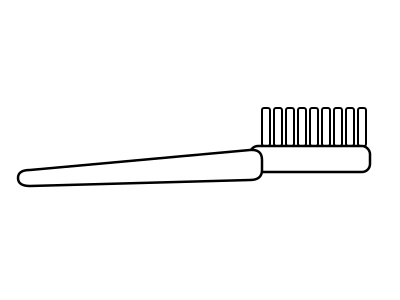
      A toothbrush. Is this a good or a service?
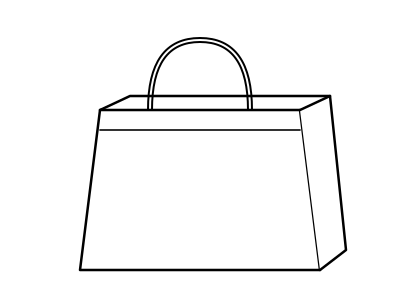
      • A shopping bag.
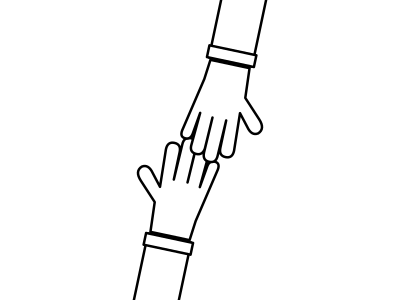
      • A helping hand.
    4. 4.
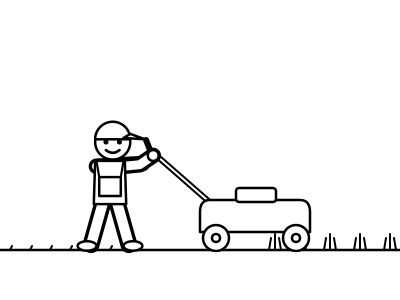
      A worker mowing a lawn. Is this a good or a service?
      • A shopping bag.
      • A helping hand.
    5. 5.
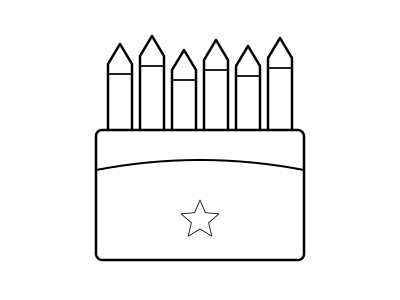
      A box of crayons. Is this a good or a service?
      • A shopping bag.
      • A helping hand.
    6. 6.
      Where does the money come from when a worker buys groceries?
    7. 7.
      You earned 4 coins for raking leaves and spent 1 coin. How many are left?
    8. 8.
      Why does a baker get paid?