1First Grade

    Near doubles

    A, an, the, this, that

    Practice pages

    0 of 180 days complete · Saved on this device

    View all 180 days

    Math

    Near doubles

    I can use a double to help with a near double.

    Standards: 1.OA.C.6

    Number practice (no timer)
    Doubles and doubles plus one
    Builds on
    Days 1 and 2 doubles to 10 + 10. One-minute check: "6 + 6 = ?" (12) "7 + 7 = ?" (14)

    New words

    • near double: a fact where one number is just 1 more than the other, such as 6 + 7

    You need

    • Double ten frame
    • 20 counters in two colors
    • Notebook and pencil
    1. Warm-Up · 5 min

      Fluency: doubles and doubles plus one. Ask doubles out of order: 8 + 8 (16), 5 + 5 (10), 9 + 9 (18). Spaced review from Week 7: "9 + ? = 13." (4)

    2. Mini-Lesson · 10 min

      Say: "Today we use a double to help with a near double." Build 6 + 6 on the double ten frame. Ask: "How many?" (12) Now add 1 more counter of a different color to the bottom frame. Ask: "What do the frames show now?" (6 + 7) Say: "6 + 7 is 6 + 6 and 1 more. 12 and 1 more is 13. So 6 + 7 = 13." Write: 6 + 6 = 12, so 6 + 7 = 13. Do 5 + 6: "5 + 5 = 10, and 1 more is 11." Say: "When two numbers are next-door neighbors, use the double of the smaller number and add 1."

    3. Guided Practice · 10 min

      Your child builds the double, adds 1 extra counter in a new color and says the near double. 1) 7 + 8 (7 + 7 = 14, so 15) 2) 4 + 5 (4 + 4 = 8, so 9) 3) 8 + 9 (8 + 8 = 16, so 17) 4) 3 + 4 (3 + 3 = 6, so 7) 5) 9 + 10 (9 + 9 = 18, so 19) Ask after each: "Which double helped?" If stuck, say: "Which number is smaller? Double it. Now add 1."

    4. Play · 10 min

      Is It a Near Double? Write 8 facts on paper: 5 + 6, 7 + 7, 4 + 9, 6 + 7, 8 + 8, 2 + 3, 3 + 8 and 9 + 8. Your child sorts them into three piles: double, near double, or neither. Then your child solves the doubles and near doubles. Answers: doubles 7 + 7 = 14 and 8 + 8 = 16; near doubles 5 + 6 = 11, 6 + 7 = 13, 2 + 3 = 5 and 9 + 8 = 17; neither 4 + 9 and 3 + 8. For the "neither" pile, your child counts on from the bigger number (13 and 11).

    5. Exit Ticket · 3-5 min

      Put the objects to one side but leave them on the table. Read each question aloud. Your child answers out loud, with objects or with a quick drawing. Check each answer together right away.

    Exit ticket

    1. 6 + 7 = ? Which double helped?
    2. Solve 7 + 8.
    3. Solve 5 + 4.
    Answers
    1. 13; 6 + 6 = 12
    2. 15 (7 + 7 = 14, and 1 more)
    3. 9 (4 + 4 = 8, and 1 more)
    Watch for, and help or stretch
    Watch for
    Doubling the bigger number and then adding 1, which gives 17 for 7 + 8 instead of 15.
    Try
    Ask: "Which number is smaller? Use its double." Build it to show that 7 + 7 and 1 more is 15.
    Extra help
    Use near doubles up to 5 + 6, built on the double ten frame every time.
    Stretch
    Try a double minus one: 8 + 7 is 8 + 8 - 1 (15). Ask your child which way they like better.

    At home (optional): Ask a family member a near double, such as 6 + 7, and teach them the double plus one trick.
    Reading & Writing

    A, an, the, this, that

    I can use a, an, the, this and that in sentences.

    Standards: L.1.1.h, SL.1.6, RF.1.3.b

    Phonics
    Beginning r-blends and s-blends (frog, trip, drum, step, swim, snap)
    Sight words
    again, once, says, every, other
    Reading
    Original nonfiction mini-book "Shadows All Around" (ties to the light science unit)
    Writing
    Informational: All About book plan with a topic sentence · Handwriting: capitals P, B, R, D
    Builds on
    Speaking in full sentences (Week 4). One-minute check: your child tells you a complete sentence about a toy in the room.

    New words

    • a and an: words for one thing; use an before a vowel sound, as in an apple
    • this and that: this is close to you; that is farther away

    You need

    • Objects around the house (an apple, a cup, an egg carton, a sock)
    • Sentence frames on cards: This is a ___. That is an ___. The ___ is red.
    • Sight word cards
    1. Phonics & Word Work · 15 min

      I do: read drop, trap, grab. We do: read crush, print, stomp. You do: your child reads drop, trap, grab, crush, print, stomp, grand, frost. Read: "This is a trap. That is a crab." "An ant is on the drum." Dictation: drop, grab, print, frost. If stuck, cover the ending and read the blend and vowel first.

    2. Sight Words · 5 min

      Review: again, once, says, every, other. Flip and Read: lay the five cards face down with last week's words. Your child flips a card, reads it and uses it in a short spoken sentence. Missed words go back in the pile.

    3. Read-Aloud & Shared Reading · 15 min

      Reread "Spot the Frog". Your child finds every a and every the in the story. (a frog, a big flat rock, a bug, a big jump, a pet, a snack; the pond, the frog, the sun, the bank) Ask: "First Fran says I spot a frog. Later she says The frog can live in the pond. Which words tell about the one frog we already know?" (the frog)

    4. Writing & Handwriting · 15 min

      Play Pass the Object: pass items back and forth and name each with a determiner. "This is an apple." (when holding it) "That is the red cup." (pointing across the room) Say: "Use an before a vowel sound: an apple, an egg. Use this for close and that for far." Your child writes two of the sentences, with capitals and end marks. Handwriting (3 min): your child writes This and That neatly, minding the capital T.

    5. Exit Ticket · 5 min

      Oral answers.

    Exit ticket

    1. Fill in a or an: ___ egg.
    2. Hold up a spoon. Say a sentence with this.
    3. Point to something far away. Say a sentence with that.
    Answers
    1. an
    2. Answers vary. Look for: "This is a spoon." while holding it.
    3. Answers vary. Look for: "That is a ___." about a far object.
    Watch for, and help or stretch
    Watch for
    Saying a apple or a egg.
    Try
    Say both aloud and listen: "a apple, an apple: which is smoother?" Use an before a vowel sound.
    Extra help
    Practise a and an with only 4 objects: an apple, an egg, a cup, a sock.
    Stretch
    Your child writes a sentence with both this and that: "This cup is red, and that cup is blue."

    At home (optional): At dinner, your child names 3 things on the table with a, an or the.

    Social Studies

    Goods and services

    I can tell the difference between goods and services.

    Standards: D2.Eco.4.K-2

    Builds on
    Skills helpers need. One-minute check: your child tells one skill a baker needs. (Sample: measuring.)

    New words

    • goods: things you can touch and buy
    • services: work someone does for you

    You need

    • 8 picture sort cards: apple, haircut, shoes, bus ride, book, dentist cleaning teeth, loaf of bread, fixing a sink
    • 2 baskets labeled Goods and Services
    • A few packaged foods or clothing labels from home
    1. Warm-Up / Wonder · 5 min

      Spaced review: ask: "What is a skill?" (Something a person knows how to do well.) Wonder question: "When a family pays money at a store or a barbershop, what do they get?"

    2. Explore · 10–15 min

      Say: "Goods are things you can touch and buy. Services are work someone does for you." Hold up the apple card. Ask: "Can you touch it and take it home?" (Yes; it is a good.) Hold up the haircut card. Ask: "Can you take a haircut home in a bag?" (No; someone does it for you, so it is a service.) Your child sorts the rest. Goods: apple, shoes, book, loaf of bread. Services: haircut, bus ride, dentist cleaning teeth, fixing a sink. Then a quick label look: read the labels on 2 or 3 items from home. Ask: "Was this good made in our community or far away?" (Answers vary. Sample: bananas come from warm places far away; bread might come from a bakery nearby.) Say: "Some goods are made near us and some come from far away." If stuck, ask: "Is it a thing or is it work?"

    3. Talk & Record · 5–10 min

      Your child folds a page in half, labels it Goods and Services and draws one good and one service from your own home. (Sample: a toy is a good; a grown-up fixing a bike is a service.)

    4. Exit Ticket · 3–5 min

      Ask the three questions aloud.

    Exit ticket

    1. Is a haircut a good or a service?
    2. Is a pair of shoes a good or a service?
    3. Name one good and one service in our home.
    Answers
    1. A service.
    2. A good.
    3. Answers vary. Look for: a thing you can touch (good) and work someone does (service).
    Watch for, and help or stretch
    Watch for
    Calling a service a good because it uses things, such as calling a haircut a good because of the scissors.
    Try
    Ask: "What do you get to take home? Scissors or a new haircut?" The person's work is the service.
    Extra help
    Sort 4 cards: apple, shoes, haircut and bus ride.
    Stretch
    Your child finds one place that sells both, such as a bike shop that sells bikes and fixes them.

    At home (optional): At a store or on a walk, your child names one good and one service they see.

    Practice

    Read each direction aloud. Your child works on the page; answers are in the grown-up view.

    Warm-up

    Remember?

    Math

    1. Start at 8. How many do you count on to get to 11?
    2. The parts are 4 and 4. What is the whole?

    Reading & Writing

    1. could, would, should

    Math · Week 8 Day 3

    I can use a double to help with a near double.

    Look: 9 + 8

    1. 9 and 8 are next-door neighbors. Use the double of the smaller number: 8 + 8 = 16.
    2. 9 is 1 more than 8, so add 1 more.
    3. 16 and 1 more is 17. So 9 + 8 = 17.

    Use the double to help. Write the sum.

    1. 1.
      6 + 6 = 12, so 7 + 6 = ___
    2. 2.
      1 + 1 = 2, so 1 + 2 = ___
    3. 3.
      2 + 2 = 4, so 3 + 2 = ___
    4. 4.
      9 + 9 = 18, so 10 + 9 = ___

    Circle the double that helps. Then write the sum.

    1. 5.
      4 + 3
      • 3 + 3
      • 4 + 5
    2. 6.
      4 + 3 = ___
    3. 7.
      6 + 5
      • 5 + 5
      • 6 + 7
    4. 8.
      6 + 5 = ___

    Challenge (optional)

    Make up a near double with a sum of 13. Which double helps?

    You need: two ten frames and counters in 2 colors (optional)

    Reading & Writing · Week 8 Day 3

    I can use a, an, the, this and that in sentences.

    Look: a, an, this and that

    1. Say: "Use an before a vowel sound: an ant, an ox. Use a before other sounds: a crab."
    2. Hold a cup: "This is my cup." Point across the room: "That is a lamp."
    3. Say: "This is close to me. That is far away."

    Brad and the Crab

    Brad got a crab in a net. The crab was red. "This crab is big!" said Brad. An ant sat on the net. "That ant is not big," said Mom.

    Circle a or an.

    1. 1.
      ___ ax
      • a
      • an
    2. 2.
      ___ frog
      • a
      • an
    3. 3.
      ___ ox
      • a
      • an
    4. 4.
      ___ plum
      • a
      • an

    Look at the picture. Circle this or that.

    1. 5.
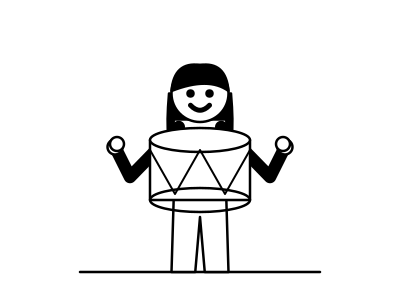
      A child holding a drum in both hands. ___ is my drum.
      • This
      • That
    2. 6.
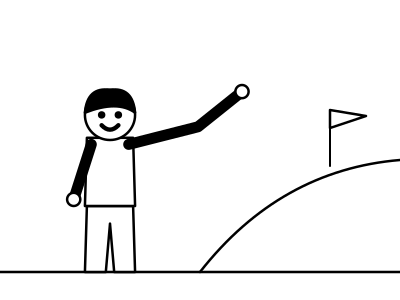
      A child pointing at a flag far away on a hill. ___ is a big flag.
      • This
      • That
    3. 7.
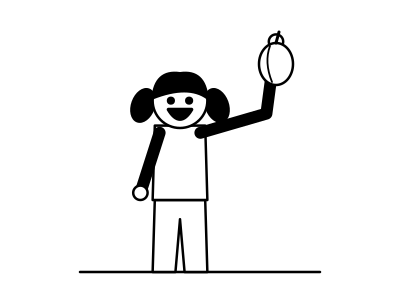
      A child holding up a plum. ___ plum is soft.
      • This
      • That

    Challenge (optional)

    Brad got ___ crab in a net.

    Social Studies · Week 8 Day 3

    I can tell the difference between goods and services.

    Look: goods or services?

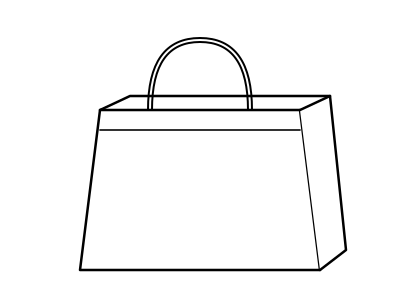
    1. Goods are things you can touch and buy. The shopping bag means goods.
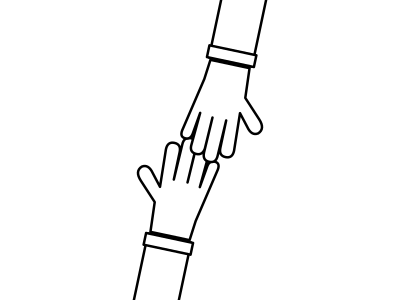
    2. Services are work someone does for you. The helping hand means services.
    3. Ask: "Is it a thing, or is it work?" A hat is a thing, so it is a good. A car wash is work, so it is a service.

    Listen. Circle the bag for a good. Circle the hand for a service.

    1. 1.
      a toy truck
      • A shopping bag.
      • A helping hand.
    2. 2.
      walking a dog for someone
      • A shopping bag.
      • A helping hand.
    3. 3.
      a bag of carrots
      • A shopping bag.
      • A helping hand.
    4. 4.
      a piano lesson
      • A shopping bag.
      • A helping hand.
    5. 5.
      a pencil
      • A shopping bag.
      • A helping hand.
    6. 6.
      a checkup at the doctor
      • A shopping bag.
      • A helping hand.

    Talk and draw. Write what your child says.

    1. 7.
      Name one good you used today.
    2. 8.
      Who did a service for you this month? What did they do?
    3. 9.
      Find a label on a food at home. Was it made near us or far away?

    Challenge (optional)

    Is a teacher teaching a lesson a good or a service? How do you know?