1First Grade

    Taking from: how many are left?

    Retelling with details

    Practice pages

    0 of 180 days complete · Saved on this device

    View all 180 days

    Math

    Taking from: how many are left?

    I can act out a taking-away story and tell how many are left.

    Standards: 1.OA.A.1

    Number practice (no timer)
    Count back by 1 and 2; partners of 10
    Builds on
    Week 1 adding stories. One-minute check: "6 and 2 more is?" (8) Your child writes 6 + 2 = 8.

    New words

    • take away: remove some from a group
    • minus: the sign - that means take away
    • left: how many are still there after some are taken away

    You need

    • 20 counters
    • A cup
    • Toy bus or shoebox and 10 small toys for passengers
    • Notebook and pencil
    1. Warm-Up · 5 min

      Fluency: count back by 1 and 2. Count back from 10 to 0 together, then from 10 by 2s with a whisper on the skipped number: "10, (9), 8, (7), 6..." Partners of 10: you say 7, your child says 3. Do 2 (8) and 9 (1). Spaced review from Week 1: "4 + 5 = ?" Your child solves it with fingers (9).

    2. Mini-Lesson · 10 min

      Say: "Last week, more things came and the number got bigger. Today, some things go away. We find how many are left." Put 8 counters on the table. Your child counts them (8). Say: "8 cookies are on a plate. You eat 3." Your child moves 3 counters into the cup. Ask: "How many cookies are left on the plate?" (5) Write 8 - 3 = 5. Read: "8 minus 3 equals 5." Say: "The - sign is called minus. It means take away." Point to each number. (8 is all the cookies at the start, 3 is the cookies eaten, 5 is the cookies left.) Ask: "Did the number get bigger or smaller?" (Smaller.)

    3. Guided Practice · 10 min

      Tell each story. Your child acts it out with counters and the cup, then writes the equation. 1) "7 birds are on a fence. 2 fly away." (7 - 2 = 5) 2) "9 balloons. 4 pop." (9 - 4 = 5) 3) "6 crayons are in a box. You take out all 6." (6 - 6 = 0) Ask: "What does 0 mean here?" (No crayons are left.) 4) "10 grapes. You eat 1." (10 - 1 = 9) If stuck, say: "Count all of them first. Now put the ones that go away in the cup. Count what is still on the table."

    4. Play · 10 min

      Bus Stop. Put 10 toy passengers on the bus. Drive the bus around the table. At each stop, you say how many get off: first 2, then 3, then 4. Your child takes them off, says how many are left and writes the equation: 10 - 2 = 8, 8 - 3 = 5, 5 - 4 = 1. Then your child is the driver and chooses how many get off at each stop while you write the equations. Check them together.

    5. Exit Ticket · 3-5 min

      Put the objects to one side but leave them on the table. Read each question aloud. Your child answers out loud, with objects or with a quick drawing. Check each answer together right away.

    Exit ticket

    1. 6 birds sit on a wire. 2 fly away. How many are left?
    2. Write the equation for that story.
    3. You have 5 cookies and you eat all 5. How many are left?
    Answers
    1. 4 birds
    2. 6 - 2 = 4
    3. 0 cookies
    Watch for, and help or stretch
    Watch for
    Counting the counters in the cup and giving that number as the answer.
    Try
    Ask: "Which ones are still here?" Your child points only to the counters on the table and counts those.
    Extra help
    Use numbers up to 6. Your child holds the counters in their hand and drops the taken ones into the cup one at a time.
    Stretch
    Use starting numbers from 11 to 15, such as "12 ducks, 2 swim away" (10).

    At home (optional): During cleanup, count toys in a bin, take some out and tell how many are left.
    Reading & Writing

    Retelling with details

    I can retell what happened in a story using key details.

    Standards: RL.1.2, RF.1.3.b, RF.1.3.g

    Phonics
    Short o, u and e in CVC words; all five short vowels; middle sounds
    Sight words
    the, of, to, said, was
    Reading
    The Relatives Came (Cynthia Rylant); original decodable "Ten in a Hut"
    Writing
    Personal narrative: drawing and writing about one time with family · Handwriting: lowercase l, t, i, j, k
    Builds on
    Telling who and where in a story (Week 1). One-minute check: ask "Who was in Pam and the Big Cat, and where was the cat at the start?" (Pam and the cat; in a bag)

    New words

    • retell: tell a story again in your own words, in order
    • key detail: an important part of the story
    • sight word: a word we read in a snap; some have a tricky part we learn by heart

    You need

    • The Relatives Came (Cynthia Rylant), optional read-aloud; any picture book about a family visit or gathering works
    • Word cards with short o, u and e words
    • Sight word cards: the, of, to, said, was
    • Printed "Ten in a Hut"
    • Lined handwriting paper
    1. Phonics & Word Work · 15 min

      I do: Say: "o says /o/ as in octopus. u says /u/ as in up. e says /e/ as in egg." Read hot, sun and bed by touching each letter and sweeping. We do: read dog, cup, ten, mop, bug and net together. You do: your child reads a mixed row of 8 words: hop, rug, pet, fox, hum, leg, job, men. Then read: "Ted got a red cup." "The bug is on a log." Dictation: hot, bug, ten, mop. If stuck, show the vowel card with its picture (octopus, up, egg) and say the key word, then the sound.

    2. Sight Words · 5 min

      Introduce this week's words with see-say-spell-write. For each card: Say: "This word is ___. Say it with me." Your child reads it, spells it aloud while tapping each letter, then writes it once while saying each letter, and reads it again. Draw a small heart over the tricky part, the part we must learn by heart: the (t and h work as a team we learn in Week 4; the e says /uh/); of (o says /u/ and f says /v/); to (o says /oo/); said (ai says /e/); was (a says /u/ and s says /z/). Finish by reading all five cards in mixed order twice. If stuck, cover the tricky part, read the regular part together, then uncover it and say the whole word.

    3. Read-Aloud & Shared Reading · 15 min

      Read the picture book aloud. Then your child retells it on three fingers: first, next, last. Ask: "What happened first?" (Answers vary. With The Relatives Came: the relatives packed up and drove a long way. Look for: an event from the start.) Ask: "What happened next?" (Look for: a middle event, such as everyone hugging, eating or sleeping together.) Ask: "What happened last?" (Look for: the ending, such as the visitors going home.) Then read "Ten in a Hut" with you reading first and your child reading second: Ten in a Hut Ten of us sat in a hut. The hut was hot. "It is hot!" said Mom. Dad had a fan. The fan did not go. We got up. We ran to the big red bus. The bus was not hot. Ten of us had fun on the bus! Ask: "Why did they go to the bus?" (The hut was hot.)

    4. Writing & Handwriting · 15 min

      Talk about a time your family visited someone or someone visited you. Your child draws the visit and writes one sentence about it using sound spelling, such as "We had fun." Check for a capital and an end mark. Handwriting (4 min): model each letter large in the air, then on paper while saying the path aloud. l: start at the tall line and pull straight down; t: start below the tall line, pull down, then cross at the middle line; i: pull down from the middle line, then add a dot. Your child writes each letter 3 times on lined paper and circles the best one.

    5. Exit Ticket · 5 min

      Show each card or word; your child answers orally.

    Exit ticket

    1. Read these words: hot, bug, ten.
    2. Read this sight word: said.
    3. Retell the story on three fingers.
    Answers
    1. hot, bug, ten
    2. said
    3. Answers vary. Look for: a first, a middle and a last event in order.
    Watch for, and help or stretch
    Watch for
    Mixing up short e and short i (reading ten as tin).
    Try
    Use mouth cues: for /e/ the mouth is open a little as in egg; for /i/ the lips are pulled back as in itch. Have your child look in a mirror.
    Extra help
    Work on one new vowel at a time today (o first). Put a picture key card (octopus, up, egg) beside each word.
    Stretch
    Your child reads "Ten in a Hut" alone and writes a new last line, such as "We had fun in the sun."

    At home (optional): Read the five sight word cards to a family member. Put them on the fridge for the week.

    Social Studies

    Everyone helps at home

    I can name jobs at home and tell why each helper matters.

    Standards: D2.Civ.2.K-2, D2.Civ.6.K-2

    Builds on
    Families are alike and different. One-minute check: your child names two ways all families are alike. (Sample: they care for each other and help each other.)

    New words

    • job: work that someone does
    • responsibility: a job you are trusted to do

    You need

    • 8 index cards
    • Crayons
    • A chore chart with 5 boxes (Monday to Friday)
    • Stickers or a pencil for check marks
    1. Warm-Up / Wonder · 5 min

      Spaced review: ask: "What do all families do?" (Care for and help each other.) Wonder question: "What would happen if nobody washed the dishes for a whole week?" (Answers vary: no clean plates, a smelly kitchen.)

    2. Explore · 10–15 min

      List the jobs it takes to run your home, one per card. Your child draws a quick picture on each: cook, wash dishes, feed the pet (or water the plants), take out the trash, fold laundry, set the table, sweep, put away toys. Act out three of the jobs and let your child guess them. Then sort the cards into three piles: jobs grown-ups do, jobs kids can do, and jobs we do together. Ask: "What would happen if nobody did this job?" for two cards. (Sample: no one feeds the cat, so the cat is hungry.) Say: "Every person in a home helps it work. That is a responsibility." If stuck, walk to one room and ask: "What job happens in this room?"

    3. Talk & Record · 5–10 min

      Your child picks one job to own this week and draws it at the top of the chore chart. Each day they do it, they add a sticker or a check mark. Sentence frame: "My job is ___. It helps ___." (Sample: "My job is to set the table. It helps everyone eat.")

    4. Exit Ticket · 3–5 min

      Ask the three questions aloud.

    Exit ticket

    1. Name two jobs it takes to run our home.
    2. What is your job this week, and who does it help?
    3. Why does every helper at home matter?
    Answers
    1. Answers vary. Look for: two real jobs, such as cooking and taking out the trash.
    2. Answers vary. Look for: a job and a person or pet it helps.
    3. If nobody does a job, it does not get done, and the home does not work as well.
    Watch for, and help or stretch
    Watch for
    Thinking only grown-ups have jobs at home.
    Try
    Find 2 jobs your child already does, such as putting shoes away. Say: "That is a job. You are a helper."
    Extra help
    Use 4 job cards and sort into 2 piles only: grown-up jobs and kid jobs.
    Stretch
    Your child interviews a family member about a job they do and draws them doing it.

    At home (optional): Your child does their chosen job each day and marks the chart.

    Practice

    Read each direction aloud. Your child works on the page; answers are in the grown-up view.

    Warm-up

    Remember?

    Math

    1. 16 is 10 ones and how many more ones?
    2. 2 + 2 = ?

    Reading & Writing

    1. like, my

    Math · Week 2 Day 1

    I can act out a taking-away story and tell how many are left.

    Look: 7 cookies, eat 3

    1. 7 cookies are on a plate. Show 7 counters.
    2. You eat 3. Move 3 counters into the cup.
    3. Count what is still on the plate: 4. Write 7 - 3 = 4.

    Listen to the story. Cross out the ones that go away. Write how many are left.

    1. 1.
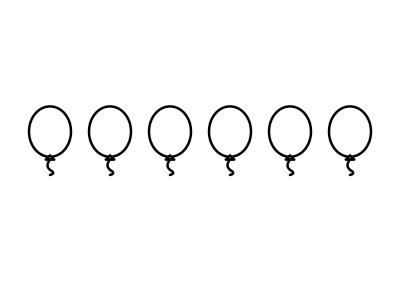
      6 balloons in a row. 6 balloons. 1 pops. How many are left?
    2. 2.
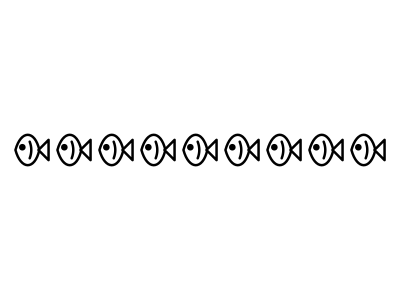
      9 fish in a row. 9 fish. 3 swim away. How many are left?
    3. 3.
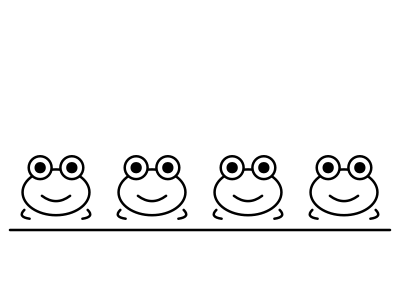
      4 frogs in a row. 4 frogs. 4 hop away. How many are left?
    Listen to the story. Write the equation.

    1. 4.
      10 kids are on the bus. 5 get off.
    2. 5.
      8 grapes are in a bowl. You eat 2.
    3. 6.
      7 leaves are on a branch. 4 fall off.
    4. 7.
      3 cars are in the lot. 1 drives away.

    Challenge (optional)

    Tell a take-away story where 0 are left. Write the equation.

    You need: crayons, 10 counters and a cup (optional)

    Reading & Writing · Week 2 Day 1

    I can retell what happened in a story using key details.

    Look: retell first, next, last

    1. Read "Meg and the Hen" together.
    2. Hold up one finger at a time: "First, the hen got in the mud. Next, Meg said Get up. Last, Meg can pet the hen."
    3. Say: "When we retell, we tell the important parts in order."

    Meg and the Hen

    Meg had a red hen. The hen got in the mud! "Get up, hen!" said Meg. The hen ran to the pen. Meg can pet the hen.

    Write 1, 2 and 3 to show what happened first, next and last.

    1. 1.
      The hen ran to the pen.
    2. 2.
      The hen got in the mud.
    3. 3.
      Meg can pet the hen.

    Say the picture name. Circle the vowel that is missing.

    1. 4.
      A bug. b _ g
      • a
      • u
      • o
    2. 5.
      A pot. p _ t
      • o
      • e
      • i
    3. 6.
      A net. n _ t
      • u
      • e
      • a
    4. 7.
      A sun. s _ n
      • i
      • o
      • u

    Challenge (optional)

    Was the hen red?

    Social Studies · Week 2 Day 1

    I can name jobs at home and tell why each helper matters.

    Look: who does the job?

    1. Name a job: water the plants.
    2. Say who can do it: a kid can do it.
    3. Say why it matters: if nobody does it, the plants dry up.

    Listen to each job. Circle who can do it.

    1. 1.
      Make your bed.
      • A child.
      • A grown-up.
      • A child and a grown-up together.
    2. 2.
      Drive the car to the store.
      • A child.
      • A grown-up.
      • A child and a grown-up together.
    3. 3.
      Carry in the grocery bags: the grown-up takes the heavy ones and the kid takes the light ones.
      • A child.
      • A grown-up.
      • A child and a grown-up together.
    4. 4.
      Take a hot pan out of the oven.
      • A child.
      • A grown-up.
      • A child and a grown-up together.
    5. 5.
      Match the clean socks into pairs.
      • A child.
      • A grown-up.
      • A child and a grown-up together.

    Talk and draw. Write what your child says.

    1. 6.
      What would happen if nobody wiped the table after dinner?
    2. 7.
      Draw one job you will do this week.
    3. 8.
      Who is helped when you do that job?

    Challenge (optional)

    Name a job at home that happens when you are asleep or at school. Who does it?

    You need: crayons