1First Grade

    Get to 10 first to subtract

    Fact or picture label

    Practice pages

    0 of 180 days complete · Saved on this device

    View all 180 days

    Math

    Get to 10 first to subtract

    I can take away to 10 first, then take the rest.

    Standards: 1.OA.C.6

    Number practice (no timer)
    Think addition to subtract
    Builds on
    Week 9 making a ten to add, and Week 1 number bonds (breaking a number into two parts). One-minute check: "4 is 3 and what?" (1) "13 - 3 = ?" (10)

    New words

    • get to 10 first: take away just enough to land on 10, then take away the rest
    • break apart: split a number into two parts, like 4 is 3 and 1

    You need

    • Two ten frames drawn side by side on one sheet (a double ten frame)
    • 20 counters (dried beans or buttons)
    • Number line 0 to 20
    • Deck of cards: only the 2 to 9 cards
    • 8 paper cards with the numbers 11 to 18
    • Notebook and pencil
    1. Warm-Up · 5 min

      Fluency: think addition. "8 + 6 = 14, so 14 - 8 = ?" (6) Then teen take-aways that land on 10: "13 - 3?" (10) "16 - 6?" (10) "18 - 8?" (10) Ask: "What do you notice?" (Taking away the ones lands on 10.) Spaced review from Week 1: "Break 5 into two parts." (Answers vary: 4 and 1, 3 and 2, 2 and 3, 1 and 4.)

    2. Mini-Lesson · 10 min

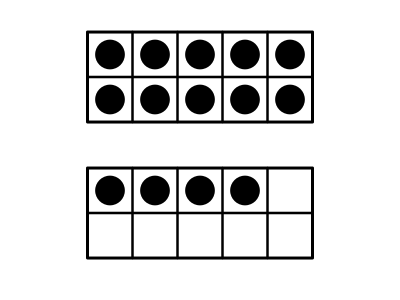
      Say: "When we add, we make a ten. When we take away, we can get to 10 first." Build 13 on the double ten frame: fill the first frame (10) and put 3 counters on the second frame. Write 13 - 4. Say: "We need to take away 4. First take away the 3 on the second frame." Your child removes them. Ask: "How many are left?" (10) "We took away 3. We had to take away 4. How many more do we still take?" (1) Your child takes 1 from the full frame. Ask: "How many now?" (9) Write: 13 - 4 = 13 - 3 - 1 = 10 - 1 = 9. Draw a number bond under the 4 with parts 3 and 1. Show it on the number line too: jump back 3 to land on 10, then 1 more to 9. Do one more: 15 - 7. Ask: "How many do we take first to get to 10?" (5) "7 is 5 and what?" (2) Write: 15 - 7 = 15 - 5 - 2 = 10 - 2 = 8.

    3. Guided Practice · 10 min

      Your child builds the first number on the double ten frame, breaks apart the number being taken away, and writes both steps. 1) 12 - 5 (12 - 2 = 10, 10 - 3 = 7) 2) 14 - 6 (14 - 4 = 10, 10 - 2 = 8) 3) 11 - 3 (11 - 1 = 10, 10 - 2 = 8) 4) 15 - 9 (15 - 5 = 10, 10 - 4 = 6) 5) 13 - 6 (13 - 3 = 10, 10 - 3 = 7) If stuck, say: "How many counters are on the second frame? Take those first. Now how many more do you still need to take?"

    4. Play · 10 min

      Back to Ten. Put the 11 to 18 paper cards face down in one pile and the 2 to 9 playing cards face down in another. Take turns. Flip one card from each pile: the paper card is the whole and the playing card is the take-away number. If the playing card is the same as or smaller than the ones in the whole (like 14 and 3), put it back and flip again, so every fact crosses 10. Build the whole on the double ten frame, get to 10 first, and say it: "14 - 6. 14 - 4 = 10, 10 - 2 = 8." The other player checks by thinking addition: "6 + 8 = 14. Yes!" Play 6 rounds each. Every answer is between 2 and 9, so all numbers stay within 20.

    5. Exit Ticket · 3-5 min

      Put the objects to one side but leave them on the table. Read each question aloud. Your child answers out loud, with objects or with a quick drawing. Check each answer together right away.

    Exit ticket

    1. Solve 16 - 7 by getting to 10 first.
    2. Solve 12 - 4 by getting to 10 first.
    3. For 14 - 5, how many do you take away first to get to 10?
    Answers
    1. 9 (16 - 6 = 10, 10 - 1 = 9)
    2. 8 (12 - 2 = 10, 10 - 2 = 8)
    3. 4 (14 - 4 = 10), then 1 more, so 14 - 5 = 9
    Watch for, and help or stretch
    Watch for
    Stopping at 10, such as saying 13 - 4 = 10 after taking away only the 3.
    Try
    Keep the number bond under the 4 (3 and 1). Ask: "You took the 3. Did you take the 1 yet?"
    Extra help
    Start with 11 and 12 only, and move real counters for every step. Write the number bond for the take-away number before you start.
    Stretch
    Solve 17 - 9 and 16 - 8 by getting to 10 first, then check each one by thinking addition (9 + 8 = 17, 8 + 8 = 16).

    At home (optional): Line up 14 spoons or blocks: 10 in a row and 4 more. Your child takes away 6 by taking the 4 first and then 2 more from the row, and says: "14 - 4 = 10, 10 - 2 = 8."
    Reading & Writing

    Fact or picture label

    I can add a picture with a label to teach a fact.

    Standards: W.1.2, SL.1.5, L.1.2.e

    Phonics
    Long i with final e (i_e: bike, time, slide); short i vs. long i
    Sight words
    his, her, him, has, had
    Reading
    From Caterpillar to Butterfly (Deborah Heiligman)
    Writing
    Informational: adding a picture with a label or caption to each fact page · Handwriting: capitals U, J, K
    Builds on
    Drafting fact pages (Weeks 8 and 9). One-minute check: your child reads one page of the All About book aloud.

    New words

    • label: a word or two that names part of a picture
    • diagram: a picture with labels that shows the parts of something

    You need

    • All About book draft
    • Colored pencils
    • Handwriting sheet (U, J, K)
    • From Caterpillar to Butterfly (Deborah Heiligman; illustrated by Bari Weissman), optional read-aloud; any picture book about the butterfly life cycle works, or use "From Egg to Butterfly" in the lesson
    • Sight word cards
    • Printed "Mike and the White Kite"
    1. Phonics & Word Work · 15 min

      Short i or long i? I do: say pin and pine. Say: "Pin has a short i, /i/. Pine has a long i, /ī/. It says its name." We do: say each word and your child shows a thumb up for long i and a thumb sideways for short i: fin, fine, dim, dime, kit, kite, rid, ride. (Long i: fine, dime, kite, ride. Short i: fin, dim, kit, rid.) You do: your child reads "Tim had a dime." "Is the pin on the pine?" Dictation: fin, fine, rip, ripe. Say: "When you hear a long i at the end of a short word, try i and a silent e." If stuck, say the word slowly and stretch the vowel: "Does the i say its name?"

    2. Sight Words · 5 min

      Review: his, her, him, has, had. Flip and Read: lay the five cards face down with last week's words. Your child flips a card, reads it and uses it in a short spoken sentence. Missed words go back in the pile.

    3. Read-Aloud & Shared Reading · 15 min

      Look at a page in the butterfly book that has a picture with labels, or draw a quick butterfly diagram and label wing, head, leg and antenna. Ask: "What do the labels teach us?" (the names of the parts) Ask: "Would you know which part is the antenna without the label?" (Answers vary. Look for: the label tells us its name.) Then your child reads "Mike and the White Kite" to you. Ask: "What did Kim do to help?" (She got the kite from the pine.) Ask: "How did Dad fix the rip?" (with tape)

    4. Writing & Handwriting · 15 min

      Your child adds a labeled drawing to two pages of the All About book, so the picture teaches something extra, such as the parts of the animal or the tool. Each picture gets at least 2 labels. Your child spells each label by stretching the sounds (L.1.2.e); a label such as "wing" or "tail" is fine spelled the way it sounds. Handwriting (4 min): your child writes each label neatly, with any capital starting at the top line.

    5. Exit Ticket · 5 min

      Your child points to the pages and answers.

    Exit ticket

    1. Show me one label on your picture. What does it tell?
    2. Short i or long i: dime?
    3. Read this sentence: "I like to hide."
    Answers
    1. Answers vary. Look for: a word that names a real part in the picture.
    2. long i
    3. I like to hide.
    Watch for, and help or stretch
    Watch for
    Writing a label far away from the part it names.
    Try
    Have your child draw a short line from each label to its part.
    Extra help
    Your child points to the part and says the label; you write it on a sticky note for your child to copy.
    Stretch
    Your child makes a full diagram with 4 labels and a title.

    At home (optional): Draw a quick picture of something in your home (a bike, a lamp, a pet) with 3 labels.

    Social Studies

    Services government gives

    I can name things our government gives everyone, like parks, roads and libraries.

    Standards: D2.Eco.12.K-2

    Builds on
    What is government? (Day 1). One-minute check: ask "What is one job a government does?" (makes laws, keeps people safe, or gives services)

    New words

    • service: work that helps people
    • public: shared by everyone in a place
    • taxes: money people pay to the government to pay for shared services

    You need

    • 6 photos (draw or print): a park, a road, a library, a fire truck, a public school, a mail truck
    • 3 business photos (draw or print): a grocery store, a toy store, a restaurant
    • Booklet: 3 sheets of paper folded in half and stapled by the grown-up, which makes a cover and 5 pages (use one side of each)
    • Crayons
    1. Warm-Up / Wonder · 5 min

      Spaced review: ask: "Who leads a state?" (a governor) Wonder question: "Who pays for the park slide?"

    2. Explore · 10–15 min

      Say: "Governments give services that everyone in a place can share. People pay taxes, money that goes to the government, to pay for them." Service hunt: on a short walk or with the photos, your child finds as many government services as possible. Talk about each: a park (a place for everyone to play), a road (to get around), a library (to borrow books), a fire truck (firefighters keep us safe), a public school (to learn), a mail truck (to deliver letters). Then sort all 9 photos into Shared by Everyone (government) and Businesses. Expected: Shared by Everyone: park, road, library, fire truck, public school, mail truck. Businesses: grocery store, toy store, restaurant. Ask: "What is the difference between a library and a bookstore?" (Anyone can borrow library books; at a store you buy them.) If stuck sorting, ask: "Can everyone use it without buying something?"

    3. Talk & Record · 5–10 min

      Your child makes a "Shared by Everyone" booklet: the cover and one page for each of 5 services, with a drawing and a word. Sentence frame on each page: "The ___ helps everyone ___."

    4. Exit Ticket · 3–5 min

      Ask the three questions aloud.

    Exit ticket

    1. Name two services our government gives everyone.
    2. How do governments pay for services?
    3. Is a toy store a government service?
    Answers
    1. Answers vary. Look for: two of parks, roads, libraries, firefighters, police, public schools or mail.
    2. With taxes, money people pay to the government.
    3. No. It is a business that sells things.
    Watch for, and help or stretch
    Watch for
    Calling every helpful place a government service, such as a grocery store.
    Try
    Ask: "Do we buy things there?" Stores are businesses; shared services are paid for with taxes.
    Extra help
    Make a 3-page booklet: park, road and library.
    Stretch
    Your child finds one more government service at home, such as clean tap water or trash pickup, and adds a page. (In some places a private company picks up trash; check together.)

    At home (optional): On your next outing, your child points out one government service and tells how it helps everyone.

    Practice

    Read each direction aloud. Your child works on the page; answers are in the grown-up view.

    Warm-up

    Remember?

    Math

    1. 6 + 9 = ? Make a ten first.
    2. 3 + 7 = 10. So 7 + 3 = ?

    Reading & Writing

    1. after, ask, by
    2. They have a shed.

    Math · Week 10 Day 3

    I can take away to 10 first, then take the rest.

    Look: 13 - 5

    1. Build 13: a full ten frame and 3 on the second frame. Take away the 3 first: 13 - 3 = 10.
    2. We had to take away 5, so take 2 more: 10 - 2 = 8.
    3. 13 - 5 = 8.

    Get to 10 first. Write the answer and both steps.

    1. 1.
      12 - 3 = ___
    2. 2.
      15 - 8 = ___
    3. 3.
      11 - 5 = ___
    4. 4.
      16 - 8 = ___

    How many do you take away first to get to 10? Circle it.

    1. 5.
      Two ten frames; the first is full and the second has 4 counters. 14 - 7
      • 4
      • 7
      • 10
    2. 6.
      17 - 9
      • 2
      • 7
      • 9
    3. 7.
      18 - 9
      • 1
      • 8
      • 9

    Challenge (optional)

    Solve 13 - 9 by getting to 10 first.

    You need: two ten frames and 20 counters

    Reading & Writing · Week 10 Day 3

    I can add a picture with a label to teach a fact.

    Look: a picture with a label

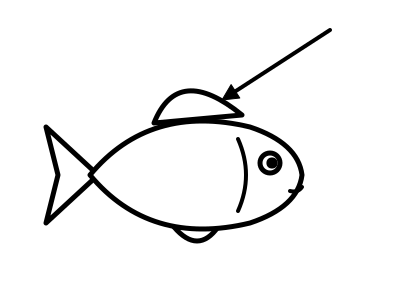
    1. Draw a quick fish. Draw an arrow to its fin and write fin.
    2. Say: "A label names a part. It teaches the reader something the picture alone might not."
    3. Say: "Stretch the sounds to spell each label."

    My Bike

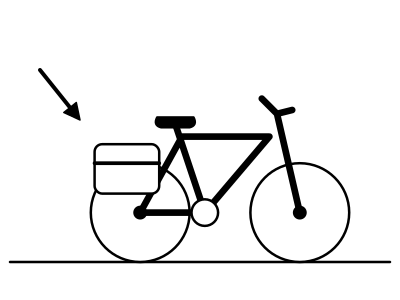
    A bike with an arrow pointing to a bag on its side. I like my bike. It is white. It has a big side bag. I ride it to the lake.
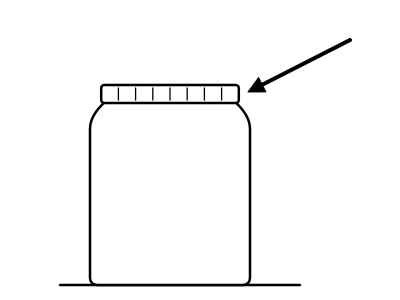
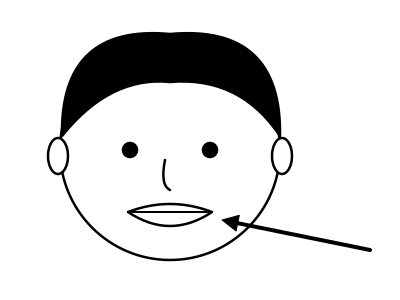
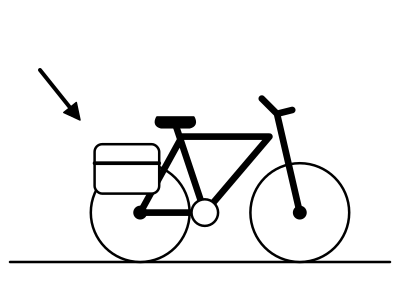
    Look at the arrow. Write the label.

    1. 1.
      A fish with an arrow pointing to its fin.
    2. 2.
      A jar with an arrow pointing to its lid.
    3. 3.
      A face with an arrow pointing to its lip.
    4. 4.
      The bike from the story with an arrow pointing to its bag.

    Draw it. Add two labels.

    1. 5.
      a kite
    2. 6.
      a bike
    3. 7.
      a hive

    Challenge (optional)

    My bike is ___.

    You need: crayons

    Social Studies · Week 10 Day 3

    I can name things our government gives everyone, like parks, roads and libraries.

    Look: shared by everyone

    1. A government gives services that everyone can share, like parks, roads and libraries.
    2. People pay taxes, money that goes to the government, to pay for them.
    3. Ask: "Can everyone use it without buying something?" If yes, it is a shared service.

    Listen. Circle yes if it is a service the government gives everyone. Circle no if it is a business that sells things.

    1. 1.
      a bridge over a river
      • yes
      • no
    2. 2.
      a movie theater
      • yes
      • no
    3. 3.
      the streetlights on our road
      • yes
      • no
    4. 4.
      police officers
      • yes
      • no
    5. 5.
      a gas station
      • yes
      • no
    6. 6.
      the sidewalks in our town
      • yes
      • no

    Talk and draw. Write what your child says.

    1. 7.
      Who pays for the streetlights?
    2. 8.
      Which shared service do you use the most? Why?
    3. 9.
      Draw one shared service in our town.

    Challenge (optional)

    Think of a shared service that would be hard to live without for a week. Why?

    You need: crayons