1First Grade

    Lesson + weekly check: subtraction strategies

    Share and check: i_e

    Practice pages

    0 of 180 days complete · Saved on this device

    View all 180 days

    MathWeekly check

    Lesson + weekly check: subtraction strategies

    I can subtract within 20 using a strategy.

    Standards: 1.OA.C.6, 1.OA.B.4

    Number practice (no timer)
    Think addition to subtract
    Builds on
    Days 1 to 4: think addition, count back or count up, get to 10 first, and stories. One-minute check: "14 - 9 = ?" (5)

    New words

    • subtract: take away; find how many are left or the missing part

    You need

    • 10 empty plastic bottles (bowling pins)
    • A soft ball or a pair of rolled-up socks
    • Double ten frame on paper and 20 counters
    • Number line 0 to 20
    • The stored Week 10 check and its answer key
    • Notebook and pencil
    1. Warm-Up · 5 min

      Fluency: think addition. "8 + 3 = 11, so 11 - 8 = ?" (3) "6 + 6 = 12, so 12 - 6 = ?" (6) Spaced review from Week 8: "7 + 8: which double helps?" (7 + 7 = 14, so 15)

    2. Short Lesson: Review Game · 10 min

      Subtraction Bowling. Stand the 10 bottles in a group. Your child rolls the ball, counts the bottles knocked down and says two facts: "10 - 4 = 6 are standing, because 4 + 6 = 10." Count the standing bottles to check. Take 4 rolls each. Then play 3 bonus rolls with 15 points: "You start with 15 points. Each bottle knocked down takes away 1 point." If 7 fall, your child gets to 10 first: "15 - 5 = 10, 10 - 2 = 8 points." At most 10 bottles can fall, so the points never go below 5. If stuck, say: "Count the bottles that are still standing. That is the other part." For the bonus rolls, say: "Put 15 on the double ten frame. Take the 5 on the second frame first."

    3. Weekly Check · 15 min

      Give the stored Week 10 check. The printed check has 10 items. It covers these goals: (1) I can use an adding fact to subtract; (2) I can choose to count back or count up to subtract; (3) I can take away to 10 first, then take the rest; (4) I can solve subtraction stories and name my strategy. Your child may show a model (ten frame, number line or number bond) and writes the helping fact, the strategy or both steps where an item asks: think addition, count back, count up or get to 10 first. Read each item aloud. There is no time limit. If your child is stuck on an item, say only: "Which tool do you want: the ten frames, the number line or a number bond?" Do not give the answer. Score it with the answer key. Secure: 8 of 10 correct, with at least 1 right on each goal and a model that matches the strategy named. If the check is secure, start Week 11. If it is not, first do the reteach step on the check page for each group of items missed, then start Week 11. For the facts within 10, note any fact your child had to count out one by one and use it in the Week 11 warm-ups.

    4. Exit Ticket · 3-5 min

      After the check, ask these two questions. Then go over any missed check items together.

    Exit ticket

    1. Solve 12 - 9. Tell me your strategy.
    2. Solve 14 - 7 by getting to 10 first.
    Answers
    1. 3. Answers vary. Look for: 9 + 3 = 12, or count up from 9 (10, 11, 12).
    2. 7 (14 - 4 = 10, 10 - 3 = 7)
    Watch for, and help or stretch
    Watch for
    Naming a strategy that does not match what your child did, such as saying "get to 10 first" after counting back one at a time.
    Try
    Say: "Show me with the tools what you did in your head." Then name the strategy together.
    Extra help
    Let your child use counters and the double ten frame on every check item, and note it on the check.
    Stretch
    After the check, solve 17 - 8 two ways: 8 + 9 = 17, and 17 - 7 = 10, 10 - 1 = 9.

    At home (optional): Play Subtraction Bowling with a family member. After each roll, say the take-away fact and the adding fact that goes with it.
    Reading & WritingWeekly check

    Share and check: i_e

    I can read i_e words and tell a fact I learned from a picture.

    Standards: RF.1.3.c, RI.1.6, RF.1.3.g

    Phonics
    Long i with final e (i_e: bike, time, slide); short i vs. long i
    Sight words
    his, her, him, has, had
    Reading
    From Caterpillar to Butterfly (Deborah Heiligman)
    Writing
    Informational: adding a picture with a label or caption to each fact page · Handwriting: capitals U, J, K
    Builds on
    This week's i_e work and pictures that teach. One-minute check: warm up with kite, slide and pine.

    New words

    • detail: a small piece of information

    You need

    • Word cards: short i and long i (written in step 4)
    • A new nonfiction picture page (written in step 4)
    • Sight word cards: his, her, him, has, had
    • Recording sheet
    • All About book
    1. Review Game · 10 min

      Kite Path: lay 10 word cards in a line across the floor like a kite string: kit, kite, pin, pine, slid, slide, rip, ripe, fin, fine. Your child walks the string, reading each word. On a long i word your child stretches arms out like a kite; on a short i word your child crouches. Then play Silent e: hold a card such as hid and stick on an e to make hide. If stuck on a word during the game (not during the check), cover all but the first sound, say it together, then uncover the rest and blend.

    2. Sight Words · 5 min

      Review: his, her, him, has, had, after, ask, by, fly, going. Flip and Read: lay the five cards face down with last week's words. Your child flips a card, reads it and uses it in a short spoken sentence. Missed words go back in the pile. Mix this week's and last week's words.

    3. Weekly Check · 15 min

      The printed check has 8 items. It covers these goals: (1) I can read short i and long i words; (2) I can read the sight words his, her, him, has and had; (3) I can tell what I learned from a picture and what I learned from the words; (4) I can put the stages of a life cycle in order; (5) I can tell what group a word belongs to. Give no hints. Record each answer. Secure: 8 of the 10 words in items 1 and 2, 4 of the 5 sight words, and 4 of items 4 to 8, including a clear picture detail in item 5. Any word missed goes into next week's warm-ups. For any part that is not yet secure, use the matching reteach step on the check page next week.

    4. Share & Listen · 10 min

      Your child shows a family member a page with a labeled picture and reads the caption. The listener asks: "What does your picture teach?"

    5. Handwriting · 5 min

      Capitals start at the top line and touch the bottom line. Review all three capitals. Your child writes each capital 3 times, then writes one word that starts with it (Uma, Jim, Kim). Circle the best letter in each row.

    6. Exit Ticket · 5 min

      Talk about the week.

    Exit ticket

    1. Read a word with a long i and a word with a short i.
    2. Why do information books have pictures?
    Answers
    1. Answers vary. Look for: correct reads such as kite and kit.
    2. Answers vary. Look for: pictures show or teach things the words do not, such as what something looks like.
    Watch for, and help or stretch
    Watch for
    Reading has and his with an /s/ at the end.
    Try
    Review the heart part (the s says /z/) and read "Kim has her bike. Mike has his kite." three times.
    Extra help
    Read the directions for item 5 aloud twice and point to the picture.
    Stretch
    Your child reads 3 bonus o_e words (home, rope, bone) to preview next week. Do not score them.

    At home (optional): Read "Mike and the White Kite" to a family member.

    Social StudiesWeekly check

    Made here, made there

    I can tell goods made in my community and goods made in other places.

    Standards: D2.Eco.4.K-2

    Builds on
    Goods and services (Unit 2). One-minute check: ask "What is a good?" (a thing you can touch and buy)

    New words

    • label: a tag or sticker that tells about a thing, like where it was made
    • local: from near where we live

    You need

    • 6 goods or their labels from home: for example, eggs, a loaf of bread, bananas, apples, a can of beans and a T-shirt tag
    • A sticker or tag from a piece of fresh fruit, if you have one
    • A simple world map or a map on a phone
    • 2 sticky notes: Made near us and Made far away
    • Notebook
    • Pencil
    1. Warm-Up / Wonder · 5 min

      Spaced review: ask: "Name one government service." (a park, a road, a library) Wonder question: "Where did our bananas come from?"

    2. Review Game · 10 min

      Label detectives. Say: "Many labels tell where a thing was grown or made. Most grocery stores must tell where fresh fruits, vegetables and fish come from." Read each label together. Your child sorts the goods onto the 2 sticky notes. Find each far-away place on the map. Say: "Most bananas in our stores are grown in warm countries, such as Guatemala and Costa Rica." Point to Central America on the map. Ask: "Why don't bananas grow near us?" (Answers vary: it is too cold; bananas need warm weather.) Then talk about what our community makes: ask: "What goods are made or grown near us?" (Answers vary: bread from a bakery, vegetables from a farm or farmers market, things from a nearby factory.) Say: "Our community makes some goods and sends them to other places, and other places send goods to us." If stuck reading a label, look for the words "Made in," "Product of" or "Grown in."

    3. Check · 10 min

      Give the Week 10 social studies check. The check items are on the Week 10 check page; do not show them ahead of time. Read each part aloud. Your child answers by talking, pointing, showing with the real materials or drawing. You write down their words exactly. It is not timed; stop and finish later if your child is tired. Make a check mark next to each part your child shows on their own. The printed check has 10 items. It covers these goals: (1) I can tell what a government is and name some jobs it does; (2) I can name things our government gives everyone, like parks, roads and libraries; (3) I can tell goods made in my community and goods made in other places. This week the check is a sorting task with a short explanation. Your child sorts 4 goods or pictures into made near us and made far away, then names one good made in our community and one made in another place. Look for: a correct sort based on the labels or what you know, one local good (such as eggs from a farm stand or bread from a local bakery) and one good from far away (such as bananas from Guatemala). Secure: 8 of 10 correct, with at least one right on each goal. If the check is not yet secure, use the reteach step on the check page that matches the items missed.

    4. Exit Ticket · 3–5 min

      Ask the three questions aloud.

    Exit ticket

    1. Name one good made or grown near us.
    2. Name one good that comes from far away.
    3. How can you find out where something was made?
    Answers
    1. Answers vary. Look for: a real local good, such as eggs, bread, honey or vegetables from a nearby farm.
    2. Answers vary. Look for: a real example, such as bananas, or a shirt made in another country.
    3. Read the label ("Made in," "Product of" or "Grown in").
    Watch for, and help or stretch
    Watch for
    Thinking everything at our store was made in our town.
    Try
    Read one label together that names another country. Ask: "Is that our town?" Stores bring goods from many places.
    Extra help
    Sort 4 goods only, with clear labels.
    Stretch
    Your child finds 3 far-away places from the labels on the map and tells which is farthest from home.

    At home (optional): At the store, your child finds one fruit or vegetable sign or sticker that tells where it was grown.

    Practice

    Read each direction aloud. Your child works on the page; answers are in the grown-up view.

    Warm-up

    Remember?

    Math

    1. 8 + 8 = ? It is a doubles fact.
    2. 3 + 2 + 6 = ?

    Reading & Writing

    1. The pup can jump from the bed.

    Math · Week 10 check

    Weekly check

    How to give it: Read each item aloud. Untimed. For items 1–2 and 5–10, your child shows a model (ten frame, number line or number bond) and writes the answer. If your child is stuck, say only: "Which tool do you want: the ten frames, the number line or a number bond?" Do not give the answer.

    Secure when: 8 of 10 correct, with at least 1 right on each goal and a model that matches the strategy named

    • I can use an adding fact to subtract.
    • I can choose to count back or count up to subtract.
    • I can take away to 10 first, then take the rest.
    • I can solve subtraction stories and name my strategy.
    1. 1.
      11 - 4 = ___. Write the adding fact that helps.
    2. 2.
      12 - 7 = ___. Write the adding fact that helps.
    3. 3.
      9 - 4 = ___
    4. 4.
      10 - 6 = ___
    5. 5.
      18 - 17 = ___. Did you count back or count up?
    6. 6.
      15 - 2 = ___. Did you count back or count up?
    7. 7.
      13 - 6 = ___. Get to 10 first and write both steps.
    8. 8.
      14 - 8 = ___. Get to 10 first and write both steps.
    9. 9.
      There are 13 birds. 8 fly away. How many are left? Name your strategy.
    10. 10.
      Lia has 18 shells. Ben has 12 shells. How many more shells does Lia have?

    Reading & Writing · Week 10 check

    Weekly check

    How to give it: Give the check after the review game, in a quiet spot, one part at a time. It is untimed; take a stretch break between parts if needed. Read every direction aloud, but do not read the words or story for your child. Do not help except to say "Try your best" or "Skip it." Mark each item right or wrong. Items 1 and 2 (Part 1): your child reads the words aloud. Item 3 (Part 2): your child reads the 5 sight words. Items 4 and 5 (Part 3): your child reads "A Fish", looks at the picture, and tells one thing the picture shows that the words do not say. Then read the directions for items 6 to 8. Any word missed goes into next week's warm-ups.

    Secure when: 8 of the 10 words in items 1 and 2, 4 of the 5 sight words, and 4 of items 4 to 8, including a clear picture detail in item 5.

    • I can read short i and long i words.
    • I can read the sight words his, her, him, has and had.
    • I can tell what I learned from a picture and what I learned from the words.
    • I can put the stages of a life cycle in order.
    • I can tell what group a word belongs to.

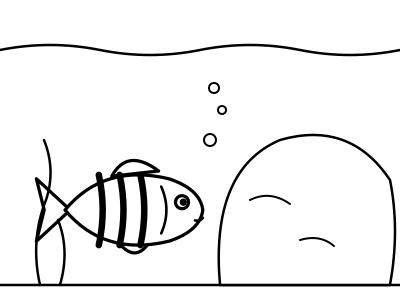
    A Fish

    A fish with stripes on its side, hiding next to a big rock. A fish can swim. It can dive and hide in the mud. A fish has a big fin on top.
    1. 1.
      bit bite sit site spit
    2. 2.
      spite pip pipe grip gripe
    3. 3.
      his her him has had
    4. 4.
      A fish can dive and ___ in the mud.
      • hide
      • ride
    5. 5.
    6. 6.
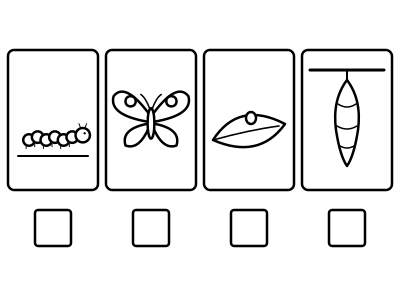
      Four boxes out of order: a caterpillar, a butterfly, a tiny egg on a leaf, a chrysalis. Write 1, 2, 3, 4 under the boxes to show the order.
    7. 7.
      A pine is a ___ that can get big.
      • plant
      • pet
    8. 8.
      bite
      • do
      • thing

    Social Studies · Week 10 check

    Weekly check

    How to give it: Read every question and choice aloud, and point to each picture as you name it. This week the check is a sorting task with a short explanation. Your child answers by talking, pointing, circling, acting it out or drawing; write their words exactly on the line. It is not timed; stop and finish later if your child is tired. Do not show the page ahead of time. For items 6 to 9, use the real goods or labels if you have them. Make a check mark next to each part your child shows on their own.

    Secure when: 8 of 10 correct, with at least one right on each goal

    • I can tell what a government is and name some jobs it does.
    • I can name things our government gives everyone, like parks, roads and libraries.
    • I can tell goods made in my community and goods made in other places.
    1. 1.
      A group that makes laws and runs things for everyone in a place is called a ____.
    2. 2.
      The leader of a state is called a ____.
    3. 3.
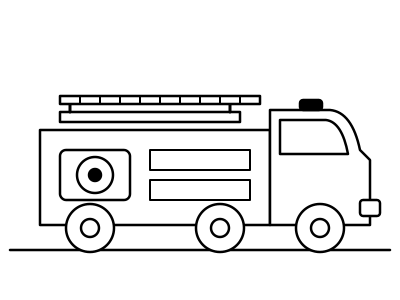
      A fire truck. Is this a service the government gives everyone?
      • yes
      • no
    4. 4.
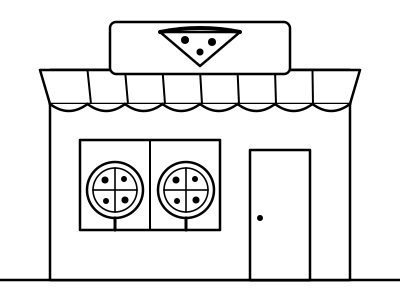
      A pizza shop. Is this pizza shop a government service?
      • yes
      • no
    5. 5.
      Where does the money for the town park come from?
    6. 6.
      Eggs from a farm stand down the road. Circle the house for made near us or the globe for made far away.
      • A house.
      • A globe.
    7. 7.
      Bananas with a label that says "Product of Costa Rica."
      • A house.
      • A globe.
    8. 8.
      A shirt with a tag that says "Made in Vietnam."
      • A house.
      • A globe.
    9. 9.
      Bread from the bakery on our street.
      • A house.
      • A globe.
    10. 10.
      Name one good made near us and one good made far away.