1First Grade

    Count on from any number

    The lesson of the tale

    Practice pages

    0 of 180 days complete · Saved on this device

    View all 180 days

    Math

    Count on from any number

    I can count forward from any number up to 120.

    Standards: 1.NBT.A.1

    Number practice (no timer)
    Doubles and make-10 facts (keep-up practice)
    Builds on
    Kindergarten counting to 100 by ones and tens. One-minute check: "Count from 20 to 30." Your child should say each number once and not skip 29 to 30.

    New words

    • count on: start at any number and keep counting forward
    • hundred chart: a chart with numbers in rows of 10
    • row: a line of numbers going across

    You need

    • Hundred chart to 120: printed, or drawn as 12 rows of 10 boxes (1 to 10 in the top row, 111 to 120 in the bottom row)
    • A button or coin to use as a marker
    • Notebook and pencil
    1. Warm-Up · 5 min

      Fluency: doubles and make-10 facts. "7 + 7?" (14) "8 + 8?" (16) "6 and what make 10?" (4) "9 and what make 10?" (1) Spaced review from Week 12: "9 + ? = 14." (5)

    2. Mini-Lesson · 10 min

      Say: "Today we start a new unit about big numbers. We can start counting from any number, not just 1." Show the hundred chart. Say: "Each row has 10 numbers." Put the marker on 43. Say: "Let us count on 10 from 43." Point to each number as you both say it: "44, 45, 46, 47, 48, 49, 50, 51, 52, 53." Ask: "Where did we land?" (53) "Where is 53 on the chart?" (Right under 43.) Put the marker on 87 and count on 10 together: "88, 89, 90, ... 97." Stop at 89 and 90. Say: "After 89, the ones are used up, so we start a new ten: 90." Ask: "What would come after 59?" (60)

    3. Guided Practice · 10 min

      Your child puts the marker on each start number, counts on 10 out loud while pointing, and says where they landed. 1) 26 (36) 2) 58 (68) 3) 71 (81) 4) 39 (49) 5) 95 (105; after 100 comes 101, 102, 103, 104, 105) Ask after each: "What do you notice about where you land?" (One row down, the same column.) If stuck, say: "Put your finger on the number and say it. Now touch and say the very next one. Keep going one box at a time."

    4. Play · 10 min

      Drop and Count. Your child closes their eyes and drops the button on the chart. Read the number it lands on, then count on out loud until you say "Stop" (5 to 15 numbers). Take turns. On your turns, make one mistake on purpose, such as "68, 69, 60" or "79, 70." Your child says "Stop!", fixes it and shows the right number on the chart. Play 6 rounds.

    5. Exit Ticket · 3-5 min

      Put the objects to one side but leave them on the table. Read each question aloud. Your child answers out loud, with objects or with a quick drawing. Check each answer together right away.

    Exit ticket

    1. Count on from 43 to 53.
    2. What number comes after 89?
    3. Start at 95 and count on 10. Where do you land?
    Answers
    1. 44, 45, 46, 47, 48, 49, 50, 51, 52, 53
    2. 90
    3. 105
    Watch for, and help or stretch
    Watch for
    Getting stuck at a decade change, such as "58, 59, 50" or "fifty-ten."
    Try
    Point to the start of the next row. Say: "After 59 we start a new ten: 60." Practice the four numbers 58, 59, 60, 61 together.
    Extra help
    Count on 5 instead of 10, and start below 50. Your child keeps a finger on the chart the whole time.
    Stretch
    Count on 10 from 108 (118). Ask: "What do you notice about 108 and 118?" (Same place in the column; one row down.)

    At home (optional): Count on 10 out loud from a house number, a page number or a number on a food package.
    Reading & Writing

    The lesson of the tale

    I can retell a folktale and tell its lesson.

    Standards: RL.1.2, RF.1.3.c, RF.1.3.g

    Phonics
    Vowel teams ai and ay (rain, tail, play, day)
    Sight words
    round, stop, take, thank, think
    Reading
    The Little Red Hen (traditional, public domain)
    Writing
    Opinion: I like… because… (naming the book and giving one reason) · Handwriting: spacing between words
    Builds on
    Retelling stories with a beginning, middle and end (Unit 1) and final e (Unit 2). One-minute check: your child reads cake and kite and tells which letter is silent. (the e)

    New words

    • folktale: an old story that people told aloud for many years before it was written down
    • lesson: something a story teaches us about how to act
    • vowel team: two letters that work together to make one vowel sound

    You need

    • "The Little Red Hen" (in the lesson)
    • A 4-box picture strip your child draws: plant, cut, mill, bread
    • ai and ay word cards
    • Sight word cards: round, stop, take, thank, think
    • Printed "Hen and the Grain" (in the lesson)
    • Lined handwriting paper
    1. Phonics & Word Work · 15 min

      I do: write rain. Underline ai. Say: "a and i are a team. Together they say /ā/, the name of a. We see ai in the middle of a word." Read: /r/ /ā/ /n/, rain. Then write play and underline ay. Say: "a and y are a team too. ay says /ā/, and we see it at the end of a word." We do: read tail, wait, day, say. You do: your child reads rain, tail, paint, train, play, day, stay, gray. Read: "Gail can play in the rain." "May I paint the tail?" Dictation: rain, play, tail, day. If stuck, frame the two team letters with two fingers and say: "Two letters, one sound: /ā/."

    2. Sight Words · 5 min

      Introduce this week's words with see-say-spell-write. For each card: Say: "This word is ___. Say it with me." Your child reads it, spells it aloud while tapping each letter, then writes it once while saying each letter, and reads it again. Draw a small heart over any tricky part, the part we must learn by heart: round (ou says /ow/, a team we learn later); stop (every sound is one you know: st is a blend, then /o/ /p/); take (a_e makes the a say its name, as you know); thank (every sound is one you know: th, /a/, then nk); think (every sound is one you know: th, /i/, then nk). Finish by reading all five cards in mixed order twice. If stuck, cover the tricky part, read the rest together, then uncover it and say the whole word.

    3. Read-Aloud & Shared Reading · 15 min

      Read "The Little Red Hen" below. Your child draws a 4-box strip: plant the wheat, cut the wheat, take it to the mill, bake the bread. Your child retells the tale using the strip. Ask: "Who did all the work?" (the little red hen) Ask: "Why did the hen say no at the end?" (The others did not help with any of the work.) Ask: "What lesson does the tale teach? Say it in one sentence." (Answers vary. Look for: if you do not help with the work, you should not expect to share the reward; or, people who help get to share.) The Little Red Hen (a traditional tale, retold; you read it aloud) A little red hen found some grains of wheat. "Who will help me plant the wheat?" she asked. "Not I," said the cat. "Not I," said the dog. "Not I," said the duck. "Then I will do it myself," said the little red hen. And she did. The wheat grew tall and golden. "Who will help me cut the wheat?" "Not I," said the cat, the dog and the duck. So she cut it herself. "Who will help me take the wheat to the mill to be ground into flour?" "Not I," they said. So she took it herself. "Who will help me bake the bread?" "Not I," they said. So she baked it herself, and the whole house smelled warm and good. "Who will help me eat the bread?" asked the little red hen. "I will!" said the cat. "I will!" said the dog. "I will!" said the duck. "No," said the little red hen. "You did not help plant, cut, carry or bake. My chicks and I will eat it." And they did. Then echo-read this week's decodable story: you read a line, your child reads it back. Hen and the Grain One day Hen had a bag of grain. "Who can plant the grain?" said Hen. "Not I," said Cat. "Not I," said Dog. "Not I," said Duck. "I am going to play." "Then I can," said Hen. And she did. Rain came, and the sun came. The grain got big. "Who can take the grain and bake a cake?" said Hen. "Not I," said Cat. "Not I," said Dog. "Not I," said Duck. "I have to stay in the shade." "Then I can," said Hen. "I think I can bake it." And she did. Hen made a big, round cake. "Who can have the cake?" said Hen. "I can! I can! I can!" said Cat, Dog and Duck. "Wait! Stop!" said Hen. "You did not plant. You did not bake. My chick and I can have it." And they did. Yum!

    4. Writing & Handwriting · 15 min

      Your child draws a favorite part of the tale and writes: "I like the part when ___." (Answers vary, such as "I like the part when the hen says no.") Handwriting (4 min): spacing between words. Say: "Readers need spaces to see where one word ends." Your child puts a finger (or a craft stick) after each word before writing the next, then copies "The hen can bake." with a finger space between each word. Circle the best-spaced line.

    5. Exit Ticket · 5 min

      Oral answers.

    Exit ticket

    1. Read these words: rain, play.
    2. Where do we usually see ay: in the middle or at the end of a word?
    3. What lesson does The Little Red Hen teach?
    Answers
    1. rain, play
    2. at the end
    3. Answers vary. Look for: people who help with the work get to share the reward, or you should help others.
    Watch for, and help or stretch
    Watch for
    Reading rain as ran (reading only the a).
    Try
    Have your child circle the team first and say /ā/ before blending.
    Extra help
    Practice only ai today: rain, tail, wait, paint, train. Add ay tomorrow.
    Stretch
    Your child rereads "Hen and the Grain" alone and finds 3 ai words and 3 ay words. (ai: grain, Rain, Wait. ay: day, play, stay. Said has ai too, but it is a heart word that says /e/.)

    At home (optional): Your child retells The Little Red Hen to a family member using the picture strip.

    Science

    Animal outside parts

    I can name outside parts of animals.

    Standards: 1-LS1-1

    Builds on
    Observing closely with tools (Units 1 and 2). One-minute check: ask "Which tool helps us see small things up close?" (a magnifying glass)

    New words

    • outside part: a body part you can see on the outside, like a beak, fur or a fin
    • survive: to stay alive

    You need

    • Magnifying glass
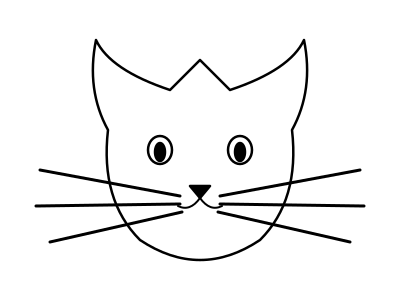
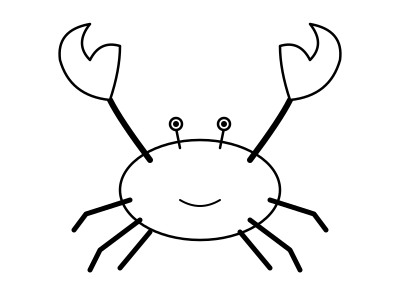
    • 6 animal pictures (draw or print): a duck, an eagle, a fish, a turtle, a cat and a crab; or a family pet
    • A sheet of paper with a coin-size hole cut by the grown-up (the peek window)
    • Science notebook (start a Parts at Work section)
    • Crayons
    1. Warm-Up / Wonder · 5 min

      Spaced review: ask: "What can block light?" (cardboard, a toy, a hand) Wonder question for the new unit: "Why does a duck have flat feet and an eagle have sharp, curved claws?"

    2. Explore · 10–15 min

      Play "Mystery Peek." Lay the peek window over one picture so only one part shows, such as the duck's beak. Your child guesses the part and the animal. Lift the paper to check. Do all 6. Name the parts as you go: beak, feathers, webbed feet, talons (claws), fins, scales, shell, fur, whiskers, pincers. Say: "These are outside parts. Animals use them to survive: to eat, move, stay safe and stay warm." Then your child picks 3 animals and points to 3 outside parts on each. If you have a calm pet, look at its fur, paws or whiskers with the magnifying glass while the grown-up holds the pet. Wash hands after. Ask: "What do you see up close?" (Answers vary: many hairs, a soft pad, a claw.) If stuck naming a part, point and ask: "Is it for eating, moving or staying safe?" Then give the name.

    3. Talk & Record · 5–10 min

      On the first Parts at Work page, your child draws one animal and labels 3 outside parts. You write the labels if needed. Sentence frame: "A ___ has ___, ___ and ___."

    4. Exit Ticket · 3–5 min

      Ask the three questions aloud.

    Exit ticket

    1. Name two outside parts of a bird.
    2. Name an outside part a fish has that a cat does not have.
    3. Is a heart an outside part?
    Answers
    1. Answers vary. Look for: beak, feathers, wings, feet, claws or eyes.
    2. Answers vary. Look for: fins, scales or gills.
    3. No. It is inside the body.
    Watch for, and help or stretch
    Watch for
    Naming colors or sizes ("It's brown") instead of parts.
    Try
    Ask: "What is the brown thing called? Point to it." Then give the part name.
    Extra help
    Use 3 pictures only (duck, fish, cat) and name 2 parts on each.
    Stretch
    Your child finds a part that two different animals share, such as claws on a cat and on a crab's pincers, and tells how they are alike.

    At home (optional): Your child looks at a bird, a bug or a pet outside or at home and names 2 of its outside parts.

    Practice

    Read each direction aloud. Your child works on the page; answers are in the grown-up view.

    Warm-up

    Remember?

    Math

    1. What number goes in the blank? 8 + ___ = 13
    2. 7 + 7 = ? It is a doubles fact.

    Reading & Writing

    1. hop, hope, cut, cute

    Math · Week 13 Day 1

    I can count forward from any number up to 120.

    Look: count on from 67

    1. Put your finger on 67 on the hundred chart.
    2. Touch and say each next number: 68, 69, 70, 71.
    3. After 69, the ones are used up, so a new ten starts: 70.

    Write the next three numbers.

    1. 1.
      34, 35, ___, ___, ___
    2. 2.
      57, 58, ___, ___, ___
    3. 3.
      88, ___, ___, ___
    4. 4.
      106, ___, ___, ___

    Write the number that comes next.

    1. 5.
      79, ___
    2. 6.
      49, ___
    3. 7.
      99, ___

    Challenge (optional)

    Start at 75. Count on 10. Where do you land?

    You need: hundred chart to 120 (optional)

    Reading & Writing · Week 13 Day 1

    I can retell a folktale and tell its lesson.

    Look: retell a folktale and find the lesson

    1. Read "Jay and the Grain" together. Retell it on your fingers: Jay asks for help, Cat and Dog say no, Jay does the job, Jay makes a cake.
    2. Ask: "What lesson does this tale teach?" (If you do not do the work, you may not get to share.)
    3. Say: "A folktale often teaches a lesson."

    Jay and the Grain

    Jay had a sack of grain. "Can you plant it with me?" said Jay. "Not I," said Cat and Dog. Jay did the job. Then Jay made a big grain cake. "Can we have a bit?" said Cat and Dog.

    Write 1, 2 and 3 to retell the tale in order. Then circle the lesson.

    1. 1.
      Jay made a big grain cake.
    2. 2.
      "Not I," said Cat and Dog.
    3. 3.
      Jay did the job.
    4. 4.
      The lesson:
      • If you do not do the job, you may not get the cake.
      • A cake is fun to make.

    Read the word. Circle ai or ay.

    1. 5.
      sail
      • ai
      • ay
    2. 6.
      hay
      • ai
      • ay
    3. 7.
      paint
      • ai
      • ay
    4. 8.
      sway
      • ai
      • ay

    Challenge (optional)

    "Can we have a bit?" What would you say to Cat and Dog?

    Science · Week 13 Day 1

    I can name outside parts of animals.

    Look: Find outside parts

    1. Look at a frog. What parts can you see on the outside?
    2. I see eyes, skin and webbed feet.
    3. Outside parts help animals eat, move, stay safe and stay warm.

    Circle the outside part.

    1. 1.
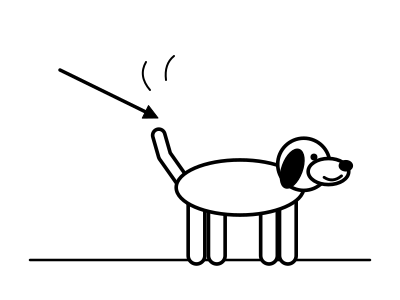
      Which part can you see on a dog?
      • A dog's tail.
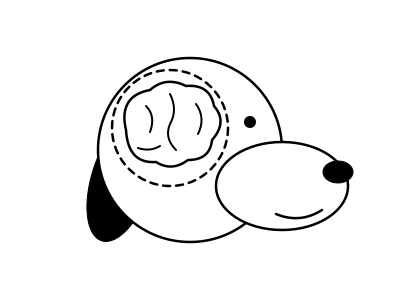
      • A dog's brain.
    2. 2.
      Which part does a bird have on the outside?
      • A heart.
      • Feathers.
    3. 3.
      Which part does a fish have on the outside?
      • Fins.
      • Fur.
    4. 4.
      Which part does a crab have on the outside?
      • Whiskers.
      • Pincers.

    Look at each animal. Make a mark on the part your grown-up names.

    1. 5.
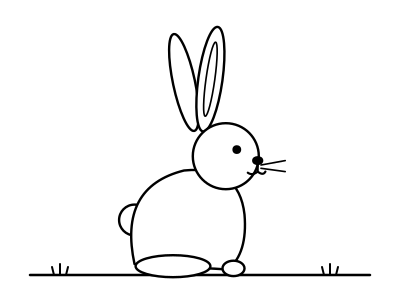
      A rabbit. Mark the rabbit's ears.
    2. 6.
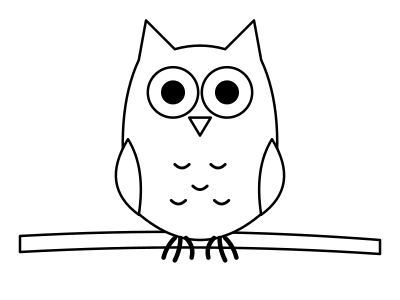
      An owl. Mark the owl's claws.
    3. 7.
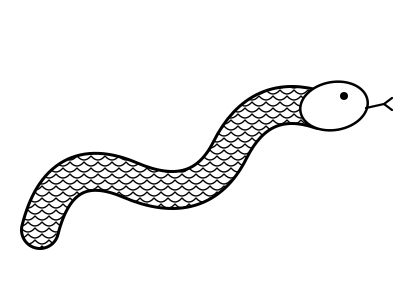
      A snake. Mark the snake's scales.
    4. 8.
      Draw an animal you like. Your grown-up helps you label 2 outside parts.

    Challenge (optional)

    An elephant has a long trunk. What could that part help it do?

    You need: crayons