1First Grade

    Count a big collection

    My opinion of the tale

    Practice pages

    0 of 180 days complete · Saved on this device

    View all 180 days

    Math

    Count a big collection

    I can count a collection and write how many.

    Standards: 1.NBT.A.1, 1.NBT.B.2.a

    Number practice (no timer)
    Doubles and make-10 facts (keep-up practice)
    Builds on
    Day 3 writing numbers, and Kindergarten counting by tens. One-minute check: "Count by tens to 100." (10, 20, 30, ... 100)

    New words

    • collection: a group of things to count
    • group of ten: 10 things put together so they can be counted as one ten

    You need

    • A pile of 74 dried beans or pennies (count it before the lesson)
    • A second pile of 58 beans or pennies (count it before the lesson)
    • 12 small cups (paper cups or egg carton cups)
    • Extra beans for the Play (about 120 in all)
    • Notebook and pencil
    1. Warm-Up · 5 min

      Fluency: doubles and make-10 facts. "9 + 9?" (18) "7 and what make 10?" (3) Spaced review from Week 9: "8 + 5: make a ten." (8 + 2 = 10, 10 + 3 = 13)

    2. Mini-Lesson · 10 min

      Say: "Counting a big pile one by one is slow and easy to mess up. Today we count by putting 10 in each cup." Take 34 beans from the extra pile. Count 10 into a cup together, touching each bean. Fill 3 cups. Ask: "How many are left over?" (4) Say: "Now count the cups by tens and then the leftovers by ones." Point and count together: "10, 20, 30, 31, 32, 33, 34." Write 34. Say: "3 cups of ten and 4 more is 34."

    3. Guided Practice · 10 min

      Give your child the pile of 74. Your child fills cups with exactly 10 beans each, then counts the cups by tens and the leftovers by ones: "10, 20, 30, 40, 50, 60, 70, 71, 72, 73, 74." Your child writes 74. Ask: "How many cups? How many left over?" (7 cups and 4 left) Then do the same with the pile of 58 (5 cups and 8 left; 58). If stuck, say: "Fill just one cup. Count those 10 beans again to make sure there are exactly 10."

    4. Play · 10 min

      Handful Count. Your child grabs 3 big handfuls of beans and puts them in one pile. If the pile seems to have more than 120, put some back. Your child counts it by filling cups and writes the numeral. You check by counting the cups by tens. Then you grab 3 handfuls, count them, and make one mistake on purpose (such as putting 9 in a cup) for your child to find.

    5. Exit Ticket · 3-5 min

      Put the objects to one side but leave them on the table. Read each question aloud. Your child answers out loud, with objects or with a quick drawing. Check each answer together right away.

    Exit ticket

    1. 4 cups of 10 and 6 more. How many in all?
    2. 7 cups of 10 and 2 more. How many in all?
    3. Why do we put 10 in each cup?
    Answers
    1. 46
    2. 72
    3. Answers vary. Look for: it is faster, we lose track less, or we can count by tens.
    Watch for, and help or stretch
    Watch for
    Cups with 9 or 11 beans, which makes the total wrong.
    Try
    Before counting the cups, your child checks each cup by pouring it out in a row of 10.
    Extra help
    Use a pile of 30 to 40 beans and count each cup together.
    Stretch
    Count a pile of more than 100, such as 108 beans (10 cups and 8 more). Your child writes 108.

    At home (optional): Count a collection at home, such as crayons, coins or blocks, by making groups of 10. Write the total.
    Reading & Writing

    My opinion of the tale

    I can name the book, tell my opinion and give a reason with because.

    Standards: W.1.1, L.1.6, L.1.2.b

    Phonics
    Vowel teams ai and ay (rain, tail, play, day)
    Sight words
    round, stop, take, thank, think
    Reading
    The Little Red Hen (traditional, public domain)
    Writing
    Opinion: I like… because… (naming the book and giving one reason) · Handwriting: spacing between words
    Builds on
    Joining ideas with and, but and so (Day 3). One-minute check: your child says one sentence with but about the tale.

    New words

    • opinion: what you think or feel about something; others may think something different
    • reason: why you think something
    • because: a word that comes right before a reason

    You need

    • Opinion frame on paper: In The Little Red Hen, I think the hen was ___ because ___.
    • Crayons
    • Sight word cards
    • Printed "Hen and the Grain"
    1. Phonics & Word Work · 15 min

      ai and ay in sentences. I do: read "I think the hen made the cake." We do: read "Thank you, Gail." "Stop and wait!" You do: your child reads "I think Hen is the best." "Take the cake to Ray." Dictation: train, tray, mail, stay. If stuck, find the vowel team in each word first and underline it.

    2. Sight Words · 5 min

      Review: round, stop, take, thank, think. Rainbow Write: your child writes two of this week's words three times each in different crayons, saying each letter, then reads them. Use thank and think.

    3. Read-Aloud & Shared Reading · 15 min

      Say: "An opinion tells what you think. A reason tells why." Model: "In The Little Red Hen, I think the hen was fair because the cat, dog and duck did not help." Ask: "What is my opinion?" (the hen was fair) "What is my reason?" (the others did not help) Ask your child: "Was the hen right not to share? Why do you think so?" (Answers vary. Look for: an opinion with a reason from the story.) Accept either side; the reason is what matters. Then your child reads "Hen and the Grain" with expression, using a big voice for "Wait! Stop!"

    4. Writing & Handwriting · 15 min

      Your child writes: "In The Little Red Hen, I think the hen was ___ because ___." and draws the reason. Spell untaught words by sound. Check the title has capitals (The Little Red Hen). Handwriting (4 min): your child checks for a finger space between each word and rewrites one line neatly if needed.

    5. Exit Ticket · 5 min

      Your child reads the opinion.

    Exit ticket

    1. Read me your opinion. Point to your reason.
    2. What word comes right before a reason?
    3. Read this sentence: "Take the cake to Ray."
    Answers
    1. Answers vary. Look for: an opinion and a reason that comes after because.
    2. because
    3. Take the cake to Ray.
    Watch for, and help or stretch
    Watch for
    Retelling the story instead of giving an opinion.
    Try
    Ask: "What do YOU think about the hen? Start with I think."
    Extra help
    Your child says the opinion and you write the because part lightly for your child to trace.
    Stretch
    Your child adds a second reason with also.

    At home (optional): Your child tells a family member an opinion about dinner with a because reason.

    Social StudiesWeekly check

    Map my room

    I can make a map of my room with symbols and a key.

    Standards: D2.Geo.1.K-2

    Builds on
    What is a map? (Day 2). One-minute check: ask "What is a bird's-eye view?" (how things look from high above)

    New words

    • symbol: a small picture or shape that stands for a real thing on a map
    • key: a box on a map that tells what each symbol means

    You need

    • Large paper
    • Ruler (for straight lines)
    • Crayons
    • Pencil
    • The Day 2 bird's-eye drawing
    1. Warm-Up / Wonder · 5 min

      Spaced review: ask: "How is a globe different from a map?" (A globe is round; a map is flat.) Wonder question: "How could you show your bed on a map without drawing every pillow?"

    2. Review Game · 10 min

      Symbol game: you say a thing, and your child invents a simple symbol and draws it in the air or on scrap paper. Bed (a rectangle). Rug (an oval). Door (a gap in the wall line). Window (a double line on the wall). Lamp (a small circle). Say: "A symbol is a small shape that stands for a real thing. A key tells what each symbol means." Then start the room map. Stand at the door and look around. Your child draws the outline of the room with the ruler, then adds 3 to 5 things as symbols in the right places. Draw a key box in a corner with each symbol and its name. Add a title, such as "My Room." If stuck placing things, ask: "Is the bed near the door or far from it? Near the window?"

    3. Check · 10 min

      Give the Week 13 social studies check. The check items are on the Week 13 check page; do not show them ahead of time. Read each part aloud. Your child answers by talking, pointing, showing with the real materials or drawing. You write down their words exactly. It is not timed; stop and finish later if your child is tired. Make a check mark next to each part your child shows on their own. The printed check has 8 items. It covers these goals: (1) I can tell what a map shows and how a map is different from a globe; (2) I can make a map of my room with symbols and a key. This week the check is the room map. Your child shows the finished map, points to each symbol and tells what it stands for using the key, and then finds one real thing in the room from the map. Look for: a bird's-eye outline, 3 to 5 symbols, a key that matches the symbols, things in about the right places, and a title. Secure: 6 of 8 correct, with at least one right on each goal. If the check is not yet secure, use the reteach step on the check page that matches the items missed.

    4. Exit Ticket · 3–5 min

      Ask the three questions aloud.

    Exit ticket

    1. What is a symbol?
    2. What does a map key tell you?
    3. Point to your bed on the map. What is next to it?
    Answers
    1. A small picture or shape that stands for a real thing.
    2. What each symbol means.
    3. Answers vary. Look for: an answer that matches the real room.
    Watch for, and help or stretch
    Watch for
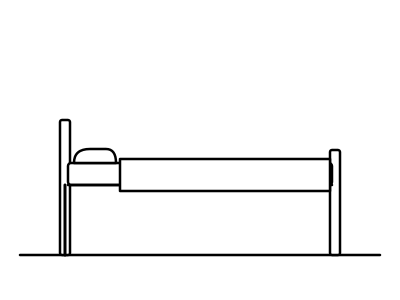
    Drawing the bed from the side, with legs.
    Try
    Look down at the bed from standing height. Ask: "What shape do you see from above?" (a rectangle)
    Extra help
    Map only 3 things: the bed, the door and one more.
    Stretch
    Your child hides a small toy in the room and marks its spot on the map with an X for you to find.

    At home (optional): Your child shows the room map to a family member and has them find something using the key.

    Practice

    Read each direction aloud. Your child works on the page; answers are in the grown-up view.

    Warm-up

    Remember?

    Math

    1. 16 - 7 = ? Think 7 + ? = 16.
    2. 9 + 9 = ? It is a doubles fact.

    Reading & Writing

    1. pin, pine
    2. The frog says it can swim.

    Math · Week 13 Day 4

    I can count a collection and write how many.

    Look: 2 cups of ten and 5 more

    1. Count the cups by tens: 10, 20.
    2. Count the extra beans by ones: 21, 22, 23, 24, 25.
    3. There are 25 beans.

    Count the cups by tens and the extras by ones. Write how many.

    1. 1.
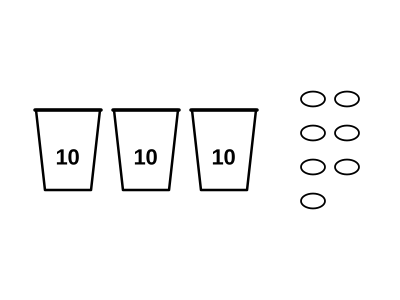
      3 cups, each labeled 10, and 7 loose beans.
    2. 2.
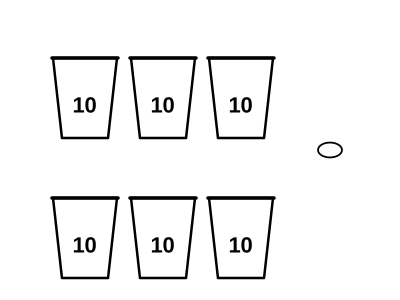
      6 cups, each labeled 10, and 1 loose bean.
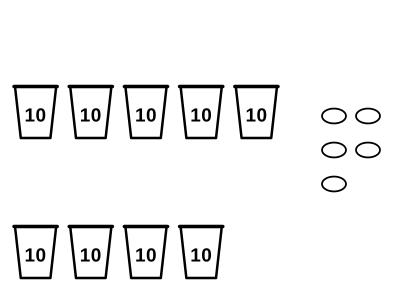
    3. 3.
      9 cups, each labeled 10, and 5 loose beans.

    Write how many.

    1. 4.
      5 cups of 10 and 9 more
    2. 5.
      8 cups of 10 and 0 more
    3. 6.
      1 cup of 10 and 6 more
    4. 7.
      11 cups of 10 and 3 more

    Challenge (optional)

    You count 4 cups of 10 and 12 extra beans. How many beans are there?

    Reading & Writing · Week 13 Day 4

    I can name the book, tell my opinion and give a reason with because.

    Look: opinion and reason

    1. Say: "An opinion tells what I think. A reason tells why."
    2. Read "I Like Jay". Underline the opinion: I think Jay is the best. Circle the reason: Jay did the job.
    3. Say: "The title of a book gets capitals on the first word and the big words."

    I Like Jay

    I think Jay is the best. Jay did the job. Cat and Dog did not do the job. I like Jay a lot!

    Underline the opinion. Circle the reason.

    1. 1.
      I think Jay is the best. Jay did the job.
    2. 2.
      I think Gail is fun. Gail did not stop in the rain.
    3. 3.
      I think the train is fun. It can go fast.

    Write the title with capitals. Then write your opinion and a reason.

    1. 4.
      jay and the grain
    2. 5.
      I think ___.
    3. 6.
      Your reason:

    Challenge (optional)

    What do you think of Cat and Dog?

    Social Studies · Week 13 check

    Weekly check

    How to give it: Read every question and choice aloud, and point to each picture as you name it. This week the check is the room map. Your child answers by talking, pointing, circling, acting it out or drawing; write their words exactly on the line. It is not timed; stop and finish later if your child is tired. Do not show the page ahead of time. Your child uses the finished room map for items 6 to 8. Make a check mark next to each part your child shows on their own.

    Secure when: 6 of 8 correct, with at least one right on each goal

    • I can tell what a map shows and how a map is different from a globe.
    • I can make a map of my room with symbols and a key.
    1. 1.
      Which one is round like Earth?
      • map
      • globe
    2. 2.
      Tell one thing a map can help you do.
    3. 3.
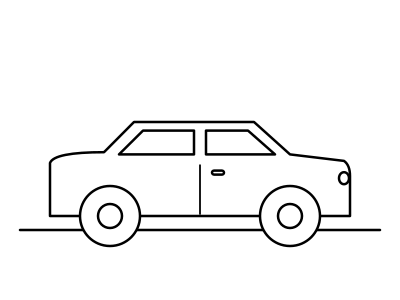
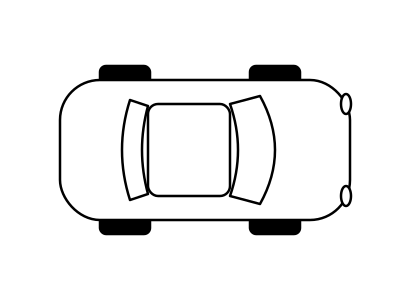
      Which picture shows a bird's-eye view?
      • A toy car seen from the side.
      • A toy car seen from above.
    4. 4.
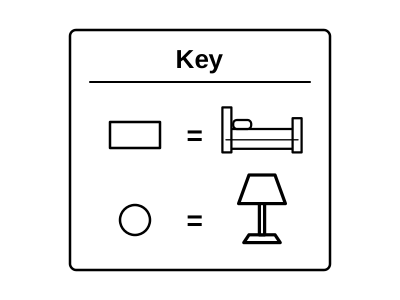
      A map key: a small rectangle next to a bed, and a small circle next to a lamp. On this map, what does the circle stand for?
      • A bed.
      • A lamp.
    5. 5.
      A small shape on a map that stands for a real thing is called a ____.
    6. 6.
      Point to one symbol on your room map. What does it stand for?
    7. 7.
      Use your map to find one real thing in your room. What did you find?
    8. 8.
      Does your map have a title, a key and 3 to 5 symbols? Make a check for each part.