1First Grade

    Lesson + weekly check: counting to 120

    Share and check: ai and ay

    Practice pages

    0 of 180 days complete · Saved on this device

    View all 180 days

    MathWeekly check

    Lesson + weekly check: counting to 120

    I can count, read and write numbers to 120.

    Standards: 1.NBT.A.1

    Number practice (no timer)
    Doubles and make-10 facts (keep-up practice)
    Builds on
    Days 1 to 4: counting on, counting past 100, reading and writing numbers, and counting collections. One-minute check: "What comes after 109?" (110)

    New words

    • hundred chart: a chart with numbers in rows of 10

    You need

    • Two hundred charts to 120 (printed or drawn as 12 rows of 10 boxes); one is cut by an adult into 8 puzzle pieces along the box lines
    • The stored Week 13 check and its answer key
    • Notebook and pencil
    1. Warm-Up · 5 min

      Fluency: doubles and make-10 facts. "8 + 8?" (16) "4 and what make 10?" (6) Spaced review from Week 11: "Is 9 - 3 = 4 + 2 true or false?" (True. Both are 6.)

    2. Short Lesson: Review Game · 10 min

      Hundred Chart Puzzle. Mix up the 8 puzzle pieces. Your child puts the chart back together, reading the first number on each piece out loud. Use the whole chart only to check at the end. Then point to 3 boxes on the puzzle and ask your child to read them. If stuck, say: "Find the piece with 1 on it first. Numbers in the same column end with the same digit."

    3. Weekly Check · 15 min

      Give the stored Week 13 check. The printed check has 10 items. It covers these goals: (1) I can count forward from any number up to 120; (2) I can count past 100 to 120; (3) I can read and write numbers up to 120; (4) I can count a collection and write how many. There is no time limit. If your child is stuck, say only: "Find the number before it and count on." Do not give the answer. Score it with the answer key. Secure: 9 of 10 correct. If the check is secure, start Week 14. If it is not, first do the reteach step on the check page for each group of items missed, then start Week 14.

    4. Exit Ticket · 3-5 min

      After the check, ask these two questions. Then go over any missed check items together.

    Exit ticket

    1. What comes after 109?
    2. Write one hundred fifteen.
    Answers
    1. 110
    2. 115
    Watch for, and help or stretch
    Watch for
    Writing 10015 or 1015 for 115.
    Try
    Find 115 on the chart. Cover the 1 at the front: 15 is left. Write 1 and then 15.
    Extra help
    Let your child keep the whole hundred chart in view while counting aloud, and note it on the check.
    Stretch
    After the check, your child counts back from 120 to 98.

    At home (optional): Do the hundred chart puzzle with a family member. Read the first number on each piece aloud.
    Reading & WritingWeekly check

    Share and check: ai and ay

    I can read ai and ay words and share my opinion.

    Standards: RF.1.3.c, RF.1.3.g, W.1.1

    Phonics
    Vowel teams ai and ay (rain, tail, play, day)
    Sight words
    round, stop, take, thank, think
    Reading
    The Little Red Hen (traditional, public domain)
    Writing
    Opinion: I like… because… (naming the book and giving one reason) · Handwriting: spacing between words
    Builds on
    This week's ai and ay work and opinion writing. One-minute check: warm up with rain, play and train.

    New words

    • share: show or read your work to others

    You need

    • Word cards: ai and ay words (written in step 4)
    • Sight word cards: round, stop, take, thank, think
    • Recording sheet
    • Opinion page from Day 4
    1. Review Game · 10 min

      Rain or Play: lay 10 cards face down: rain, tail, wait, paint, train, play, day, stay, gray, tray. Your child flips a card and reads it. If it has ai, your child wiggles fingers like rain; if it has ay, your child does a happy play dance. If stuck on a word during the game (not during the check), cover all but the first sound, say it together, then uncover the rest and blend.

    2. Sight Words · 5 min

      Review: round, stop, take, thank, think, let, may, old, open, over. Bean Bag Toss: lay the cards on the floor. Your child tosses a bean bag or a rolled-up sock, reads the card it lands on and spells it without looking. Mix this week's and last week's words.

    3. Weekly Check · 15 min

      The printed check has 7 items. It covers these goals: (1) I can read ai and ay words; (2) I can read the sight words round, stop, take, thank and think; (3) I can tell a tale's lesson and describe a character from what she does and says; (4) I can join two ideas with and or but; (5) I can tell an opinion and a reason. Give no hints. Record each answer. Secure: 8 of the 10 words in items 1 and 2, 4 of the 5 sight words, and 4 of items 4 to 7, with the reason found in item 7. For any part that is not yet secure, use the matching reteach step on the check page next week.

    4. Share & Listen · 10 min

      Your child reads the opinion page to a family member. The listener says whether they agree and gives a reason too.

    5. Handwriting · 5 min

      Your child copies "I think the hen is the best." with a finger space between each word, a capital at the start and a period at the end. Circle the best word.

    6. Exit Ticket · 5 min

      Talk about the week.

    Exit ticket

    1. Read a word with ai and a word with ay.
    2. What is the difference between an opinion and a fact?
    Answers
    1. Answers vary. Look for: correct reads such as rain and play.
    2. An opinion tells what someone thinks; a fact is true and can be checked.
    Watch for, and help or stretch
    Watch for
    Reading said with a long a, like the ai in rain.
    Try
    Remind your child that said is a heart word: ai says /e/ in said only. Read "Hen said no." three times.
    Extra help
    Read the item 7 direction aloud and point to the reason on the page.
    Stretch
    Your child reads 3 bonus ee words (feet, green, see) to preview next week. Do not score them.

    At home (optional): Read "Hen and the Grain" to a family member.

    ScienceWeekly check

    Beak tools

    I can test which tool beak works best for each food.

    Standards: 1-LS1-1

    Builds on
    Parts have jobs (Day 3). One-minute check: ask "What job does an eagle's beak do?" (tears and picks up food)

    New words

    • beak: the hard mouth of a bird
    • model: a thing we use to stand for something real

    You need

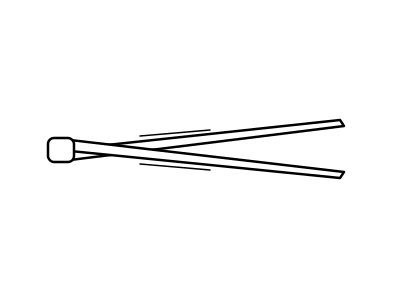
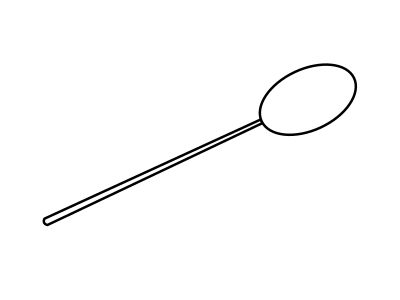
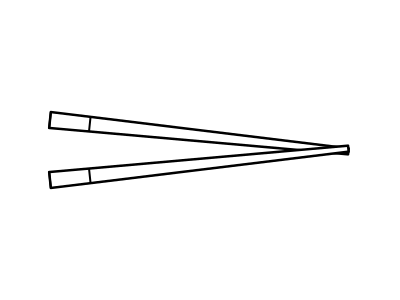
    • 4 tools as "beaks": tweezers, a clothespin, a plastic or metal spoon, and chopsticks (or 2 unsharpened pencils)
    • 4 "foods" in 4 plastic bowls: 10 large plastic beads (seeds), 1 tablespoon of dry rice (tiny seeds), water about 2 cm deep (pond water), 10 pieces of dry pasta (worms)
    • An empty plastic cup (the bird's tummy)
    • Data chart: 4 rows (Tweezers, Clothespin, Spoon, Chopsticks) and 4 columns (Beads, Rice, Water, Pasta)
    • Pencil
    • A towel for spills
    • Notebook
    1. Warm-Up / Wonder · 5 min

      Spaced review: ask: "How do a duck's webbed feet help it?" (They help it paddle and swim.) Wonder question: "Why do birds have so many different beak shapes?" Choking safety: large beads, dry rice and dry pasta are small enough to choke on. The U.S. Consumer Product Safety Commission (CPSC) bans small parts in toys made for children under 3, so keep these items away from younger brothers and sisters, and remind your child that test items never go in mouths, noses or ears.

    2. Review Game · 10 min

      Beak test. Say: "Each tool is a model of a beak. A beak works if it can pick up the food and carry it to the tummy cup." For each food, your child tries each tool once and you mark the chart: a check if it worked, an X if not. That is 16 tries; keep them quick. Pour the food back after each try. Then look at the chart together. Ask: "Which beak worked for water?" (Most likely only the spoon.) "Which beaks worked for the pasta worms?" (Most likely the tweezers, the clothespin and the chopsticks.) Results vary, so read your own chart. Say: "A pelican has a big pouch under its beak. It scoops up fish and water, then tips its beak down to drain the water out. The spoon works a little like that." If stuck using chopsticks, your child holds one in each hand like two sticks.

    3. Check · 10 min

      Give the Week 13 science check. The check items are on the Week 13 check page; do not show them ahead of time. Read each part aloud. Your child answers by talking, pointing, showing with the real materials or drawing. You write down their words exactly. It is not timed; stop and finish later if your child is tired. Make a check mark next to each part your child shows on their own. The printed check has 8 items. It covers these goals: (1) I can name outside parts of animals; (2) I can tell how an animal part helps it live; (3) I can test which tool beak works best for each food. This week the check is an explanation. Your child picks one food, tells which beak worked best for it using the chart, and finishes the frame: "The ___ is like a ___ beak because ___." Look for: a choice that matches the chart, and a reason about shape, such as "The spoon is like a pelican beak because it scoops," or "The tweezers are like a thin, pointy beak because they pinch small things." Secure: 6 of 8 correct, including item 2 (a beak match with a reason about shape). If the check is not yet secure, use the reteach step on the check page that matches the items missed.

    4. Exit Ticket · 3–5 min

      Ask the three questions aloud.

    Exit ticket

    1. Which beak worked best for the water?
    2. Why can't the tweezers pick up water?
    3. Finish: "The spoon is like a pelican's beak because ___."
    Answers
    1. Answers come from your chart. Look for: the spoon.
    2. The water slips out between the tips; tweezers pinch, they cannot scoop.
    3. it scoops.
    Watch for, and help or stretch
    Watch for
    Saying a beak is "best" because they like it, not because of the chart.
    Try
    Point to the chart: "Show me the checks. Which beak got the most for this food?"
    Extra help
    Use 2 tools (spoon and clothespin) and 2 foods (water and pasta).
    Stretch
    Your child looks at bird pictures in a book and guesses which tool each beak is most like, and why.

    At home (optional): Your child watches birds outside or in a video and tells what one bird's beak shape might help it eat.

    Practice

    Read each direction aloud. Your child works on the page; answers are in the grown-up view.

    Warm-up

    Remember?

    Math

    1. True or false? 6 + 2 = 5 + 4
    2. 5 + 6 = ? Use the double 5 + 5.

    Reading & Writing

    Math · Week 13 check

    Weekly check

    How to give it: Read each item aloud. Untimed. Do item 1 out loud first and mark it right if no number is skipped or repeated. For items 6–8, say each number once or twice; your child writes it. Your child may not use the hundred chart for items 1–8. If stuck, say only: "Find the number before it and count on." Do not give the answer.

    Secure when: 9 of 10 correct

    • I can count forward from any number up to 120.
    • I can count past 100 to 120.
    • I can read and write numbers up to 120.
    • I can count a collection and write how many.
    1. 1.
      Count aloud from 78 to 120. Your grown-up marks it.
    2. 2.
      45, 46, ___, 48
    3. 3.
      69, ___, 71
    4. 4.
      99, ___, 101
    5. 5.
      112, ___, 114
    6. 6.
      Listen to your grown-up: thirty-six. Write the number.
    7. 7.
      Listen to your grown-up: one hundred fourteen. Write the number.
    8. 8.
      Listen to your grown-up: forty-nine. Write the number.
    9. 9.
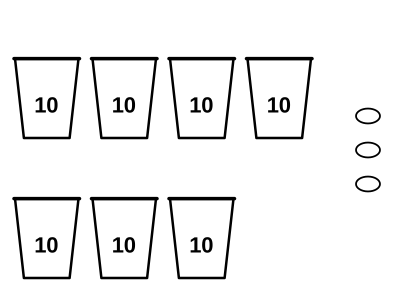
      7 cups, each labeled 10, and 3 loose beans. How many beans?
    10. 10.
      4 cups of 10 and 8 more. How many?

    Reading & Writing · Week 13 check

    Weekly check

    How to give it: Give the check after the review game, in a quiet spot, one part at a time. It is untimed; take a stretch break between parts if needed. Read every direction aloud, but do not read the words or story for your child. Do not help except to say "Try your best" or "Skip it." Mark each item right or wrong. Items 1 and 2 (Part 1): your child reads the ai and ay words aloud. Item 3 (Part 2): your child reads the 5 sight words. Part 3: your child reads "Kay and the Pail" aloud, including the opinion at the end, and points to the reason (item 7). Read the directions for items 4 to 6. Your child may also read the opinion page from Day 4 aloud, as in the lesson.

    Secure when: 8 of the 10 words in items 1 and 2, 4 of the 5 sight words, and 4 of items 4 to 7, with the reason found in item 7.

    • I can read ai and ay words.
    • I can read the sight words round, stop, take, thank and think.
    • I can tell a tale's lesson and describe a character from what she does and says.
    • I can join two ideas with and or but.
    • I can tell an opinion and a reason.

    Kay and the Pail

    Kay had a red pail. Wade had no pail, and he was sad. "Take it," said Kay. Wade and Kay made a big sand cake. "Thank you!" said Wade. I think Kay is the best pal. Kay let Wade play with the pail.

    1. 1.
      bait sail rail main maid
    2. 2.
      laid fray hay bay pray
    3. 3.
      round stop take thank think
    4. 4.
      "Take it," said ___.
      • Kay
      • Wade
    5. 5.
      The lesson:
      • It is fun to let a pal play.
      • A pail is red.
    6. 6.
      Kay had a pail, ___ Wade had no pail.
      • and
      • but
    7. 7.
      I think Kay is the best pal. Kay let Wade play with the pail.

    Science · Week 13 check

    Weekly check

    How to give it: Read every direction, question and choice aloud. It is not timed; stop and finish later if your child is tired. Your child answers by talking, pointing, showing with the real materials or drawing, and you write their words exactly. Have the beak test chart, the 4 tools and the 4 foods. Beads, rice and pasta are small enough to choke on; keep them away from younger children, and test items never go in mouths, noses or ears.

    Secure when: 6 of 8 correct, including item 2 (a beak match with a reason about shape).

    • I can name outside parts of animals.
    • I can tell how an animal part helps it live.
    • I can test which tool beak works best for each food.
    1. 1.
      Pick one food from the beak test. Look at the chart. Tell which beak worked best for it. Your grown-up writes it.
    2. 2.
      Finish and tell: "The ___ is like a ___ beak because ___." Your grown-up writes it.
    3. 3.
      A bird eats small seeds. Circle the beak tool it would need.
      • Tweezers.
      • A big spoon.
    4. 4.
      A pelican scoops up fish and water. Circle the tool that works like its beak.
      • Chopsticks.
      • A big spoon.
    5. 5.
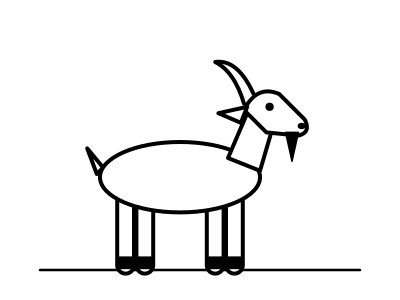
      A goat. Make a mark on 2 outside parts.
    6. 6.
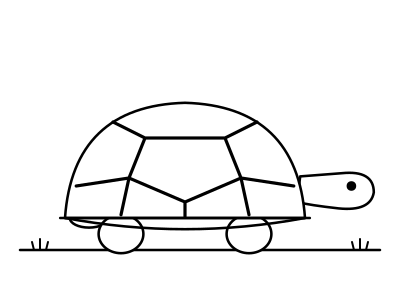
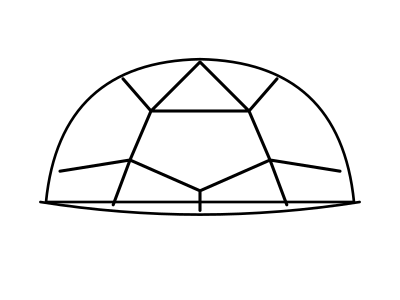
      A turtle. Circle the turtle part you can see on the outside.
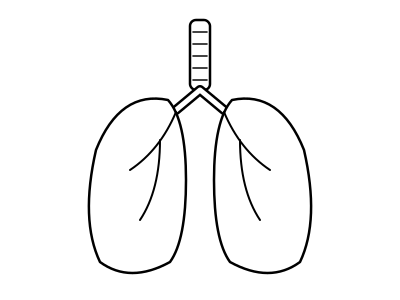
      • Lungs.
      • A shell.
    7. 7.
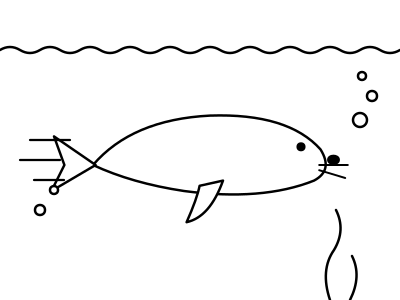
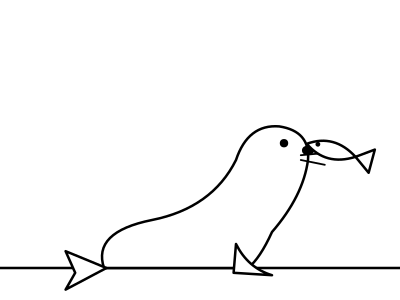
      A seal has flippers. Circle the job.
      • A seal swimming.
      • A seal eating.
    8. 8.
      An eagle has sharp, curved claws. Tell the job. Your grown-up writes it.