1First Grade

    Read and write numbers to 120

    And, but, so

    Practice pages

    0 of 180 days complete · Saved on this device

    View all 180 days

    Math

    Read and write numbers to 120

    I can read and write numbers up to 120.

    Standards: 1.NBT.A.1

    Number practice (no timer)
    Doubles and make-10 facts (keep-up practice)
    Builds on
    Days 1 and 2 counting on and counting past 100. One-minute check: "Read 108." (one hundred eight)

    New words

    • digit: one of the symbols 0 to 9 that we use to write numbers
    • numeral: a number written with digits, like 47

    You need

    • Hundred chart to 120: printed, or drawn as 12 rows of 10 boxes (1 to 10 in the top row, 111 to 120 in the bottom row)
    • Whiteboard and marker, or paper and pencil
    • Notebook and pencil
    1. Warm-Up · 5 min

      Fluency: doubles and make-10 facts. "5 + 5?" (10) "4 + 4?" (8) "2 and what make 10?" (8) Spaced review from Week 10: "12 - 8: think addition." (8 + 4 = 12, so 4)

    2. Mini-Lesson · 10 min

      Say: "Today we read and write big numbers." Say: "one hundred seven." Write 1007 on the board. Say: "Some kids write what they hear: 100 and then 7. Let us check the chart." Find 107 on the chart. Ask: "How many digits does it have?" (3: a 1, a 0 and a 7.) Cross out 1007 and write 107. Say: "One hundred seven has a 0 in the middle." Now say "forty-seven" and write 47. Say: "We say the tens first, so we write the tens digit first." Write 74 under it. Ask: "Is this the same number?" (No. That is seventy-four.) Write 62 and 115 and read them together.

    3. Guided Practice · 10 min

      Part 1: you say each number, and your child writes it: 34, 71, 59, 103, 110, 117. Part 2: you write each number, and your child reads it: 46, 64, 90, 108, 112, 120. Check each one on the chart together. If stuck, say: "Find it on the hundred chart and copy it digit by digit."

    4. Play · 10 min

      Number Detective. Write 6 numbers as you say them out loud. Make 2 mistakes on purpose: say "one hundred six" and write 1006; say "fifteen" and write 51. Your child finds the mistakes and fixes them using the chart (106 and 15). Then switch: your child says 6 numbers and you write them, making 1 or 2 mistakes for your child to catch.

    5. Exit Ticket · 3-5 min

      Put the objects to one side but leave them on the table. Read each question aloud. Your child answers out loud, with objects or with a quick drawing. Check each answer together right away.

    Exit ticket

    1. Write one hundred seven.
    2. Read this number: 64.
    3. Write eighty-one.
    Answers
    1. 107
    2. sixty-four
    3. 81
    Watch for, and help or stretch
    Watch for
    Writing 1007 for 107, or writing digits in the wrong order (74 for 47).
    Try
    Find the number on the chart and count its digits. For teen numbers, say "fifteen is 1 ten and 5," so the 1 comes first.
    Extra help
    Keep the hundred chart in view and let your child find each number before writing it.
    Stretch
    Your child writes all the numbers from 101 to 120 from memory, then checks against the chart.

    At home (optional): Find 3 numbers on a calendar, a clock or a food package. Your child reads each one aloud and writes it.
    Reading & Writing

    And, but, so

    I can join two ideas with and, but or so.

    Standards: L.1.1.g, L.1.1.j, SL.1.6

    Phonics
    Vowel teams ai and ay (rain, tail, play, day)
    Sight words
    round, stop, take, thank, think
    Reading
    The Little Red Hen (traditional, public domain)
    Writing
    Opinion: I like… because… (naming the book and giving one reason) · Handwriting: spacing between words
    Builds on
    Writing complete sentences (Unit 1). One-minute check: your child says one complete sentence about the hen.

    New words

    • joining word: a word like and, but or so that joins two ideas into one sentence
    • but: a joining word that shows something different or surprising comes next
    • so: a joining word that tells what happened because of the first part

    You need

    • Sentence halves written on paper strips (listed in the lesson)
    • ai and ay word cards
    • Sight word cards
    • Printed "Hen and the Grain"
    1. Phonics & Word Work · 15 min

      ai or ay? I do: say "ai likes the middle; ay likes the end." Read wait and say and put them in two columns. We do: sort rain, day, tail, play. You do: your child reads and sorts paint, way, train, tray, mail, stay. (ai: rain, tail, paint, train, mail. ay: day, play, way, tray, stay.) Read: "The cat had a nap, but the hen did not." Dictation: wait, say, paint, way. If stuck on spelling, ask: "Is the /ā/ at the end? Then use ay."

    2. Sight Words · 5 min

      Review: round, stop, take, thank, think. Flip and Read: lay the five cards face down with last week's words. Your child flips a card, reads it and uses it in a short spoken sentence. Missed words go back in the pile.

    3. Read-Aloud & Shared Reading · 15 min

      Read these sentence halves aloud and lay them on the table. First halves: "The hen asked for help," "The wheat grew tall," "The hen baked the bread," Second halves: "but no one helped." "so she cut it." "and she ate it with her chicks." Read each strip aloud again as needed; your child matches each first half to a second half that makes sense, then echo-reads the whole sentence after you (the strips use words not yet taught, such as asked, helped and wheat). (The hen asked for help, but no one helped. The wheat grew tall, so she cut it. The hen baked the bread, and she ate it with her chicks.) Ask: "Which joining word shows a surprise?" (but) "Which shows what happened because of the first part?" (so) Then reread "Hen and the Grain". Ask: "What did the hen do when no one would plant?" (She planted it herself.)

    4. Writing & Handwriting · 15 min

      Your child says two joined sentences aloud, one with but and one with so, then writes one of them: "The cat did not help, so it did not get any bread." Handwriting (4 min): your child copies the joined sentence with finger spaces and a period at the end.

    5. Exit Ticket · 5 min

      Oral answers.

    Exit ticket

    1. Finish this sentence: The dog wanted bread, but...
    2. Listen and choose and, but or so: It was raining, ___ we stayed inside.
    3. Read this sentence: "Gail had a pail, but it had a hole."
    Answers
    1. Answers vary. Look for: a contrast, such as "but the hen said no."
    2. so
    3. Gail had a pail, but it had a hole.
    Watch for, and help or stretch
    Watch for
    Using and for every join.
    Try
    Ask: "Is the second part a surprise? Then try but."
    Extra help
    Use only and and but today. Act out each sentence with toys.
    Stretch
    Your child writes a sentence with each joining word: and, but and so.

    At home (optional): At dinner, your child says one sentence with so: "I was hungry, so I ate."

    Science

    What do the parts do?

    I can tell how an animal part helps it live.

    Standards: 1-LS1-1

    Builds on
    Naming animal parts (Day 1). One-minute check: your child names 3 outside parts of a duck. (Sample: beak, feathers, webbed feet.)

    New words

    • protect: to keep safe
    • job: what a part does to help

    You need

    • 8 part cards (draw or write): turtle shell, cat claws, bear fur, rabbit eyes on the sides of the head, duck webbed feet, eagle beak, fish fins, porcupine quills
    • 8 job cards (written below)
    • Matching mat: a paper with 2 columns, Part and Job
    • Notebook
    • Crayons
    1. Warm-Up / Wonder · 5 min

      Spaced review: play one round of Mystery Peek from Day 1. Wonder question: "Why does a rabbit have eyes on the sides of its head?"

    2. Explore · 10–15 min

      Write the 8 job cards: keeps the body safe; grabs and digs; keeps the body warm; sees all around to watch for danger; paddles in water; tears and picks up food; steers and swims; sharp points that keep hungry animals away. Model one: "The turtle's shell is hard. It covers the turtle's body. So its job is to keep the body safe." Put the pair on the mat. Your child matches the other 7, telling why for each. Expected: shell, keeps the body safe; claws, grabs and digs; fur, keeps the body warm; eyes on the sides, sees all around to watch for danger; webbed feet, paddles in water; beak, tears and picks up food; fins, steers and swims; quills, sharp points that keep hungry animals away. Act some out: your child paddles in a sink or tub of water, first with fingers pressed together like webbed feet, then with fingers spread apart. Ask: "Which pushes more water?" (fingers together) Then your child looks straight ahead and keeps their head still while you stand just behind one shoulder. Ask: "Can you see me?" (No, not without turning.) Say: "A rabbit's eyes are on the sides of its head, so it could see you there. Rabbits are hunted by other animals, so seeing all around helps them stay safe." If stuck on a match, ask: "Is this part hard, sharp, soft, flat or pointed? What could that shape help with?"

    3. Talk & Record · 5–10 min

      Your child draws 2 animals and finishes the sentence frame for each: "The ___ helps the animal ___." (Sample: "The webbed feet help the duck swim.")

    4. Exit Ticket · 3–5 min

      Ask the three questions aloud.

    Exit ticket

    1. How does a turtle's shell help it?
    2. How do a duck's webbed feet help it?
    3. Finish: "A bear's fur helps it ___."
    Answers
    1. It keeps the turtle's body safe (protects it).
    2. They push water so the duck can paddle and swim.
    3. keep warm.
    Watch for, and help or stretch
    Watch for
    Giving a want instead of a job, such as "The fur makes it pretty."
    Try
    Ask: "How does the fur help the bear stay alive in the cold?" Jobs help the animal survive.
    Extra help
    Match 4 pairs only: shell, fur, webbed feet and beak.
    Stretch
    Your child invents an animal with 3 parts and tells the job of each part.

    At home (optional): Your child picks a pet or an animal in a book and tells one part and its job using the sentence frame.

    Practice

    Read each direction aloud. Your child works on the page; answers are in the grown-up view.

    Warm-up

    Remember?

    Math

    1. What number goes in the blank? ___ + 6 = 15
    2. 4 + 5 = ? Use the double 4 + 4.

    Reading & Writing

    1. let, may, old

    Math · Week 13 Day 3

    I can read and write numbers up to 120.

    Look: one hundred nine

    1. Say it: one hundred nine.
    2. Find it on the chart. It has 3 digits: 1, 0 and 9.
    3. Write 109, not 1009.

    Listen to your grown-up. Write the number.

    1. 1.
      fifty-two
    2. 2.
      eighty-five
    3. 3.
      one hundred two
    4. 4.
      one hundred sixteen
    5. 5.
      twenty-seven

    Your grown-up says a number. Circle it.

    1. 6.
      thirty-eight
      • 38
      • 83
    2. 7.
      one hundred five
      • 105
      • 1005
      • 150
    3. 8.
      ninety-one
      • 19
      • 91

    Challenge (optional)

    Write the number that is 1 less than 110.

    You need: hundred chart to 120 (to check)

    Reading & Writing · Week 13 Day 3

    I can join two ideas with and, but or so.

    Look: join ideas with and, but or so

    1. Say: "And adds more. But shows something different. So tells what happened because of it."
    2. Model: "Ray went to the train, but it was late." "Ray sat and had a snack."
    3. Read "Ray and the Train" together and point to and and but.

    Ray and the Train

    Ray went to the train, but it was late. Ray sat and had a snack. The train came, and Ray got on. Ray had a fun day!

    Circle and or but.

    1. 1.
      Kay had a pail, ___ it had a hole.
      • and
      • but
    2. 2.
      Ray ate a snack ___ sat in the shade.
      • and
      • but
    3. 3.
      I like rain, ___ I do not like mud.
      • and
      • but
    4. 4.
      The train came, ___ Ray got on.
      • and
      • but

    Join the two sentences with and. Then answer the last one out loud.

    1. 5.
      I can paint. I can play.
    2. 6.
      Kay got a pail. Kay got a tray.
    3. 7.

    Challenge (optional)

    Ray had a ___ day!

    Science · Week 13 Day 3

    I can tell how an animal part helps it live.

    Look: Match a part to its job

    1. Look at the part: an owl has big eyes on the front of its face.
    2. Ask: what could this shape help with?
    3. Big eyes help the owl see to find food at night.

    Circle the job for each part.

    1. 1.
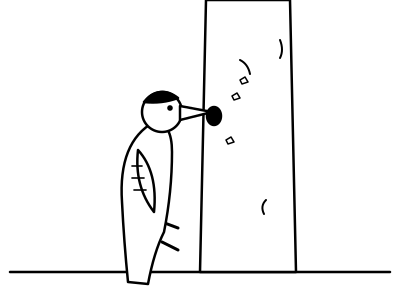
      A woodpecker's strong, pointed beak
      • A bird pecking a hole in a tree.
      • A bird swimming.
    2. 2.
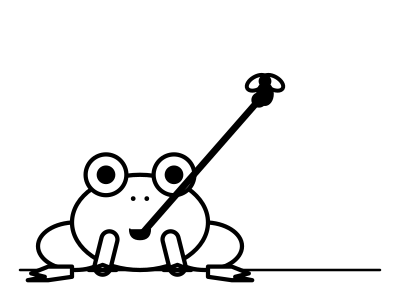
      A frog's long, sticky tongue
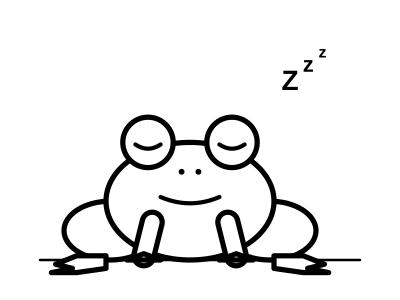
      • A frog sleeping.
      • A frog catching a fly.
    3. 3.
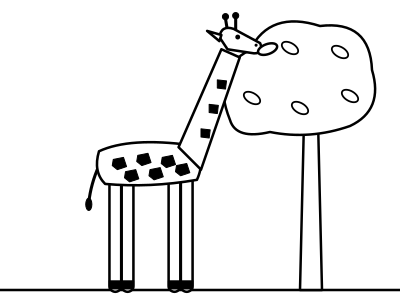
      A giraffe's long neck
      • A giraffe eating leaves high in a tree.
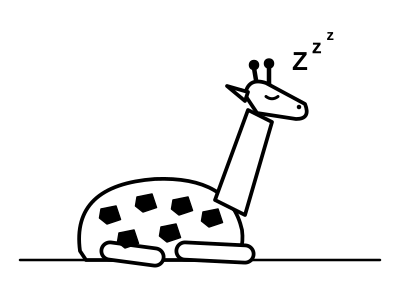
      • A giraffe sleeping.
    4. 4.
      A kangaroo's big back legs
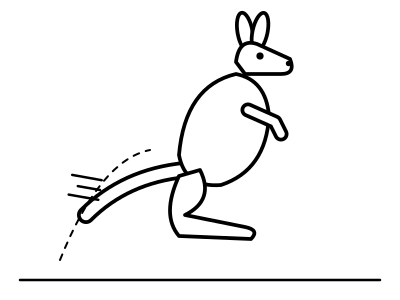
      • A kangaroo hopping.
      • A kangaroo eating.

    Circle yes or no.

    1. 5.
      Does a snail's shell keep its soft body safe?
      • yes
      • no
    2. 6.
      Does a fish use its fins to see?
      • yes
      • no
    3. 7.
      Does a hedgehog have sharp spines that keep hungry animals away?
      • yes
      • no
    4. 8.
      Draw an animal part that helps the animal move. Tell its job.

    Challenge (optional)

    A deer has eyes on the sides of its head. How could that help it stay safe?

    You need: crayons