1First Grade

    Crossing 100

    What are the characters like?

    Practice pages

    0 of 180 days complete · Saved on this device

    View all 180 days

    Math

    Crossing 100

    I can count past 100 to 120.

    Standards: 1.NBT.A.1

    Number practice (no timer)
    Doubles and make-10 facts (keep-up practice)
    Builds on
    Day 1 counting on from any number. One-minute check: "Count on from 96." (97, 98, 99, 100)

    New words

    • one hundred: the number 100, which is 10 tens

    You need

    • Hundred chart to 120: printed, or drawn as 12 rows of 10 boxes (1 to 10 in the top row, 111 to 120 in the bottom row)
    • 1 die
    • 2 game pieces (a coin and a button)
    • 8 paper cards with 103, 110, 115, 119, 120, 101, 107 and 112
    • Notebook and pencil
    1. Warm-Up · 5 min

      Fluency: doubles and make-10 facts. "6 + 6?" (12) "9 + 9?" (18) "3 and what make 10?" (7) Spaced review from Week 11: "Is 8 = 4 + 4 true or false?" (True)

    2. Mini-Lesson · 10 min

      Say: "Today we count past 100." Point to each number on the chart and count from 95: "96, 97, 98, 99, 100." Say: "Now there is more!" Point to the row after 100: "101, 102, 103, ... 110." Say it like this: "one hundred one, one hundred two." Keep going: "111, 112, ... 120." Then point to the top two rows (1 to 20) and the bottom two rows (101 to 120). Ask: "What do you notice?" (The numbers look the same after the 1 at the front: 1 and 101, 12 and 112, 20 and 120.) Say: "To read a number like 112, say 'one hundred' and then read the rest: one hundred twelve."

    3. Guided Practice · 10 min

      1) Your child counts out loud from 98 to 112 while pointing. 2) Your child counts from 105 to 120, then counts back from 103 to 97 while pointing (watch 101, 100, 99). 3) Hold up each paper card: 103, 110, 115, 119, 120, 101, 107, 112. Your child reads it and points to it on the chart. (one hundred three, one hundred ten, one hundred fifteen, one hundred nineteen, one hundred twenty, one hundred one, one hundred seven, one hundred twelve) If stuck, say: "Cover the 1 at the front with your finger. What number is left? Now say 'one hundred' and then that number."

    4. Play · 10 min

      Climb to 120. Both game pieces start on 90. Take turns rolling the die and moving that many boxes, saying every number out loud as you move. If you land on 100 or past it, read your number again slowly. The first piece to reach 120 wins; you do not need an exact roll. Play 2 games. Ask your child to catch you if you skip a number.

    5. Exit Ticket · 3-5 min

      Put the objects to one side but leave them on the table. Read each question aloud. Your child answers out loud, with objects or with a quick drawing. Check each answer together right away.

    Exit ticket

    1. Count from 97 to 105.
    2. Read this number: 112.
    3. What comes after 119?
    Answers
    1. 97, 98, 99, 100, 101, 102, 103, 104, 105
    2. One hundred twelve
    3. 120
    Watch for, and help or stretch
    Watch for
    Saying "200" or "1,000" after 100, or saying "100, 200, 300."
    Try
    Point to the row after 100 and read it together. Show that 101 looks like 1 with a 1 in front.
    Extra help
    Count from 95 to 110 only today, pointing to every number.
    Stretch
    Count back from 120 to 95. Watch the change from 101 to 100 to 99.

    At home (optional): Count from 95 to 120 out loud while doing jumping jacks or climbing stairs.
    Reading & Writing

    What are the characters like?

    I can describe a character using what they do and say.

    Standards: RL.1.3, RF.1.3.c, SL.1.1.b

    Phonics
    Vowel teams ai and ay (rain, tail, play, day)
    Sight words
    round, stop, take, thank, think
    Reading
    The Little Red Hen (traditional, public domain)
    Writing
    Opinion: I like… because… (naming the book and giving one reason) · Handwriting: spacing between words
    Builds on
    Retelling The Little Red Hen (Day 1). One-minute check: your child tells what the hen did with the wheat, in order. (plant, cut, take to the mill, bake)

    New words

    • character: a person or animal in a story
    • trait: a word that tells what a character is like, such as kind or lazy
    • evidence: a clue from the story that proves your idea

    You need

    • Character cards: Hen, Cat, Dog, Duck (draw or write on paper)
    • "The Little Red Hen"
    • Sight word cards
    • Printed "Hen and the Grain"
    1. Phonics & Word Work · 15 min

      ai and ay with blends. I do: read train, snail, stay. We do: read brain, grain, play, clay. You do: your child reads plain, stain, tray, sway, gray, trail, snail, braid. Read: "The snail is on the gray tray." "Stay and play!" Dictation: train, gray, snail, stay. If stuck, read the team first (ai, /ā/), then add the sounds around it: tr-ai-n.

    2. Sight Words · 5 min

      Review: round, stop, take, thank, think. Swat It: spread the cards on the table. Say a word; your child taps it with a clean spatula, reads it and spells it. Then your child calls a word for you to swat. Point out that thank and think differ by only one letter.

    3. Read-Aloud & Shared Reading · 15 min

      Reread part of "The Little Red Hen". Talk about how the hen acts compared with her friends. For each card, your child chooses one trait word and gives the clue that proves it. Hen: (Answers vary. Look for: hard-working or busy, because she did all the jobs herself.) Cat, Dog and Duck: (Answers vary. Look for: lazy or unhelpful, because they always said "Not I".) Practice building on talk (SL.1.1.b): you say "I think the hen is fair." Your child adds on: "I agree, because..." or "I think something different..." Keep the talk going for 3 turns each. If stuck, offer two words to choose from: "Was the duck helpful or lazy?" Then your child reads "Hen and the Grain" to you. Ask: "What did the friends want to do instead of helping?" (play and stay in the shade)

    4. Writing & Handwriting · 15 min

      Your child writes one character sentence with a clue: "The hen is busy. She did all the jobs." Handwriting (4 min): finger spaces. Your child copies "The cat did not plant." with a finger space between each word, then checks each space with a finger.

    5. Exit Ticket · 5 min

      Oral answers.

    Exit ticket

    1. Tell me one word that describes the hen and the clue that proves it.
    2. How was the cat different from the hen?
    3. Read these words: train, stay.
    Answers
    1. Answers vary. Look for: a trait (hard-working, busy, fair) and a clue (she did all the jobs herself).
    2. The cat did not help, but the hen did all the work.
    3. train, stay
    Watch for, and help or stretch
    Watch for
    Giving a trait with no clue from the story.
    Try
    Ask: "How do you know? What did the character do or say?"
    Extra help
    Give 4 trait words on cards (busy, lazy, fair, sleepy) for your child to match.
    Stretch
    Your child tells how the dog might feel at the end and why. (Answers vary. Look for: sad or sorry, because it did not get any bread.)

    At home (optional): Your child tells a family member about one character and gives a clue.

    Social Studies

    What is a map?

    I can tell what a map shows and how a map is different from a globe.

    Standards: D2.Geo.2.K-2

    Builds on
    Neighborhood walk (Unit 2). One-minute check: your child names 3 places in your community. (Sample: the park, the library, the store.)

    New words

    • map: a flat drawing of a place as seen from above
    • globe: a round model of Earth
    • bird's-eye view: how things look from high above, like a flying bird sees them

    You need

    • 2 or 3 maps: a zoo or park map, a road map, or a map on a phone
    • A globe, or a picture of a globe
    • A ball (any size)
    • A tabletop scene: a paper plate (pond), 3 blocks (houses), a toy car and a small toy tree
    • Paper
    • Crayons
    1. Warm-Up / Wonder · 5 min

      Spaced review: ask: "What does our government give everyone?" (parks, roads, libraries) Wonder question: "How do people find their way in a place they have never been?"

    2. Explore · 10–15 min

      Look at the maps together. Ask: "What do you see?" (roads, buildings, paths, colors) Say: "A map is a flat drawing of a place as if you were looking down from above, like a bird. That is called a bird's-eye view." Bird's-eye game: build the tabletop scene. First your child looks at it from the side, at eye level. Then your child stands next to the table and looks straight down on it. Ask: "What does a block look like from above?" (a square or a rectangle) "The plate?" (a circle) Your child draws the scene from above. Use the park or zoo map: ask: "What is next to the entrance?" "Is the playground near the pond or far from it?" (Answers depend on your map.) Say: "Maps show where places are and what is near what." Globe and map: hold the ball and the globe. Ask: "What shape is Earth?" (round, like a ball) Say: "A globe is a round model of Earth. A map is flat. A map is easier to fold and carry; a globe shows the real shape of Earth." If stuck on the bird's-eye view, have your child hold a toy car above the scene and pretend it is flying.

    3. Talk & Record · 5–10 min

      Your child finishes the bird's-eye drawing and adds a title. Sentence frame: "A map shows ___. A globe is ___."

    4. Exit Ticket · 3–5 min

      Ask the three questions aloud.

    Exit ticket

    1. What does a map show?
    2. How is a globe different from a map?
    3. From above, what shape does a block look like?
    Answers
    1. A place as seen from above, and where things are (what is near what).
    2. A globe is round like Earth; a map is flat.
    3. A square or a rectangle.
    Watch for, and help or stretch
    Watch for
    Drawing the scene from the side, with walls and roofs.
    Try
    Look straight down again together. Ask: "Can you see the walls from up here, or only the tops?"
    Extra help
    Use the tabletop scene only, with 2 blocks and the plate.
    Stretch
    Your child uses the park or zoo map to give you directions from the entrance to one spot.

    At home (optional): Your child finds a map at home, in the car or on a phone and shows you one thing on it.

    Practice

    Read each direction aloud. Your child works on the page; answers are in the grown-up view.

    Warm-up

    Remember?

    Math

    1. True or false? 3 + 5 = 4 + 4
    2. 19 - 2 = ? Count back.

    Reading & Writing

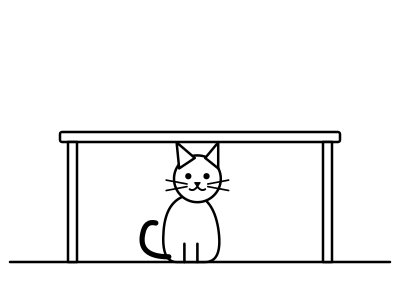
    1. A cat under a table.
    2. Could the sled go fast?

    Math · Week 13 Day 2

    I can count past 100 to 120.

    Look: 98 to 102

    1. Count: 98, 99, 100.
    2. Keep going: 101, 102. Say "one hundred one, one hundred two."
    3. After 100, the numbers look like 1, 2, 3 with a 1 in front.

    Write the missing numbers.

    1. 1.
      99, 100, ___, ___
    2. 2.
      108, 109, ___, ___
    3. 3.
      116, ___, 118, ___, 120
    4. 4.
      Count back: 102, 101, ___, ___

    Your grown-up says a number. Circle it.

    1. 5.
      one hundred four
      • 104
      • 140
      • 1004
    2. 6.
      one hundred eleven
      • 101
      • 111
      • 110
    3. 7.
      one hundred eighteen
      • 108
      • 118
      • 180

    Challenge (optional)

    Count on from 113 to 120. How many numbers did you say after 113?

    You need: hundred chart to 120 (optional)

    Reading & Writing · Week 13 Day 2

    I can describe a character using what they do and say.

    Look: describe a character

    1. Read "Gail the Snail" together.
    2. Say: "Gail did not stop in the rain. Gail said, I can make it! What Gail does and says shows she does not give up."
    3. Say: "We use what a character does and says to describe her."

    Gail the Snail

    Gail is a snail. Gail can not go fast. Rain hit Gail, but she did not stop. "I can make it!" said Gail. Gail got to the top of the pail.

    Read and circle. Then write a word that tells what Gail is like.

    1. 1.
      Gail is a ___.
      • snail
      • whale
    2. 2.
      Rain hit Gail, but she did not ___.
      • stop
      • play
    3. 3.
      "I can make it!" said ___.
      • Gail
      • the rain
    4. 4.
      Gail is ___.

    Read the word. Circle ai or ay.

    1. 5.
      mail
      • ai
      • ay
    2. 6.
      pay
      • ai
      • ay
    3. 7.
      bait
      • ai
      • ay
    4. 8.
      clay
      • ai
      • ay

    Challenge (optional)

    Did Gail get to the top?

    Social Studies · Week 13 Day 2

    I can tell what a map shows and how a map is different from a globe.

    Look: from above

    1. A map is a flat drawing of a place as seen from above, like a bird sees it.
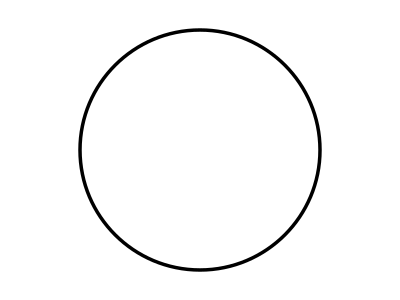
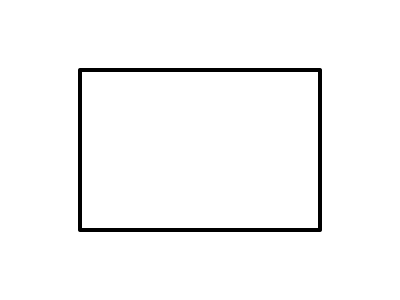
    2. From above, a round table looks like a circle, and a bed looks like a rectangle.
    3. A globe is a round model of Earth. A map is flat.

    Listen. Your child circles map or globe.

    1. 1.
      It is round like a ball.
      • map
      • globe
    2. 2.
      It is flat and can fold up.
      • map
      • globe
    3. 3.
      It shows the real shape of Earth.
      • map
      • globe
    4. 4.
      It can show the paths in a zoo.
      • map
      • globe

    Think about each thing seen from above. Circle the shape it makes.

    1. 5.
      a round rug
      • A circle.
      • A rectangle.
    2. 6.
      a door mat
      • A circle.
      • A rectangle.
    3. 7.
      a round pizza on a table
      • A circle.
      • A rectangle.
    4. 8.
      a book lying flat on a table
      • A circle.
      • A rectangle.

    Challenge (optional)

    Draw your kitchen table from above, with the plates on it.

    You need: crayons