1First Grade

    Teen numbers are a ten and some ones

    A story told by 'I'

    Practice pages

    0 of 180 days complete · Saved on this device

    View all 180 days

    Math

    Teen numbers are a ten and some ones

    I can show a teen number as one ten and some ones.

    Standards: 1.NBT.B.2.b

    Number practice (no timer)
    Ten and some more: teen facts (10 + 3, 13 - 3)
    Builds on
    Day 1 bundles of ten, and Week 9 making a ten. One-minute check: "10 + 5?" (15)

    New words

    • teen number: a number from 11 to 19; it is 1 ten and some ones

    You need

    • Double ten frame on paper
    • 20 counters (dried beans or buttons)
    • Straw bundles from Day 1 (or base-ten blocks)
    • Deck of cards ace to 9 (ace = 1)
    • Notebook and pencil
    1. Warm-Up · 5 min

      Fluency: ten and some more. "10 + 2?" (12) "10 + 9?" (19) "15 - 5?" (10) "18 - 8?" (10) Spaced review from Week 12: "? + 5 = 9." (4)

    2. Mini-Lesson · 10 min

      Say: "Every teen number is a ten and some ones." Fill the first ten frame with 10 counters. Put 3 on the second frame. Ask: "How many?" (13) Say: "13 is 1 ten and 3 ones." Write: 13 = 1 ten and 3 ones. Then write: 13 = 10 + 3. Show the same number with a straw bundle and 3 loose straws. Build 16 (1 ten and 6 ones; 10 + 6) and 19 (1 ten and 9 ones; 10 + 9) the same way. Point to the 1 in 16 and ask: "What does this 1 mean?" (1 ten, the full ten frame.)

    3. Guided Practice · 10 min

      Your child builds each number with a full ten frame plus extra ones and writes it two ways. 1) 11 (1 ten and 1 one; 10 + 1) 2) 14 (1 ten and 4 ones; 10 + 4) 3) 17 (1 ten and 7 ones; 10 + 7) 4) 18 (1 ten and 8 ones; 10 + 8) 5) 12 (1 ten and 2 ones; 10 + 2) If stuck, say: "Fill the first ten frame all the way first. Then put the rest on the second frame."

    4. Play · 10 min

      Flip and Build. Fill the first ten frame and leave it full the whole game. Take turns flipping a card (ace to 9). Put that many counters on the second frame. Say the teen number three ways: "17. 1 ten and 7 ones. 10 + 7 = 17." The biggest you can make is 19. Clear the second frame after each turn. Play 8 rounds.

    5. Exit Ticket · 3-5 min

      Put the objects to one side but leave them on the table. Read each question aloud. Your child answers out loud, with objects or with a quick drawing. Check each answer together right away.

    Exit ticket

    1. Show 16 on the ten frames. How many tens and ones?
    2. 10 + 4 = ?
    3. What does the 1 in 18 mean?
    Answers
    1. 1 ten and 6 ones
    2. 14
    3. 1 ten (10 ones)
    Watch for, and help or stretch
    Watch for
    Thinking the 1 in a teen number means 1 counter.
    Try
    Point to the full ten frame and say: "This is the 1. One whole ten."
    Extra help
    Use only 11 to 15 and say the ten frame count together each time.
    Stretch
    Ask: "What number is 1 ten and 0 ones?" (10) "What about 2 tens and 0 ones?" (20)

    At home (optional): Use an egg carton or ten small objects: make a full ten and add some more. Your child says the teen number and "1 ten and __ ones."
    Reading & Writing

    A story told by 'I'

    I can tell when a character tells the story using I.

    Standards: RL.1.6, RL.1.3, RF.1.3.c

    Phonics
    Vowel teams ee and ea (feet, green, seat, read)
    Sight words
    them, then, when, walk, an
    Reading
    The Three Billy Goats Gruff (traditional, public domain); original first-person retelling "I Am the Troll"
    Writing
    Opinion: stating an opinion and giving two reasons · Handwriting: letters sitting on the line
    Builds on
    Who is telling the story (Day 1). One-minute check: ask "Who is the narrator?" (the voice that tells the story)

    New words

    • first person: a story told by a character using I and me
    • point of view: who is telling the story and how they see it

    You need

    • "I Am the Troll" (in the lesson)
    • "The Three Billy Goats Gruff"
    • Highlighter or crayon
    • Sight word cards
    • Printed "I Am Lee"
    1. Phonics & Word Work · 15 min

      ee and ea with digraphs. I do: read sheep, teeth, peach. We do: read cheek, beach, wheat, sheet. You do: your child reads teach, cheep, reach, wheel, sheet, each, teeth, sheep. Read: "I need a peach." "Lee can teach the sheep." Dictation: sheep, teeth, beach, peach. If stuck, box the digraph and circle the team, then read part by part: sh-ee-p.

    2. Sight Words · 5 min

      Review: them, then, when, walk, an. Swat It: spread the cards on the table. Say a word; your child taps it with a clean spatula, reads it and spells it. Then your child calls a word for you to swat. Point out that them, then and when look alike; check the first and last letters.

    3. Read-Aloud & Shared Reading · 15 min

      Read "I Am the Troll" below. Then show your child the first two sentences and have your child highlight the word I each time it appears there. (3 times) Ask: "Who is I in this story?" (the troll) Ask: "Who told yesterday's version?" (a narrator who was not a character) Ask: "How does the troll feel at the end? How do you know?" (Answers vary. Look for: wet, sorry or ready to share the bridge, because he says next time he will let the goats cross.) Ask: "In I Am Lee, who is I?" (Lee the sheep) I Am the Troll (an original retelling told by the troll; you read it aloud) I am the troll. I live under the bridge, and I like it quiet. One morning I heard trip, trap, trip, trap. I jumped up and said, "Who is that tripping over my bridge?" It was a tiny goat. I was hungry, but he said, "Wait for my bigger brother." So I waited. Soon I heard trip, trap again. A middle-sized goat! He told me to wait for his big brother. So I waited again. Then I heard TRIP, TRAP, so loud that my bridge shook. I climbed up to look. There stood the biggest goat I had ever seen. Before I could say a word, he lowered his horns, and SPLASH! I landed in the river. I am drying off now. Next time, I think I will just let the goats cross my bridge.

    4. Writing & Handwriting · 15 min

      Your child writes one sentence as one of the goats, using I: "I am the big goat. I am not afraid." Handwriting (4 min): letters sitting on the line. Your child writes the sentence and checks that only tail letters hang below the line.

    5. Exit Ticket · 5 min

      Oral answers.

    Exit ticket

    1. In I Am the Troll, who is telling the story?
    2. What word tells you a character is telling the story?
    3. Read this sentence: "Lee can teach the sheep."
    Answers
    1. the troll
    2. I (also me or my)
    3. Lee can teach the sheep.
    Watch for, and help or stretch
    Watch for
    Thinking I means the reader (your child) instead of a character.
    Try
    Ask: "Who is talking here? Is it you, or someone in the story?"
    Extra help
    Read I Am the Troll a second time and your child taps the table every time you read I.
    Stretch
    Your child retells one part of the tale as the littlest goat, using I.

    At home (optional): Your child tells a family member about the day, then tells it again as a pet or a toy would, using I.

    Science

    Plant outside parts

    I can name plant parts and tell what they do.

    Standards: 1-LS1-1

    Builds on
    Animal parts and their jobs (Week 13). One-minute check: your child tells one animal part and its job with the frame "The ___ helps the animal ___."

    New words

    • root: the part of a plant that grows under the ground
    • stem: the part that holds a plant up and carries water to the leaves
    • leaf: the flat green part that catches sunlight to make food for the plant

    You need

    • A whole plant with its roots: a weed the grown-up pulls from the yard (only a plant you know is safe; never poison ivy, poison oak or any plant you do not know), or a store-bought potted herb or green onion with roots
    • Magnifying glass
    • Paper towel
    • A plastic tray or a paper plate
    • A picture of a rose stem with thorns (picture only)
    • Notebook
    • Crayons
    1. Warm-Up / Wonder · 5 min

      Spaced review: ask: "Which beak tool worked for scooping water?" (the spoon) Wonder question: "Plants can't walk or eat with a mouth. What outside parts help a plant live?"

    2. Explore · 10–15 min

      Lay the plant on the paper towel on the tray. Your child looks at it with the magnifying glass from bottom to top. Name each part and ask your child to guess its job first, then tell them. Roots: "What do you notice?" (thin, stringy parts, maybe with dirt) Say: "Roots hold the plant in the ground and take in water." If the weed came from the yard, ask: "Was it hard to pull out?" (Answers vary.) That was the roots holding on. Stem: "Roots hold the plant down, and the stem holds the plant up and carries water to the leaves." Leaves: "Leaves catch sunlight. The plant uses the light to make its own food." Flowers, if any: "Flowers make seeds, so new plants can grow." Thorns: look at the rose picture only. Ask: "What could sharp points on a stem do?" (keep animals from eating the plant) Then your child gently pulls the plant apart into roots, stem and leaves and lays the parts in a row on the towel. Wash hands after. If stuck guessing a job, ask: "What part of an animal is like this one?" (Roots hold on like claws; a stem holds the plant up like legs.)

    3. Talk & Record · 5–10 min

      Your child draws the plant and labels roots, stem and leaves, with one job written or drawn next to each. Sentence frame: "The ___ helps the plant ___."

    4. Exit Ticket · 3–5 min

      Ask the three questions aloud.

    Exit ticket

    1. What do roots do for a plant?
    2. What do leaves do?
    3. Name one plant part that keeps animals from eating the plant.
    Answers
    1. They hold the plant in the ground and take in water.
    2. They catch sunlight to make food for the plant.
    3. Thorns, spines or prickles (sharp points).
    Watch for, and help or stretch
    Watch for
    Thinking plants eat dirt through their roots.
    Try
    Say: "Roots take in water from the dirt. The leaves use sunlight to make the plant's food." Your child points to each part as you say it.
    Extra help
    Name and draw only roots, stem and leaves.
    Stretch
    Your child compares 2 plants, such as a weed and a green onion, and tells one part that looks different and one that looks the same.

    At home (optional): On a walk, your child finds a plant and points to its stem and leaves, and tells what each one does. (Look, don't pick, unless a grown-up says the plant is safe.)

    Practice

    Read each direction aloud. Your child works on the page; answers are in the grown-up view.

    Warm-up

    Remember?

    Math

    1. What number goes in the blank? 14 - ___ = 8
    2. 9 + 3 = ? Make a ten first.

    Reading & Writing

    Math · Week 14 Day 2

    I can show a teen number as one ten and some ones.

    Look: 15

    1. Fill the first ten frame: 10.
    2. Put 5 counters on the second frame.
    3. 15 is 1 ten and 5 ones. 15 = 10 + 5.

    Write the teen number.

    1. 1.
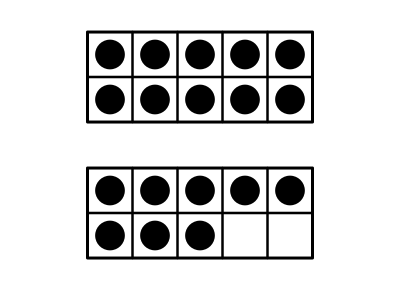
      Two ten frames; the first is full and the second has 8 counters.
    2. 2.
      10 + 3 = ___
    3. 3.
      1 ten and 1 one is ___
    4. 4.
      10 + 9 = ___

    Write how many tens and ones.

    1. 5.
      14 is ___ ten and ___ ones.
    2. 6.
      17 = 10 + ___
    3. 7.
      12 is ___ ten and ___ ones.

    Challenge (optional)

    Write 15 two ways: in tens and ones, and as 10 + ___.

    You need: two ten frames and 20 counters (optional)

    Reading & Writing · Week 14 Day 2

    I can tell when a character tells the story using I.

    Look: a character who says I

    1. Read "I Am Dee" together.
    2. Say: "Here Dee tells the story. When a character tells the story, we see the word I."
    3. Circle each I in the first two sentences together.

    I Am Dee

    I am Dee the sheep. I need a treat. I see a seal at the sea. I can swim with the seal. I feel glad!

    Read and circle.

    1. 1.
      I am Dee the sheep. I need a treat.
    2. 2.
      Who is I?
      • Dee
      • the seal
    3. 3.
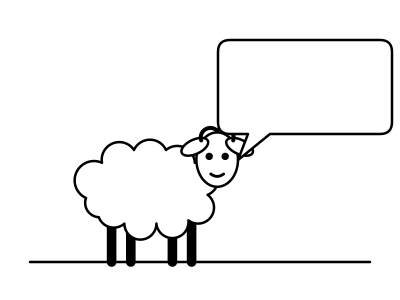
      Dee the sheep with an empty speech bubble. What would Dee say?
      • I see the sea.
      • Dee can see the sea.

    Read the word. Circle the two letters that make one sound at the start. Then finish the last sentence.

    1. 4.
      cheek
    2. 5.
      wheat
    3. 6.
      sheet
    4. 7.
      I am the seal. I ___.

    Challenge (optional)

    Dee said, "I feel ___!"

    Science · Week 14 Day 2

    I can name plant parts and tell what they do.

    Look: Plant parts and their jobs

    1. Look at a bean plant from the bottom up.
    2. Roots hold it in the dirt and take in water. The stem holds it up.
    3. Leaves catch sunlight so the plant can make food.

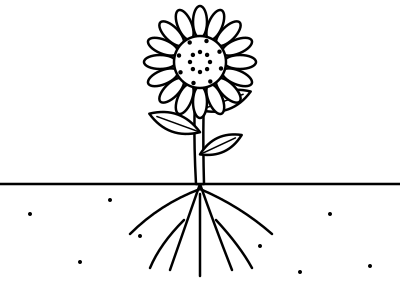
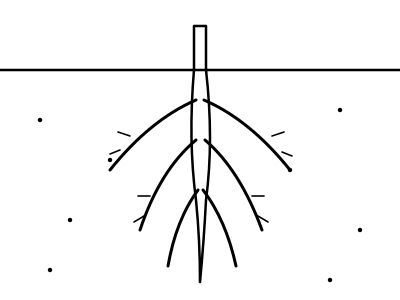
    A sunflower with its roots showing under the ground. Make a mark on each part your grown-up names.
    1. 1.
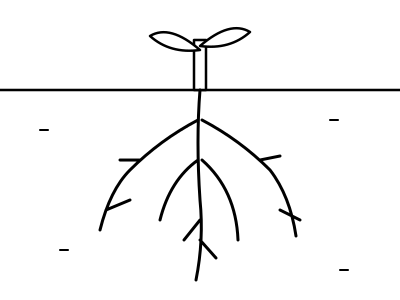
      Mark the roots.
    2. 2.
      Mark the stem.
    3. 3.
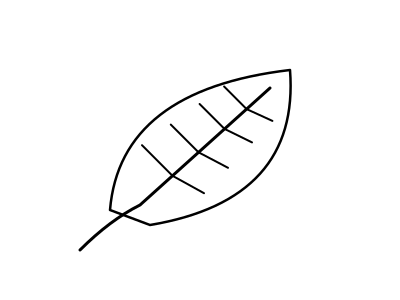
      Mark a leaf.
    4. 4.
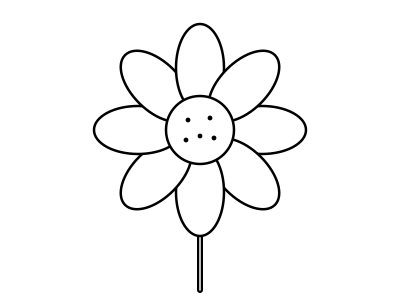
      Mark the flower.

    Circle the part that does the job.

    1. 5.
      This part catches sunlight to make food.
      • A root.
      • A leaf.
    2. 6.
      This part holds the plant in the ground.
      • Roots.
      • A flower.
    3. 7.
      This part makes seeds, so new plants can grow.
      • A stem.
      • A flower.
    4. 8.
      This part carries water up to the leaves.
      • A stem.
      • A leaf.

    Challenge (optional)

    A tree trunk is a very big stem. What jobs does it do?