1First Grade

    Lesson + weekly check: tens and ones

    Share and check: ee and ea

    Practice pages

    0 of 180 days complete · Saved on this device

    View all 180 days

    MathWeekly check

    Lesson + weekly check: tens and ones

    I can show a number as tens and ones.

    Standards: 1.NBT.B.2, 1.NBT.B.2.a, 1.NBT.B.2.b, 1.NBT.B.2.c

    Number practice (no timer)
    Ten and some more: teen facts (10 + 3, 13 - 3)
    Builds on
    Days 1 to 4: bundles of ten, teen numbers, decade numbers, and tens and ones. One-minute check: "What does the 6 in 63 mean?" (6 tens, or 60)

    New words

    • tens and ones: the two parts of a two-digit number

    You need

    • 9 straw bundles of 10 and 10 loose straws (or base-ten blocks)
    • 12 match cards made from paper squares: 37, 3 tens and 7 ones, 73, 7 tens and 3 ones, 15, 1 ten and 5 ones, 50, 5 tens and 0 ones, 26, 2 tens and 6 ones, 62, 6 tens and 2 ones
    • The stored Week 14 check and its answer key
    • Notebook and pencil
    1. Warm-Up · 5 min

      Fluency: ten and some more. "10 + 4?" (14) "19 - 9?" (10) Spaced review from Week 11: "Is 3 + 4 = 4 + 3 true or false?" (True)

    2. Short Lesson: Review Game · 10 min

      Tens and Ones Match. Lay the 12 match cards face down in 3 rows of 4. Take turns flipping 2 cards. If they show the same number (such as 37 and 3 tens and 7 ones), say why and keep them. If not, turn them back over. Watch out for the tricky pairs 37 and 73, and 26 and 62. Play until all 6 pairs are found. If stuck, say: "Build the number with bundles. Then look for the card that tells what you built."

    3. Weekly Check · 15 min

      Give the stored Week 14 check. The printed check has 8 items. It covers these goals: (1) I can make a ten from ten ones; (2) I can show a teen number as one ten and some ones; (3) I can show 10, 20, 30 ... 90 as tens and 0 ones; (4) I can tell how many tens and ones are in a two-digit number. There is no time limit. If your child is stuck, say only: "Build the tens first." Do not give the answer. Score it with the answer key. Secure: 7 of 8 correct. If the check is secure, start Week 15. If it is not, first do the reteach step on the check page for each group of items missed, then start Week 15.

    4. Exit Ticket · 3-5 min

      After the check, ask these two questions. Then go over any missed check items together.

    Exit ticket

    1. What does the 5 in 52 mean?
    2. Build 19. How many tens and ones?
    Answers
    1. 5 tens, or 50
    2. 1 ten and 9 ones
    Watch for, and help or stretch
    Watch for
    Saying the 5 in 52 means 5.
    Try
    Build 52. Point to the 5 bundles: "These are the 5. How many straws are in them?" (50)
    Extra help
    Let your child use the bundles for the explanation item and note it on the check.
    Stretch
    After the check, your child shows 52 with a quick picture and with words.

    At home (optional): Play Tens and Ones Match with a family member.
    Reading & WritingWeekly check

    Share and check: ee and ea

    I can read ee and ea words and say who is telling a story.

    Standards: RF.1.3.c, RL.1.6, RF.1.3.g

    Phonics
    Vowel teams ee and ea (feet, green, seat, read)
    Sight words
    them, then, when, walk, an
    Reading
    The Three Billy Goats Gruff (traditional, public domain); original first-person retelling "I Am the Troll"
    Writing
    Opinion: stating an opinion and giving two reasons · Handwriting: letters sitting on the line
    Builds on
    This week's ee and ea work and who is telling the story. One-minute check: warm up with feet, seat and green.

    New words

    • speaker: the person or character who is talking

    You need

    • Word cards: ee and ea words (written in step 4)
    • A short new passage with dialogue (written in step 4)
    • Sight word cards: them, then, when, walk, an
    • Recording sheet
    1. Review Game · 10 min

      Trip, Trap Bridge: lay 10 word cards in a line like a bridge: feet, green, seat, read, sheep, beach, tree, leaf, need, team. Your child walks across saying "trip, trap" and reads each card. You are the troll at the end: your child reads the last card to cross. If stuck on a word during the game (not during the check), cover all but the first sound, say it together, then uncover the rest and blend.

    2. Sight Words · 5 min

      Review: them, then, when, walk, an, round, stop, take, thank, think. Memory Match: make two cards for each of three words. Turn them face down and play Memory; read the word on every card turned over. Mix this week's and last week's words.

    3. Weekly Check · 15 min

      The printed check has 8 items. It covers these goals: (1) I can read ee and ea words; (2) I can read the sight words them, then, when, walk and an; (3) I can tell who is telling a story: a character or the narrator; (4) I can use the right end mark for telling, asking and exclaiming sentences; (5) I can give two reasons for my opinion. Give no hints. Record each answer. Secure: 8 of the 10 words in items 1 and 2, 4 of the 5 sight words, 2 of items 4 to 6, and items 7 and 8. For any part that is not yet secure, use the matching reteach step on the check page next week.

    4. Share & Listen · 10 min

      Your child reads the smartest-goat opinion to a family member, who asks one question: "Why do you think that?"

    5. Handwriting · 5 min

      Your child copies "The sheep can eat." with every letter sitting on the line and the p hanging below. Circle the best word.

    6. Exit Ticket · 5 min

      Talk about the week.

    Exit ticket

    1. Read a word with ee and a word with ea.
    2. How can you tell when a character is talking?
    Answers
    1. Answers vary. Look for: correct reads such as feet and seat.
    2. There are quotation marks around the words.
    Watch for, and help or stretch
    Watch for
    Reading walk as /w/ /a/ /l/ /k/.
    Try
    Review the heart part (al says /aw/; the l is silent) and read "I walk to the creek." three times.
    Extra help
    Before items 4 to 6, show your child one pair of quotation marks in a familiar story.
    Stretch
    Your child reads 3 bonus oa words (boat, road, goat) to preview next week. Do not score them.

    At home (optional): Read "I Am Lee" to a family member.

    Social StudiesWeekly check

    Where in the world am I?

    I can tell my place from home to town, state, country, continent and world.

    Standards: D2.Geo.3.K-2, D2.Geo.2.K-2

    Builds on
    Map my neighborhood (Day 3). One-minute check: ask "What 3 parts does a good map have?" (title, compass rose, key)

    New words

    • state: one of the 50 parts of our country, each with its own government
    • country: a land with its own government and borders, like the United States
    • continent: one of Earth's 7 very large areas of land

    You need

    • 6 plastic or paper nesting cups (or 6 paper circles of different sizes)
    • 6 cards to fit the cups: home, town or city, state, country, continent, world (Earth)
    • A map app or online map you can zoom in and out
    • A globe or a world map
    • Crayons
    • Stapler (for the grown-up)
    1. Warm-Up / Wonder · 5 min

      Spaced review: ask: "Which map shows a bigger place, the room map or the street map?" (the street map) Wonder question: "If we zoomed out from our home, what would we see?"

    2. Review Game · 10 min

      Zoom out. Start the map app on your home. Zoom out step by step and name each place: our street, our town or city, our state, our country (the United States), our continent (North America) and the whole world. Note for families: if you live in Hawaii, Guam, American Samoa or the Northern Mariana Islands, your islands are in the Pacific Ocean rather than on a continent, so make that card "Pacific Ocean." Puerto Rico and the U.S. Virgin Islands are islands in the Caribbean Sea and are usually counted as part of North America. Your child fills in each card with the real name and draws one thing that place has: home (my family), town (our park), state (a mountain, a river or a beach), country (the flag), continent (other countries, such as Canada and Mexico), world (oceans). Put each card in its cup and nest the cups, smallest inside. Find the state and the country on the globe or world map. If stuck ordering, ask: "Which one fits inside the other?"

    3. Check · 10 min

      Give the Week 14 social studies check. The check items are on the Week 14 check page; do not show them ahead of time. Read each part aloud. Your child answers by talking, pointing, showing with the real materials or drawing. You write down their words exactly. It is not timed; stop and finish later if your child is tired. Make a check mark next to each part your child shows on their own. The printed check has 9 items. It covers these goals: (1) I can use a compass rose to find north, south, east and west; (2) I can make a map of my street with a title, key and compass rose; (3) I can tell my place from home to town, state, country, continent and world. This week the check is a sorting task. Mix the 6 cards. Your child orders them from smallest to biggest and says each name, then points to the state and the country on the globe or world map. Look for: the order home, town, state, country, continent, world (or ocean for Pacific islands); the real names of your town, state and country; and pointing to the right places. Secure: 7 of 9 correct, with at least one right on each goal. If the check is not yet secure, use the reteach step on the check page that matches the items missed.

    4. Exit Ticket · 3–5 min

      Ask the three questions aloud.

    Exit ticket

    1. What is the name of our state?
    2. Which is bigger: a state or a country?
    3. What continent is the United States on?
    Answers
    1. Answers vary. Look for: your real state (or your territory, such as Puerto Rico or Guam).
    2. A country (the United States has 50 states).
    3. North America. (Hawaii is a state in the Pacific Ocean, not on the continent.)
    Watch for, and help or stretch
    Watch for
    Thinking a town is bigger than a state because it feels big.
    Try
    Zoom out on the map again and watch the town become a tiny dot inside the state.
    Extra help
    Use 4 cards: home, town, country, world.
    Stretch
    Your child staples the cards into a "Me on the Map" book, smallest place first, and adds one fact on each page.

    At home (optional): Your child says their full "address in the world" to a family member: home, town, state, country, continent, world.

    Practice

    Read each direction aloud. Your child works on the page; answers are in the grown-up view.

    Warm-up

    Remember?

    Math

    1. What number goes in the blank? ___ - 4 = 9
    2. Jada has 1 ribbon. Theo has 6 ribbons. How many fewer ribbons does Jada have?

    Reading & Writing

    1. the, to

    Math · Week 14 check

    Weekly check

    How to give it: Read each item aloud. Untimed. Your child builds each number with straw bundles or cube trains, then writes the tens and ones. If stuck, say only: "Build the tens first." Do not give the answer.

    Secure when: 7 of 8 correct

    • I can make a ten from ten ones.
    • I can show a teen number as one ten and some ones.
    • I can show 10, 20, 30 ... 90 as tens and 0 ones.
    • I can tell how many tens and ones are in a two-digit number.
    1. 1.
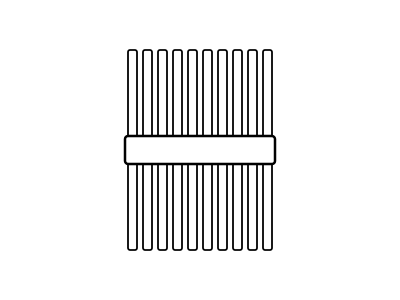
      20 loose cubes. How many trains of ten can you make?
    2. 2.
      1 bundle of 10 straws. How many straws are in the bundle?
    3. 3.
      Build 15. Write the tens and ones.
    4. 4.
      10 + 2 = ___
    5. 5.
      Build 80. Write the tens and ones.
    6. 6.
      Build 43. Write the tens and ones.
    7. 7.
      Build 67. Write the tens and ones.
    8. 8.
      What does the 3 in 38 mean?

    Reading & Writing · Week 14 check

    Weekly check

    How to give it: Give the check after the review game, in a quiet spot, one part at a time. It is untimed; take a stretch break between parts if needed. Read every direction aloud, but do not read the words or story for your child. Do not help except to say "Try your best" or "Skip it." Mark each item right or wrong. Items 1 and 2 (Part 1): your child reads the ee and ea words aloud. Item 3 (Part 2): your child reads the 5 sight words. Part 3: your child reads "The Seal and the Bee" aloud and points to where a character is talking and where the narrator is telling (items 4 to 6). Then read the directions for items 7 and 8.

    Secure when: 8 of the 10 words in items 1 and 2, 4 of the 5 sight words, 2 of items 4 to 6, and items 7 and 8.

    • I can read ee and ea words.
    • I can read the sight words them, then, when, walk and an.
    • I can tell who is telling a story: a character or the narrator.
    • I can use the right end mark for telling, asking and exclaiming sentences.
    • I can give two reasons for my opinion.

    The Seal and the Bee

    A seal sat by the sea. A bee came to the seal. "Can I sit on you?" said the bee. "Yes, but do not sting me!" said the seal. The bee sat on the seal in the heat.

    1. 1.
      peel jeep weep heat meal
    2. 2.
      bead leak peek beam reef
    3. 3.
      them then when walk an
    4. 4.
      "Can I sit on you?"
      • the bee
      • the seal
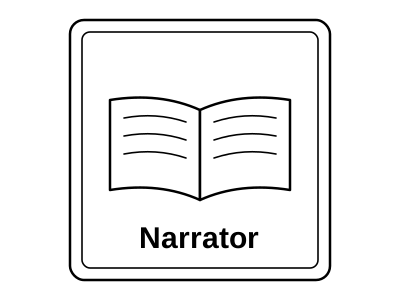
      • The Narrator card.
    5. 5.
      A seal sat by the sea.
      • the bee
      • the seal
      • The Narrator card.
    6. 6.
      "Yes, but do not sting me!"
      • the bee
      • the seal
      • The Narrator card.
    7. 7.
      Can a bee sting ___
      • .
      • ?
      • !
    8. 8.
      I think a seal is the best. It can swim. It can play in the sea.

    Social Studies · Week 14 check

    Weekly check

    How to give it: Read every question and choice aloud, and point to each picture as you name it. This week the check is a sorting task. Your child answers by talking, pointing, circling, acting it out or drawing; write their words exactly on the line. It is not timed; stop and finish later if your child is tired. Do not show the page ahead of time. Mix the 6 place cards before item 5. Have the globe or world map ready for item 9. Make a check mark next to each part your child shows on their own.

    Secure when: 7 of 9 correct, with at least one right on each goal

    • I can use a compass rose to find north, south, east and west.
    • I can make a map of my street with a title, key and compass rose.
    • I can tell my place from home to town, state, country, continent and world.
    1. 1.
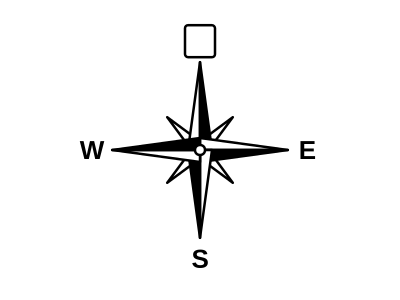
      A compass rose with a box over the letter at the top. Which letter goes in the box?
      • N
      • E
      • S
      • W
    2. 2.
      Which letter is across from W on the compass rose?
      • N
      • E
      • S
    3. 3.
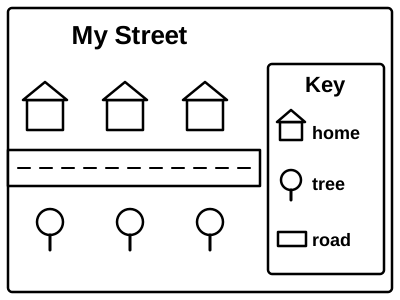
      A map with a title and a key but no compass rose. Which map part is missing?
    4. 4.
      On a map, where do you look to find out what a symbol means?
    5. 5.
      Put the 6 cards in order from smallest to biggest. Say each name.
    6. 6.
      What is the name of our country?
    7. 7.
      Which state is our town in?
    8. 8.
      Our country is on a continent. What is its name?
    9. 9.
      Point to our state and our country on the globe or world map.