1First Grade

    A bundle of ten

    Who is telling the story?

    Practice pages

    0 of 180 days complete · Saved on this device

    View all 180 days

    Math

    A bundle of ten

    I can make a ten from ten ones.

    Standards: 1.NBT.B.2.a

    Number practice (no timer)
    Ten and some more: teen facts (10 + 3, 13 - 3)
    Builds on
    Week 13 counting a collection by putting 10 in each cup. One-minute check: "3 cups of 10 and 2 more?" (32)

    New words

    • ten: a bundle or group of 10 ones
    • ones: single things that are not in a group of ten
    • bundle: things tied together in a group

    You need

    • 40 drinking straws (or craft sticks)
    • 4 rubber bands or hair ties
    • 60 linking cubes, 30 for each player (or 60 beans and 6 small cups)
    • 1 die
    • Notebook and pencil
    1. Warm-Up · 5 min

      Fluency: ten and some more. "10 + 3?" (13) "10 + 7?" (17) "13 - 3?" (10) "16 - 6?" (10) Spaced review from Week 13: "Count on from 88 to 92." (89, 90, 91, 92)

    2. Mini-Lesson · 10 min

      Say: "Today we make a ten." Count 10 straws one at a time with your child. Put a rubber band around them. Say: "Ten ones make one ten." Ask: "How many straws are in the bundle?" (10) "How many bundles?" (1) Say: "One ten is the same as 10 ones." Make a second bundle together. Ask: "How many straws now?" (20) "How many tens?" (2) Snap 10 cubes into a train and say: "This train is one ten too." Ask: "If I break the train apart, how many ones?" (10)

    3. Guided Practice · 10 min

      1) Count out 23 straws. Your child makes bundles of 10 and says: "2 tens and 3 ones. 23." 2) Count out 30 straws. (3 tens and 0 ones. 30.) 3) Give 16 loose cubes. Your child snaps a train of 10. (1 ten and 6 ones. 16.) After each, ask: "How many tens? How many ones? How many in all?" If stuck, say: "Count out 10 first, one at a time, and put them aside. Then bundle them."

    4. Play · 10 min

      Trade Up. Take turns rolling the die and taking that many loose cubes. When you have 10 loose cubes, snap them into a train and say "Trade!" After each turn, say your total in tens and ones: "1 ten and 4 ones. 14." The first player to make 3 trains of ten wins. Play 2 games.

    5. Exit Ticket · 3-5 min

      Put the objects to one side but leave them on the table. Read each question aloud. Your child answers out loud, with objects or with a quick drawing. Check each answer together right away.

    Exit ticket

    1. How many ones are in one ten?
    2. I have 3 bundles of 10 straws. How many straws is that?
    3. You have 15 cubes. How many trains of ten can you make? How many are left?
    Answers
    1. 10
    2. 30
    3. 1 train of ten and 5 left over
    Watch for, and help or stretch
    Watch for
    Counting a bundle as 1 instead of 10, such as saying 2 bundles and 3 straws is 5.
    Try
    Take off the rubber band and count the straws. Then put it back on and say: "Still 10. One ten."
    Extra help
    Work with numbers up to 20 and count every straw in each bundle together.
    Stretch
    Make 4 bundles and 7 loose straws. Your child writes the number (47) and says it in tens and ones.

    At home (optional): Bundle 10 crayons, spoons or pencils with a hair tie. Your child tells a family member: "Ten ones make one ten."

    Reading & Writing

    Who is telling the story?

    I can tell who is telling the story at different points.

    Standards: RL.1.6, RF.1.3.c, RF.1.3.g

    Phonics
    Vowel teams ee and ea (feet, green, seat, read)
    Sight words
    them, then, when, walk, an
    Reading
    The Three Billy Goats Gruff (traditional, public domain); original first-person retelling "I Am the Troll"
    Writing
    Opinion: stating an opinion and giving two reasons · Handwriting: letters sitting on the line
    Builds on
    Describing characters (Week 13). One-minute check: your child tells one trait of the little red hen and a clue.

    New words

    • narrator: the voice that tells the story
    • dialogue: the words a character says, shown inside quotation marks
    • quotation marks: marks that show the exact words someone says

    You need

    • "The Three Billy Goats Gruff" (in the lesson)
    • Puppet sticks: 3 goats, 1 troll and 1 Narrator card (drawings taped to spoons or craft sticks)
    • ee and ea word cards
    • Sight word cards: them, then, when, walk, an
    • Printed "I Am Lee" (in the lesson)
    • Lined handwriting paper
    1. Phonics & Word Work · 15 min

      I do: write feet and underline ee. Say: "ee is a team. It says /ē/, the name of e." Read /f/ /ē/ /t/, feet. Then write seat and underline ea. Say: "ea is another team that says /ē/." We do: read bee, meet, eat, sea. You do: your child reads green, sheep, tree, need, leaf, beach, team, read. Read: "I see a bee in the tree." "We need to eat." Dictation: feet, seat, green, eat. If stuck, frame the team with two fingers and say /ē/, then blend.

    2. Sight Words · 5 min

      Introduce this week's words with see-say-spell-write. For each card: Say: "This word is ___. Say it with me." Your child reads it, spells it aloud while tapping each letter, then writes it once while saying each letter, and reads it again. Draw a small heart over any tricky part, the part we must learn by heart: them (every sound is one you know: th, /e/, /m/); then (every sound is one you know: th, /e/, /n/); when (every sound is one you know: wh, /e/, /n/); walk (al says /aw/; the l is silent); an (every sound is one you know: /a/ /n/). Finish by reading all five cards in mixed order twice. If stuck, cover the tricky part, read the rest together, then uncover it and say the whole word.

    3. Read-Aloud & Shared Reading · 15 min

      Read "The Three Billy Goats Gruff" below. Each time a goat or the troll speaks, your child holds up that puppet. When no one is speaking, your child holds up the Narrator card. Say: "The narrator tells the story but is not one of the characters." Ask: "Who is speaking when we hear Who is that tripping over my bridge?" (the troll) Ask: "Who tells us that the goats wanted to eat the grass?" (the narrator) Ask: "How do quotation marks help us?" (They show the exact words a character says.) The Three Billy Goats Gruff (a traditional tale from Norway, retold; you read it aloud) Three billy goats, all named Gruff, wanted to cross a bridge to eat the sweet green grass on the hill. Under the bridge lived a grumpy troll. First the littlest goat went trip, trap, trip, trap over the bridge. "Who is that tripping over my bridge?" roared the troll. "It is only me, the littlest Billy Goat Gruff," said the goat in a tiny voice. "Wait for my bigger brother. He is much bigger than me." So the troll let him pass. Then the middle goat went trip, trap, trip, trap. "Who is that tripping over my bridge?" roared the troll. "It is me, the middle Billy Goat Gruff. Wait for my big brother. He is much bigger than me." So the troll let him pass. Then the big goat went TRIP, TRAP, TRIP, TRAP. "Who is that tramping over my bridge?" roared the troll. "It is I, the big Billy Goat Gruff!" said the goat in a deep voice. The troll climbed up, but the big goat lowered his horns and tossed the troll right off the bridge and into the river. Then all three goats ate the sweet green grass on the hill until they were fat and happy. Then echo-read this week's decodable story: you read a line, your child reads it back. I Am Lee I am Lee. I am a sheep. When the sun is up, I walk to the creek. I need to eat, and I need a drink. At the creek I see a bee on a weed. I do not eat that weed. I let the bee keep it. Then I see my pal Dean and my pal Jean. I sit with them. We eat a green leaf. It is sweet. I see an ant. The ant has a seed. At the end of the day, I sleep. I dream a sweet dream. Ask: "Who is telling this story?" (Lee, the sheep) "How do you know?" (Lee says I am Lee. I am a sheep.)

    4. Writing & Handwriting · 15 min

      Talk first: "Which goat would you want to be? Why?" Your child says an opinion with two reasons, then writes the opinion sentence: "I would want to be the ___ goat." Handwriting (4 min): letters sitting on the line. Say: "Every letter sits on the line, like a goat standing on the bridge. Tail letters (g, j, p, q, y) hang below." Your child copies "The sheep is big." and checks that every letter sits on the line; only the p and the g hang below.

    5. Exit Ticket · 5 min

      Oral answers.

    Exit ticket

    1. Read these words: feet, seat.
    2. Who tells the story when no character is talking?
    3. Who said: Who is that tripping over my bridge?
    Answers
    1. feet, seat
    2. the narrator
    3. the troll
    Watch for, and help or stretch
    Watch for
    Reading ea in seat as two sounds (se-at).
    Try
    Cover one team letter with a finger, then uncover it: "Two letters, one sound: /ē/."
    Extra help
    Use only 2 puppets today (troll and Narrator). Your child holds up the troll for any line in quotation marks the troll says.
    Stretch
    Your child rereads "I Am Lee" alone and finds 5 ee words and 4 ea words. (ee: Lee, sheep, creek, need, see, bee, weed, keep, green, sweet, seed, sleep. ea: eat, Dean, Jean, leaf, dream.)

    At home (optional): Your child acts out the tale with a family member, using the puppets.

    Social Studies

    North, south, east and west

    I can use a compass rose to find north, south, east and west.

    Standards: D2.Geo.2.K-2

    Builds on
    Map my room (Week 13). One-minute check: your child points to 2 symbols on the room map and tells what they stand for.

    New words

    • direction: the way to go to get somewhere
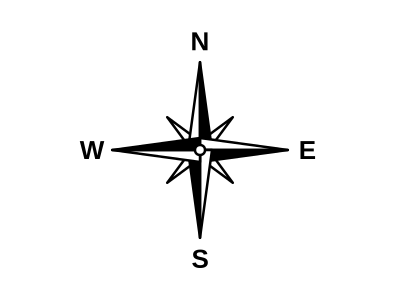
    • compass rose: a drawing on a map that shows north, south, east and west

    You need

    • 4 sticky notes labeled N, S, E and W
    • A compass, or a compass app on a phone (optional)
    • A paper compass rose (draw a plus sign and label the ends N, E, S, W, going around clockwise from the top)
    • 5 clue cards (written below)
    • A small prize, such as a sticker, to hide
    • Pencil
    1. Warm-Up / Wonder · 5 min

      Spaced review: ask: "What does a map key tell you?" (what each symbol means) Wonder question: "How could a map tell you which way to walk?"

    2. Explore · 10–15 min

      Find north. Use the compass or the compass app (the grown-up reads it), or think about the sun: it rises in the east in the morning and sets in the west in the evening. Never look straight at the sun. Stick the N, S, E and W notes on the 4 walls. Show the paper compass rose. Say: "On most maps, north is at the top. Then go around: north, east, south, west." Memory trick: "Never Eat Soggy Waffles." Ask: "Which direction is opposite north?" (south) "Opposite east?" (west) Play "Point and Walk": "Point north!" "Turn to face west!" "Walk 3 steps east!" Take turns giving the orders. Treasure hunt: while your child hides their eyes, hide the prize. Then read 5 clue cards you write for your room, such as: 1) Start at the door. 2) Walk 4 steps north. 3) Turn and walk 2 steps east. 4) Look south. 5) The prize is under something soft. Your child follows them. If stuck, point to the wall note and ask: "Which sign says the direction we need?"

    3. Talk & Record · 5–10 min

      Your child draws a compass rose and labels N, E, S and W. Then they add a compass rose to the room map from Week 13. Sentence frame: "The window is on the ___ side of my room."

    4. Exit Ticket · 3–5 min

      Ask the three questions aloud.

    Exit ticket

    1. Which direction is opposite north?
    2. On most maps, which direction is at the top?
    3. In which direction does the sun rise?
    Answers
    1. South.
    2. North.
    3. East.
    Watch for, and help or stretch
    Watch for
    Mixing up east and west.
    Try
    Stand facing north. Say: "East is on your right hand when you face north." Your child raises the right hand and says "East."
    Extra help
    Use only north and south in the game first, then add east and west.
    Stretch
    Your child writes 3 direction clues for a family member's treasure hunt.

    At home (optional): Your child tells a family member which direction the front door faces, using the compass rose or the sun as a clue.

    Practice

    Read each direction aloud. Your child works on the page; answers are in the grown-up view.

    Warm-up

    Remember?

    Math

    1. Count on: 98, 99, 100, ___, ___
    2. 2 + 5 + 3 = ?

    Reading & Writing

    1. pail, wait, pay
    2. where, here

    Math · Week 14 Day 1

    I can make a ten from ten ones.

    Look: 14 straws

    1. Count out 10 straws and put a rubber band around them. That is 1 ten.
    2. 4 straws are left over. Those are 4 ones.
    3. 1 ten and 4 ones is 14.

    Circle a group of 10. Write how many tens and ones.

    1. 1.
      12 sticks in a row. ___ ten and ___ ones
    2. 2.
      17 dots, scattered. ___ ten and ___ ones
    3. 3.
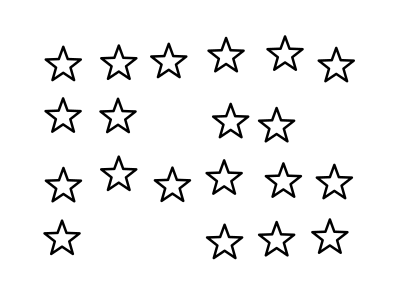
      20 stars, scattered. ___ tens and ___ ones

    Write how many straws.

    1. 4.
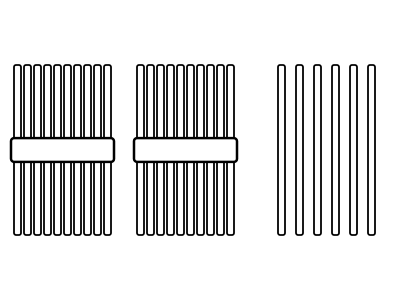
      2 bundles of 10 straws and 6 loose straws.
    2. 5.
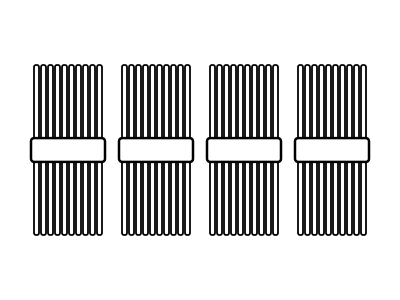
      4 bundles of 10 straws.
    3. 6.
      1 bundle of 10 straws and 9 loose straws
    4. 7.
      How many ones are in 2 tens?

    Challenge (optional)

    You have 13 loose cubes. Snap a train of ten. How many tens and ones?

    You need: crayons

    Reading & Writing · Week 14 Day 1

    I can tell who is telling the story at different points.

    Look: who is telling the story

    1. Say: "The narrator tells the story but is not a character. When a character talks, we see quotation marks."
    2. Read "Dee and the Seal". Point to "Can I swim with you?" Say: "Dee is talking here."
    3. Point to Dee met a seal at the sea. Say: "No character is talking here. The narrator tells it."

    Dee and the Seal

    Dee the sheep met a seal at the sea. "Can I swim with you?" said Dee. "Yes!" said the seal. Then Dee and the seal had a dip in the sea.

    Who is telling this part? Circle Dee, the seal, or the Narrator card if the narrator tells it.

    1. 1.
      "Can I swim with you?"
      • Dee
      • the seal
      • The Narrator card.
    2. 2.
      Dee the sheep met a seal at the sea.
      • Dee
      • the seal
      • The Narrator card.
    3. 3.
      "Yes!"
      • Dee
      • the seal
      • The Narrator card.

    Say the picture name. Write ee or ea.

    1. 4.
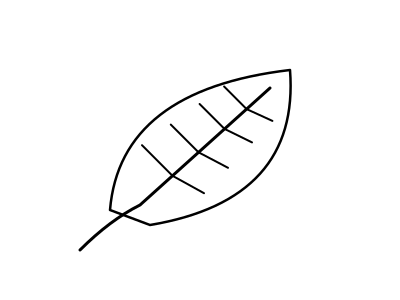
      A leaf. l ___ f
    2. 5.
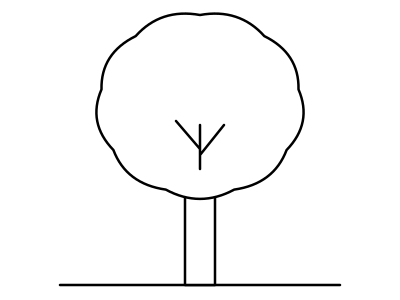
      A tree. t r ___
    3. 6.
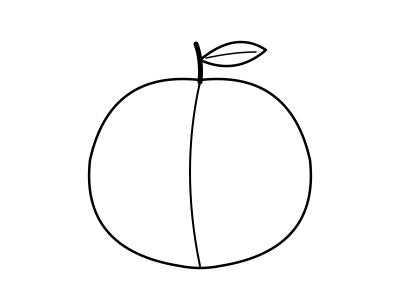
      A peach. p ___ ch
    4. 7.
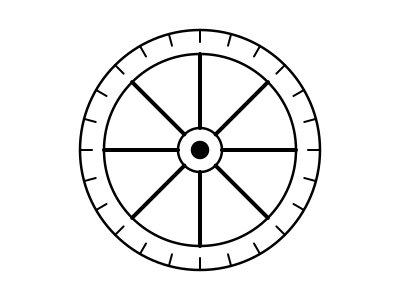
      A wheel. wh ___ l

    Challenge (optional)

    Where did Dee and the seal swim?

    Social Studies · Week 14 Day 1

    I can use a compass rose to find north, south, east and west.

    Look: using a compass rose

    1. On most maps, north is at the top of the compass rose.
    2. Go around: north, east, south, west. A memory trick is "Never Eat Soggy Waffles."
    3. North and south are opposites. East and west are opposites.

    Look at the compass rose. Your child circles the letter.

    1. 1.
      A compass rose with N, E, S and W. Which letter is at the top?
      • N
      • E
      • S
      • W
    2. 2.
      Which letter is at the bottom?
      • N
      • E
      • S
      • W
    3. 3.
      Which letter is on the right side?
      • N
      • E
      • S
      • W
    4. 4.
      Which letter is on the left side?
      • N
      • E
      • S
      • W

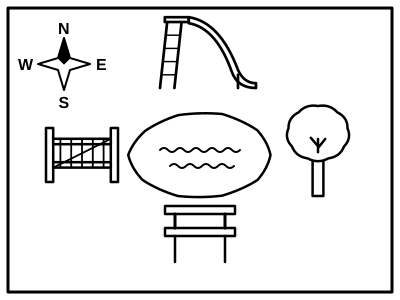
    Look at the park map. Write what your child says.

    1. 5.
      A simple park map. A pond is in the middle. A slide is north of the pond. A tree is east of the pond. A bench is south of the pond. A gate is west of the pond. A compass rose is in the corner. What is north of the pond?
    2. 6.
      What is east of the pond?
    3. 7.
      Which way do you walk to go from the pond to the bench?
    4. 8.
      Which way do you walk to go from the pond to the gate?

    Challenge (optional)

    Make a 3-step treasure hunt for someone at home using north, south, east and west.