1First Grade

    Tens and ones in any two-digit number

    Two reasons

    Practice pages

    0 of 180 days complete · Saved on this device

    View all 180 days

    Math

    Tens and ones in any two-digit number

    I can tell how many tens and ones are in a two-digit number.

    Standards: 1.NBT.B.2

    Number practice (no timer)
    Ten and some more: teen facts (10 + 3, 13 - 3)
    Builds on
    Days 2 and 3: teen numbers and decade numbers. One-minute check: "Build 30. How many tens?" (3)

    New words

    • tens place: the left digit in a two-digit number; it tells how many tens
    • ones place: the right digit in a two-digit number; it tells how many ones
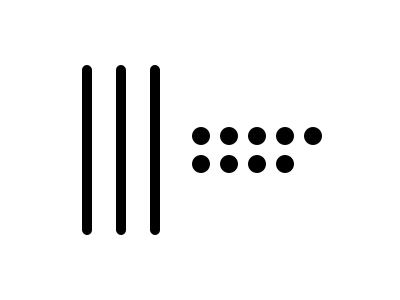
    • quick picture: a drawing with a stick for each ten and a dot for each one

    You need

    • 9 straw bundles of 10 and 10 loose straws (or base-ten blocks)
    • 2 dice
    • Notebook and pencil
    1. Warm-Up · 5 min

      Fluency: ten and some more. "10 + 5?" (15) "17 - 7?" (10) Spaced review from Week 10: "13 - 4: get to 10 first." (13 - 3 = 10, 10 - 1 = 9)

    2. Mini-Lesson · 10 min

      Say: "Every two-digit number is tens and ones." Write 24. Point to the 2: "This digit is in the tens place. It means 2 tens." Point to the 4: "This digit is in the ones place. It means 4 ones." Build it: 2 bundles and 4 loose straws. Then draw a quick picture: 2 sticks for the tens and 4 dots for the ones. Say: "2 tens and 4 ones is 24." Build and draw 47 (4 tens and 7 ones) and 56 (5 tens and 6 ones). Ask: "In 47, what does the 4 mean?" (4 tens, or 40.) "And the 7?" (7 ones.)

    3. Guided Practice · 10 min

      Your child builds each number, draws a quick picture and says it in tens and ones. 1) 35 (3 tens and 5 ones) 2) 62 (6 tens and 2 ones) 3) 81 (8 tens and 1 one) 4) 19 (1 ten and 9 ones) 5) 70 (7 tens and 0 ones) 6) 58 (5 tens and 8 ones) If stuck, say: "Cover the ones digit. How many tens? Take that many bundles. Now uncover it. How many ones?"

    4. Play · 10 min

      Roll and Build. Use two dice of different colors, or roll one die twice. The first number is the tens and the second number is the ones. If you roll 4 and then 3, build 4 tens and 3 ones, draw the quick picture and say: "4 tens and 3 ones is 43." The other player checks. Take turns. Play 6 rounds each. Then ask: "What is the biggest number you could make?" (66)

    5. Exit Ticket · 3-5 min

      Put the objects to one side but leave them on the table. Read each question aloud. Your child answers out loud, with objects or with a quick drawing. Check each answer together right away.

    Exit ticket

    1. How many tens and ones are in 56?
    2. Draw a quick picture of 32.
    3. 7 tens and 4 ones is what number?
    Answers
    1. 5 tens and 6 ones
    2. 3 sticks and 2 dots
    3. 74
    Watch for, and help or stretch
    Watch for
    Reversing the digits, such as building 74 for 47.
    Try
    Say the number slowly: "FOR-ty seven." The word you hear first is the tens.
    Extra help
    Build every number before drawing it. Keep numbers below 50.
    Stretch
    Your child builds 47 and 74 and explains why they are different numbers.

    At home (optional): Your child draws quick pictures for 3 numbers a family member says, and the family member checks them.
    Reading & Writing

    Two reasons

    I can give two reasons for my opinion.

    Standards: W.1.1, L.1.1.g, L.1.2.d

    Phonics
    Vowel teams ee and ea (feet, green, seat, read)
    Sight words
    them, then, when, walk, an
    Reading
    The Three Billy Goats Gruff (traditional, public domain); original first-person retelling "I Am the Troll"
    Writing
    Opinion: stating an opinion and giving two reasons · Handwriting: letters sitting on the line
    Builds on
    One-reason opinions (Week 13). One-minute check: your child reads the opinion page from last week.

    New words

    • also: a word that adds one more idea
    • smart: good at thinking of ways to solve problems

    You need

    • Opinion frame with two reason lines: I think the ___ goat was the smartest. First, ___. Also, ___. That is why ___.
    • Sight word cards
    • Printed "I Am Lee"
    1. Phonics & Word Work · 15 min

      ee or ea? I do: say "When you hear /ē/ in the middle of a word, try ee or ea. Picture the word to pick the right one." Show meet and seat. We do: read "The team can meet at the beach." You do: your child reads sweet, sea, deep, leap, feel, bean. Dictation: team, meet, sweet, leaf. If stuck on spelling, write the word both ways and ask: "Which one looks right?"

    2. Sight Words · 5 min

      Review: them, then, when, walk, an. Rainbow Write: your child writes two of this week's words three times each in different crayons, saying each letter, then reads them. Use walk and when.

    3. Read-Aloud & Shared Reading · 15 min

      Ask: "Who was the smartest goat?" Talk through the evidence. (Answers vary. Look for: the littlest goat, because he tricked the troll into waiting; or the big goat, because he knew he was strong enough to beat the troll.) Model two reasons with also: "I think the littlest goat was the smartest. First, he did not panic. Also, he tricked the troll into waiting." Ask: "What are my two reasons?" (He did not panic; he tricked the troll.) Then your child reads "I Am Lee" to you for fluency.

    4. Writing & Handwriting · 15 min

      Your child writes the opinion with two reasons joined by and or also, and ends with a closing line: "That is why I think ___." Handwriting (4 min): your child rewrites the closing line with every letter sitting on the line.

    5. Exit Ticket · 5 min

      Your child reads the opinion.

    Exit ticket

    1. Read me your two reasons.
    2. What word can you use to add a second reason?
    3. Read this sentence: "The team can meet at the beach."
    Answers
    1. Answers vary. Look for: two different reasons from the story.
    2. also (or and)
    3. The team can meet at the beach.
    Watch for, and help or stretch
    Watch for
    Giving the same reason twice in different words.
    Try
    Ask: "Is your second reason new? What else did the goat do?"
    Extra help
    Your child says both reasons aloud first; you write the first words of each line.
    Stretch
    Your child adds a third reason with another word: "Last, ___."

    At home (optional): Your child gives a family member two reasons for a favorite food.

    ScienceWeekly check

    Celery drinks

    I can test what happens to a celery stalk in colored water and tell the stem's job.

    Standards: 1-LS1-1

    Builds on
    Plant parts and their jobs (Day 2). One-minute check: ask "What do roots do?" (hold the plant in the ground and take in water) "What do leaves do?" (catch sunlight to make food)

    New words

    • stalk: a long stem, like a stick of celery
    • tube: a long, thin, hollow path that something can move through

    You need

    • 2 celery stalks with leaves (the grown-up cuts a fresh end on each)
    • 2 clear plastic cups (not glass)
    • Water
    • Blue or red food coloring (the grown-up adds it; it stains)
    • Masking tape and a marker for labels
    • Magnifying glass
    • Paper towels
    • The plant parts drawing from Day 2
    • Notebook
    • Crayons
    1. Warm-Up / Wonder · 5 min

      Spaced review: your child points to the roots, stem and leaves on the Day 2 drawing. Wonder question: "If we put a celery stalk in colored water, what will happen?" Your child predicts and draws the prediction. Accept any answer.

    2. Review Game · 10 min

      Set up the test now. Fill both cups halfway with water. The grown-up adds about 15 drops of food coloring to one cup. Label the cups "Colored" and "Plain." Put one celery stalk in each cup, cut end down. Ask: "Why do we need a plain cup too?" (to compare) While you wait, play "Part and Job": you say a part and your child tells its job, then swap. Roots (hold on, take in water). Stem (holds the plant up). Leaves (catch sunlight to make food). Thorns (keep animals away). Shell (keeps the body safe). Fur (keeps warm). Look at the celery again after a few hours, and again tomorrow morning. Leave it on the counter, out of reach of younger children. If stuck waiting, put a sticky note on the cups with the time you will look next. Stop here today. Give the Check and the Exit Ticket tomorrow morning, after the celery has sat about 24 hours (about 15 minutes).

    3. Check · 10 min

      Give the Week 14 science check. The check items are on the Week 14 check page; do not show them ahead of time. Read each part aloud. Your child answers by talking, pointing, showing with the real materials or drawing. You write down their words exactly. It is not timed; stop and finish later if your child is tired. Make a check mark next to each part your child shows on their own. The printed check has 8 items. It covers these goals: (1) I can name plant parts and tell what they do; (2) I can test what happens to a celery stalk in colored water and tell the stem's job. Give this part the next morning, after the celery has sat about 24 hours. After only a few hours the leaves often show little or no color, which would make a correct answer look wrong. Your child looks closely at both stalks, with the magnifying glass. Then the grown-up cuts across the bottom of the colored stalk so your child can see the cut end. Your child draws what happened and tells what the stem did and how they know. Look for: colored leaves or leaf edges on the stalk in colored water and no color on the plain stalk, colored dots at the cut end, and words such as "The stem carried the water up to the leaves" and "I can tell because the leaves turned blue." The colored dots are the ends of the tubes that carry water. Secure: 6 of 8 correct, including item 3 (the stem carried water up, with the color as evidence). If the check is not yet secure, use the reteach step on the check page that matches the items missed.

    4. Exit Ticket · 3–5 min

      Ask the three questions aloud after the check.

    Exit ticket

    1. What happened to the leaves of the celery in colored water?
    2. How do you know the stem carried water up?
    3. Why did we put a second stalk in plain water?
    Answers
    1. Answers come from your test. Look for: they got some of the color, often at the edges and tips.
    2. The color moved up from the cup to the leaves (and you can see colored dots in the cut stem).
    3. To compare, so we know the color came from the colored water.
    Watch for, and help or stretch
    Watch for
    Saying the celery "drank" through its leaves or that the color was painted on.
    Try
    Look at the cut end together. Ask: "Where are the colored dots?" (in the stem) Say: "The water went in at the bottom and up the stem."
    Extra help
    Point to the colored parts together and give the sentence start: "The color went ___."
    Stretch
    Your child measures with a ruler how high the color has climbed on day 1 and day 2 and tells which is higher.

    At home (optional): At a meal, your child looks at the cut end of a celery stick, a green onion or a carrot top and finds the tiny tubes or dots.

    Practice

    Read each direction aloud. Your child works on the page; answers are in the grown-up view.

    Warm-up

    Remember?

    Math

    1. True or false? 10 = 12 - 2
    2. 8 + 7 = ? Make a ten first.

    Reading & Writing

    1. pole, dune, stove

    Math · Week 14 Day 4

    I can tell how many tens and ones are in a two-digit number.

    Look: 63

    1. The 6 is in the tens place. It means 6 tens.
    2. The 3 is in the ones place. It means 3 ones.
    3. Draw 6 sticks and 3 dots. 6 tens and 3 ones is 63.

    Write how many tens and ones.

    1. 1.
      48 is ___ tens and ___ ones.
    2. 2.
      91 is ___ tens and ___ one.
    3. 3.
      27 is ___ tens and ___ ones.
    4. 4.
      60 is ___ tens and ___ ones.

    Write the number.

    1. 5.
      3 sticks and 9 dots.
    2. 6.
      8 tens and 5 ones
    3. 7.
      5 tens and 3 ones

    Challenge (optional)

    You roll a 2 and a 6. What two numbers can you make? Write the tens and ones of each.

    You need: straw bundles or cubes (optional)

    Reading & Writing · Week 14 Day 4

    I can give two reasons for my opinion.

    Look: two reasons for an opinion

    1. Read "A Sweet Pet" together. Underline the opinion: I think a sheep is a sweet pet.
    2. Circle two reasons: It is soft. It can sleep by me.
    3. Say: "Two reasons make an opinion stronger. We can join them with and."

    A Sweet Pet

    I think a sheep is a sweet pet. It is soft. It can sleep by me. I need a sheep!

    Underline the opinion. Circle the two reasons. Then write the words your grown-up says.

    1. 1.
      I think a sheep is a sweet pet. It is soft. It can sleep by me.
    2. 2.
      I think the sea is the best. I can swim. I can see a seal.
    3. 3.
    4. 4.

    Write your opinion and two reasons.

    1. 5.
      I think ___ is the best.
    2. 6.
      Reason 1:
    3. 7.
      Reason 2:

    Challenge (optional)

    I think a sheep is a ___ pet.

    Science · Week 14 check

    Weekly check

    How to give it: Read every direction, question and choice aloud. It is not timed; stop and finish later if your child is tired. Your child answers by talking, pointing, showing with the real materials or drawing, and you write their words exactly. Give this check the next morning, after the celery has sat about 24 hours; after only a few hours the leaves may show little color. Have both stalks, a magnifying glass and paper towels ready. The grown-up does all cutting.

    Secure when: 6 of 8 correct, including item 3 (the stem carried water up, with the color as evidence).

    • I can name plant parts and tell what they do.
    • I can test what happens to a celery stalk in colored water and tell the stem's job.
    1. 1.
      Look closely at both celery stalks with the magnifying glass. Draw what happened to each one.
    2. 2.
      Your grown-up cuts across the bottom of the colored stalk. Make a mark on the colored dots.
    3. 3.
      Tell what the stem did and how you know. Your grown-up writes it.
    4. 4.
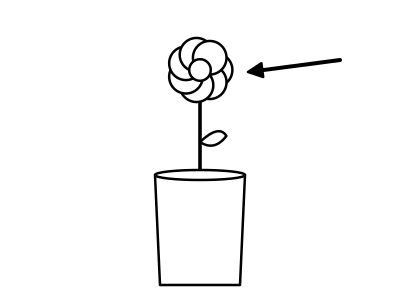
      A flower stands in a cup of water. Circle the part that carries the water up to the petals.
      • The flower's stem.
      • The flower's petals.
    5. 5.
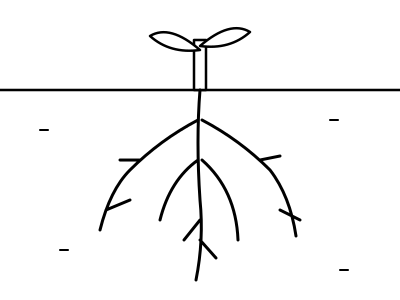
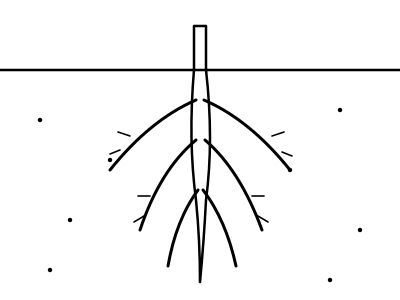
      Circle the plant part that is under the ground.
      • A leaf.
      • Roots.
    6. 6.
      Tell what roots do for a carrot plant. Your grown-up writes it.
    7. 7.
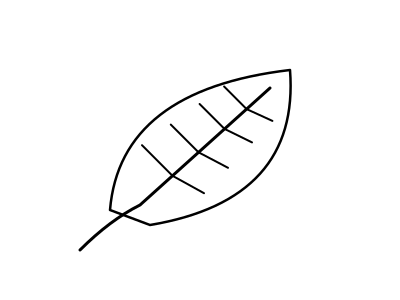
      Circle the plant part that catches sunlight.
      • A leaf.
      • A root.
    8. 8.
      A blackberry bush has prickles on its stems. Circle what they do.
      • An animal turning away from the prickly bush.
      • The bush drinking water.