1First Grade

    Hundred chart patterns

    Compare the mice

    Practice pages

    0 of 180 days complete · Saved on this device

    View all 180 days

    Math

    Hundred chart patterns

    I can find patterns on the hundred chart.

    Standards: 1.NBT.A.1, 1.NBT.B.2

    Number practice (no timer)
    Make 10 and doubles (keep-up practice)
    Builds on
    Week 13 counting on the hundred chart. One-minute check: "Point to 47 on the chart. What number is right after it?" (48)

    New words

    • pattern: something that repeats or changes in the same way
    • column: a line of numbers going up and down

    You need

    • Hundred chart to 120: printed, or drawn as 12 rows of 10 boxes (1 to 10 in the top row, 111 to 120 in the bottom row)
    • Crayons in 2 colors
    • Notebook and pencil
    1. Warm-Up · 5 min

      Fluency: make 10 and doubles. "5 + 5?" (10) "2 and what make 10?" (8) "9 + 9?" (18) Spaced review from Week 14: "How many tens and ones in 85?" (8 tens and 5 ones)

    2. Mini-Lesson · 10 min

      Say: "The hundred chart has patterns that help us find numbers." Your child colors every number that ends in 3: 3, 13, 23, 33, 43, 53, 63, 73, 83, 93, 103, 113. Ask: "What do you notice?" (They make a straight column.) "What stays the same as you go down?" (The ones digit is always 3.) "What changes?" (The tens go up by 1 each time, so each number is 10 more.) Now point to the row 41 to 50. Ask: "What happens as you go across?" (Each number is 1 more. The ones digit goes up by 1.) Say: "Across is 1 more. Down is 10 more."

    3. Guided Practice · 10 min

      Your child answers using the chart and the patterns. 1) "What number is right below 47?" (57) 2) "Right above 47?" (37) 3) "Right after 47?" (48) 4) "Right before 47?" (46) 5) Color the column that ends in 0 with the second color. (10, 20, 30, ... 120) "What is the same about them?" (They all have 0 ones.) 6) "What is right below 95?" (105) If stuck, say: "Put your finger on the number. Slide it one box down. Read the new number."

    4. Play · 10 min

      Chart Mystery. Your child closes their eyes while you put a finger on a number. Give clues: "I am right below 62." Your child finds the number (72). Then give 2-step clues: "Start at 35. Go down 1 box, then across 1 box to the right." (46) Take turns. Play 6 rounds each. (Skip counting by 2s or 5s is not needed today. If your child wants to, color those patterns as a bonus.)

    5. Exit Ticket · 3-5 min

      Put the objects to one side but leave them on the table. Read each question aloud. Your child answers out loud, with objects or with a quick drawing. Check each answer together right away.

    Exit ticket

    1. What number is right below 47 on the chart?
    2. What number is right after 47?
    3. What is the same about all the numbers in the 3 column?
    Answers
    1. 57
    2. 48
    3. They all have 3 ones (they end in 3).
    Watch for, and help or stretch
    Watch for
    Saying the number below 47 is 48.
    Try
    Trace the column with your finger. Say: "Down is a new row, so it is 10 more: 57."
    Extra help
    Use only the first 5 rows (1 to 50) and keep a finger on the chart.
    Stretch
    Ask: "Without the chart, what is right below 108?" (118) "How do you know?" (Down is 10 more.)

    At home (optional): Your child shows a family member one pattern on the hundred chart and explains it.
    Reading & Writing

    Compare the mice

    I can compare what happened to the two mice.

    Standards: RL.1.9, RL.1.3, SL.1.1.b

    Phonics
    Vowel team igh and y as long i (light, night, my, fly)
    Sight words
    for, or, but, not, all
    Reading
    The Town Mouse and the Country Mouse (Aesop, public domain)
    Writing
    Opinion: which place would you choose and why · Handwriting: neat copying of a short fable line
    Builds on
    Retelling The Town Mouse and the Country Mouse (Day 1). One-minute check: ask "What scared the mice in town?" (two big dogs)

    New words

    • compare: tell how things are the same
    • contrast: tell how things are different
    • alike: the same in some way

    You need

    • Two hoops, hula hoops or circles of string overlapping on the floor (or a Venn diagram on paper)
    • Sticky notes
    • "The Town Mouse and the Country Mouse"
    • Sight word cards
    • Printed "Max and Skip"
    1. Phonics & Word Work · 15 min

      igh and y with blends. I do: read bright, fright, sky. We do: read flight, spy, fry, slight. You do: your child reads try, dry, sly, bright, flight, fright, sky, spy. Read: "The fly is in the sky." "I got a fright at night." Dictation: bright, fright, sky, try. If stuck, read the blend, then the team: br-igh-t.

    2. Sight Words · 5 min

      Review: for, or, but, not, all. Swat It: spread the cards on the table. Say a word; your child taps it with a clean spatula, reads it and spells it. Then your child calls a word for you to swat. Point out that for and or share the same ending.

    3. Read-Aloud & Shared Reading · 15 min

      Lay out the two hoops: Town Mouse, Country Mouse, and Both in the middle. Your child says an idea for each part and you write it on a sticky note. (Town Mouse: big fancy house, rich food like cake and cheese, danger from dogs. Country Mouse: quiet field, plain food like beans and seeds, safe. Both: mice, visited each other, ate a meal together.) Build on each other's talk (SL.1.1.b): you add one idea, then your child adds one that connects to yours: "Yes, and..." Ask: "Which mouse had a better time in town? Why?" (Answers vary. Look for: the town mouse, because she was used to it; or neither, because the dogs came.) Then your child reads "Max and Skip". Ask: "How are Max and Skip alike?" (both cats; both like to play) "How are they different?" (Max lives in a bright shop; Skip lives in a dim shed.)

    4. Writing & Handwriting · 15 min

      Your child writes one alike sentence and one different sentence: "Both mice ate a meal." "The town mouse had cake, but the country mouse had beans." Handwriting (4 min): your child copies the different sentence neatly.

    5. Exit Ticket · 5 min

      Point to the hoops and ask.

    Exit ticket

    1. Tell one way the two mice were alike.
    2. Tell one way the two mice were different.
    3. Read this sentence: "The fly is in the sky."
    Answers
    1. Answers vary. Look for: both are mice, both visited each other, or both ate a meal together.
    2. Answers vary. Look for: one lived in town and one in the country; fancy food and plain food; danger and safety.
    3. The fly is in the sky.
    Watch for, and help or stretch
    Watch for
    Putting a detail in Both that is true for only one mouse.
    Try
    Ask: "Is that true for the town mouse AND the country mouse?"
    Extra help
    Start with only the two outside hoops (different), then add Both.
    Stretch
    Your child compares the town mouse with Max from "Max and Skip". (Both like bright, busy places.)

    At home (optional): Your child compares two family members' favorite foods: one way alike, one way different.

    Science

    Pick a problem, sketch a fix

    I can sketch an idea that copies an animal or plant part.

    Standards: 1-LS1-1, K-2-ETS1-2

    Builds on
    Nature-to-invention matches (Week 15). One-minute check: ask "How is a helmet like a turtle shell?" (Both are hard covers that protect.)

    New words

    • problem: something that is not working that people want to fix
    • sketch: a quick drawing that shows an idea
    • label: a word that names a part of a drawing

    You need

    • Sketch page: a paper with a box for the drawing and 3 lines for labels
    • Pencil
    • Crayons
    • 2 crackers
    • A zip-top sandwich bag
    • A paper cup
    • A sheet of paper
    • 10 pieces of dry cereal (small and light)
    • Picture cards from Week 15 (beak, turtle shell)
    1. Warm-Up / Wonder · 5 min

      Spaced review: play one fast round of Nature Memory with 4 cards. Wonder question: "How could you pick up a tiny piece of cereal without using your fingers?"

    2. Explore · 10–15 min

      Say: "Engineers start with a problem. Then they sketch an idea before they build." Show 2 problems. Problem 1: pick up tiny things without fingers. Your child tries to pick up a piece of cereal with 2 flat palms. (It's hard.) Ask: "Which animal part picks up small food?" (a beak) "What shape is it?" (pointed, with 2 parts that close together) Problem 2: keep a cracker from breaking in a bag. Put a cracker in the zip bag on the table. Lay the flat paper on top and your child presses gently with one finger. Then take the paper away, put the paper cup upside down over the cracker inside the bag and press gently in the same way. Ask: "Which kept the cracker safer?" (The cup; it is a curved, stiff cover.) "Which animal part does the cup copy?" (a shell) Your child chooses one problem and sketches a design on the sketch page. Labels to add: which animal part it copies, one shape word (such as pointed tip or curved cover) and what it will be made from (craft sticks, clothespins, cardboard, tape, paper cups or rubber bands). Your child tells you; you write the labels if needed. If stuck starting, say: "Draw the animal part first. Now draw how a tool could have the same shape."

    3. Talk & Record · 5–10 min

      Your child points to each label on the sketch and finishes: "My design copies a ___. The ___ shape helps it ___." Keep the sketch for Day 4 and Week 17.

    4. Exit Ticket · 3–5 min

      Ask the three questions aloud.

    Exit ticket

    1. What problem did you choose?
    2. Which animal part does your design copy?
    3. What shape in your design helps it work?
    Answers
    1. Answers vary. Look for: picking up tiny things without fingers, or keeping a cracker from breaking.
    2. Answers vary. Look for: a beak for the grabber or a shell for the cracker protector.
    3. Answers vary. Look for: a shape word tied to the job, such as "pointed tips to grab small things" or "a curved cover to stop pushes."
    Watch for, and help or stretch
    Watch for
    Drawing the animal instead of a tool.
    Try
    Ask: "What could you build from craft sticks or a cup that has the same shape as that beak or shell?"
    Extra help
    Your child picks the problem, and you draw the outline while your child adds the labels by telling you.
    Stretch
    Your child sketches 2 different designs for the same problem and tells which one they think will work better and why.

    At home (optional): Your child shows the sketch to a family member and tells what problem it solves and which animal part it copies.

    Practice

    Read each direction aloud. Your child works on the page; answers are in the grown-up view.

    Warm-up

    Remember?

    Math

    1. How many tens and how many ones are in 34?
    2. There are 10 grapes. 6 are green. The rest are purple. How many are purple?

    Reading & Writing

    Math · Week 16 Day 2

    I can find patterns on the hundred chart.

    Look: around 54

    1. Right after 54 is 55. Across is 1 more.
    2. Right below 54 is 64. Down is 10 more.
    3. Right above 54 is 44. Up is 10 less.

    Use the hundred chart. Write the number.

    1. 1.
      Right below 28
    2. 2.
      Right above 81
    3. 3.
      Right after 69
    4. 4.
      Right before 100
    5. 5.
      Right below 106

    Write the next two numbers in the pattern.

    1. 6.
      6, 16, 26, ___, ___
    2. 7.
      72, 73, 74, ___, ___
    3. 8.
      59, 69, 79, ___, ___

    Challenge (optional)

    Start at 33. Go down 2 boxes, then right 1 box. Where are you?

    You need: hundred chart to 120

    Reading & Writing · Week 16 Day 2

    I can compare what happened to the two mice.

    Look: compare two characters

    1. Read "Mike and Kim" together.
    2. Say: "Mike and Kim both had a kite. Both ran. But Mike's kite went high, and Kim's kite got stuck."
    3. Say: "When we compare, we tell how characters are the same and how they are not the same."

    Mike and Kim

    Mike had a kite. Kim had a kite. Mike ran with his kite, and it went high in the sky. Kim ran with her kite, but it got stuck in a tree. Kim did not cry. She got it down and had a try again.

    Read each one. Circle Mike, Kim or Mike and Kim.

    1. 1.
      had a kite
      • Mike
      • Kim
      • Mike and Kim
    2. 2.
      kite went high in the sky
      • Mike
      • Kim
      • Mike and Kim
    3. 3.
      kite got stuck in a tree
      • Mike
      • Kim
      • Mike and Kim
    4. 4.
      ran with a kite
      • Mike
      • Kim
      • Mike and Kim

    Write how they are the same and how they are not the same. Then write the word your grown-up says.

    1. 5.
      The same:
    2. 6.
      Not the same:
    3. 7.

    Challenge (optional)

    Did Kim cry?

    Science · Week 16 Day 2

    I can sketch an idea that copies an animal or plant part.

    Look: Sketch an idea that copies nature

    1. Problem: it is hard to pick up a tiny bead with flat hands.
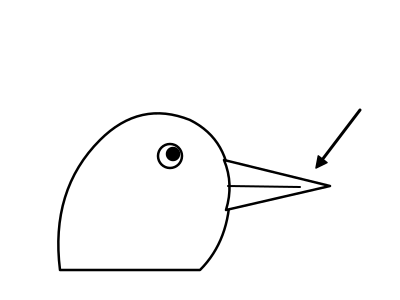
    2. A bird's beak has 2 pointed parts that close, so it picks up tiny food.
    3. Sketch a tool with 2 pointed parts that close. Label it "beak."

    Circle the animal part that could help solve the problem.

    1. 1.
      Problem: you need to scoop up water.
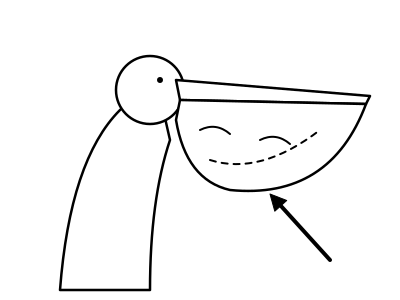
      • A pelican's pouch.
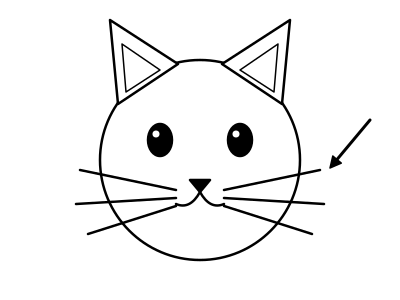
      • A cat's whiskers.
    2. 2.
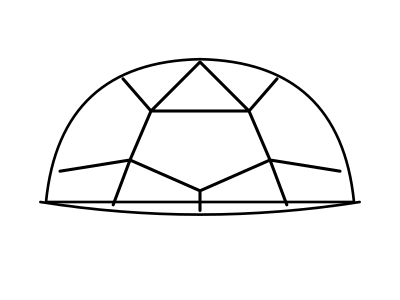
      Problem: you need to keep an egg from breaking.
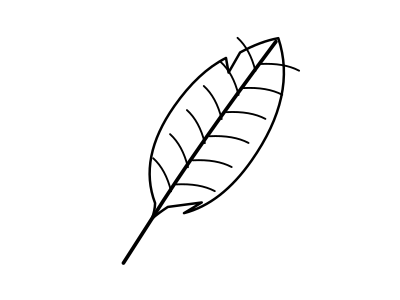
      • A bird's feather.
      • A turtle's shell.
    3. 3.
      Problem: you need to grab a tiny seed.
      • A bird's pointed beak.
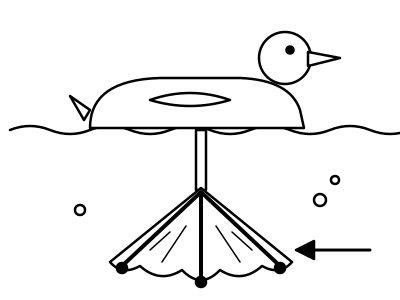
      • A duck's webbed foot.
    4. 4.
      Problem: you need to swim fast in a pool.
      • A duck's webbed foot.
      • An owl's eye.

    Sketch and label.

    1. 5.
      Pick a problem: pick up tiny things, or keep a cracker safe. Sketch a tool that copies an animal part.
    2. 6.
      Tell which animal part your sketch copies. Your grown-up writes the label.
    3. 7.
      Tell one material you will use. Your grown-up writes the label.

    Challenge (optional)

    Why do engineers sketch an idea before they build it?

    You need: pencil, crayons