1First Grade

    Lesson + weekly check: counting and tens

    Share and check: igh and y

    Practice pages

    0 of 180 days complete · Saved on this device

    View all 180 days

    MathWeekly check

    Lesson + weekly check: counting and tens

    I can count collections and explain tens and ones.

    Standards: 1.NBT.A.1, 1.NBT.B.2

    Number practice (no timer)
    Make 10 and doubles (keep-up practice)
    Builds on
    Weeks 13 to 16: counting collections, the hundred chart, and tens and ones. One-minute check: "Show 46 as tens and ones." (4 tens and 6 ones)

    New words

    • collection: a group of things to count

    You need

    • A pile of 60 to 70 small items (count it before the lesson)
    • 12 small cups
    • 9 straw bundles of 10 and 10 loose straws (or base-ten blocks)
    • Hundred chart to 120: printed, or drawn as 12 rows of 10 boxes (1 to 10 in the top row, 111 to 120 in the bottom row)
    • The stored Week 16 check and its answer key
    • Notebook and pencil
    1. Warm-Up · 5 min

      Fluency: make 10 and doubles. "1 and what make 10?" (9) "6 + 6?" (12) Spaced review from Week 11: "Is 7 + 2 = 8 + 2 true or false?" (False. 9 and 10.)

    2. Short Lesson: Review Game · 10 min

      Collection Relay. Take turns putting items into cups: each player fills one cup with exactly 10 and checks the other player's cup. When the pile is gone, your child counts the cups by tens and the leftovers by ones, writes the numeral, and says it in tens and ones. Then unbundle one cup in your head: "If I spill one cup, how many tens and ones?" (For 64: 5 tens and 14 ones.) If stuck, say: "Count the cups first by tens. Stop. Then count the leftovers by ones."

    3. Weekly Check · 15 min

      Give the stored Week 16 check. The printed check has 9 items. It covers these goals: (1) I can count a collection to 120 and write the numeral; (2) I can find patterns on the hundred chart; (3) I can show that 34 can be 3 tens and 4 ones or 2 tens and 14 ones; (4) I can fill in missing numbers using tens and ones. There is no time limit. If your child is stuck, say only: "Across is 1 more and down is 10 more," for the chart items, or "What happens if you unbundle a ten?" for items 5 and 6. Do not give the answer. Score it with the answer key. Secure: 8 of 9 correct. If the check is secure, start Week 17. If it is not, first do the reteach step on the check page for each group of items missed, then start Week 17.

    4. Exit Ticket · 3-5 min

      After the check, ask these two questions. Then go over any missed check items together.

    Exit ticket

    1. What number is just below 38 on the chart?
    2. Show 46 two ways.
    Answers
    1. 48
    2. Answers vary. Look for: 4 tens and 6 ones, and 3 tens and 16 ones (or 2 tens and 26 ones).
    Watch for, and help or stretch
    Watch for
    Writing the right count but the wrong numeral, such as 604 for 64.
    Try
    Ask: "How many tens? How many ones?" Then write the tens digit and the ones digit side by side.
    Extra help
    Let your child keep the whole hundred chart in view during the check, and note it.
    Stretch
    After the check, your child shows 46 three different ways.

    At home (optional): Your child counts a collection at home, writes the numeral and tells a family member how many tens and ones.
    Reading & WritingWeekly check

    Share and check: igh and y

    I can read igh and y words and compare two characters.

    Standards: RF.1.3.c, RL.1.9, RF.1.3.g

    Phonics
    Vowel team igh and y as long i (light, night, my, fly)
    Sight words
    for, or, but, not, all
    Reading
    The Town Mouse and the Country Mouse (Aesop, public domain)
    Writing
    Opinion: which place would you choose and why · Handwriting: neat copying of a short fable line
    Builds on
    This week's igh and y work and comparing characters. One-minute check: warm up with light, night and sky.

    New words

    • same: alike; not different
    • different: not alike

    You need

    • Word cards: igh and y words (written in step 4)
    • Sight word cards: for, or, but, not, all
    • Recording sheet
    • Two-hoop diagram from Day 2
    1. Review Game · 10 min

      Flashlight Read: dim the lights. Lay 10 cards on the floor: light, night, bright, high, right, my, sky, try, cry, fly. Your child shines a flashlight on a card and reads it. If stuck on a word during the game (not during the check), cover all but the first sound, say it together, then uncover the rest and blend.

    2. Sight Words · 5 min

      Review: for, or, but, not, all, as, with, this, that, because. Bean Bag Toss: lay the cards on the floor. Your child tosses a bean bag or a rolled-up sock, reads the card it lands on and spells it without looking. Mix this week's and last week's words.

    3. Weekly Check · 15 min

      The printed check has 8 items. It covers these goals: (1) I can read igh words and words where y says /ī/; (2) I can read the sight words for, or, but, not and all; (3) I can compare two characters: how they are the same and not the same; (4) I can use 's to show who owns something; (5) I can give my opinion with reasons. Give no hints. Record each answer. Secure: 8 of the 10 words in items 1 and 2, 4 of the 5 sight words, one same (item 4) and one different (item 5 or 6), and items 7 and 8. For any part that is not yet secure, use the matching reteach step on the check page next week.

    4. Share & Listen · 10 min

      Your child reads the town-or-country opinion to a family member. The listener asks one question, and your child answers with because.

    5. Handwriting · 5 min

      Your child copies "I like my home best." neatly, checking spacing, letters on the line and the period. Circle the best word.

    6. Exit Ticket · 5 min

      Talk about the week.

    Exit ticket

    1. Read a word with igh and a word where y says /ī/.
    2. Which mouse would you visit, and why?
    Answers
    1. Answers vary. Look for: correct reads such as light and sky.
    2. Answers vary. Look for: a choice with a reason.
    Watch for, and help or stretch
    Watch for
    Reading all as /a/ /l/.
    Try
    Review the heart part (a says /aw/) and read "I can see it all." three times.
    Extra help
    Do items 1 and 2 with the flashlight game cards so the words feel familiar.
    Stretch
    Your child reads 3 bonus ar words (car, farm, star) to preview next week. Do not score them.

    At home (optional): Read "Max and Skip" to a family member.

    Social StudiesWeekly check

    Jobs that fit the land

    I can tell how the land and water in a place help decide the jobs people do there.

    Standards: D2.Geo.9.K-2

    Builds on
    City, suburb and country (Day 3). One-minute check: your child tells which kind of community we live in and one reason.

    New words

    • natural resource: something from nature that people use, like water, soil or trees

    You need

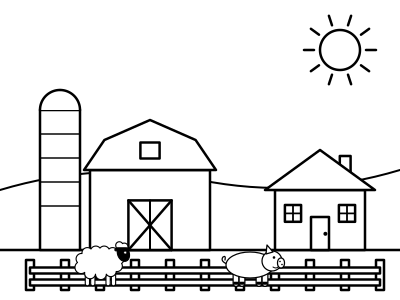
    • 5 job photos (draw or print): a fishing boat, a farm, a ranch with cattle, a ski hill, a forest with a forester or logger
    • 5 place cards: an ocean coast, flat land with rich soil, wide grassy land, snowy mountains, a forest
    • Notebook
    • Pencil
    1. Warm-Up / Wonder · 5 min

      Spaced review: ask: "Where might a rural family get water?" (a well) Wonder question: "Why are there fishing boats in some towns and not in others?"

    2. Review Game · 10 min

      Play "Job Match." Your child matches each job photo to the place where it fits and tells why. Expected: fishing boat, ocean coast (fish live in the ocean); farm, flat land with rich soil (crops grow well there); ranch, wide grassy land (cattle eat grass); ski hill, snowy mountains (you need snow and slopes); forest worker, a forest (trees are there to care for or cut). Say: "The land and water in a place help decide the jobs people do there. Things from nature that people use, like soil, water and trees, are natural resources." Ask: "Could someone run a ski hill on flat land with no snow?" (No.) Then ask: "What jobs fit the land near us?" (Answers vary.) If stuck, ask: "What do you need to do this job? Where can you find it?"

    3. Check · 10 min

      Give the Week 16 social studies check. The check items are on the Week 16 check page; do not show them ahead of time. Read each part aloud. Your child answers by talking, pointing, showing with the real materials or drawing. You write down their words exactly. It is not timed; stop and finish later if your child is tired. Make a check mark next to each part your child shows on their own. The printed check has 8 items. It covers these goals: (1) I can tell how weather and climate change what people wear, eat and build; (2) I can compare how people in the city, suburbs and country get what they need; (3) I can tell how the land and water in a place help decide the jobs people do there. This week the check is a short explanation. Your child picks one place card, names a job that fits it, and tells how the land or water there helps that job. Look for: a job that fits the place and a reason tied to nature, such as "Farming fits flat land because crops grow in the soil" or "Fishing fits the coast because fish live in the ocean." Secure: 6 of 8 correct, with at least one right on each goal. If the check is not yet secure, use the reteach step on the check page that matches the items missed.

    4. Exit Ticket · 3–5 min

      Ask the three questions aloud.

    Exit ticket

    1. Where does fishing fit best?
    2. Why does farming fit flat land with good soil?
    3. Name one job that fits the land or water near us.
    Answers
    1. Near the ocean, a lake or a river, where fish live.
    2. Crops grow well in good soil, and flat land is easy to plant.
    3. Answers vary. Look for: a job that really fits your area, with a reason.
    Watch for, and help or stretch
    Watch for
    Matching by a picture detail, such as a boat to a lake picture with no fish.
    Try
    Ask: "What does the worker need from nature?" Then find the place that has it.
    Extra help
    Match 3 pairs: fishing boat, farm and ski hill.
    Stretch
    Your child thinks of a job that does not depend much on the land, such as a teacher or a doctor, and tells why it can be done almost anywhere.

    At home (optional): Your child asks a family member about one job in your area and whether it uses the land or water.

    Practice

    Read each direction aloud. Your child works on the page; answers are in the grown-up view.

    Warm-up

    Remember?

    Math

    1. 1 ten and 9 ones make what number?
    2. 6 + 3 + 4 = ? Find two numbers that make 10 first.

    Reading & Writing

    1. lamp, sand, nest

    Math · Week 16 check

    Weekly check

    How to give it: Read each item aloud. Untimed. Your child may use bundles and cups, but not the hundred chart for items 3, 4 and 7–9. If stuck, say only: "Across is 1 more and down is 10 more," or "What happens if you unbundle a ten?" Do not give the answer.

    Secure when: 8 of 9 correct

    • I can count a collection to 120 and write the numeral.
    • I can find patterns on the hundred chart.
    • I can show that 34 can be 3 tens and 4 ones or 2 tens and 14 ones.
    • I can fill in missing numbers using tens and ones.
    1. 1.
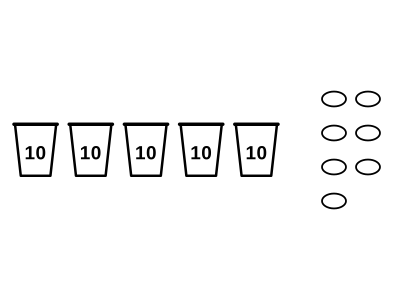
      5 cups, each labeled 10, and 7 loose beans. How many beans?
    2. 2.
      3 cups of 10 and 8 more. Write the number and the tens and ones.
    3. 3.
      What number is right below 76 on the hundred chart?
    4. 4.
      Write the next two numbers: 15, 25, 35, ___, ___
    5. 5.
      64 is 6 tens and 4 ones. Show it another way: ___ tens and ___ ones.
    6. 6.
      Is 2 tens and 17 ones the same as 37?
      • yes
      • no
    7. 7.
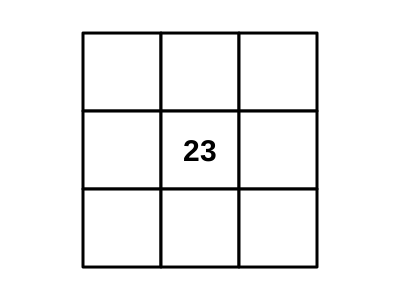
      A 3 by 3 piece of the hundred chart with 23 in the center and the other 8 boxes empty. Write the number in the box above 23.
    8. 8.
      In the same piece, write the number in the bottom right corner.
    9. 9.
      In the same piece, write the number in the top left corner.

    Reading & Writing · Week 16 check

    Weekly check

    How to give it: Give the check after the review game, in a quiet spot, one part at a time. It is untimed; take a stretch break between parts if needed. Read every direction aloud, but do not read the words or story for your child. Do not help except to say "Try your best" or "Skip it." Mark each item right or wrong. Items 1 and 2 (Part 1): your child reads the igh and y words aloud. Item 3 (Part 2): your child reads the 5 sight words. Part 3: your child reads "Ty and Kay" aloud and tells one way the two are the same and one way they are not (items 4 to 6). Then read the directions for items 7 and 8. You may also ask the lesson's question about the two mice from the fable.

    Secure when: 8 of the 10 words in items 1 and 2, 4 of the 5 sight words, one same (item 4) and one different (item 5 or 6), and items 7 and 8.

    • I can read igh words and words where y says /ī/.
    • I can read the sight words for, or, but, not and all.
    • I can compare two characters: how they are the same and not the same.
    • I can use 's to show who owns something.
    • I can give my opinion with reasons.

    Ty and Kay

    Ty had a light. Kay had a light. Ty's light was bright, but Kay's light was dim. Ty and Kay sat up at night. They had fun by the light.

    1. 1.
      tight thigh might high right
    2. 2.
      ply sty pry shy fry
    3. 3.
      for or but not all
    4. 4.
      had a light
      • Ty
      • Kay
      • Ty and Kay
    5. 5.
      light was dim
      • Ty
      • Kay
      • Ty and Kay
    6. 6.
      light was bright
      • Ty
      • Kay
      • Ty and Kay
    7. 7.
      Ty has a bike. It is ___ bike.
    8. 8.
      I would pick ___ light because ___.

    Social Studies · Week 16 check

    Weekly check

    How to give it: Read every question and choice aloud, and point to each picture as you name it. This week the check is a short explanation. Your child answers by talking, pointing, circling, acting it out or drawing; write their words exactly on the line. It is not timed; stop and finish later if your child is tired. Do not show the page ahead of time. Have the 5 place cards from Day 5 ready for item 8. Make a check mark next to each part your child shows on their own.

    Secure when: 6 of 8 correct, with at least one right on each goal

    • I can tell how weather and climate change what people wear, eat and build.
    • I can compare how people in the city, suburbs and country get what they need.
    • I can tell how the land and water in a place help decide the jobs people do there.
    1. 1.
      "Today it is foggy." Is that weather or climate?
    2. 2.
      What would people wear in a very hot, dry place?
    3. 3.
      Which kind of community has farms and lots of open land?
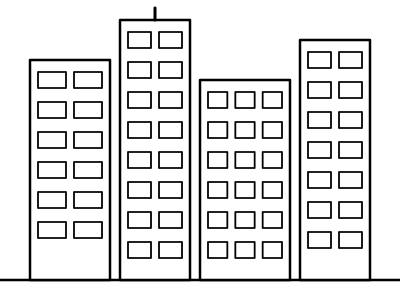
      • Tall buildings.
      • A house with a yard.
      • A farm.
    4. 4.
      How do many people get around in a big city?
    5. 5.
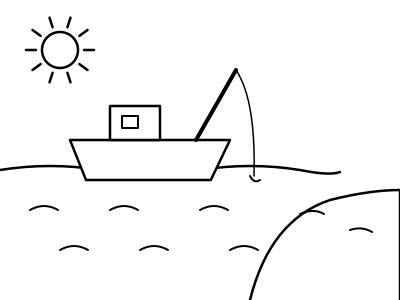
      A fishing boat near the ocean shore. Why does this job fit a place by the ocean?
    6. 6.
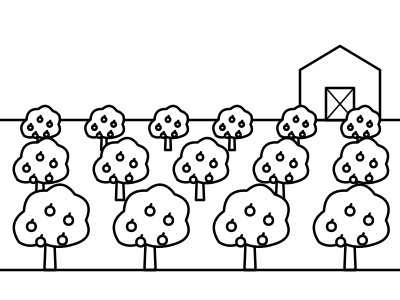
      Rows of apple trees on a farm. Why does this job fit a place with good soil?
    7. 7.
      Could a person catch ocean fish in a dry desert?
      • yes
      • no
    8. 8.
      Pick a place card. Name a job that fits it and tell how the land or water helps that job.