This week's lessons
Math and reading every day; science and social studies take turns
- Day 1 · Monday
- MathCount objects and write the numberI can count a collection to 120 and write the numeral.
- Reading & WritingTwo mice, two homesI can retell a fable and tell its lesson.
- Social StudiesWeather and how we liveI can tell how weather and climate change what people wear, eat and build.
- Day 2 · Tuesday
- MathHundred chart patternsI can find patterns on the hundred chart.
- Reading & WritingCompare the miceI can compare what happened to the two mice.
- SciencePick a problem, sketch a fixI can sketch an idea that copies an animal or plant part.
- Day 3 · Wednesday
- MathSame number, different tradesI can show that 34 can be 3 tens and 4 ones or 2 tens and 14 ones.
- Reading & WritingNouns that own thingsI can use 's to show who owns something.
- Social StudiesCity, suburb and countryI can compare how people in the city, suburbs and country get what they need.
- Day 4 · Thursday
- MathNumbers in the hundred chart piecesI can fill in missing numbers using tens and ones.
- Reading & WritingTown or country?I can tell which home I would choose and give reasons.
- Science · CheckShape helps it workI can explain how the shape of my design helps it work.
- Day 5 · Friday
- Math · CheckLesson + weekly check: counting and tensI can count collections and explain tens and ones.
- Reading & Writing · CheckShare and check: igh and yI can read igh and y words and compare two characters.
- Social Studies · CheckJobs that fit the landI can tell how the land and water in a place help decide the jobs people do there.
This week's checks
Short checks on the last day each subject meets this week
Science · Day 4
- I can sketch an idea that copies an animal or plant part.
- I can explain how the shape of my design helps it work.
Secure when: 6 of 8 correct, including items 1, 2 and 3 (a named shape, its job and the living thing it copies).
Open the checkMath · Day 5
- I can count a collection to 120 and write the numeral.
- I can find patterns on the hundred chart.
- I can show that 34 can be 3 tens and 4 ones or 2 tens and 14 ones.
- I can fill in missing numbers using tens and ones.
Secure when: 8 of 9 correct
Open the checkReading & Writing · Day 5
- I can read igh words and words where y says /ī/.
- I can read the sight words for, or, but, not and all.
- I can compare two characters: how they are the same and not the same.
- I can use 's to show who owns something.
- I can give my opinion with reasons.
Secure when: 8 of the 10 words in items 1 and 2, 4 of the 5 sight words, one same (item 4) and one different (item 5 or 6), and items 7 and 8.
Open the checkSocial Studies · Day 5
- I can tell how weather and climate change what people wear, eat and build.
- I can compare how people in the city, suburbs and country get what they need.
- I can tell how the land and water in a place help decide the jobs people do there.
Secure when: 6 of 8 correct, with at least one right on each goal
Open the check
Reading About Our World: City, Suburb and Country
Read it aloud. Your child reads the sentences marked with a star. Builds social studies knowledge.
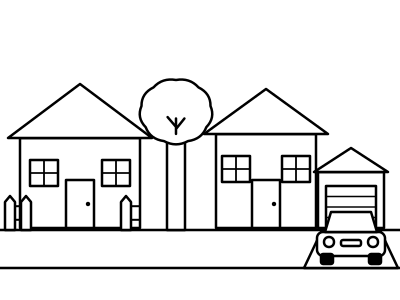
The City
A city has many people living close together. There are tall buildings, busy streets, buses and trains. Many people live in tall apartment buildings.
The Suburb
A suburb is near a city. Homes are often farther apart and may have yards. Many people in suburbs travel to the city to work.
The Country
In the country, homes are far apart. There is lots of open land. Many people in the country work on farms and raise animals or grow food. A sheep can eat and sleep.
Words to know
- city: a big place where many people live close together
- suburb: a place with homes near a city
- country: land outside towns and cities, with farms and open space
Talk about it
- Where are there tall buildings and busy streets?
- What work do many people in the country do?
- A family wants lots of room for horses. Where might they want to live? Why?
Home Connection
Five-minute ideas for the whole family, with things you already have
Math
Ten ones can be traded for one ten.
Do: Write the numbers 1 to 100 in rows of 10 on paper, or use a printed hundred chart. Color one column, like 5, 15, 25, and so on to 95.
Talk: What changes as you go down the column? What stays the same?
Reading & Writing
We can compare two characters and the places they live.
Do: Read or tell the fable The Town Mouse and the Country Mouse. Write light, night, my, fly and right for your child to read.
Talk: Would you rather live in the town or the country? Why?
Science
We can design something that works like a plant or animal part.
Do: Your child sketches an idea that works like an animal or plant part, like flippers that work like duck feet.
Talk: How does the shape of your idea help it work?
Social Studies
Weather and land shape how people live and work.
Do: Look in the closet together and sort clothes for hot weather and for cold weather.
Talk: How do people in a city, a suburb and the country get their food?
This week's words: for, or, but, not, all
Celebrate a hundred chart pattern, a town-or-country opinion and a nature design sketch.
Math catch-up: Break a Bundle
10 minutes, if this week's math check was not secure · 1.NBT.B.2
Children often think a number grows when a bundle is broken into loose ones. Trading the same straws back and forth shows that 3 tens and 6 ones is the same as 2 tens and 16 ones.
You need: 40 straws or craft sticks, 4 rubber bands, 4 small cups with 10 dry beans in each, and a few extra beans
- Build 36: 3 bundles and 6 loose. Take the band off one bundle. Ask: "Did we add any straws?" (No.)
- Count it now: 2 tens and 16 ones. Count all the straws together to check: still 36.
- Put out 4 cups of 10 beans and 3 loose beans. Your child taps each cup: 10, 20, 30, 40, then counts on 41, 42, 43.
- Show 2 bundles and 13 loose straws. Ask: "Can we make a new bundle?" Bundle 10 of the loose ones and count again: 33.
Try again
- 4 tens and 5 ones is the same as 3 tens and ___ ones.
- 6 cups with 10 beans in each and 4 loose beans. How many beans?
- 3 tens and 14 ones is ___
Specials This Week
Weeks 13–18 unit • ~90 min/week per subject
Manipulative Skills (Throwing and Catching)
Developing underhand and overhand throwing, catching with two hands, aiming at targets.
Form and Space
Understanding 2D vs. 3D forms (cubes, spheres), exploring foreground, middle ground, background in drawings.
Tempo and Dynamics
Forte/piano (loud/soft), fortissimo/pianissimo, expressing musical ideas through tempo and dynamics.
For guiding principles and full standards reference, visit How to use this curriculum
As an Amazon Associate, we earn from qualifying purchases. Book and supply links on this page are affiliate links — using them supports this curriculum at no extra cost to you.