1First Grade

    Same number, different trades

    Nouns that own things

    Practice pages

    0 of 180 days complete · Saved on this device

    View all 180 days

    Math

    Same number, different trades

    I can show that 34 can be 3 tens and 4 ones or 2 tens and 14 ones.

    Standards: 1.NBT.B.2, 1.NBT.B.2.a

    Number practice (no timer)
    Make 10 and doubles (keep-up practice)
    Builds on
    Week 14 bundles of ten: one ten is 10 ones. One-minute check: "Take the band off one bundle. How many straws?" (10)

    New words

    • unbundle: break a ten apart into 10 ones
    • trade: swap one ten for 10 ones, or 10 ones for one ten

    You need

    • 9 straw bundles of 10 and 10 loose straws (or base-ten blocks), plus 10 extra loose straws
    • Rubber bands
    • Notebook and pencil
    1. Warm-Up · 5 min

      Fluency: make 10 and doubles. "3 and what make 10?" (7) "7 + 7?" (14) Spaced review from Week 12: "? - 4 = 8." (12)

    2. Mini-Lesson · 10 min

      Say: "Today we find out if we can change how a number looks without changing the number." Build 34: 3 bundles and 4 loose straws. Write: 34 = 3 tens and 4 ones. Take the band off one bundle and spread out the straws. Ask: "How many bundles now?" (2) "How many loose straws?" (14) "Did we add or take away any straws?" (No.) Count them together: "10, 20, 21, 22, ... 34." Say: "It is still 34." Write: 34 = 2 tens and 14 ones. Say: "One ten can be traded for 10 ones. The number stays the same."

    3. Guided Practice · 10 min

      Your child builds each number, unbundles one ten, and writes both ways. 1) 46 (4 tens and 6 ones; 3 tens and 16 ones) 2) 25 (2 tens and 5 ones; 1 ten and 15 ones) 3) 52 (5 tens and 2 ones; 4 tens and 12 ones) 4) 30 (3 tens and 0 ones; 2 tens and 10 ones) After each, ask: "Is it still the same number? How do you know?" If stuck, say: "Count all the straws, bundles by tens and loose straws by ones. What do you get?"

    4. Play · 10 min

      Bundle Bank. You are the bank. Your child builds 41 with 4 bundles and 1 loose straw. Say: "I need 5 loose straws." Your child cannot give 5 loose straws, so they trade 1 bundle to the bank for 10 loose straws, then gives you 5. Say: "Count what you have now: bundles by tens, then loose straws by ones." (10, 20, 30, 31, 32, 33, 34, 35, 36. 3 tens and 6 ones is 36.) Do it again from 36: "I need 8 loose straws." (Trade a bundle: 2 tens and 16 ones. Give 8, then count what is left: 2 tens and 8 ones is 28.) Do not write these as take-away equations; taking a one-digit number from a two-digit number with a trade is a Grade 2 skill. Then swap roles.

    5. Exit Ticket · 3-5 min

      Put the objects to one side but leave them on the table. Read each question aloud. Your child answers out loud, with objects or with a quick drawing. Check each answer together right away.

    Exit ticket

    1. Is 2 tens and 14 ones the same as 34?
    2. Show 46 another way.
    3. How many ones do you get when you unbundle 1 ten?
    Answers
    1. Yes. 20 and 14 make 34.
    2. Answers vary. Look for: 3 tens and 16 ones (or 2 tens and 26 ones).
    3. 10
    Watch for, and help or stretch
    Watch for
    Thinking the number got bigger because there are more loose pieces.
    Try
    Count all the straws together. The total did not change.
    Extra help
    Use numbers below 30 and count every straw after unbundling.
    Stretch
    Show 34 three ways: 3 tens and 4 ones, 2 tens and 14 ones, 1 ten and 24 ones.

    At home (optional): Use coins or toy blocks in groups of 10 to show a family member that 1 ten is the same as 10 ones.
    Reading & Writing

    Nouns that own things

    I can use 's to show who owns something.

    Standards: L.1.1.b, L.1.2.d, SL.1.6

    Phonics
    Vowel team igh and y as long i (light, night, my, fly)
    Sight words
    for, or, but, not, all
    Reading
    The Town Mouse and the Country Mouse (Aesop, public domain)
    Writing
    Opinion: which place would you choose and why · Handwriting: neat copying of a short fable line
    Builds on
    Common and proper nouns (Unit 1). One-minute check: your child names one common noun (mouse) and one proper noun (Max) from this week.

    New words

    • noun: a word for a person, place, animal or thing
    • apostrophe: a little mark ( ' ) that can show who owns something
    • owner: the one something belongs to

    You need

    • Picture cards you draw: a mouse with cheese, a cat with a tail, a dog with a bone
    • Sticky note with 's on it
    • Sight word cards
    • Printed "Max and Skip"
    1. Phonics & Word Work · 15 min

      igh and y in owner phrases. I do: write Max, then add 's: Max's shop. Say: "The apostrophe and s show the shop belongs to Max." We do: read "This is Max's shop." "That is Skip's shed." You do: your child reads "the cat's light" "Dad's bike" "my pal's kite" "Kim's light". Dictation: right, high, sigh, fry. If stuck, cover the 's, read the owner, then uncover it: "Max's means it belongs to Max."

    2. Sight Words · 5 min

      Review: for, or, but, not, all. Flip and Read: lay the five cards face down with last week's words. Your child flips a card, reads it and uses it in a short spoken sentence. Missed words go back in the pile.

    3. Read-Aloud & Shared Reading · 15 min

      Show each picture card and make an owner phrase together: "the mouse's cheese", "the cat's tail", "the dog's bone". Then make phrases from the fable. Ask: "Whose house was big and fancy?" (the town mouse's house) Ask: "Whose food was plain?" (the country mouse's food) Ask: "Whose shed is dim?" (Skip's shed) If stuck, ask: "Who owns it? Say that name, then add 's."

    4. Writing & Handwriting · 15 min

      Your child writes two owner phrases from the fable and draws each: "the town mouse's cake", "the country mouse's field". Check that each one has an apostrophe before the s. Handwriting (4 min): your child copies "the cat's tail" neatly; the apostrophe floats at the top like a comma in the air.

    5. Exit Ticket · 5 min

      Oral and written answers.

    Exit ticket

    1. Say it with 's: the bone that belongs to the dog.
    2. Write: the tail that belongs to the cat.
    3. Read this: "This is Max's shop."
    Answers
    1. the dog's bone
    2. the cat's tail (with an apostrophe before the s)
    3. This is Max's shop.
    Watch for, and help or stretch
    Watch for
    Writing the s with no apostrophe (cats tail) or adding 's to make more than one.
    Try
    Ask: "Is something belonging to someone? Then it needs the apostrophe."
    Extra help
    Use real objects: hold your child's shoe and say "Sam's shoe" (use your child's name), then your child does the same with your things.
    Stretch
    Your child writes a sentence with two owners: "Max's shop is bright, but Skip's shed is dim."

    At home (optional): Your child labels 3 things at home with owner phrases on sticky notes: "Mom's cup."

    Social Studies

    City, suburb and country

    I can compare how people in the city, suburbs and country get what they need.

    Standards: D2.Geo.8.K-2

    Builds on
    Weather and how we live (Day 1). One-minute check: ask "What is climate?" (the usual weather in a place over a long time)

    New words

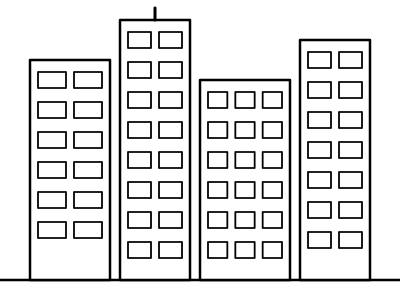
    • city: a big community with many people and tall buildings close together
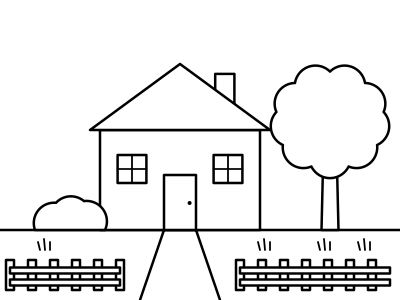
    • suburb: a community near a city with many houses and yards
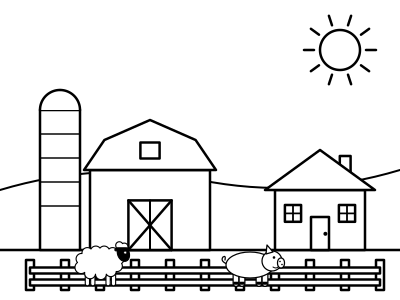
    • rural: in the country, with farms and lots of open land

    You need

    • 3 photos (draw or print): a city street, a suburban street, a rural farm road
    • 3-column chart with 3 rows: columns City, Suburb, Rural; rows Homes, Getting around, Where food and water come from
    • Pencil
    • Crayons
    1. Warm-Up / Wonder · 5 min

      Spaced review: ask: "What would you wear in Phoenix in summer?" (light clothes, a hat, sunscreen) Wonder question: "Do all people live in the same kind of place?"

    2. Explore · 10–15 min

      Look at the 3 photos. Fill in the chart together, row by row. Homes: City: tall apartment buildings close together. Suburb: houses with yards. Rural: houses far apart, farms. Getting around: City: walking, buses, and in some cities, subways or trains. Suburb: cars, school buses, bikes. Rural: cars and trucks on long roads. Where food and water come from: say: "Some things come from nearby, and some come from far away." City: food comes in on trucks from farms far away; water often comes through pipes from lakes or rivers outside the city. Suburb: food from stores, some from nearby farms; water through pipes. Rural: some families grow food or raise animals; water often comes from a well on their land; other food comes from stores in town. Ask: "Which kind of community do we live in?" Your child circles it on the chart. Ask: "What is one thing that comes to our community from far away?" (Answers vary: bananas, gas, clothes.) If stuck, ask: "Are the homes close together or far apart? Are there farms?"

    3. Talk & Record · 5–10 min

      Your child draws our community and one thing we get from nearby and one from far away. Sentence frame: "I live in a ___. We get ___ from nearby and ___ from far away."

    4. Exit Ticket · 3–5 min

      Ask the three questions aloud.

    Exit ticket

    1. What kind of community has tall buildings close together?
    2. Where might a rural family get water?
    3. Name one thing that comes to our community from far away.
    Answers
    1. A city.
    2. From a well on their land.
    3. Answers vary. Look for: a real example, such as bananas, clothes or gas.
    Watch for, and help or stretch
    Watch for
    Thinking one kind of community is better than the others.
    Try
    Say: "Each kind of community is good for different things." Ask: "What is one good thing about each?"
    Extra help
    Compare city and rural only, with the Homes row only.
    Stretch
    Your child tells one way a city family and a rural family both get food from far away.

    At home (optional): Your child tells a family member whether we live in a city, a suburb or a rural place, and one reason.

    Practice

    Read each direction aloud. Your child works on the page; answers are in the grown-up view.

    Warm-up

    Remember?

    Math

    1. How many tens and how many ones are in 73?
    2. 9 + 8 = ? Make a ten first.

    Reading & Writing

    1. as, with, this
    2. gate, lane, tape

    Math · Week 16 Day 3

    I can show that 34 can be 3 tens and 4 ones or 2 tens and 14 ones.

    Look: 43 two ways

    1. Build 43: 4 bundles and 3 loose straws.
    2. Take the band off 1 bundle. Now there are 3 bundles and 13 loose straws.
    3. No straws came or went. It is still 43: 4 tens and 3 ones, or 3 tens and 13 ones.

    Unbundle one ten. Write the missing number.

    1. 1.
      28 is 2 tens and 8 ones, or 1 ten and ___ ones.
    2. 2.
      61 is 6 tens and 1 one, or 5 tens and ___ ones.
    3. 3.
      40 is 4 tens and 0 ones, or 3 tens and ___ ones.
    4. 4.
      75 is 7 tens and 5 ones, or ___ tens and 15 ones.
    5. 5.
      57 is 5 tens and 7 ones, or 4 tens and ___ ones.

    Is it the same number? Circle yes or no.

    1. 6.
      Is 2 tens and 13 ones the same as 33?
      • yes
      • no
    2. 7.
      Is 3 tens and 12 ones the same as 32?
      • yes
      • no
    3. 8.
      Is 1 ten and 10 ones the same as 20?
      • yes
      • no

    Challenge (optional)

    Show 63 two ways with tens and ones.

    You need: straw bundles and rubber bands (optional)

    Reading & Writing · Week 16 Day 3

    I can use 's to show who owns something.

    Look: 's shows who owns it

    1. Write Ty. Add 's: Ty's light. Say: "The apostrophe and s show the light belongs to Ty."
    2. Read "Ty's Night Light" and point to each 's.
    3. Ask: "Whose tail is long?" (the cat's tail)

    Ty's Night Light

    Ty has a night light. Ty's cat sat by the light. The cat's tail is long. Ty and the cat sleep by the bright light.

    Read the words. Draw a picture to match.

    1. 1.
      the fox's den
    2. 2.
      Mom's hat
    3. 3.
      the fly's wing

    Write who owns it, with 's.

    1. 4.
      Dad has a light. It is ___ light.
    2. 5.
      The cat has a bed. It is the ___ bed.
    3. 6.
      Kim has a kite. It is ___ kite.
    4. 7.
      My pal has a bike. It is my ___ bike.

    Challenge (optional)

    It is ___ cat.

    You need: crayons

    Social Studies · Week 16 Day 3

    I can compare how people in the city, suburbs and country get what they need.

    Look: three kinds of communities

    1. A city has many people and tall buildings close together.
    2. A suburb is near a city, with many houses and yards.
    3. A rural place has farms and lots of open land.

    Listen. Circle the tall buildings for city, the house with a yard for suburb or the farm for rural.

    1. 1.
      Homes are far apart, and many families raise animals.
      • Tall buildings.
      • A house with a yard.
      • A farm.
    2. 2.
      Many people ride a subway or a city bus to work.
      • Tall buildings.
      • A house with a yard.
      • A farm.
    3. 3.
      Houses have yards, and kids ride a school bus to a nearby school.
      • Tall buildings.
      • A house with a yard.
      • A farm.
    4. 4.
      There are many stores and busy sidewalks on one block.
      • Tall buildings.
      • A house with a yard.
      • A farm.
    5. 5.
      A family drives a long way on country roads to get to the store.
      • Tall buildings.
      • A house with a yard.
      • A farm.

    Ask each question. Write what your child says.

    1. 6.
      What kind of community do we live in?
    2. 7.
      Name one thing our family gets from nearby.
    3. 8.
      How does food get to a big city?

    Challenge (optional)

    Would you like to live in a city, a suburb or a rural place? Why?