1First Grade

    Taking apart: two groups in one

    Middle sounds

    Practice pages

    0 of 180 days complete · Saved on this device

    View all 180 days

    Math

    Taking apart: two groups in one

    I can split a group into two parts and find the missing part.

    Standards: 1.OA.A.1

    Number practice (no timer)
    Count back by 1 and 2; partners of 10
    Builds on
    Day 1 taking-from stories. One-minute check: "8 apples, 3 roll away. How many are left?" (5)

    New words

    • missing part: the part we do not know yet
    • take apart: split one group into two parts

    You need

    • Part-part-whole mat
    • 20 counters
    • 10 pennies (or any two-sided objects, such as beans colored on one side with a marker)
    • A cup
    • Notebook and pencil
    1. Warm-Up · 5 min

      Fluency: count back by 1 and 2. Count back from 12 to 0 by 1s. Then count back by 2s from 10: 10, 8, 6, 4, 2, 0. Partners of 10: 4 (6), 8 (2). Spaced review from Day 1: "9 - 4 = ?" (5)

    2. Mini-Lesson · 10 min

      Say: "Today we know the whole, and we find a missing part." Put 7 counters in the Whole box. Say: "7 children are at the park. 4 are wearing hats. How many are not wearing hats?" Move 4 counters into one Part box. Ask: "How many are left for the other part?" Your child moves the rest into the other Part box (3). Say: "The whole is 7. One part is 4. The missing part is 3." Write 7 - 4 = 3 and 4 + 3 = 7. Say: "Both of these tell the same story." Now hide the counters: put 7 counters under the cup, then pull out 4. Ask: "How many are still under the cup?" Your child thinks first, then lifts the cup to check (3).

    3. Guided Practice · 10 min

      Hide It. Put a whole under the cup, then pull out one part. Your child names the hidden part before lifting the cup. 1) Whole 6, you pull out 2. (4 hidden) 2) Whole 9, you pull out 5. (4 hidden) 3) Whole 10, you pull out 7. (3 hidden) 4) Whole 8, you pull out 8. (0 hidden) After each one, write the subtraction equation together: 6 - 2 = 4, 9 - 5 = 4, 10 - 7 = 3, 8 - 8 = 0. If stuck, say: "Show me the whole on your fingers. Fold down the part we can see. How many fingers are still up?"

    4. Play · 10 min

      Shake and Spill. Your child shakes 6 pennies in the cup and spills them. Count the heads. Ask: "There are 6 in all. How many must be tails?" Your child says the number, then counts the tails to check. Record each spill as a number bond and an equation, such as 6 - 2 = 4. Do 5 spills. Then play with 8 pennies.

    5. Exit Ticket · 3-5 min

      Put the objects to one side but leave them on the table. Read each question aloud. Your child answers out loud, with objects or with a quick drawing. Check each answer together right away.

    Exit ticket

    1. There are 9 apples. 5 are red. The rest are green. How many are green?
    2. The whole is 8. One part is 2. What is the other part?
    3. Write a subtraction equation for: the whole is 7 and one part is 3.
    Answers
    1. 4 green apples
    2. 6
    3. 7 - 3 = 4
    Watch for, and help or stretch
    Watch for
    Giving the whole as the answer, for example saying 9 for the green apples.
    Try
    Point to the mat. Ask: "Is the 9 a part or the whole?" Put it in the Whole box, then find the part that is missing.
    Extra help
    Keep the whole at 5 or 6. Let your child see the counters instead of hiding them.
    Stretch
    Use a whole of 12 to 15. Ask for both equations for each spill, such as 12 - 5 = 7 and 5 + 7 = 12.

    At home (optional): Play Shake and Spill with 5 coins and a family member. Name the missing part before you count it.
    Reading & Writing

    Middle sounds

    I can hear and say the middle vowel sound in a word.

    Standards: RF.1.2.c, RF.1.3.b, RL.1.3

    Phonics
    Short o, u and e in CVC words; all five short vowels; middle sounds
    Sight words
    the, of, to, said, was
    Reading
    The Relatives Came (Cynthia Rylant); original decodable "Ten in a Hut"
    Writing
    Personal narrative: drawing and writing about one time with family · Handwriting: lowercase l, t, i, j, k
    Builds on
    Blending short a and short i words (Week 1). One-minute check: read cat, sit, map and pig; then say /m/ /u/ /g/ and ask for the word (mug).

    New words

    • middle sound: the sound in the center of a word, like /u/ in bug
    • vowel strip: a strip with a, e, i, o and u to point to

    You need

    • Picture cards (pot, bug, bed, pig, cat)
    • Vowel strip (a e i o u with pictures)
    • The Relatives Came (Cynthia Rylant), optional read-aloud; any picture book about a family visit or gathering works
    • Sight word cards
    • Lined handwriting paper
    1. Phonics & Word Work · 15 min

      I do: say pot slowly, /p/ /o/ /t/, and tap o on the vowel strip. Say: "The middle sound in pot is /o/." We do: say bug and bed together and tap the vowel. You do: your child says each picture name slowly (pig, cat, bug, bed, pot) and taps the vowel. Then say 5 more words with no pictures: sun, hen, fox, map and lid. Ask: "What is the middle sound in hen?" (/e/) Read: "Gus had a red pen." "Meg can hop to the bus." Dictation: bed, pot, bug, pig. If stuck, say the word with the middle sound stretched (beeed) and slide your finger along the vowel strip until your child hears a match.

    2. Sight Words · 5 min

      Review: the, of, to, said, was. Swat It: spread the cards on the table. Say a word; your child taps it with a clean spatula, reads it and spells it. Then your child calls a word for you to swat.

    3. Read-Aloud & Shared Reading · 15 min

      Reread a page or two from the middle of the picture book. Ask: "What did the visitors do when they arrived?" (Answers vary. With The Relatives Came: they hugged everyone. Look for: an action shown in the words or pictures.) Ask: "How do you think the family felt?" (Answers vary. Look for: a feeling word such as happy or excited, with a reason.) Ask: "Who is one character, and what is one thing they did?" (Look for: a named or described character and an action.) Then your child reads "Ten in a Hut" to you and points to each word with a short vowel.

    4. Writing & Handwriting · 15 min

      Your child writes 3 short words from today, one for each picture card they choose, then writes a sentence using one of them: "I see a red bug." Check capital and end mark. Handwriting (4 min): model each letter large in the air, then on paper while saying the path aloud. j: pull down from the middle line, go below the line, hook left, add a dot; k: tall line down, then in to the middle and out to the bottom. Your child writes each letter 3 times on lined paper and circles the best one. Then write the words jet and kit.

    5. Exit Ticket · 5 min

      Say each word aloud; your child says the middle sound.

    Exit ticket

    1. What is the middle sound in bug?
    2. What is the middle sound in bed?
    3. Read this sentence: The pot was hot.
    Answers
    1. /u/
    2. /e/
    3. The pot was hot.
    Watch for, and help or stretch
    Watch for
    Saying the first sound when asked for the middle sound.
    Try
    Say the word in three parts and hold up three fingers. Wiggle the middle finger and say: "This finger is the middle sound."
    Extra help
    Use only two vowels at a time (o and u) and add the others when those are steady.
    Stretch
    Your child makes a word chain changing only the middle sound: bag, beg, big, bog, bug, and reads each one.

    At home (optional): Play Middle Sound Hunt in the kitchen: name 3 things (pot, cup, pan) and your child says each middle sound.

    Science

    Feel the buzz

    I can feel my throat shake when I hum.

    Standards: 1-PS4-1

    Builds on
    Last week's prediction about how sound is made. One-minute check: your child reads or tells you their prediction from the Sound Journal.

    New words

    • vibrate: to shake back and forth very fast
    • vibration: a fast back-and-forth shake

    You need

    • Your hands
    • A balloon (grown-up blows it up, ties it and stays close; if it pops, pick up every piece at once, because broken balloons are a choking hazard for children under 8); for a latex allergy, use a paper plate instead
    • Sound Journal
    • Crayons
    1. Warm-Up / Wonder · 5 min

      Spaced review: your child hums a low note, then a high note. Ask: "Which was low?" (the first one) Wonder question: "When you hum, does anything on your body move?" (Answers vary.)

    2. Explore · 10–15 min

      1) Your child rests two fingertips lightly on the front of their throat. Say: "Hum 'mmm' for 3 seconds, then stop." Ask: "What did your fingers feel while you hummed?" (A buzz or a shake.) "What happened when you stopped?" (The buzz stopped.) 2) Say: "That shaking has a science name. It is called vibrating. To vibrate means to shake back and forth very fast." Your child says "vibrate" and wiggles a hand fast. 3) Hum loudly, then softly, with fingers on the throat. Ask: "Which buzz felt bigger?" (the loud hum) 4) Balloon: your child holds the balloon gently in both hands with one cheek or palm on it. You put your mouth near the other side and say "Hello, scientist" in a deep voice. Ask: "What did you feel?" (The balloon buzzed or tickled.) Swap roles. No balloon? Your child holds a paper plate flat against their lips and hums while their other hand touches the back of the plate. If stuck feeling the buzz, place your child's fingers on your own throat and hum a long, low "mmm." Low hums are easier to feel.

    3. Talk & Record · 5–10 min

      Your child draws a person humming with zigzag lines at the throat to show the shaking. Sentence frame: "When I hum, my throat ___." (vibrates or shakes) Your child writes "vibrate" under the picture, copying from your model.

    4. Exit Ticket · 3–5 min

      Ask the questions aloud. For question 2, your child does it with fingers on their throat.

    Exit ticket

    1. What does vibrate mean?
    2. Put your fingers on your throat and say your name. What do you feel?
    3. When you stop talking, what happens to the buzz?
    Answers
    1. To shake back and forth very fast.
    2. A buzz or shaking. (A vibration.)
    3. It stops.
    Watch for, and help or stretch
    Watch for
    Pressing too hard or touching the side of the neck, so they feel nothing.
    Try
    Place your child's fingers flat and light on the front of the throat, under the chin, and hum a loud, low note together.
    Extra help
    Skip the balloon and do only the throat hum, 3 times. Your child says "buzz" while humming and "stop" when it stops.
    Stretch
    Your child hums with fingers on the top of their head, then on their nose, and tells where else they can feel a vibration.

    At home (optional): With a grown-up, find one thing at home that vibrates and makes a sound, such as a purring cat or a washing machine that is running. Your child touches it gently and tells what they feel.

    Practice

    Read each direction aloud. Your child works on the page; answers are in the grown-up view.

    Warm-up

    Remember?

    Math

    1. Count on: 15, 16, 17, ___
    2. 3 - 1 = ?

    Reading & Writing

    1. he, she, me

    Math · Week 2 Day 2

    I can split a group into two parts and find the missing part.

    Look: whole 8, one part 5

    1. 8 children are at the park. Put 8 counters in the Whole box.
    2. 5 have hats. Move 5 counters to one Part box.
    3. The rest go in the other Part box: 3. 8 - 5 = 3 and 5 + 3 = 8.

    Write the missing part.

    1. 1.
      Whole: 10. One part: 4. Other part: ___
    2. 2.
      Whole: 6. One part: 5. Other part: ___
    3. 3.
      Whole: 9. One part: 2. Other part: ___
    4. 4.
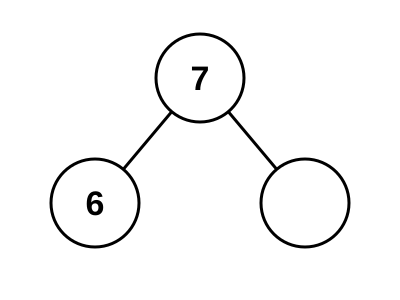
      Number bond with 7 on top, 6 in one part and the other part empty. Other part: ___

    Listen to the story. Write the equation.

    1. 5.
      There are 5 socks. 3 are white. The rest are black. How many are black?
    2. 6.
      There are 10 eggs. 6 are brown. The rest are white. How many are white?
    3. 7.
      You hide 8 pennies under a cup. You pull out 4. How many are still under the cup?

    Challenge (optional)

    The whole is 9. Show two different ways to split it into two parts.

    You need: 10 counters and a cup (optional)

    Reading & Writing · Week 2 Day 2

    I can hear and say the middle vowel sound in a word.

    Look: the middle sound

    1. Say "cup" slowly: /k/ /u/ /p/. Stretch the middle sound: cuuup.
    2. Say: "The middle sound in cup is /u/. The letter is u."
    3. Try one more together: bed. The middle sound is /e/.

    Gus and Ted

    Gus is a pup. Ted is a cat. Gus and Ted sit on a rug. Ted was in a box! Gus did not see Ted.

    Say the picture name. Circle the middle sound.

    1. 1.
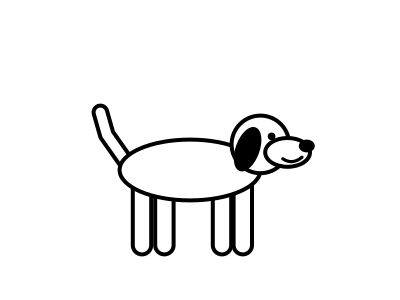
      A dog.
      • o
      • u
      • a
    2. 2.
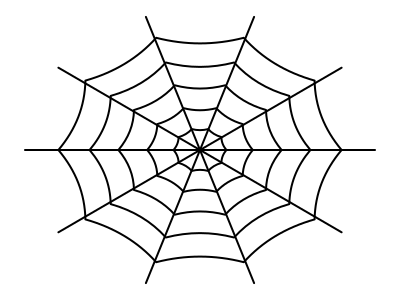
      A web.
      • i
      • e
      • u
    3. 3.
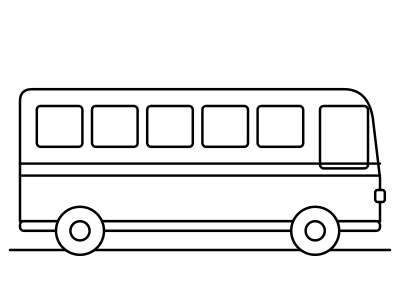
      A bus.
      • u
      • a
      • o
    4. 4.
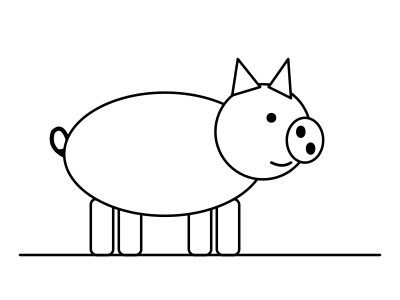
      A pig.
      • e
      • i
      • a

    Read the story. Circle the word that matches.

    1. 5.
      Gus is a ___.
      • pup
      • cat
    2. 6.
      Gus and Ted sit on a ___.
      • rug
      • bed
    3. 7.
      Ted was in a ___!
      • box
      • hut

    Challenge (optional)

    Did Gus see Ted?

    Science · Week 2 Day 2

    I can feel my throat shake when I hum.

    Look: Feel a hum

    1. Put two fingers on the front of your throat.
    2. Hum "mmm." Feel the buzz. That buzz is a vibration.
    3. Stop humming. The buzz stops too.

    Put your fingers on your throat and do each thing. Circle yes if you feel a buzz. Circle no if you do not.

    1. 1.
      Sing "la, la, la."
      • yes
      • no
    2. 2.
      Keep your lips shut and make no sound at all.
      • yes
      • no
    3. 3.
      Growl like a lion.
      • yes
      • no
    4. 4.
      Count to 3 in your head without saying it out loud.
      • yes
      • no
    5. 5.
      Buzz "zzzz" like a bee.
      • yes
      • no

    Draw or circle.

    1. 6.
      Circle the one that is vibrating to make a sound.
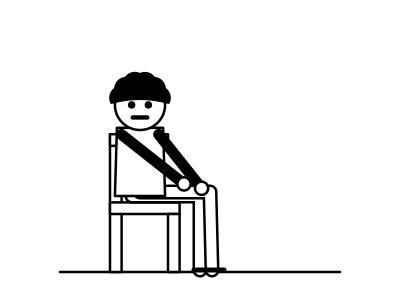
      • A child sitting with lips shut.
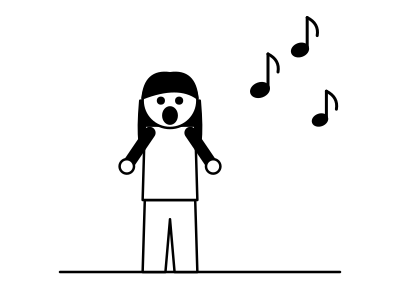
      • A child singing.
    2. 7.
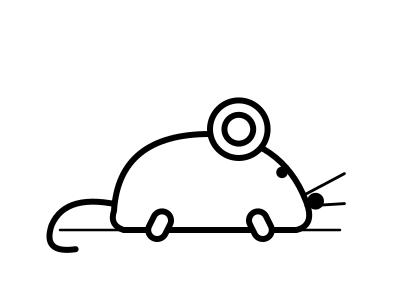
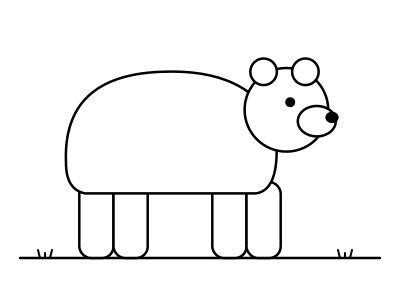
      Hum a high note, then a low note. Which buzz is easier to feel? Circle the mouse for high or the bear for low.
      • A mouse.
      • A bear.
    3. 8.
      Draw a dog barking. Add zigzag lines where its body shakes to make the bark.

    Challenge (optional)

    Put your hand gently on a grown-up's back while they talk. What do you feel?

    You need: crayons