1First Grade

    Fact families: add and subtract go together

    My family story, part 1

    Practice pages

    0 of 180 days complete · Saved on this device

    View all 180 days

    Math

    Fact families: add and subtract go together

    I can use three numbers to write adding and subtracting facts.

    Standards: 1.OA.B.4, 1.OA.A.1

    Number practice (no timer)
    Count back by 1 and 2; partners of 10
    Builds on
    Days 1 to 3 and Week 1 equations. One-minute check: "3 + 5 = ?" (8) "8 - 5 = ?" (3) Your child may use counters.

    New words

    • fact family: a group of adding and subtracting facts that use the same three numbers

    You need

    • 20 counters or cubes in two colors
    • Paper triangles: draw 3 large triangles on paper with a circle at each corner
    • Notebook and pencil
    1. Warm-Up · 5 min

      Fluency: count back by 1 and 2. Count back by 1s from 15 to 5. Count back by 2s from 10 to 0. Partners of 10: 6 (4), 1 (9). Spaced review from Day 3: "8 - 2 = ?" Count back on fingers (6).

    2. Mini-Lesson · 10 min

      Say: "Today we see how adding and taking away go together." Build a train of 3 red cubes and 5 yellow cubes. Ask: "How many in all?" (8) Write 3 + 5 = 8. Turn the train around. Ask: "Now what do you see?" (5 + 3 = 8) Write it. Snap off the 5 yellow cubes. Ask: "8 cubes, take away 5. How many left?" (3) Write 8 - 5 = 3. Snap the train back together, then take away the 3 red. Write 8 - 3 = 5. Say: "These four facts use the same three numbers: 3, 5 and 8. We call this a fact family. If 3 + 5 = 8, then 8 - 5 = 3." Point out that 8, the whole, always comes first in the subtraction facts.

    3. Guided Practice · 10 min

      Your child builds each train and writes all four facts. 1) 2, 4 and 6: 2 + 4 = 6, 4 + 2 = 6, 6 - 4 = 2, 6 - 2 = 4. 2) 1, 9 and 10: 1 + 9 = 10, 9 + 1 = 10, 10 - 9 = 1, 10 - 1 = 9. 3) Your child chooses: they snap 4 of one color and 3 of another and write the family (4 + 3 = 7, 3 + 4 = 7, 7 - 3 = 4, 7 - 4 = 3). If stuck, say: "Which number is the whole, the biggest one? Start every subtraction fact with the whole."

    4. Play · 10 min

      Fact Triangles. Write 3, 4 and 7 in the corners of a paper triangle, with 7 at the top. Cover one corner with your thumb. Your child says the hidden number and the fact that finds it. Cover the 7: "3 + 4 = 7." Cover the 3: "7 - 4 = 3." Then make triangles for 5, 5, 10 and 2, 7, 9. Ask: "Why does 5, 5, 10 have only two facts?" (Because 5 + 5 = 10 and 10 - 5 = 5; switching gives the same facts.)

    5. Exit Ticket · 3-5 min

      Put the objects to one side but leave them on the table. Read each question aloud. Your child answers out loud, with objects or with a quick drawing. Check each answer together right away.

    Exit ticket

    1. Write two subtraction facts for 2, 7 and 9.
    2. If 4 + 6 = 10, what is 10 - 6?
    3. Which number is the whole in the fact family 3, 6, 9?
    Answers
    1. 9 - 7 = 2 and 9 - 2 = 7
    2. 4
    3. 9
    Watch for, and help or stretch
    Watch for
    Starting a subtraction fact with a part, such as writing 3 - 8.
    Try
    Build the train. Ask: "Can you take 8 cubes from 3 cubes?" (No.) Start with the whole train of 8.
    Extra help
    Write the addition facts for your child. Your child builds the train and finds the two subtraction facts.
    Stretch
    Ask your child to make a fact family with a whole of 15 (for example 15, 8, 7: 8 + 7 = 15, 7 + 8 = 15, 15 - 7 = 8, 15 - 8 = 7).

    At home (optional): Draw one fact triangle with numbers you choose and quiz a family member on it.
    Reading & Writing

    My family story, part 1

    I can draw and write the first thing that happened in a true story about my family.

    Standards: W.1.3, L.1.2.e, RF.1.3.b

    Phonics
    Short o, u and e in CVC words; all five short vowels; middle sounds
    Sight words
    the, of, to, said, was
    Reading
    The Relatives Came (Cynthia Rylant); original decodable "Ten in a Hut"
    Writing
    Personal narrative: drawing and writing about one time with family · Handwriting: lowercase l, t, i, j, k
    Builds on
    Drawing and labeling (Week 1). One-minute check: your child tells you what a label is and shows one on the name page.

    New words

    • true story: a story about something that really happened to you
    • beginning: the first part of a story

    You need

    • Three-box story paper (a page with 3 boxes and lines under each)
    • Pencil
    • Crayons
    • Sight word cards
    • The Relatives Came (Cynthia Rylant), optional read-aloud; any picture book about a family visit or gathering works
    1. Phonics & Word Work · 15 min

      Mixed short vowels. I do: model reading with a slow finger: sun, web, fox. We do: Change One Letter chain: hot, hop, hip, hit, hut, nut, net, wet. You do: your child reads the chain alone. Read: "Mom and Dad got a big tub." "The red hen was in the pen." Dictation: wet, nut, hip, fox, sun. If stuck, have your child say the sound of only the letter that changed.

    2. Sight Words · 5 min

      Review: the, of, to, said, was. Rainbow Write: your child writes two of this week's words three times each in different crayons, saying each letter, then reads them. Use said and was.

    3. Read-Aloud & Shared Reading · 15 min

      Say: "Authors write true stories about small things that happened to them." Look at the first pages of the picture book again. Ask: "How did the author start the story?" (Answers vary. Look for: who is going where, such as the relatives leaving home.) Ask: "What do you think gave the author the idea?" (Answers vary. Look for: a family memory or visit.) Ask: "What true story could you tell about your family?" (Answers vary.) Echo-read "Ten in a Hut" once for fluency.

    4. Writing & Handwriting · 15 min

      Your child picks one real visit or outing (a trip to the park, a cousin's visit). Say: "Plan with pictures first." Your child sketches the story across three boxes: what happened first, next and last. Then writes the first sentence under box 1 with sound spelling, such as "We went to Nan." Accept invented spelling for untaught words; spell sight words correctly. Check for a capital and an end mark. Handwriting (3 min): your child writes the sight words the, of and to neatly, minding the tall letters t, h and f.

    5. Exit Ticket · 5 min

      Your child points to the story paper and answers.

    Exit ticket

    1. What is your story about?
    2. Read your first sentence to me.
    3. Read this word: wet.
    Answers
    1. Answers vary. Look for: one real event with family.
    2. Answers vary. Look for: a sentence that matches box 1.
    3. wet
    Watch for, and help or stretch
    Watch for
    Choosing a big topic, such as "my summer", instead of one small event.
    Try
    Ask: "What is one time, on one day?" Help your child pick a single moment, like when the cousins arrived.
    Extra help
    Your child tells the story aloud first while you write key words on sticky notes to copy.
    Stretch
    Your child writes a sentence under box 2 as well.

    At home (optional): Tell someone at home about your story idea using the words first, next and last.

    ScienceWeekly check

    Rubber band guitar

    I can show that a stretched band shakes when it makes a sound.

    Standards: 1-PS4-1

    Builds on
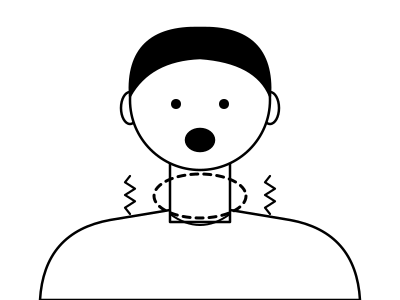
    The word vibrate. One-minute check: your child hums with fingers on their throat and tells you the science word for what they feel. (vibrate)

    New words

    • pluck: to pull a string or band and let it go

    You need

    • Open shoebox or plastic tub
    • 3 rubber bands of different thickness (grown-up stretches them around the box)
    • Sound Journal
    • Pencil
    1. Warm-Up / Wonder · 5 min

      Spaced review: play "Vibrate or Still?" Your child hums with fingers on their throat. Ask: "Vibrate or still?" (vibrate) Your child sits silently with fingers on their throat. Ask: "Vibrate or still?" (still) Wonder question: "If we pluck a rubber band, will we see it vibrate?"

    2. Review Game · 10 min

      Grown-up stretches the 3 rubber bands around the open box. Keep faces back from the bands. Your child plucks the thickest band. Ask: "What do you see?" (The band looks blurry. It is shaking fast.) "What do you hear?" (A twang.) Your child presses a finger on the band. Ask: "What happened to the sound?" (It stopped.) Play "Stop It!": you pluck a band and your child stops the sound as fast as they can by touching the band. Do it 5 times, using all 3 bands. Ask: "How did you stop the sound?" (I stopped the band from shaking.) If stuck seeing the blur, pluck the thickest band harder and hold the box at eye level near a bright window.

    3. Check · 10 min

      Give the Week 2 science check. The check items are on the Week 2 check page; do not show them ahead of time. This week the check is something your child does with the rubber band guitar. Read each part aloud. Your child answers by talking, pointing, showing with the real materials or drawing. You write down their words exactly. It is not timed; stop and finish later if your child is tired. Make a check mark next to each part your child shows on their own. The printed check has 8 items. It covers these goals: (1) I can feel my throat shake when I hum; (2) I can show that a stretched band shakes when it makes a sound. Watch for three things: your child plucks a band, points to the part that is shaking, and says that the sound stops when the shaking stops. The target sentence is: "When it shakes, I hear it." Secure: 6 of 8 correct, including at least 2 of items 1, 3 and 5 (plucks and points, knows a still band makes no sound, says "When it shakes, I hear it"). If the check is not yet secure, use the reteach step on the check page that matches the items missed.

    4. Exit Ticket · 3–5 min

      Ask the two questions aloud. Your child may point to the guitar.

    Exit ticket

    1. Which part of the guitar was vibrating?
    2. What happened to the sound when you held the band still?
    Answers
    1. The rubber band.
    2. It stopped.
    Watch for, and help or stretch
    Watch for
    Saying the box makes the sound by itself.
    Try
    Tap the empty side of the box: it makes only a dull tap. Then pluck the band. Ask: "Which one is shaking fast?"
    Extra help
    Use only the thickest band; it blurs the most and is easiest to see.
    Stretch
    Your child compares a tight band and a loose band and tells which one sounds higher. (The tight one.)

    At home (optional): Your child plays the rubber band guitar for a family member and shows how to stop the sound.

    Practice

    Read each direction aloud. Your child works on the page; answers are in the grown-up view.

    Warm-up

    Remember?

    Math

    1. Is a ball shaped like a sphere or a cube?
    2. 1 + 4 = ?

    Reading & Writing

    1. I like my cat.

    Math · Week 2 Day 4

    I can use three numbers to write adding and subtracting facts.

    Look: 2, 3 and 5

    1. Build a train with 2 red cubes and 3 yellow cubes. 2 + 3 = 5 and 3 + 2 = 5.
    2. Take away the 3 yellow cubes: 5 - 3 = 2.
    3. Put them back. Take away the 2 red cubes: 5 - 2 = 3. These 4 facts are a fact family.

    Use the three numbers. Write the missing number.

    1. 1.
      1, 6, 7: 1 + 6 = ___
    2. 2.
      1, 6, 7: 7 - 6 = ___
    3. 3.
      4, 5, 9: 9 - 4 = ___
    4. 4.
      4, 5, 9: 5 + ___ = 9

    Circle the answer.

    1. 5.
      Which fact is in the family 2, 8, 10?
      • 10 - 8 = 2
      • 8 - 2 = 6
    2. 6.
      Which fact is in the family 1, 3, 4?
      • 3 - 4 = 1
      • 4 - 3 = 1
    3. 7.
      Look at 3 + 7 = 10. Circle the number that starts both take-away facts.
      • 3
      • 7
      • 10

    Challenge (optional)

    Write all four facts for 6, 2 and 8.

    You need: cubes in 2 colors (optional)

    Reading & Writing · Week 2 Day 4

    I can draw and write the first thing that happened in a true story about my family.

    Look: plan a true story

    1. Say: "A true story tells about one thing that really happened to me."
    2. Tell a short true story: "First, we got on the bus. Next, we had a snack. Last, we got off at the pond." Draw a quick sketch for the first part.
    3. Write the first sentence under the sketch: We got on the bus.

    Nan and the Big Tub

    Nan got a big tub. Nan and Jen fed the dog. The dog got in the tub! It was wet. Jen had fun.

    Read each sentence. Circle the word that matches the story.

    1. 1.
      Nan got a big ___.
      • tub
      • cup
    2. 2.
      The dog got in the ___!
      • bed
      • tub
    3. 3.
      It was ___.
      • wet
      • hot

    Draw the first thing that happened in your true story, then write about it. Then write the words your grown-up says.

    1. 4.
      Draw here:
    2. 5.
      Write about your picture:
    3. 6.
    4. 7.

    Challenge (optional)

    Mom and ___ had fun.

    You need: crayons

    Science · Week 2 check

    Weekly check

    How to give it: Read every direction, question and choice aloud. It is not timed; stop and finish later if your child is tired. Your child answers by talking, pointing, showing with the real materials or drawing, and you write their words exactly. Have the rubber band guitar ready; keep faces back from the bands. Watch for three things: your child plucks a band, points to the shaking part and says the sound stops when the shaking stops. Mark each part your child shows on their own.

    Secure when: 6 of 8 correct, including at least 2 of items 1, 3 and 5 (plucks and points, knows a still band makes no sound, says "When it shakes, I hear it").

    • I can feel my throat shake when I hum.
    • I can show that a stretched band shakes when it makes a sound.
    1. 1.
      Pluck a band on the rubber band guitar. Point to the part that is shaking.
    2. 2.
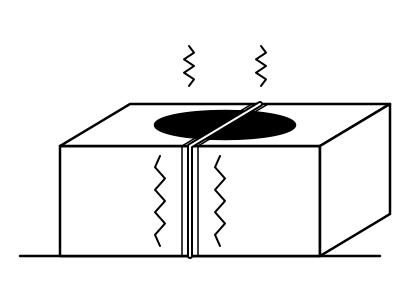
      A rubber band on a box, drawn blurry with zigzag lines around it. Is this band making a sound?
      • yes
      • no
    3. 3.
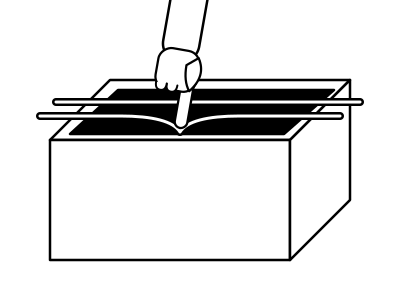
      A finger pressing down on a rubber band on a box, with no zigzag lines. Is this band making a sound?
      • yes
      • no
    4. 4.
      Tell how you stop the twang. Then say why it works. Your grown-up writes it.
    5. 5.
      Say the target sentence about the band. Your grown-up writes it.
    6. 6.
      Circle the thing that is shaking to make a sound.
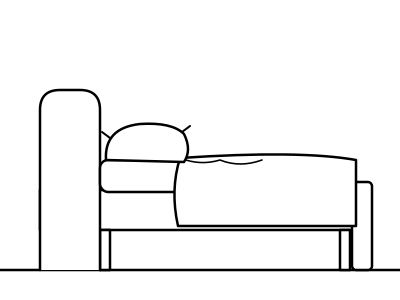
      • A pillow on a bed.
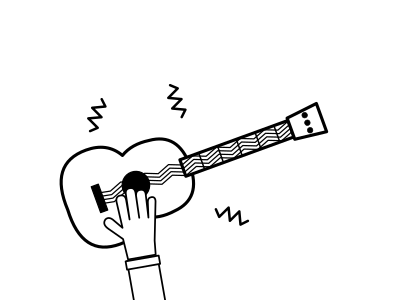
      • A guitar being strummed.
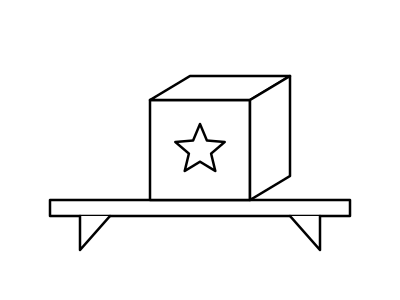
      • A toy block on a shelf.
    7. 7.
      Put your fingers on your throat and say "moo" like a cow. Do you feel a buzz?
      • yes
      • no
    8. 8.
      Where do you feel the buzz when you hum? Circle it.
      • A knee.
      • A throat.
      • A foot.