1First Grade

    Counting back to subtract

    Names get capitals

    Practice pages

    0 of 180 days complete · Saved on this device

    View all 180 days

    Math

    Counting back to subtract

    I can count back 1 or 2 to subtract.

    Standards: 1.OA.C.5

    Number practice (no timer)
    Count back by 1 and 2; partners of 10
    Builds on
    Days 1 and 2 subtraction stories. One-minute check: "10 - 1 = ?" (9) Count back by 1 from 10 to 5.

    New words

    • number line: a line with numbers in order, used for counting forward and back
    • count back: say the numbers backward to take away

    You need

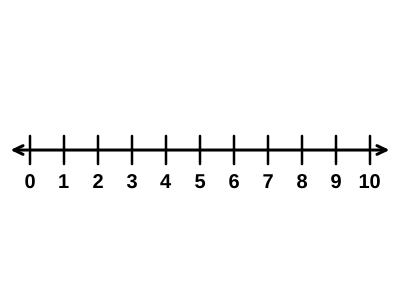
    • Number line 0 to 10 drawn on a strip of paper, with big spaces between numbers
    • A small toy or game piece to hop
    • A coin
    • Notebook and pencil
    1. Warm-Up · 5 min

      Fluency: count back by 1 and 2. Count back from 10 to 0. Then start at 9 and count back by 2s: 9, 7, 5, 3, 1. Partners of 10: you hold up 3 fingers, your child shows 7. Spaced review from Day 2: "The whole is 6. One part is 4. What is the other part?" (2)

    2. Mini-Lesson · 10 min

      Say: "Today we take away by counting back on a number line." Put the toy on 9. Say: "9 - 2 means start at 9 and hop back 2." Hop the toy back one space and say, "8." Hop again and say, "7." Say: "We hopped 2 times. We landed on 7. So 9 - 2 = 7." Say: "We do not count the 9. We start there. The first hop lands on 8." Do another: 6 - 1. Start on 6, hop back once to 5. Write 6 - 1 = 5. Ask: "What do you think 6 - 2 is?" (4)

    3. Guided Practice · 10 min

      Your child hops the toy for each problem and says each number out loud as it lands. Write each equation. 1) 10 - 2 (lands on 9, then 8; 10 - 2 = 8) 2) 5 - 2 (4, 3; 5 - 2 = 3) 3) 8 - 1 (7; 8 - 1 = 7) 4) 7 - 2 (6, 5; 7 - 2 = 5) Then try one without the number line: "Close your eyes. Start at 6. Count back 2." (5, 4; the answer is 4) If stuck, say: "Put your finger on the start number. Say nothing yet. Now hop and say the number you land on."

    4. Play · 10 min

      Hop Back. Each player starts a toy on 10. Take turns flipping the coin: heads means hop back 1, tails means hop back 2. Say the equation for each turn, such as "10 - 2 = 8." Keep playing until a toy lands exactly on 0. (If you are on 1 and flip tails, stay on 1.) There is no prize for being fast. The winner is the first toy to land exactly on 0.

    5. Exit Ticket · 3-5 min

      Put the objects to one side but leave them on the table. Read each question aloud. Your child answers out loud, with objects or with a quick drawing. Check each answer together right away.

    Exit ticket

    1. 7 - 1 = ?
    2. 10 - 2 = ?
    3. 4 - 2 = ?
    Answers
    1. 6
    2. 8
    3. 2
    Watch for, and help or stretch
    Watch for
    Counting the start number as the first hop, so 9 - 2 becomes "9, 8" and the answer is 8.
    Try
    Say: "Start number, whisper it. First hop, say it loud." Practice 9 - 1 together until it lands on 8.
    Extra help
    Only count back 1 at first. Your child touches each number on the number line with a finger.
    Stretch
    Count back 3 from 12, 15 and 20 (9, 12, 17) without the number line.

    At home (optional): Walk down the stairs and count back 1 for each step. Ask: "We started on step 5 and went down 2. Where are we?" (Step 3)
    Reading & Writing

    Names get capitals

    I can write people's names with a capital letter.

    Standards: L.1.2.a, L.1.1.b, L.1.1.a

    Phonics
    Short o, u and e in CVC words; all five short vowels; middle sounds
    Sight words
    the, of, to, said, was
    Reading
    The Relatives Came (Cynthia Rylant); original decodable "Ten in a Hut"
    Writing
    Personal narrative: drawing and writing about one time with family · Handwriting: lowercase l, t, i, j, k
    Builds on
    Capitals and end marks in sentences (Week 1). One-minute check: write "the cat can sit" without a capital or end mark. Your child tells you the two fixes. (Capital T; period at the end)

    New words

    • noun: a word that names a person, place or thing
    • proper noun: a special name, like Maria or Ohio; it starts with a capital letter
    • common noun: a word for any person, place or thing, like mom, dog or bed

    You need

    • Family photo
    • Handwriting sheet (l, t, i, j, k)
    • Index cards
    • Sight word cards
    1. Phonics & Word Work · 15 min

      I do: read a list of names that are also short vowel words: Ben, Meg, Tom, Gus, Pam, Tim. Say: "Names start with a capital." We do: read a mixed list together: hen, Ben, rug, Gus, top, Tom. You do: your child reads 8 words and tells which ones are names: mud, Ted, pin, Nan, cub, Jim, web, Dot. (Names: Ted, Nan, Jim, Dot) Read: "Ted and Meg got a pup." Dictation: Ben, ten, Gus, bug. Your child decides which need a capital. If stuck, ask: "Is this the name of one special person or pet?"

    2. Sight Words · 5 min

      Review: the, of, to, said, was. Flip and Read: lay the five cards face down with last week's words. Your child flips a card, reads it and uses it in a short spoken sentence. Missed words go back in the pile.

    3. Read-Aloud & Shared Reading · 15 min

      Look at the family photo together and name the people in it. Then reread "Ten in a Hut". Ask: "Find a name in the story. How do you know it is a name?" (Mom or Dad; they start with a capital letter in the middle of a sentence.) Ask: "Is hut a name or a common noun?" (a common noun) Ask: "Who said It is hot?" (Mom)

    4. Writing & Handwriting · 15 min

      List family members' names together (any family shape: parents, grandparents, cousins, pets). Your child copies two names, starting each with a capital. Then writes "Mom is fun." or another family name in that sentence. Sort game: write 6 cards: Mom (as a name), Rex, Ohio, dog, bed, mom (as a word: my mom). Your child sorts them into Special Names and Any Thing. Say: "When we call her Mom, it is her name, so it gets a capital." Handwriting (4 min): model each letter large in the air, then on paper while saying the path aloud. l: start at the tall line and pull straight down; t: start below the tall line, pull down, then cross at the middle line; i: pull down from the middle line, then add a dot; j: pull down from the middle line, go below the line, hook left, add a dot; k: tall line down, then in to the middle and out to the bottom. Your child writes each letter 3 times on lined paper and circles the best one. Review all five letters once each.

    5. Exit Ticket · 5 min

      Your child answers orally and writes the last one.

    Exit ticket

    1. Is dog a special name or a word for any dog?
    2. Why does Ben start with a capital letter?
    3. Write the name of someone in your family.
    Answers
    1. A word for any dog (a common noun).
    2. It is a name (a proper noun).
    3. Answers vary. Look for: a capital first letter.
    Watch for, and help or stretch
    Watch for
    Putting capitals on every word, or on common nouns such as dog.
    Try
    Ask: "Is this one special person, pet or place with its own name?" Only names get the capital.
    Extra help
    Sort with pictures: photos of family members for names and pictures of a dog, cup and bed for common nouns.
    Stretch
    Your child writes a sentence with two names, such as "Meg and Ben had fun."

    At home (optional): Write the names of 3 people or pets you know, each starting with a capital letter.

    Social Studies

    Why do we have rules?

    I can tell why we need rules.

    Standards: D2.Civ.3.K-2

    Builds on
    Jobs at home. One-minute check: your child tells you their job this week and whether they did it today.

    New words

    • rule: something everyone agrees to do or not do
    • safe: kept from getting hurt
    • fair: everyone gets a good chance

    You need

    • A soft ball or a rolled-up pair of socks
    • Chart paper or a large sheet
    • Marker
    • A timer
    1. Warm-Up / Wonder · 5 min

      Spaced review: ask: "What is a responsibility?" (A job you are trusted to do.) Wonder question: "What would a game be like with no rules at all?"

    2. Explore · 10–15 min

      Round 1, no rules (1 minute): sit in a circle with at least one other family member or a stuffed animal player. Say: "Play catch. There are no rules." Let it get a little silly: everyone grabs, throws any time, nobody waits. Stop after 1 minute. Ask: "How did that feel?" (Messy, unfair, someone almost got bonked.) Round 2, three rules (2 minutes): say the rules and write them. 1) Roll the ball on the floor; no throwing. 2) Take turns. 3) Say the person's name before you roll. Play again. Ask: "Which round was safer?" (Round 2.) "Which round was fairer?" (Round 2; everyone got a turn.) Ask about each rule: "Why does this rule help?" (Rolling: no one gets hit. Turns: everyone plays. Names: people are ready.) If stuck, ask: "In Round 1, did everyone get a turn?"

    3. Talk & Record · 5–10 min

      On chart paper, write two headings: "Rules keep us safe" and "Rules help us be fair." Your child draws one picture under each from the game. They trace or copy the word "rules."

    4. Exit Ticket · 3–5 min

      Ask the two questions aloud.

    Exit ticket

    1. Why do we have rules?
    2. Tell one rule from our game and why it helps.
    Answers
    1. To keep us safe and to help us be fair.
    2. Answers vary. Sample: "Roll, don't throw, so no one gets hit." Look for a rule and a reason.
    Watch for, and help or stretch
    Watch for
    Saying rules are only for getting in trouble.
    Try
    Replay 10 seconds of Round 1. Ask: "Did the rules stop the fun, or make the game work?"
    Extra help
    Use one rule only (take turns) in Round 2, and ask only "Was that fairer?"
    Stretch
    Your child makes up one more rule for the game and tells whether it is about safety or fairness.

    At home (optional): Your child tells a family member one rule at home and whether it keeps people safe or helps things be fair.

    Practice

    Read each direction aloud. Your child works on the page; answers are in the grown-up view.

    Warm-up

    Remember?

    Math

    1. What number comes right before 6?
    2. 2 and what number make 5?

    Reading & Writing

    Math · Week 2 Day 3

    I can count back 1 or 2 to subtract.

    Look: 9 - 2

    1. Put your finger on 9. Do not count the 9.
    2. Hop back 2 and say where you land: 8, 7.
    3. You land on 7. So 9 - 2 = 7.

    Count back on the number line. Write the answer.

    1. 1.
      Number line from 0 to 10. 5 - 1 = ___
    2. 2.
      10 - 1 = ___
    3. 3.
      2 - 1 = ___
    4. 4.
      A tree has 3 apples. 1 falls off. How many are left?

    Count back. Circle the answer.

    1. 5.
      4 - 1
      • 2
      • 3
      • 5
    2. 6.
      3 - 2
      • 1
      • 2
      • 4
    3. 7.
      2 - 2
      • 0
      • 1
      • 2

    Challenge (optional)

    Start at 10. Count back 2. Then count back 2 more. Where do you land?

    You need: a small toy to hop (optional)

    Reading & Writing · Week 2 Day 3

    I can write people's names with a capital letter.

    Look: names start with a capital

    1. Write: Ben and his dog Rex. Say: "Ben is a name. Rex is a name. Names start with a capital letter."
    2. Write: a dog. Say: "dog is not a special name. It is a word for any dog, so no capital."
    3. Read "Peg and Bob" and find each name together.

    Peg and Bob

    Peg had a pet. The pet was a dog. The dog was Bob. Peg and Bob ran to Nan. Nan had a big red pen.

    Read the words. Circle each one that is a name.

    1. 1.
      Peg
    2. 2.
      dog
    3. 3.
      Bob
    4. 4.
      pen
    5. 5.
      Nan

    Write the name with a capital letter.

    1. 6.
      tom
    2. 7.
      kim
    3. 8.
      Mom and ___

    Challenge (optional)

    The dog is ___.

    Social Studies · Week 2 Day 3

    I can tell why we need rules.

    Look: a rule and its reason

    1. Here is a rule: hold a grown-up's hand in the parking lot.
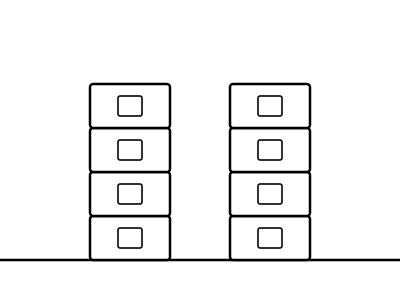
    2. Ask: does it keep us safe, or does it help us be fair? On this page, the shield means safe and the even blocks mean fair.
    3. Say the reason: it keeps us safe from cars. That is a safe rule.

    Tag with No Rules

    Ava and her cousins played tag. Nobody said who was It. Everybody ran every which way, and two kids bumped heads. Then Grandpa said, "Let's make two rules. Tag with a soft touch. Only one person is It at a time." The next game was fun for everyone.

    Listen to the story. Circle yes or no.

    1. 1.
      Was the first game of tag safe?
      • yes
      • no
    2. 2.
      Did the two rules help the next game?
      • yes
      • no
    3. 3.
      Would it be fair if one kid was always It and never got to run?
      • yes
      • no

    Listen to each rule. Circle the shield if it keeps us safe. Circle the even blocks if it helps us be fair.

    1. 4.
      Hold a grown-up's hand when you cross the street.
      • A shield.
      • Two equal stacks of blocks.
    2. 5.
      Everybody gets one slice of the pie.
      • A shield.
      • Two equal stacks of blocks.
    3. 6.
      Each player rolls the dice once, then passes it.
      • A shield.
      • Two equal stacks of blocks.
    4. 7.
      Point the scissors down when you walk.
      • A shield.
      • Two equal stacks of blocks.
    5. 8.
      Wear a helmet when you ride a bike.
      • A shield.
      • Two equal stacks of blocks.

    Challenge (optional)

    Make up one rule for a game you like. Tell why it helps.