1First Grade

    Lesson + weekly check: subtraction stories

    Share and check: short vowels

    Practice pages

    0 of 180 days complete · Saved on this device

    View all 180 days

    MathWeekly check

    Lesson + weekly check: subtraction stories

    I can solve taking-away and taking-apart stories.

    Standards: 1.OA.A.1, 1.OA.B.4

    Number practice (no timer)
    Count back by 1 and 2; partners of 10
    Builds on
    Days 1 to 4: taking from, taking apart, counting back and fact families. One-minute check: "If 2 + 5 = 7, what is 7 - 5?" (2)

    New words

    • fact family: adding and subtracting facts that use the same three numbers

    You need

    • Deck of playing cards ace to 10 (no face cards)
    • 20 counters
    • Number line 0 to 10
    • The stored Week 2 check and its answer key
    • Notebook and pencil
    1. Warm-Up · 5 min

      Fluency: count back by 1 and 2 from 10. Partners of 10: you say a number, your child says the partner. Spaced review from Week 1: "Make 10 with 7." (7 + 3 = 10)

    2. Short Lesson: Review Game · 10 min

      Subtraction War. Each player flips two cards and takes the smaller number away from the larger. Say the equation out loud. For example, 9 and 4: "9 - 4 = 5." The player with the bigger answer keeps all four cards. If you tie, flip again. Your child may use counters or the number line for every turn. Play about 6 rounds. Take your time; there is no racing. If stuck, say: "Put the bigger number of counters out. Take away the smaller number. How many are still there?"

    3. Weekly Check · 15 min

      Give the stored Week 2 check. The printed check has 8 items. It covers these goals: (1) I can act out a taking-away story and tell how many are left; (2) I can split a group into two parts and find the missing part; (3) I can count back 1 or 2 to subtract; (4) I can use three numbers to write adding and subtracting facts. Read each item aloud as many times as needed. Your child may use counters, a drawing or the number line, and writes an equation or fact where the item asks for one. There is no time limit. Score it with the answer key. Secure: 7 of 8 correct, with at least 1 right on each goal. If the check is secure, start Week 3. If it is not, first do the reteach step on the check page for each group of items missed, then start Week 3.

    4. Exit Ticket · 3-5 min

      After the check, ask these two questions. Then go over any missed check items together.

    Exit ticket

    1. You have 8 crackers. You eat 3. How many are left?
    2. Tell me the fact family for 1, 5 and 6.
    Answers
    1. 5 crackers
    2. 1 + 5 = 6, 5 + 1 = 6, 6 - 5 = 1, 6 - 1 = 5
    Watch for, and help or stretch
    Watch for
    Using the wrong operation on a taking-apart story, adding the whole and the part.
    Try
    Ask: "Is the whole number already in the story? Then we are finding a part, and the answer is smaller."
    Extra help
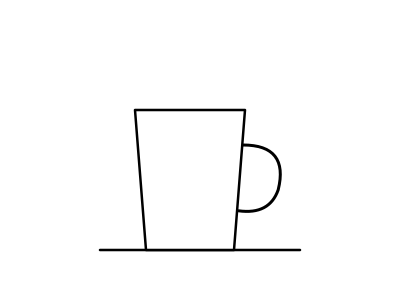
    Let your child act out every story with counters and the cup during the check.
    Stretch
    After the check, your child writes a take-apart story for you with a whole of 10.

    At home (optional): Play Subtraction War with a family member for 5 rounds.
    Reading & WritingWeekly check

    Share and check: short vowels

    I can read words with all five short vowels and share my story start.

    Standards: RF.1.3.b, SL.1.1.b, RF.1.3.g

    Phonics
    Short o, u and e in CVC words; all five short vowels; middle sounds
    Sight words
    the, of, to, said, was
    Reading
    The Relatives Came (Cynthia Rylant); original decodable "Ten in a Hut"
    Writing
    Personal narrative: drawing and writing about one time with family · Handwriting: lowercase l, t, i, j, k
    Builds on
    This week's word work. One-minute check: warm up by reading hot, bug and bed.

    New words

    • respond: say something back about what someone said

    You need

    • Mixed CVC cards
    • Sight word cards
    • Three-box story paper
    • Recording sheet for you
    1. Review Game · 10 min

      Vowel Toss: write a, e, i, o, u on five paper plates on the floor. Say a word (pet, mud, fox, lid, cap); your child tosses a bean bag or sock onto the matching vowel, then reads the word card. Then play Swat It with this week's sight words. If stuck on a word during the game (not during the check), cover all but the first sound, say it together, then uncover the rest and blend.

    2. Sight Words · 5 min

      Review: the, of, to, said, was. Memory Match: make two cards for each of three words. Turn them face down and play Memory; read the word on every card turned over.

    3. Weekly Check · 15 min

      The printed check has 9 items. It covers these goals: (1) I can read words with all five short vowels; (2) I can read the sight words the, of, to, said and was; (3) I can hear the middle vowel sound in a word; (4) I can retell a story in order; (5) I can write a name with a capital letter. Give no hints. Record right or wrong. Secure: 8 of the 10 words in items 1 and 2, 4 of the 5 sight words in item 3, and 4 of the other 6 items. Note which vowels were mixed up. For any part that is not yet secure, use the matching reteach step on the check page next week.

    4. Share & Listen · 10 min

      Your child shares the story start (box 1). You add a comment, such as "I remember that day! It was so hot." Your child responds to your comment with a connected sentence, such as "Yes, and we had a fan." (SL.1.1.b)

    5. Handwriting · 10 min

      Model each letter large in the air, then on paper while saying the path aloud. l: start at the tall line and pull straight down; t: start below the tall line, pull down, then cross at the middle line; i: pull down from the middle line, then add a dot; j: pull down from the middle line, go below the line, hook left, add a dot; k: tall line down, then in to the middle and out to the bottom. Your child writes each letter 3 times on lined paper and circles the best one. Then write the sentence "Ten of us sat."

    6. Exit Ticket · 5 min

      Talk about the week.

    Exit ticket

    1. Which short vowel is the trickiest for you? Read a word with it.
    2. I say: That was a fun trip. What could you say back?
    Answers
    1. Answers vary. Look for: a correct read of a word with that vowel.
    2. Answers vary. Look for: a response that connects, such as "Yes, I liked the bus."
    Watch for, and help or stretch
    Watch for
    Reading said as sed or sad after thinking about the letters.
    Try
    Review the heart part: "ai says /e/ in said." Read the word 5 times in sentences.
    Extra help
    Do the check in two sittings if needed. Lay the vowel strip on the table during items 1 and 2.
    Stretch
    Your child reads 3 bonus words with sh or ch (ship, chin, shop) to preview next week. Do not score them.

    At home (optional): Read "Ten in a Hut" to someone at home.

    Social StudiesWeekly check

    Rules in many places

    I can tell rules for home, school and the playground and why each one helps.

    Standards: D2.Civ.3.K-2, D2.Civ.12.K-2

    Builds on
    Why we have rules. One-minute check: ask "Name two reasons we have rules." (to be safe and to be fair)

    New words

    • reason: the "because" that tells why

    You need

    • 3-column chart: Home / School / Playground
    • 9 sticky notes, each with one rule written and a quick sketch
    • Pencil
    1. Warm-Up / Wonder · 5 min

      Spaced review: ask: "Which round of our catch game was safer?" (the one with rules) Wonder question: "Are the rules the same everywhere you go?"

    2. Review Game · 10 min

      Read each sticky note aloud. Your child puts it in a column and tells the reason. Home: put toys away (so no one trips); wash hands before eating (to stay healthy); ask before using the stove (to stay safe). School: raise your hand to talk (so everyone gets heard); walk in the hall (so no one gets hurt); keep hands to yourself (so everyone feels safe). Playground: wait your turn for the slide (to be fair); stay where a grown-up can see you (to be safe); go down the slide feet first (to be safe). Some rules fit two places. Say: "Walking inside fits home and school. That is fine." If stuck, ask: "Where would you be when you need this rule?"

    3. Check · 10 min

      Give the Week 2 social studies check. The check items are on the Week 2 check page; do not show them ahead of time. This week the check is spoken. Read each part aloud. Your child answers by talking, pointing, acting it out or drawing, and you write their words exactly. It is not timed; stop and finish later if your child is tired. Make a check mark next to each part your child shows on their own. The printed check has 8 items. It covers these goals: (1) I can name jobs at home and tell why each helper matters; (2) I can tell why we need rules; (3) I can tell rules for home, school and the playground and why each one helps. Your child gives one rule for each place (home, school, playground) and tells the reason for each. Look for a real rule and a "because" that is about safety or fairness. Write the answers in the right columns. Secure: 6 of 8 correct, with at least one right on each goal. If the check is not yet secure, use the reteach step on the check page that matches the items missed.

    4. Exit Ticket · 3–5 min

      Ask the two questions aloud.

    Exit ticket

    1. Tell a playground rule and why we have it.
    2. Tell a home rule and why we have it.
    Answers
    1. Answers vary. Sample: "Wait your turn for the slide, so it is fair."
    2. Answers vary. Sample: "Put toys away, so no one trips."
    Watch for, and help or stretch
    Watch for
    Giving a rule but no reason, or saying "because you have to."
    Try
    Ask: "What could happen if nobody followed it?" That answer is the reason.
    Extra help
    Use 2 columns (home and playground) and 4 sticky notes.
    Stretch
    Your child adds a 4th column, such as the library or the car, with one rule and a reason.

    At home (optional): On the next outing, your child spots one rule being followed, such as people waiting in line, and tells why it helps.

    Practice

    Read each direction aloud. Your child works on the page; answers are in the grown-up view.

    Warm-up

    Remember?

    Math

    1. How many corners does a square have?
    2. What number comes right after 19?

    Reading & Writing

    1. is, it, in, and

    Math · Week 2 check

    Weekly check

    How to give it: Read every item aloud as many times as needed. Untimed. Your child may use counters, the cup, a drawing or the number line, then writes the answer or equation. Help with reading only, not with the math.

    Secure when: 7 of 8 correct, with at least 1 right on each goal

    • I can act out a taking-away story and tell how many are left.
    • I can split a group into two parts and find the missing part.
    • I can count back 1 or 2 to subtract.
    • I can use three numbers to write adding and subtracting facts.
    1. 1.
      9 crayons are in a box. You take out 6. How many are left?
    2. 2.
      7 ants are on a log. 5 walk away. Write the equation.
    3. 3.
      There are 10 cars. 3 are red. The rest are blue. How many are blue?
    4. 4.
      The whole is 8. One part is 7. What is the other part?
    5. 5.
      Start at 9. Count back 1. Where do you land?
    6. 6.
      You have 7 crackers. You eat 2. Count back to find how many are left.
    7. 7.
      1, 8, 9: 9 - 8 = ___
    8. 8.
      Write two take-away facts for 1, 4 and 5.

    Reading & Writing · Week 2 check

    Weekly check

    How to give it: Give the check after the review game, in a quiet spot, one part at a time. It is untimed; take a stretch break between parts if needed. Read every direction aloud, but do not read the words or story for your child. Do not help except to say "Try your best" or "Skip it." Mark each item right or wrong. Items 1 and 2 (Part 1): your child reads each word aloud. Item 3 (Part 2): your child reads the 5 sight words. Part 3: your child reads "Bud and the Fox Den" aloud (a new story in place of "Ten in a Hut"), then you read the directions for items 4 to 9. For items 4 and 5 say the picture name once; your child circles the middle sound. The story-start share follows, as in the lesson.

    Secure when: 8 of the 10 words in items 1 and 2, 4 of the 5 sight words in item 3, and 4 of the other 6 items.

    • I can read words with all five short vowels.
    • I can read the sight words the, of, to, said and was.
    • I can hear the middle vowel sound in a word.
    • I can retell a story in order.
    • I can write a name with a capital letter.

    Bud and the Fox Den

    Ben had a pup, Bud. Bud ran to the den of a fox! The fox was not in the den. Bud dug in the mud. Ben said, "Get up, Bud!"

    1. 1.
      rob jet hum lap fit
    2. 2.
      nod web tug jab mix
    3. 3.
      the of to said was
    4. 4.
      A jet plane.
      • i
      • e
      • u
    5. 5.
      A cup.
      • u
      • o
      • a
    6. 6.
      Bud ran to the den.
    7. 7.
      Bud dug in the mud.
    8. 8.
      Ben said, "Get up, Bud!"
    9. 9.
      ben and bud

    Social Studies · Week 2 check

    Weekly check

    How to give it: Read every question and choice aloud, and point to each picture as you name it. This week the check is spoken. Your child answers by talking, pointing, circling, acting it out or drawing; write their words exactly on the line. It is not timed; stop and finish later if your child is tired. Do not show the page ahead of time. Write each rule answer in the Home, School or Playground column as well, as the Day 5 lesson says. Make a check mark next to each part your child shows on their own.

    Secure when: 6 of 8 correct, with at least one right on each goal

    • I can name jobs at home and tell why each helper matters.
    • I can tell why we need rules.
    • I can tell rules for home, school and the playground and why each one helps.
    1. 1.
      Name one job a kid can do at home.
    2. 2.
      What would happen if nobody took out the trash?
    3. 3.
      Rules help keep us ____ and help us be ____.
    4. 4.
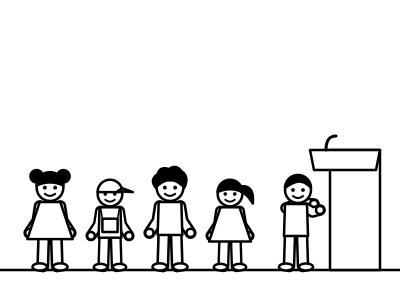
      Kids standing in a line at a water fountain. Does waiting in line help everyone get a fair turn?
      • yes
      • no
    5. 5.
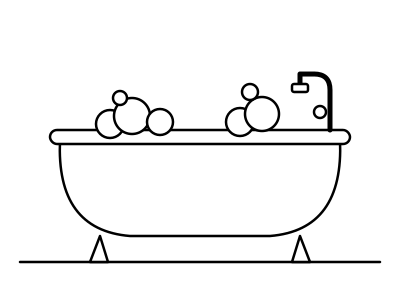
      A bathtub. Say a rule for bath time. Why does it help?
    6. 6.
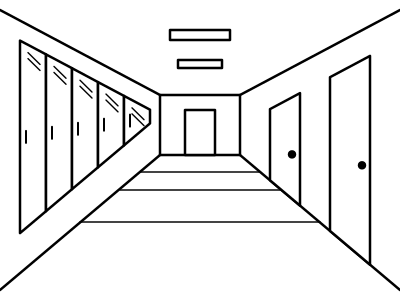
      A school hallway. Say a rule for the school hallway. Why does it help?
    7. 7.
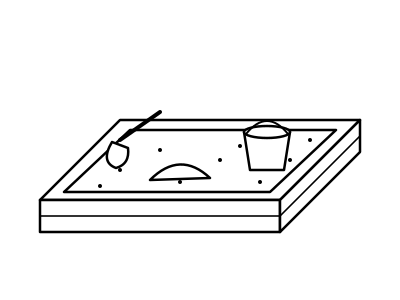
      A sandbox. Say a rule for the sandbox. Why does it help?
    8. 8.
      Can one rule fit more than one place, like walking inside at home and at school?
      • yes
      • no