1First Grade

    Adding tens to any number

    Describing words

    Practice pages

    0 of 180 days complete · Saved on this device

    View all 180 days

    Math

    Adding tens to any number

    I can add a group of tens to a two-digit number.

    Standards: 1.NBT.C.4, 1.OA.B.3

    Number practice (no timer)
    Adding tens: 3 tens + 4 tens
    Builds on
    Day 1 (adding tens to tens) and Week 3 turn-around facts (3 + 5 = 5 + 3). One-minute check: "40 + 50?" (90)

    New words

    • turn-around: adding the same numbers in the other order gives the same total

    You need

    • Tens and ones kit: 9 tens and 9 ones. Use straw bundles of 10 (a rubber band around each) and loose straws, base-ten rods and unit cubes, or paper ten-strips (strips of 10 squares, cut by an adult) with beans as ones
    • 4 slips of paper in a cup: +10, +10, +20, +20
    • 6 start cards made from paper squares: 12, 25, 31, 37, 16, 28
    • Notebook and pencil
    • Beans and unit cubes are small parts: keep them away from children under 3.
    1. Warm-Up · 5 min

      Fluency: adding tens. "3 tens + 4 tens?" (70) "1 ten + 6 tens?" (70) "50 + 40?" (90) Spaced review from Week 3: "5 + 3 = 8, so 3 + 5 = ?" (8)

    2. Mini-Lesson · 10 min

      Say: "Today we add tens to any number." Build 45: 4 bundles and 5 loose ones. Say: "Let us add 30." Add 3 bundles, one at a time, while your child counts on by tens: "55, 65, 75." Ask: "What number now?" (75) Write 45 + 30 = 75. Ask: "What changed?" (The tens: 4 tens + 3 tens = 7 tens.) "What stayed the same?" (The 5 ones.) Write the steps: 40 + 30 = 70, 70 + 5 = 75. Now write 20 + 36. Say: "20 comes first, but it is easier to start at the bigger number. Turn it around: 36 + 20. Same numbers, same total." Build 36 and add 2 bundles: 46, 56. Write 20 + 36 = 56.

    3. Guided Practice · 10 min

      Your child builds each one, counts on by tens and writes the equation. 1) 23 + 40 (63) 2) 51 + 20 (71) 3) 30 + 18 (Turn it around: 18 + 30 = 48) 4) 64 + 30 (94) 5) 17 + 50 (67) After each, ask: "Which digit changed? Why?" (The tens, because we added only tens.) If stuck, say: "Build the first number. Add one bundle at a time and say 10 more each time."

    4. Play · 10 min

      Tens Grab Bag. Each player picks a start card and writes the number at the top of a notebook page. On your turn, pull a slip from the cup, add that many tens, and write the equation, such as 25 + 20 = 45. Build it with the kit to check, then put the slip back in the cup and shake it. Each player takes 3 turns. Then compare: whose number is greater? Say it with tens: "My 85 has 8 tens. Your 72 has 7 tens." Play 2 rounds with new start cards. (The biggest possible end number is 37 + 60 = 97.)

    5. Exit Ticket · 3-5 min

      Put the objects to one side but leave them on the table. Read each question aloud. Your child answers out loud, with objects or with a quick drawing. Check each answer together right away.

    Exit ticket

    1. 52 + 30 = ?
    2. In 26 + 40, which digit changes? What is the answer?
    3. Solve 20 + 43. Tell how you did it.
    Answers
    1. 82
    2. The tens digit (2 tens + 4 tens = 6 tens). 66.
    3. 63. Answers vary. Look for: turning it around to 43 + 20, or adding 2 tens to 4 tens.
    Watch for, and help or stretch
    Watch for
    Adding the tens to the ones digit, such as 45 + 30 = 48.
    Try
    Build it. Ask: "Did we add 3 loose ones or 3 bundles?" Put the bundles with the bundles.
    Extra help
    Add only 10 or 20 to numbers under 50, and always build with the kit.
    Stretch
    Ask: "What do you add to 34 to get 84?" (50, 5 tens)

    At home (optional): Your child adds tens with coins: start with 7 pennies and add 3 dimes (10 cents each). How many cents? (37) Try 2 more.
    Reading & Writing

    Describing words

    I can use describing words to tell about a noun.

    Standards: L.1.1.f, SL.1.4, RF.1.3.b

    Phonics
    r-controlled review (ar, or, er, ir, ur) and word sorts
    Sight words
    time, look, more, write, number
    Reading
    "My Shadow" by Robert Louis Stevenson (public domain)
    Writing
    Narrative and poem: describing with adjectives · Handwriting: illustrated poem copy
    Builds on
    Shadow words (Day 1). One-minute check: your child names two words that tell what a shadow is like.

    New words

    • describing word: a word that tells what something is like, such as soft or big (also called an adjective)
    • describe: to tell what something is like

    You need

    • Letter tiles or small paper squares for: c, a, r, d, h, e, f, o, k, m, i, u, n, b, y
    • Sight word cards: time, look, more, write, number
    • Tape and a flashlight for Flashlight Find
    • A cloth bag or pillowcase with 5 objects: a soft sock, a metal spoon, a plastic block, a dry kitchen sponge and an orange (keep small objects away from children under 3, who can choke on them)
    • Printed "My Shadow" and "Bert and the Dark Shape" (from Day 1)
    • Printed copy poem "My Dark Shape" (from Day 1)
    • Lined handwriting paper
    1. Phonics & Word Work · 15 min

      Change one letter. I do: build car with tiles, then change one letter at a time and read each word: car, card, hard, herd, her. Say: "I changed c to h, so card became hard." We do: fork, form, firm, farm. You do: your child builds and reads burn, born, barn, yarn, yard. Then read plurals: forks, barns, birds, stars. Read: "Six stars are bright." "The girls have short skirts." Dictation: farm, born, stars, firm. If stuck, say the new word slowly and ask: "Which sound changed? Which tile do we swap?"

    2. Sight Words · 5 min

      Review: time, look, more, write, number. Flashlight Find: tape the cards to a wall and dim the lights. Say a word; your child shines the flashlight on it and reads it. Then your child says a word for you to find.

    3. Read-Aloud & Shared Reading · 15 min

      Say: "Describing words tell what something is like. The poet calls the shadow little and lazy." Reread the first verse of "My Shadow" and the last verse. Ask: "Which words tell what the shadow is like?" (little, lazy, sleepy-head) Then play Mystery Bag. Your child reaches into the bag without looking, holds one object and says two describing words before pulling it out ("It is soft and long"). You guess. Then swap: you describe, your child guesses. Ask: "Which describing words did you use for the spoon?" (Answers vary. Look for: cold, hard, smooth, shiny.) Ask: "Which words tell how something feels, and which tell how it looks?" (Answers vary. Look for: feels: soft, bumpy, cold; looks: round, orange, long.) If stuck, ask: "Is it soft or hard? Is it big or small?"

    4. Writing & Handwriting · 15 min

      Your child writes one sentence about an object from the bag with two describing words, using the frame "The ___ is ___ and ___." Spelling by sounds is fine. (Answers vary. Look for: two real describing words, such as "The sock is soft and long.") Your child draws the object. Handwriting (4 min): tail letters g, j, p, q and y drop below the bottom line. Your child writes each letter 3 times, then copies the last two lines of "My Dark Shape".

    5. Exit Ticket · 5 min

      Oral answers.

    Exit ticket

    1. Tell me two describing words for a pillow.
    2. Read this and point to the describing words: The big dog had wet fur.
    3. Say a sentence about your shoe that uses a describing word.
    Answers
    1. Answers vary. Look for: two words such as soft and puffy.
    2. The big dog had wet fur. Describing words: big, wet.
    3. Answers vary. Look for: a sentence with a describing word, such as "My shoe is blue."
    Watch for, and help or stretch
    Watch for
    Naming the object ("It's a spoon!") instead of describing it.
    Try
    Say: "Don't tell me what it is yet. Tell me how it feels."
    Extra help
    Give two choices for each object: "Is the spoon cold or hot? Is it hard or soft?"
    Stretch
    Your child uses three describing words with commas: "The sock is soft, long and gray."

    At home (optional): At dinner, your child describes their food with two describing words.

    Science

    Babies ask for help

    I can tell how baby animals let parents know they need help.

    Standards: 1-LS1-2

    Builds on
    Parents feed, protect, keep warm and teach (Week 19). One-minute check: ask "Name two ways animal parents help their babies." (Answers vary: feed, protect, keep warm, teach.)

    New words

    • signal: a sound or action that tells someone something
    • hatchling: a baby animal that just came out of its egg

    You need

    • Parents Help chart from Week 19
    • 4 index cards with the 4 Baby Signal Cards copied on them (the text is in the Explore step)
    • Optional: a short zoo or nature video of chicks peeping, kittens mewing or ducklings following their mother
    • 2 or 3 stuffed animals
    • Science Notebook
    • Crayons
    1. Warm-Up / Wonder · 5 min

      Spaced review: ask: "What does an orangutan mother teach her baby?" (which foods to eat and how to find them) Wonder question: "A baby animal cannot talk. How does it tell its parent it needs help?"

    2. Explore · 10–15 min

      Read Baby Signal Card 1: "Baby birds in a nest open their mouths wide and peep when a parent comes near. The parent drops food into the open mouths." Your child shows the signal: mouth open, peeping. Ask: "What does the baby want?" (food) "What does the parent do?" (feeds it) Read Card 2: "Baby alligators call from inside the nest when they are ready to hatch. The mother opens the nest. Later, if a baby is in danger and calls, the mother comes quickly." Ask: "What does the call tell the mother?" (The babies are ready to come out, or a baby needs help.) Read Card 3: "Mallard ducklings follow their mother. About one day after they hatch, she leads them to the water, and they stay within a few feet of her." Ask: "How does staying close help a duckling?" (The mother can keep it safe.) Read Card 4: "Kittens mew when they are cold or hungry, and the mother cat comes to them." Then play "Signal and Answer." Round 1: you name a baby animal and your child makes its signal; you act out the parent's answer. Round 2: switch. You give the signal; your child is the parent and answers. Use the stuffed animals as the babies. Ask: "Human babies cannot talk yet either. What do they do?" (cry) "What do grown-ups do?" (come and help) Add a new row to the chart: "Babies give signals, and parents answer." If stuck, ask: "What does the baby need: food, warmth or safety?" and then act out what the parent would do.

    3. Talk & Record · 5–10 min

      Your child draws a baby animal giving a signal and the parent answering. Sentence frame: "When the baby ___, the parent ___." (Sample: "When the baby peeps, the parent brings food.")

    4. Exit Ticket · 3–5 min

      Ask the three questions aloud. Your child answers by talking or drawing.

    Exit ticket

    1. A puppy whines because it is hungry. What will its mother probably do?
    2. Why does a duckling stay close to its mother?
    3. Show me one baby signal and tell what it means.
    Answers
    1. Come to it and let it drink her milk (feed it).
    2. So the mother can keep it safe (and lead it to water).
    3. Answers vary. Look for: a real signal, such as peeping with an open mouth (I am hungry) or calling (I need help), and what it asks for.
    Watch for, and help or stretch
    Watch for
    Thinking the babies are being naughty when they cry or peep.
    Try
    Say: "The sound is how a baby asks for help. It helps the baby survive."
    Extra help
    Use only the bird and kitten cards and play 4 rounds of Signal and Answer.
    Stretch
    Your child invents a signal for a stuffed animal and teaches you how to answer it.

    At home (optional): Your child listens for a baby animal or a pet sound this week and tells what the sound might be asking for.

    Practice

    Read each direction aloud. Your child works on the page; answers are in the grown-up view.

    Warm-up

    Remember?

    Math

    1. What is 10 less than 86?
    2. 3 + 3 + 6 = ? Look for a double.

    Reading & Writing

    Math · Week 20 Day 2

    I can add a group of tens to a two-digit number.

    Look: 20 + 47

    1. Turn it around: 47 + 20. Start with the bigger number.
    2. 47 is 4 tens and 7 ones. Add 2 tens: 57, 67.
    3. 4 tens + 2 tens = 6 tens. The 7 ones stay. 20 + 47 = 67.

    Add the tens.

    1. 1.
      34 + 50 = ____
    2. 2.
      61 + 30 = ____
    3. 3.
      15 + 70 = ____
    4. 4.
      42 + 20 = ____

    Turn it around if it helps, then add.

    1. 5.
      30 + 26 = ____
    2. 6.
      10 + 88 = ____
    3. 7.
      In 53 + 40, which digit changes?
      • tens
      • ones

    Challenge (optional)

    Ana has 32 cards. She gets 4 packs of 10 cards. How many cards does she have now?

    You need: Tens and ones kit (optional): straw bundles of 10 and loose straws, or base-ten rods and cubes, Pencil, Cubes and beans are small parts: keep them away from children under 3.

    Reading & Writing · Week 20 Day 2

    I can use describing words to tell about a noun.

    Look: describing words

    1. Pick a thing: a sock.
    2. Ask: What is it like? Soft. Long.
    3. Say it: The sock is soft and long. Soft and long are describing words.

    The Box

    Mark has a big box. In the box is a soft sock. A short red horn is in it. A thin stick is in it! Mark sorts it all.

    Read the line. Circle the describing word.

    1. 1.
      Kurt has a short scarf.
      • Kurt
      • short
      • scarf
    2. 2.
      The star is bright.
      • star
      • bright
    3. 3.
      Her fork is sharp.
      • fork
      • sharp
    4. 4.
      A thin fern is in the pot.
      • thin
      • fern
      • pot

    Finish the line with two describing words. Then draw the rug.

    1. 5.
      The rug is ____ and ____.
    2. 6.
      My bed is ____ and ____.
    3. 7.
      The rug

    Challenge (optional)

    The ____ dog ran to the barn.

    You need: crayons

    Science · Week 20 Day 2

    I can tell how baby animals let parents know they need help.

    Look: A baby signal and a parent answer

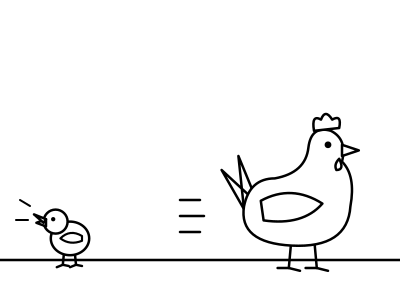
    1. A lamb bleats "baa" when it cannot find its mother.
    2. The mother bleats back and walks to the lamb.
    3. The lamb's sound is a signal, and the parent answers it.

    Circle what the parent will do.

    1. 1.
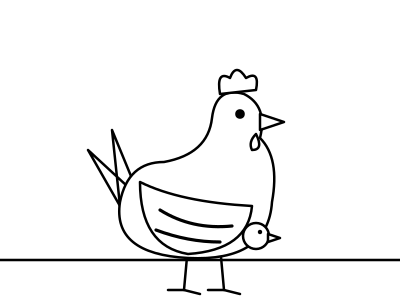
      A baby chick peeps loudly because it is cold.
      • The hen tucking the chick under her wing.
      • The hen walking away.
    2. 2.
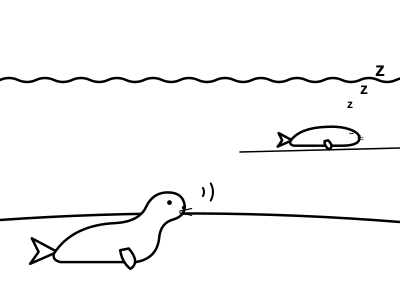
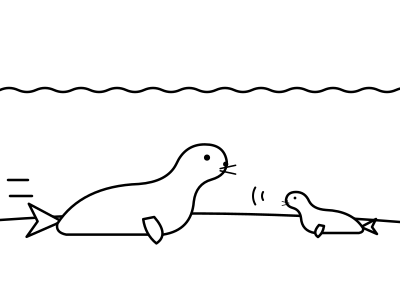
      A seal pup calls on a crowded beach.
      • The mother seal sleeping far away.
      • The mother seal coming to the pup.
    3. 3.
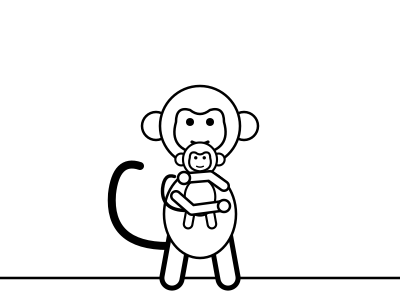
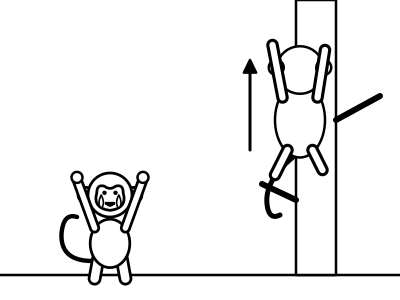
      A baby monkey cries and reaches up.
      • The mother monkey picking it up.
      • The mother monkey climbing away.

    Circle yes or no.

    1. 4.
      Can a newborn animal tell its parent "I am hungry" with words?
      • yes
      • no
    2. 5.
      Is a cry a kind of signal?
      • yes
      • no
    3. 6.
      A goose leads her goslings to the pond. Is it safer for the goslings to follow close?
      • yes
      • no
    4. 7.
      Draw a baby animal that needs something. Show what it does to tell its parent.

    Challenge (optional)

    A baby bird peeps louder when a parent lands on the nest. Why?

    You need: crayons