1First Grade

    Adding tens in stories

    My shadow poem

    Practice pages

    0 of 180 days complete · Saved on this device

    View all 180 days

    Math

    Adding tens in stories

    I can solve stories that add tens.

    Standards: 1.NBT.C.4

    Number practice (no timer)
    Adding tens: 3 tens + 4 tens
    Builds on
    Days 1 to 3 (adding tens with the kit and the chart) and Week 1 adding-to stories. One-minute check: "35 + 20?" (55)

    New words

    • equation: a number sentence with an equal sign, like 35 + 20 = 55

    You need

    • Tens and ones kit: 9 tens and 9 ones. Use straw bundles of 10 (a rubber band around each) and loose straws, base-ten rods and unit cubes, or paper ten-strips (strips of 10 squares, cut by an adult) with beans as ones
    • 1 die
    • 6 start cards made from paper squares: 11, 24, 39, 16, 32, 27
    • Notebook and pencil
    1. Warm-Up · 5 min

      Fluency: adding tens. "4 tens + 4 tens?" (80) "60 + 20?" (80) Spaced review from Week 15: "What number is 6 tens and 3 ones?" (63)

    2. Mini-Lesson · 10 min

      Read the story: "A school bus had 35 children. At the next stop, 20 more got on. How many children are on the bus now?" Ask: "What do we know?" (35 children, then 20 more) "Is this adding or taking away?" (Adding. More got on.) Build 35, then add 2 bundles. (55) Draw it as a quick picture in the notebook: 3 sticks and 5 dots, then 2 more sticks. Write 35 + 20 = 55. Ask: "Which digit changed and why?" (The tens, from 3 to 5, because 2 tens got on.) Say: "We answer in a sentence: There are 55 children on the bus."

    3. Guided Practice · 10 min

      Read each story twice. Your child builds or draws it, writes the equation and answers in a sentence. 1) "Kofi has 42 stickers. He gets 3 strips with 10 stickers on each. How many stickers now?" (42 + 30 = 72) 2) "A farm stand had 26 apples. The farmer brought 50 more. How many apples now?" (26 + 50 = 76) 3) "Rosa read 40 pages on Monday and 30 pages on Tuesday. How many pages in all?" (40 + 30 = 70) 4) "There are 18 ducks on a pond. Then 10 more ducks land. How many ducks now?" (18 + 10 = 28) If stuck, say: "Act it out with the kit. What do we start with? What gets added?"

    4. Play · 10 min

      Story Maker. On your turn, flip a start card and roll the die. The die tells how many tens to add. Tell a story with those numbers about something at home, such as: "There were 24 blocks in the bin. I put in 3 bags of 10." The other player builds it and writes the equation (24 + 30 = 54) and says the answer in a sentence. Take turns. Play 6 stories. (The biggest possible total is 39 + 60 = 99.)

    5. Exit Ticket · 3-5 min

      Put the objects to one side but leave them on the table. Read each question aloud. Your child answers out loud, with objects or with a quick drawing. Check each answer together right away.

    Exit ticket

    1. A jar has 57 beads. Ana pours in 20 more. How many beads are in the jar now?
    2. A toy box has 30 red blocks and 40 blue blocks. How many blocks in all?
    Answers
    1. 77 (57 + 20 = 77)
    2. 70 (30 + 40 = 70)
    Watch for, and help or stretch
    Watch for
    Adding the ones too, such as 35 + 20 = 57.
    Try
    Ask: "How many loose ones got on the bus?" (None. Only tens.) The ones stay the same.
    Extra help
    Use start numbers under 30 and add 10 or 20. Act out each story with the kit.
    Stretch
    Try a missing part: "There were 23 ducks. Some more landed, 10 at a time. Now there are 53. How many more landed?" (30)

    At home (optional): Your child tells a family member a story about adding tens (for example, crayons in boxes of 10) and solves it.
    Reading & Writing

    My shadow poem

    I can write a short poem using describing words.

    Standards: W.1.3, L.1.1.f, SL.1.5

    Phonics
    r-controlled review (ar, or, er, ir, ur) and word sorts
    Sight words
    time, look, more, write, number
    Reading
    "My Shadow" by Robert Louis Stevenson (public domain)
    Writing
    Narrative and poem: describing with adjectives · Handwriting: illustrated poem copy
    Builds on
    Describing words and shades of meaning (Days 2 and 3). One-minute check: your child puts big, huge and gigantic in order.

    New words

    • block: to get in the way of something
    • line: one row of words in a poem

    You need

    • A flashlight and a small toy
    • Letter tiles or paper squares
    • Sight word cards: time, look, more, write, number
    • Printed "My Shadow" and "Bert and the Dark Shape" (from Day 1)
    • Shadow word web (from Day 1)
    • Poem frame you write on paper: four lines that start My shape is, My shape is, First it can, Then it can
    • Crayons and paper for the drawing
    1. Phonics & Word Work · 15 min

      Spell r-team words. I do: spell turn aloud: /t/ /er/ /n/; /er/ here is u-r. We do: spell bird, park, fork with tiles. You do: your child builds curb, firm, sharp, short, stern with tiles and reads each. Read: "The torch is bright." "Her dark shape is on the shed." Dictation: dark, sharp, short, burst. If stuck on an /er/ word, show the three spellings from Week 19 and let your child pick one, then check together.

    2. Sight Words · 5 min

      Review: time, look, more, write, number. Build It: mix the letter tiles for one word; your child builds it, reads it and spells it. Do all five.

    3. Read-Aloud & Shared Reading · 15 min

      Shadow play (5 min). Dim the lights. Shine the flashlight on a toy so its shadow falls on a wall. Do not shine the light into anyone's eyes. Move the flashlight close to the toy, then far away. Ask: "When the light comes close to the toy, what happens to the shadow?" (It gets bigger.) Ask: "What makes the shadow?" (The toy blocks the light.) Reread the second verse of "My Shadow". Ask: "Which describing words could tell about the shadow on our wall?" (Answers vary. Look for: dark, big, flat, gray.) Then your child reads "Bert and the Dark Shape" with feeling.

    4. Writing & Handwriting · 15 min

      Write a shadow poem. Say: "A poem can be short. Each line starts on a new row." Read your model: My shape is dark. My shape is thin. First it can jump. Then it can spin. Your child fills in the poem frame with describing words from the word web and action words, spelling by sounds. Your child adds a title, My Shadow, copying the word shadow from the poem page. Your child draws a picture of themself and the shadow to help listeners see the idea. Handwriting (3 min): each line of a poem starts with a capital letter.

    5. Exit Ticket · 5 min

      Oral answers.

    Exit ticket

    1. Read one line of your poem and point to the describing word.
    2. What happens to a shadow when the light moves farther from the toy?
    3. How does your drawing help someone who hears your poem?
    Answers
    1. Answers vary. Look for: a correct read and a describing word such as dark or thin.
    2. The shadow gets smaller.
    3. Answers vary. Look for: it shows what the shadow looks like or what it does.
    Watch for, and help or stretch
    Watch for
    Writing only action words and no describing words.
    Try
    Ask: "What does your shadow look like? Dark? Thin? Big?" Point to the word web.
    Extra help
    Your child tells two lines while you write; your child writes the other two.
    Stretch
    Your child adds two more lines that rhyme, like thin and spin.

    At home (optional): Your child reads the shadow poem to a family member and shows the drawing.

    ScienceWeekly check

    Not all parents stay

    I can compare animals whose parents stay with ones whose parents leave.

    Standards: 1-LS1-2

    Builds on
    Baby signals and parent answers (Day 2). One-minute check: ask "What do baby birds do when a parent comes with food?" (open their mouths wide and peep)

    New words

    • nest: a place an animal makes for its eggs or babies
    • survive: to stay alive

    You need

    • Parents Help chart
    • 1 index card with the Sea Turtle Fact Card copied on it (the text is in the Review Game)
    • Optional: photos of a sea turtle nest and hatchlings from the NOAA or National Park Service website
    • A Stay or Go chart: a sheet of paper folded in half, labeled Parents stay and Parents leave
    • 6 small paper cards with these animal names: emperor penguin, robin, alligator, elephant, sea turtle, orangutan
    • Week 20 science check page (given separately)
    • Science Notebook
    1. Warm-Up / Wonder · 5 min

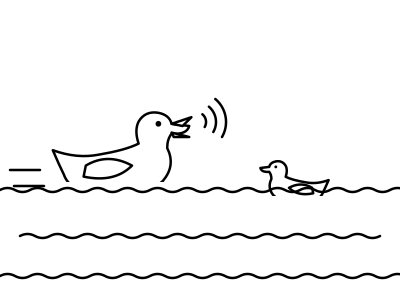
      Spaced review: your child gives a baby duckling's signal and you act out the mother's answer. Wonder question: "Do all animal parents stay with their babies?" Note for grown-ups: this lesson tells how sea turtle babies make their trip alone. Keep it about how strong and ready the babies are.

    2. Review Game · 10 min

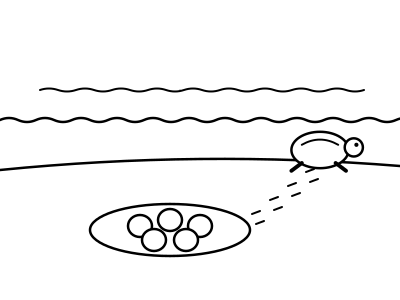
      Read the Sea Turtle Fact Card: "A mother sea turtle crawls up the beach to a spot above where the high waves reach. She lays her eggs in a nest in the sand, then slowly drags herself back to the ocean. She does not come back. The eggs stay in the warm sand for about 60 days. Then the baby turtles hatch, dig out and crawl to the ocean all by themselves. They find the water by going down the slope of the beach and toward the moon and starlight shining on the water." Ask: "Who takes care of the sea turtle eggs?" (No one. The warm sand keeps them.) "How do the babies find the ocean?" (They go downhill and toward the light on the water.) Compare: ask: "Who keeps the emperor penguin egg warm?" (the father) "Does the sea turtle mother do that?" (No. She leaves.) Play "Stay or Go": your child sorts the 6 animal cards onto the chart. (Parents stay: penguin, robin, alligator, elephant, orangutan. Parents leave: sea turtle.) Ask: "How does a penguin chick survive?" (Its parents feed it and keep it warm.) "How does a sea turtle hatchling survive?" (It is born ready to dig, crawl and swim on its own.) If stuck, reread the sentence on the card that says "She does not come back."

    3. Check · 10 min

      Give the Week 20 science check. The check items are on the Week 20 check page; do not show them ahead of time. Read each part aloud. Your child answers by talking, pointing, showing with the real materials or drawing. You write down their words exactly. It is not timed; stop and finish later if your child is tired. Make a check mark next to each part your child shows on their own. The printed check has 8 items. It covers these goals: (1) I can tell how baby animals let parents know they need help; (2) I can compare animals whose parents stay with ones whose parents leave. This week the check is an oral compare task. Look for: your child tells how a baby whose parents stay survives (the parents feed, protect or keep it warm) and how a baby whose parents leave survives (it can dig, crawl, swim and find food on its own). If stuck on a part, hold up one card from each side of the Stay or Go chart and ask: "Who helps this baby?" Secure: 6 of 8 correct, including items 5 and 6 (how each kind of baby survives). If the check is not yet secure, use the reteach step on the check page that matches the items missed.

    4. Exit Ticket · 3–5 min

      Ask the three questions aloud. Your child answers by talking or drawing.

    Exit ticket

    1. Many frogs lay their eggs in a pond and hop away. Is that more like a sea turtle or a penguin?
    2. A baby sea turtle hatches on the beach. How does it get to the ocean?
    3. Name one animal whose parents stay with their babies.
    Answers
    1. A sea turtle. The parents leave the eggs.
    2. It digs out and crawls to the water on its own, going down the slope of the beach and toward the light on the water.
    3. Answers vary. Look for: a correct example, such as a penguin, robin, alligator, elephant, orangutan, dog or cat.
    Watch for, and help or stretch
    Watch for
    Thinking the sea turtle mother forgot her babies.
    Try
    Say: "This is how sea turtles have always done it. The eggs are safe in warm sand, and the babies are ready to go on their own."
    Extra help
    Sort only 4 cards: penguin, robin, elephant and sea turtle.
    Stretch
    Your child acts out a sea turtle hatchling's trip from the nest to the ocean and tells each step in order.

    At home (optional): Your child tells a family member how a sea turtle baby is different from a penguin chick.

    Practice

    Read each direction aloud. Your child works on the page; answers are in the grown-up view.

    Warm-up

    Remember?

    Math

    1. Write >, < or =: 52 ___ 52
    2. Riddle: I have 9 tens and 4 ones. What number am I?

    Reading & Writing

    1. park, dark, yarn

    Math · Week 20 Day 4

    I can solve stories that add tens.

    Look: a story that adds tens

    1. Story: A shelf has 52 books. Mom puts 30 more books on it. How many books now?
    2. Start with 52: 5 tens and 2 ones. Add 3 tens: 62, 72, 82.
    3. 52 + 30 = 82. There are 82 books on the shelf.

    Listen to each story and write the equation and the answer.

    1. 1.
      A jar has 24 buttons. Grandma adds 40 more buttons. How many buttons are in the jar now?
    2. 2.
      There are 63 people on a train. At the next stop, 30 more get on. How many people are on the train now?
    3. 3.
      Nia counted 50 cars on Monday and 20 cars on Tuesday. How many cars did she count in all?

    Draw or circle to solve.

    1. 4.
      Draw a quick picture: 15 seeds and 3 packs of 10 seeds. How many seeds in all? ____
    2. 5.
      A bin has 37 blocks. Dad adds 2 bags of 10 blocks. How many blocks are in the bin now? ____
    3. 6.
      Kim has 41 stamps. She gets 50 more. Circle the equation that fits.
      • 41 + 50 = 91
      • 41 + 5 = 46
      • 50 - 41 = 9

    Challenge (optional)

    A bus has 18 children. At one stop, 20 get on. At the next stop, 10 more get on. How many children are on the bus now?

    You need: Tens and ones kit (optional): straw bundles of 10 and loose straws, or base-ten rods and cubes, Pencil, Cubes and beans are small parts: keep them away from children under 3.

    Reading & Writing · Week 20 Day 4

    I can write a short poem using describing words.

    Look: a short poem

    1. A poem can be short. Each line starts on a new row with a capital.
    2. Use describing words: My cat is black. My cat is soft.
    3. Add what it does: First it can sit. Then it can curl.

    My Cat

    My cat is black. My cat is soft. First it can sit. Then it can curl.

    Write the word I say. Use ar, or, er, ir or ur.

    1. 1.
      ____
    2. 2.
      ____
    3. 3.
      ____

    Write your own poem. Put a describing word on each of the first two lines. Then draw it.

    1. 4.
      My ____ is ____.
    2. 5.
      My ____ is ____.
    3. 6.
      First it can ____.
    4. 7.
      I can see it.

    Challenge (optional)

    Then it can ____.

    You need: crayons

    Science · Week 20 check

    Weekly check

    How to give it: Read every direction, question and choice aloud. It is not timed; stop and finish later if your child is tired. Your child answers by talking, pointing, showing with the real materials or drawing, and you write their words exactly. Have the Parents Help chart and the Stay or Go chart ready. Keep the sea turtle talk about how strong and ready the babies are.

    Secure when: 6 of 8 correct, including items 5 and 6 (how each kind of baby survives).

    • I can tell how baby animals let parents know they need help.
    • I can compare animals whose parents stay with ones whose parents leave.
    1. 1.
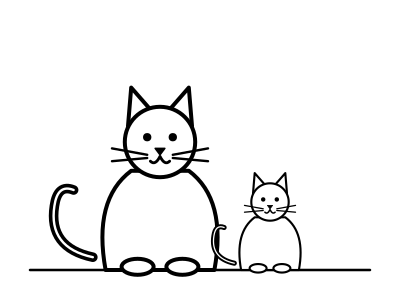
      A mother cat and her kittens. Do the parents stay or leave?
      • A parent and baby together (parents stay).
      • Eggs alone in the sand (parents leave).
    2. 2.
      Most fish lay their eggs in the water and swim away. Do the parents stay or leave?
      • A parent and baby together (parents stay).
      • Eggs alone in the sand (parents leave).
    3. 3.
      A mother bear and her cubs. Do the parents stay or leave?
      • A parent and baby together (parents stay).
      • Eggs alone in the sand (parents leave).
    4. 4.
      Many snakes lay their eggs and then leave. Do the parents stay or leave?
      • A parent and baby together (parents stay).
      • Eggs alone in the sand (parents leave).
    5. 5.
      Tell how a baby whose parents stay survives. Your grown-up writes it.
    6. 6.
      Tell how a baby sea turtle survives when its mother does not come back. Your grown-up writes it.
    7. 7.
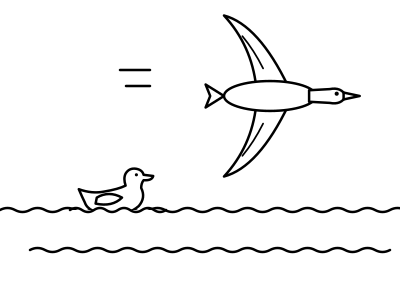
      A duckling peeps because it is lost. Circle what the mother duck does.
      • The mother duck quacking and swimming to the duckling.
      • The mother duck flying away.
    8. 8.
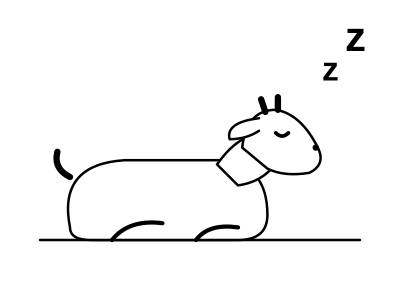
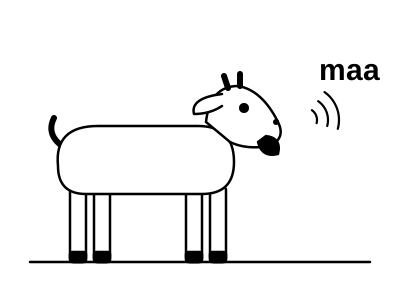
      Circle the baby goat that is giving a signal to its mother.
      • A baby goat asleep with its eyes shut.
      • A baby goat calling "maa" with its mouth open.